Anchorage to Denali: The Parks Highway
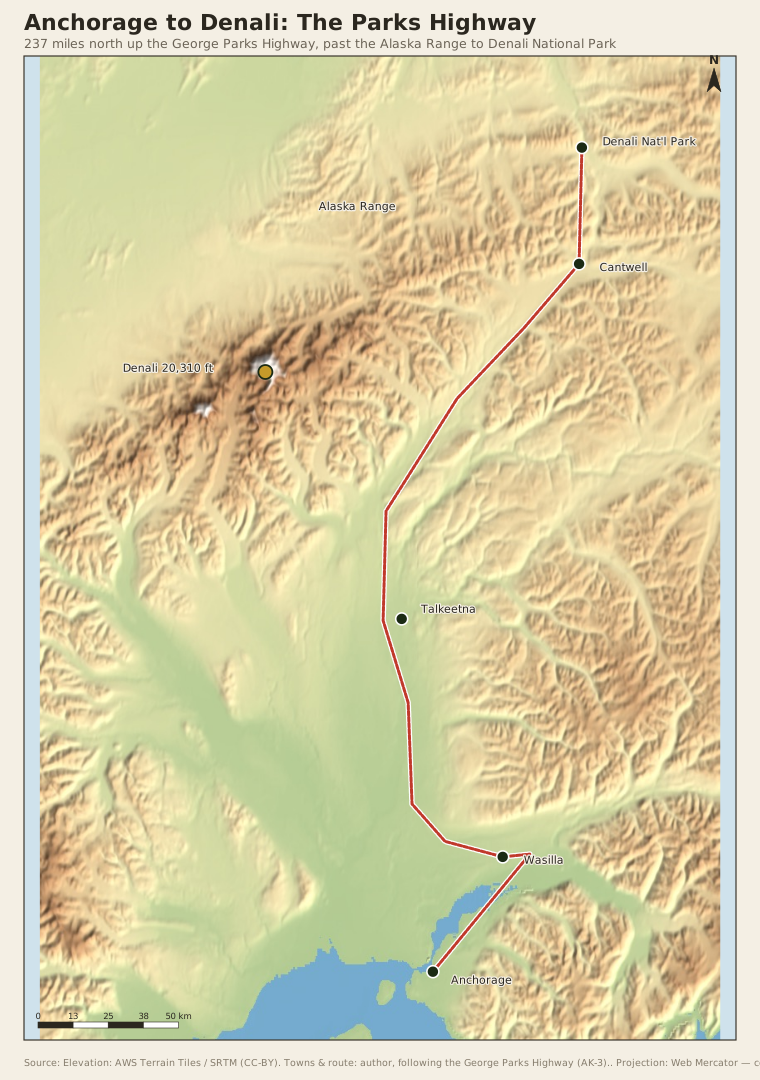
The drive from Anchorage to Denali National Park is 237 miles on the George Parks Highway (Alaska Route 3). Without stops, it takes about 4.5 hours. With stops in Talkeetna and at viewpoints along the way, plan for 6-7 hours. If you are deciding where to base near the park, our Talkeetna vs Denali guide compares the two for lodging, flightseeing, and tours.
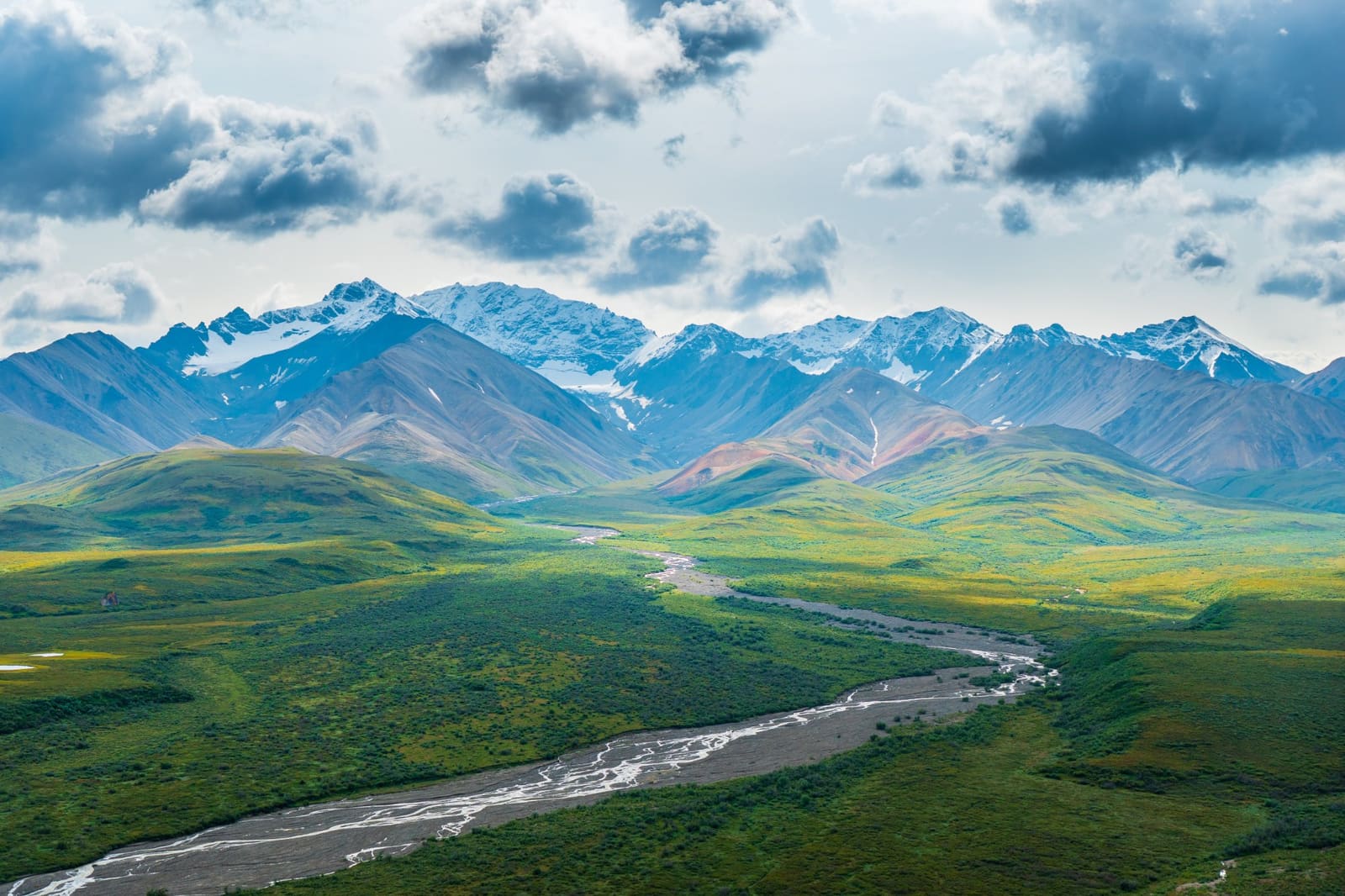
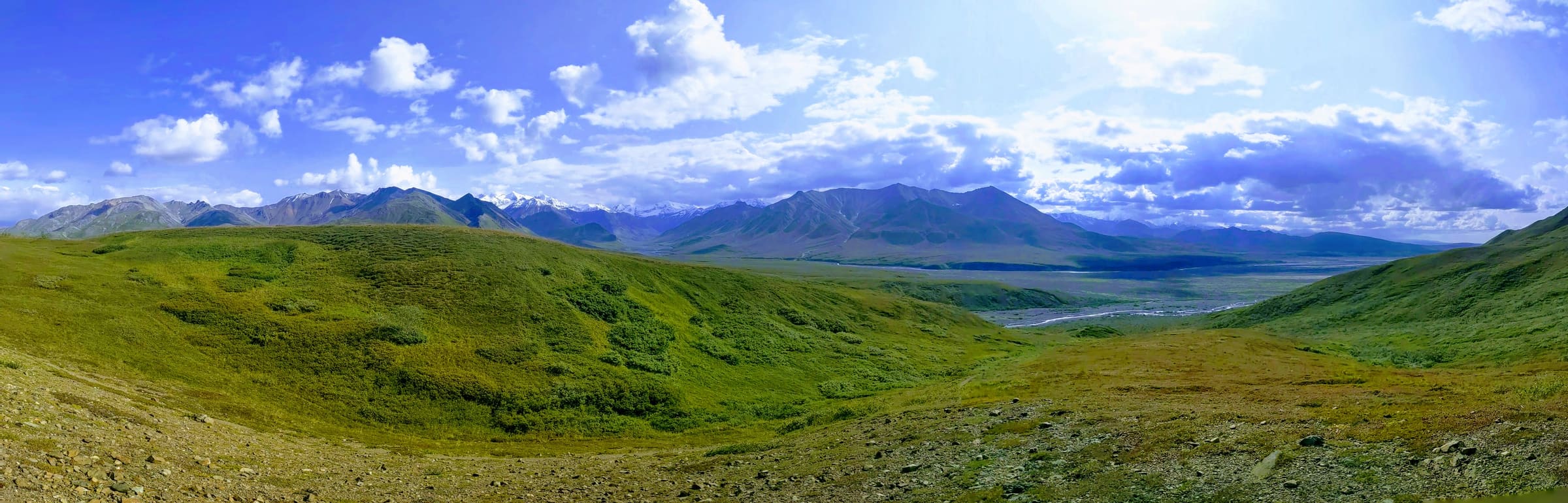
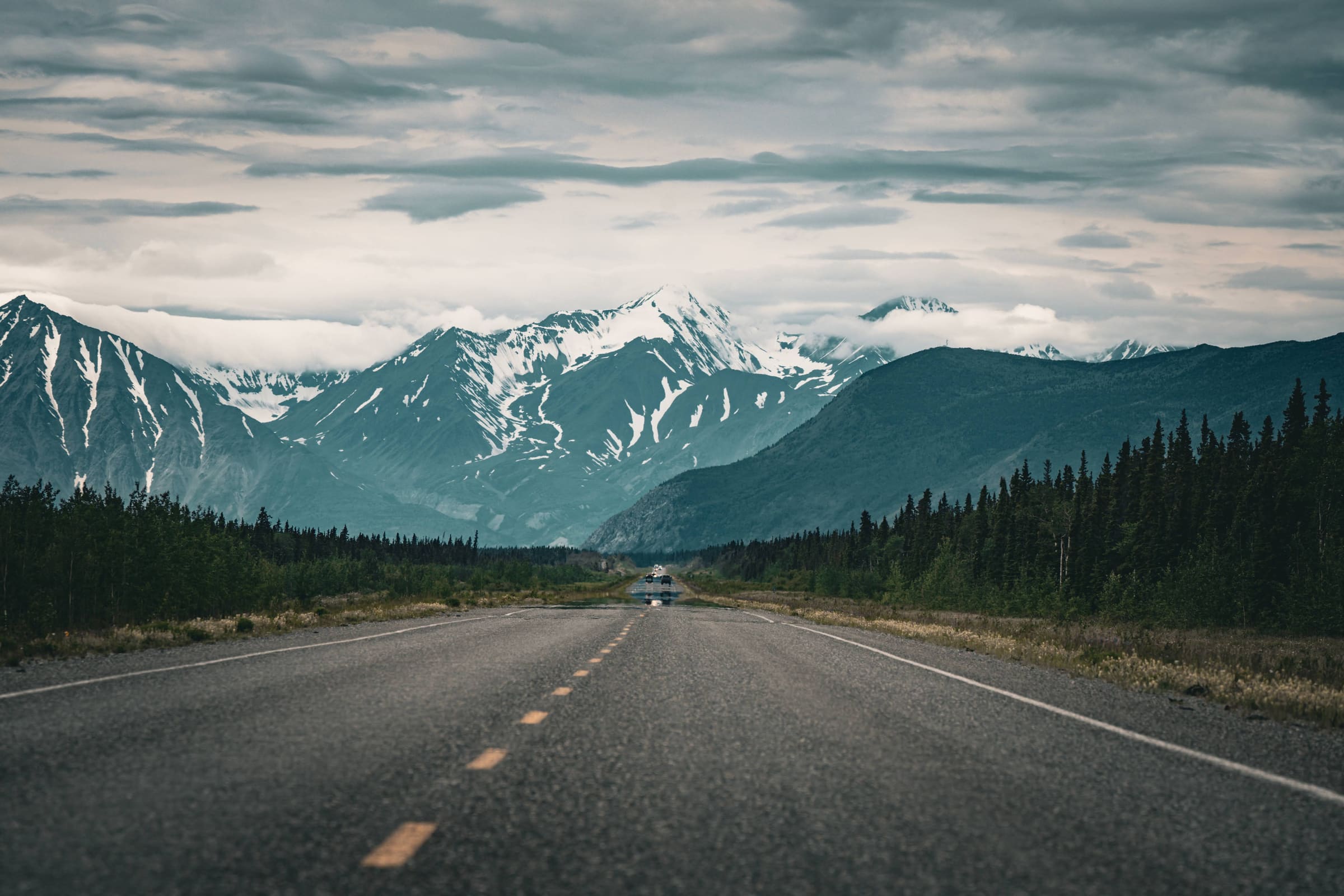
This is a straightforward drive on a good two-lane highway. The scenery builds gradually: you leave the urban sprawl of the Mat-Su Valley, pass through boreal forest, and arrive at the edge of the Alaska Range with Denali looming to the west. On clear days, the mountain appears impossibly large, 130 miles away but dominating the entire skyline.
The drive from Anchorage to Denali is 237 miles up the George Parks Highway (Alaska Route 3) and takes about 4.5 hours nonstop, or 6 to 7 hours with stops. The route heads north out of Anchorage through Wasilla (Mile 42), past the Talkeetna turnoff (Mile 98.7), the roadside Denali Viewpoint South (Mile 162), and Cantwell (Mile 210) before reaching the Denali National Park entrance at Mile 237. It is fully paved, two-lane highway the entire way, with no mountain passes or gravel.
What to Expect on the Parks Highway
The Parks Highway is an easy paved drive — the things that catch first-timers off guard are frost heaves, summer construction, thinning cell coverage, and moose, not difficult roads. Alaska winters buckle the asphalt into rollercoaster dips and bumps that crews patch all summer, so expect short construction zones with pilot cars, and check Alaska 511 the morning you drive for active delays.
- Cell coverage fades north of Talkeetna. Download offline maps before you leave Anchorage and do not count on coverage between the Talkeetna junction and Cantwell.
- Moose use the road. Dawn and dusk are the riskiest windows — and in midsummer "dusk" comes close to midnight. Scan the brushy shoulders, and slow down if a car ahead stops for no obvious reason.
- Use the turnouts. Highway signs remind slow drivers that delaying five or more vehicles is illegal in Alaska. RV traffic mostly self-sorts, but expect the occasional queue behind a motorhome in July.
- Everything is addressed by milepost. Trailheads, lodges, and fuel stops along the highway are given by milepost number, not street address. New to the system? Our guide to reading Alaska mileposts explains how the numbering works.
The Drive: Key Stops
| Milepost (approx) | Place | Why stop / what's there | Distance from Anchorage |
|---|---|---|---|
| Mile 0 | Anchorage | Start. Fuel up and leave before 7am or after 9am to beat Anchorage–Wasilla commuter traffic. | 0 mi |
| Mile 42 | Wasilla | Last full-service town: gas, groceries, and big-box stores. Fill the tank here. | 42 mi |
| Mile 49 | Hatcher Pass turnoff | Optional detour up Palmer–Fishhook Road to Independence Mine State Historical Park (adds about 2 hours). | 49 mi |
| Mile 98.7 | Talkeetna turnoff | A 14-mile spur to Talkeetna, the flightseeing hub and the best clear-day view of the mountain on the route. | 98.7 mi |
| Miles 132–169 | Denali State Park | Trails and viewpoints; the Byers Lake trailhead (Mile 147) accesses the Kesugi Ridge Trail. | 132 mi |
| Mile 162 | Denali Viewpoint South | The single best roadside view of Denali on the Parks Highway, with a large pulloff and interpretive signs. | 162 mi |
| Mile 210 | Cantwell | Junction with the Denali Highway (Route 8), 134 miles of mostly gravel east to Paxson. | 210 mi |
| Mile 224 | Carlo Creek | Quieter, often cheaper lodges and dining about 13 miles south of the park entrance. | 224 mi |
| Mile 237 | Denali National Park entrance | Visitor center, transit buses, and the private-vehicle drive to Savage River (Mile 15 of the Park Road). | 237 mi |
Anchorage to Wasilla (Miles 0-42)
The first 40 miles are the least scenic part of the drive. You pass through Eagle River, cross the Knik River, and enter the Matanuska-Susitna Valley (the Mat-Su). Wasilla is a sprawling service town with gas stations, big box stores, and fast food.
Tip: Fill up your gas tank and grab any supplies in Wasilla. Gas gets progressively more expensive as you head north. Pick up snacks and water at Fred Meyer or Carrs.
If you want a detour, the Hatcher Pass Road turns off at mile 49 (Palmer-Fishhook Road junction) and climbs to Independence Mine State Historical Park, an old gold mine at 3,500 feet with hiking trails and mountain views. The road to the mine is paved but steep. It adds about 2 hours to your drive but is beautiful in clear weather.
Talkeetna Turnoff (Mile 98.7)
Turn right onto the Talkeetna Spur Road and drive 14 miles to the town of Talkeetna. This is a mandatory stop.
Talkeetna is a small town (population ~900) at the confluence of the Susitna, Chulitna, and Talkeetna rivers. It is the staging area for Denali mountaineering expeditions, and on clear days, the mountain fills the northern horizon.
What to do in Talkeetna:
- Denali flightseeing: K2 Aviation and Talkeetna Air Taxi operate 1-hour flights around Denali in small planes. The standard flight (about $430/person) circles the mountain and its glaciers. The glacier landing option (about $550/person) adds a touchdown on a glacier at 7,000+ feet. On a clear day, this is one of the best things you can do in Alaska. Book ahead, and hope for weather.
- Walk Main Street: Talkeetna's downtown is a few blocks of log-cabin shops, cafes, and galleries. It is quirky and authentic.
- Eat: The Talkeetna Roadhouse serves enormous breakfasts and cinnamon rolls. Flying Squirrel Bakery has excellent coffee and pastries. Mountain High Pizza Pie is good for lunch.
- Talkeetna Alaskan Lodge: Even if you are not staying here, drive up to the lodge for the view from the Great Room. The Denali panorama from their deck is among the best accessible views of the mountain.
Plan to spend 1-3 hours in Talkeetna, or longer if you book a flightseeing tour.
Talkeetna to Denali (Miles 99-237)
Back on the Parks Highway, you drive through boreal forest with the Alaska Range growing larger ahead.
Denali Viewpoint South (Mile 162): The single best roadside view of Denali on the Parks Highway. A large pulloff with interpretive signs. On clear days (roughly 30% of summer days), the mountain is fully visible and stunning. If it is cloudy, the mountain is hidden entirely. Do not be discouraged. Denali creates its own weather and often clears later in the day.
Denali State Park (Miles 132-169): Not to be confused with the national park, the state park offers trails and viewpoints. The Kesugi Ridge Trail is a multi-day backcountry route with continuous Denali views, but day-hikers can access the first few miles from the Byers Lake trailhead (mile 147).
Cantwell (Mile 210): A small community at the junction of the Parks and Denali Highways. The Denali Highway (Route 8) heads east from here on 134 miles of mostly gravel road to Paxson. It is one of Alaska's most scenic drives but requires a vehicle that is allowed on gravel roads.
Want a custom itinerary built for your trip? We'll plan your entire Alaska road trip around your dates, budget, and interests. Get your custom itinerary →
Arriving at Denali National Park (Mile 237)
The park entrance area is a cluster of hotels, restaurants, and tour operators along the Parks Highway. The Denali Visitor Center is 1.5 miles inside the park entrance on the Park Road.
First things to do:
- Stop at the Denali Visitor Center for maps, ranger advice, and the park film.
- If you have not already booked a bus ticket, check availability at the Wilderness Access Center (mile 1 of the Park Road). In 2026 all transit buses turn around at East Fork (mile 43); peak-July tickets still sell out, so book in advance.
- Drive the first 15 miles of the Park Road to the Savage River area. This is the only section open to private vehicles and offers easy hikes and wildlife viewing.
What to Do at Denali (2026)
Transit bus to East Fork (mile 43): The 2026 deep-park experience. About 4.5 hours round trip, hop-on/hop-off at any stop. Crosses Sable Pass (mile 39), the most reliable grizzly habitat on the road, and ends at the East Fork River braided plain. On clear days you get long views west toward Denali from the upper sections. Cost: roughly $33.50 per adult; under 16 ride free.
Tundra Wilderness Tour: The same East Fork (mile 43) route with a naturalist driver-guide. About 5 to 5.5 hours, more expensive than the transit bus, and worth it if you want the geology and wildlife explained as you go.
Flightseeing from Talkeetna: With Eielson and Wonder Lake off the table for 2026, more visitors are choosing a Talkeetna flightseeing flight as the deep-park experience. A 60-90 minute flight gets you closer to the summit than any bus ever did, with optional glacier landings. K2 Aviation and Talkeetna Air Taxi run the most flights; see the dedicated Talkeetna section below.
Hiking near the entrance:
- Horseshoe Lake Trail (3.2 miles, easy): Forest walk to a beaver-dammed lake. Good for moose.
- Savage River Loop (2 miles, easy): At mile 15, easy walking along the river with mountain views.
- Mount Healy Overlook (5.5 miles, moderate): Above treeline with views into the park interior.
- Triple Lakes Trail (9.5 miles one way, moderate): Follows the Nenana River to three lakes. Can arrange a shuttle.
Where to Stay Near Denali
- Grande Denali Lodge: Perched on a hill above the canyon with big views. Mid-to-upper range pricing.
- Denali Bluffs Hotel: Solid mid-range option with views and shuttle service.
- McKinley Chalet Resort: Large lodge-style hotel on the Nenana River.
- Denali Princess Wilderness Lodge: Upscale with good dining and river views.
- Carlo Creek lodges (mile 224): About 13 miles south of the park entrance, a quieter and often cheaper alternative. McKinley Creekside Cabins and Denali Mountain Morning Hostel are popular.
For campgrounds, Riley Creek Campground is inside the park near the entrance. Reserve on Recreation.gov.
Where to Eat
- Prospectors Pizzeria and Ale House: Solid pizza and local beer, near the park entrance.
- 49th State Brewing (Denali): Burgers, fish, and brewed-on-site beer. Deck has Nenana River views.
- The Perch (mile 224): A restaurant and cabins at Carlo Creek. Good food in a quiet setting south of the park entrance chaos.
Planning Your Anchorage to Denali Drive
Timing your departure
Leave Anchorage before 7am or after 9am to miss the Wasilla commuter crush, and budget 6-7 hours door-to-entrance with a Talkeetna stop. Summer's near-constant daylight makes it tempting to keep driving well past your limits — the light at 10pm looks like late afternoon — so treat alertness, not darkness, as your stop signal. Our guide to avoiding driver fatigue in constant daylight covers how to pace long Alaska driving days.
Fuel and food stops
Fill up in Anchorage or Wasilla, where gas is cheapest, and top off around Trapper Creek or Cantwell — stations also exist near the Talkeetna junction and the park entrance, but prices climb the farther north you go. Wasilla is the last full-size grocery run (Fred Meyer, Carrs); around the park entrance you are down to convenience stores. To see what fuel and food add to your trip budget, run your route through our Alaska road trip cost calculator.
Vehicle prep and the costs people miss
The Parks Highway needs no special vehicle, but do the basics: check the spare, top up washer fluid, and read your rental agreement's gravel clause before side trips like the Denali Highway. Keep a basic kit in the car — our Alaska emergency kit packing guide lists what actually matters on a road with long empty stretches. And budget past the gas pump: park entrance fees, bus tickets, and parking are easy to overlook, so skim our guide to hidden fees, permits, and parking costs before you set your number. If you would rather have the timing, fuel stops, and lodging mapped for you, compare Alaska itinerary planning services to see what a flat-fee custom plan includes.
At the park
- Denali is visible only about 30% of summer days. Do not build your entire trip around seeing the mountain. If it is out, celebrate. If not, the wildlife and tundra are spectacular regardless.
- Book Denali bus tickets as early as possible. They release seats 60 days in advance and popular routes sell out.
- The park bus ride is long. Bring food, water, layers, binoculars, and a camera with zoom. There are no services past mile 15.
- If you are doing a day trip from Anchorage (as in the 7-day itinerary), you can realistically drive up, hike the Savage River area, and drive back. But two nights at Denali is much better if your schedule allows it.
Denali is a key part of our 10-day and 14-day itineraries.
How the Park Bus System Actually Works
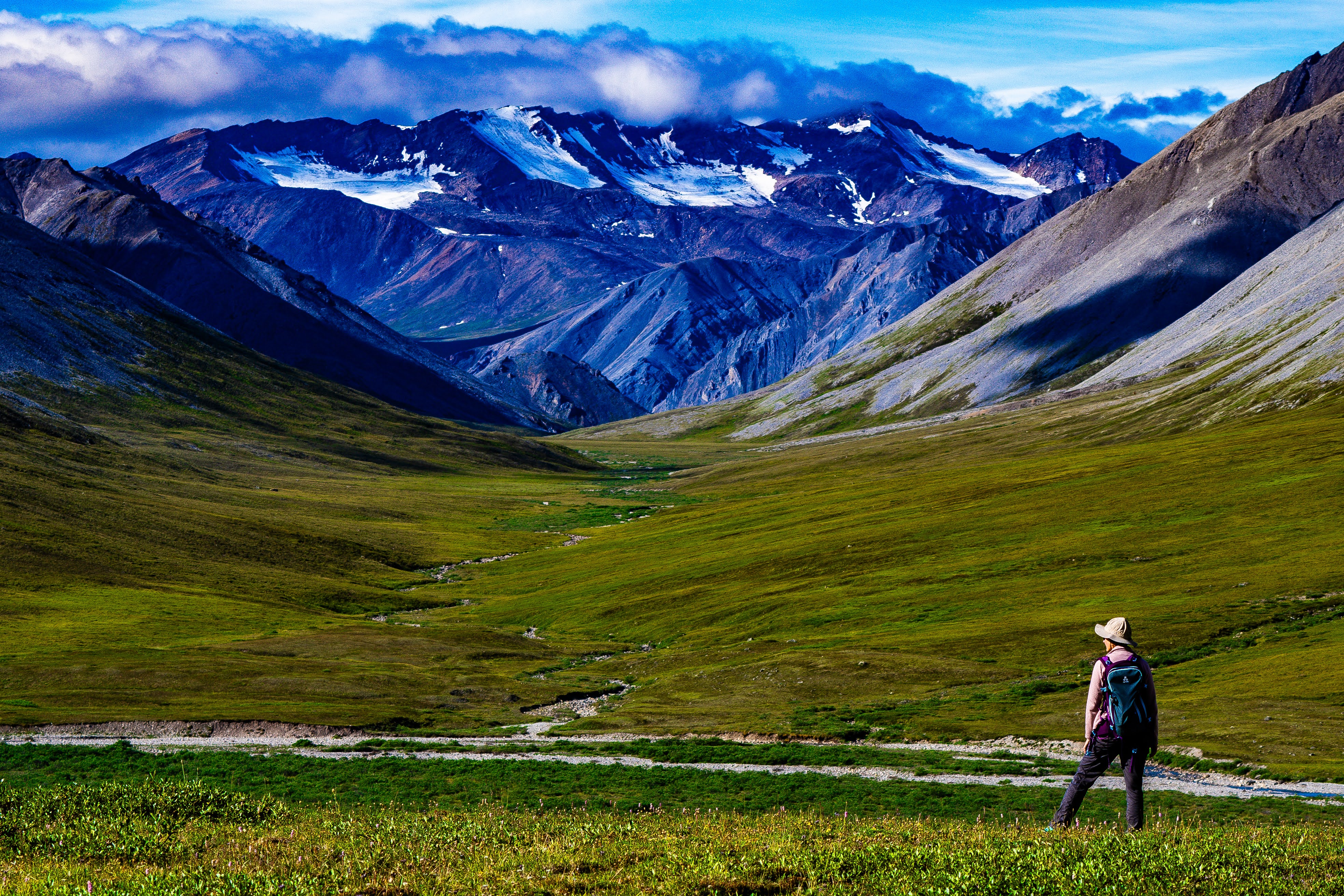
The single thing that confuses first-time visitors more than anything else is the Denali bus system. Here's the short version: past mile 15 on the Park Road, private vehicles are not allowed. To see the rest of the 92-mile road, you take a bus. There are two kinds.
Transit Buses (Hop-On, Hop-Off)
These are the classic green school-bus-style vehicles. You buy a ticket for a destination, and you can get off at any point along the way to hike. Flag down any passing bus with an empty seat to catch a ride further in or back out. This flexibility is what makes Denali feel like a wilderness experience rather than a tour.
In 2026 the only transit-bus destination is East Fork at mile 43, because the Park Road is still closed past that point due to the Pretty Rocks landslide. The historic Eielson (mile 66), Wonder Lake (mile 85), and Kantishna (mile 92) bus runs are not operating this season. Full service to those destinations is targeted for 2027 once the new bridge over Pretty Rocks and the western half of the road are both restored.
Cost: roughly $33.50 per adult for the East Fork round trip. Ages 15 and under ride free.
Tour Buses (Narrated, Fixed Route)
Brown and tan buses with a guide. Don't stop for individual hiking. Meals and drinks often included. More expensive. These are fine if you want a guided educational experience, but most independent travelers prefer the transit buses for flexibility.
Landslide Closure: What's Happening with the Road
The Pretty Rocks landslide at mile 45.4 has affected Park Road access since 2021. The road has been open only to East Fork at mile 43 in every season since, and the same is true for 2026. A new bridge over the landslide is targeted to open mid-summer 2026, which would extend access to roughly mile 45 — but the rest of the road remains under repair, so buses to Eielson, Wonder Lake, and Kantishna will not run until 2027.
For the full background, our pillar guide on the closure covers the construction timeline, the booking strategy for 2026, and the case for waiting until 2027 if Wonder Lake is the centerpiece of your trip: Denali Park Road in 2026 and 2027.
Wildlife in Denali: The Big Five
Denali is famous for its "Big Five": grizzly bears, caribou, moose, Dall sheep, and wolves. On a typical East Fork transit bus ride in summer, most people see at least three of them — the mile-0-to-43 stretch crosses the densest grizzly habitat in the park. Here's where and when.
- Grizzly bears: Most often spotted on the tundra west of Igloo Creek (around mile 35) and in the Sable Pass area. Sows with cubs graze on berries and root for ground squirrels. They look small until the bus stops and you realize the "dot" is a 400-pound bear.
- Caribou: The Denali caribou herd is small but reliably visible. Look in open tundra valleys. Bulls in summer have full velvet antlers that can reach five feet across.
- Moose: More common in the forested eastern end of the park (mile 0–20) than in the open tundra. Dawn and dusk are best. The Horseshoe Lake Trail near the visitor center is a reliable spot.
- Dall sheep: On the rocky slopes of Polychrome Pass and Igloo Mountain. Binoculars help — they look like white dots from the bus.
- Wolves: The rarest sighting. The Denali wolf population is recovering from lows. Your best shot is a long bus day that crosses the East Fork drainage.
Other common sightings: ptarmigan, golden eagles, snowshoe hares, arctic ground squirrels (everywhere), red foxes, and the occasional lynx.
Denali Hikes Worth Your Time
Entrance Area (Accessible by Car)
- Horseshoe Lake (3.2 miles, easy, 250 ft gain): Forest loop to a beaver-dammed lake. Best moose sighting trail in the entrance area. Dawn and dusk recommended.
- Mount Healy Overlook (5.5 miles, moderate, 1,700 ft gain): Climbs above treeline with views back into the park's eastern valleys. The turnaround is an open alpine ridge.
- Savage River Loop (2 miles, easy, flat): At mile 15, the end of the private-vehicle section. Follows the river through a canyon with very good Dall sheep viewing and occasional grizzlies on the opposite slopes.
- Savage Alpine Trail (4 miles one-way, moderate, 1,400 ft gain): The park's most scenic roadside hike. Climbs out of the Savage River canyon into open tundra with Alaska Range views. Shuttle back to the start or out-and-back.
Bus-Accessed Off-Trail Hiking
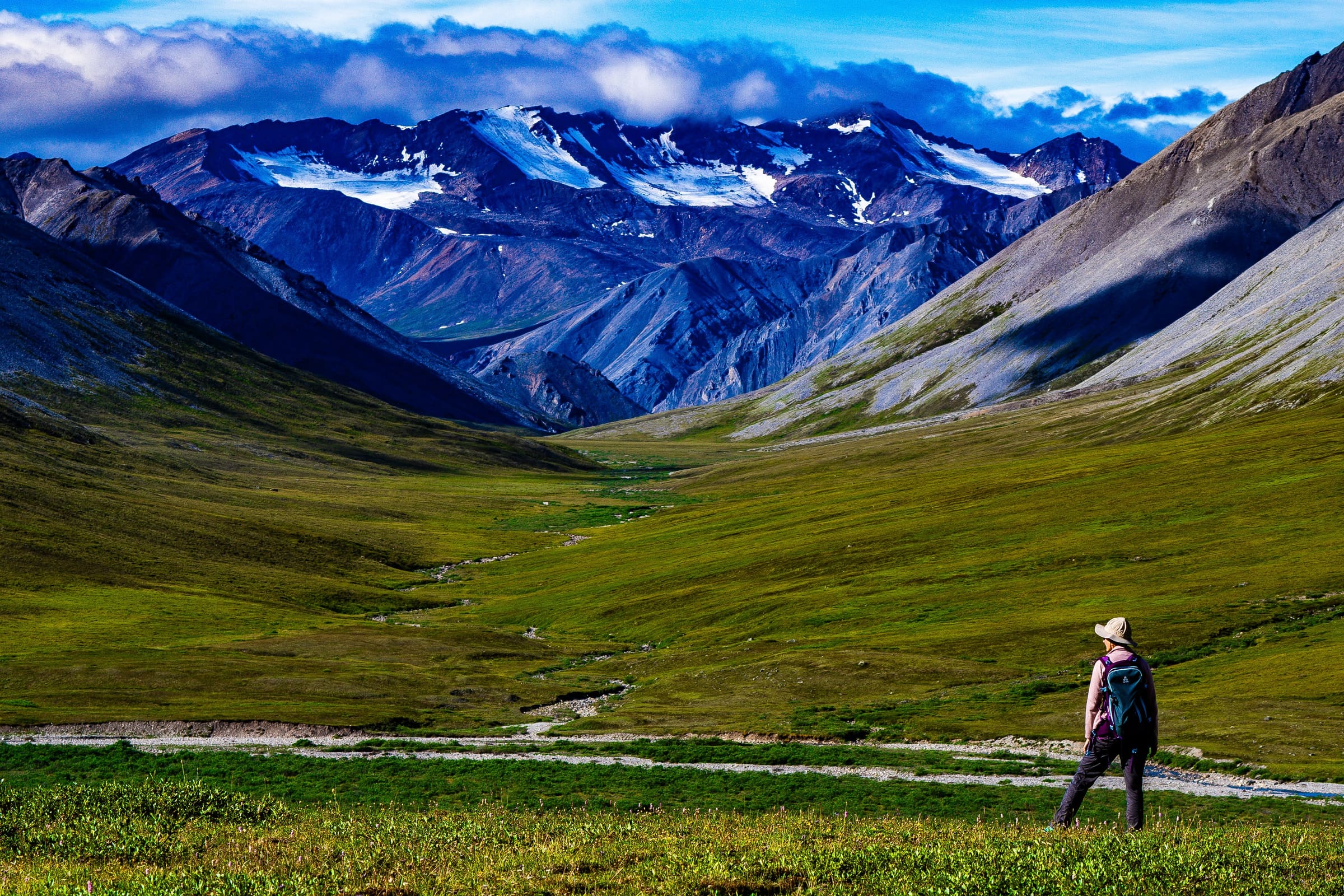
Denali is unusual among U.S. national parks in that it has very few established trails past the entrance. The philosophy is that you're free to hike anywhere — off-trail, across tundra — as long as you follow Leave No Trace. This is intimidating at first and liberating once you try it.
Easy off-trail starting points: the Polychrome Pass area, the Eielson Visitor Center tundra (walk uphill from the visitor center for as long as you want), and the Stony Hill area. Flag a transit bus to get back out. Bring bear spray, navigation, and plenty of water. You will not meet another person on most of these walks.
Flightseeing: The Other Way to See Denali
If the weather cooperates and your budget allows, a flightseeing tour from Talkeetna is the single most dramatic way to experience the mountain. Operators like K2 Aviation and Talkeetna Air Taxi run flights (roughly $430/person) that circle Denali at 11,000+ feet, and tours with a glacier landing (roughly $550/person) that touch down on the Ruth Glacier at 5,500 feet so you can walk on the ice.
The catch: these flights don't operate in bad weather. Build in a buffer day if you really want to do one. Talkeetna is 2.5 hours south of the park entrance by car.
Day Trip vs Overnight: Honest Advice
Can you see Denali on a day trip from Anchorage? Technically yes — it's what the 7-day itinerary assumes. But you'll spend 9+ hours in the car to spend maybe 3 hours at the park, and you won't have time for the East Fork transit bus. What you will see: the Savage River area, Horseshoe Lake, and the visitor center. That's it.
An overnight gets you the East Fork transit bus or Tundra Wilderness Tour, which is the difference between "I drove to Denali" and "I saw Denali." Two nights is better still — it gives you one full day on the bus, one day for a hike near the entrance or a Talkeetna flightseeing run, and buffer against the weather. Traveling with kids? The long transit-bus days can test young attention spans, so read our Alaska road trip with kids guide before committing to a full day on the bus.
If mountain views matter to you, plan three days in the area. Denali is visible about 30% of summer days, so three days gives you realistic odds of at least one clear window. Talkeetna flightseeing is the 2026 substitute for the old Eielson/Wonder Lake bus day; the road won't reach those points again until 2027.
Continuing to Fairbanks: The Parks Highway North
Denali's park entrance sits at Parks Highway mile 237, and Fairbanks is at the end of the same road at mile 358 — about 120 miles and two to two and a half hours north. That makes the full Anchorage-to-Fairbanks run roughly 358 miles and six and a half to seven and a half hours of driving, which most travelers split over two days with the stops above. North of the park the road is easier and straighter than the Talkeetna stretch: fuel and food in Healy, then the Nenana River valley and into Fairbanks.
Fairbanks is the base for the Interior — the end of the Alaska Railroad's Denali Star, the Chena Hot Springs road, dog-sled kennels that run summer cart rides, and the staging point for the Dalton Highway run to the Arctic. Late August and September are also the most reliable northern-lights window on the road system.
If Fairbanks is where you fly home, compare one-way options before booking the car — a one-way drop fee can rival a night's lodging, and looping back to Anchorage adds most of a driving day. We break down that trade-off in Fairbanks to Denali to Anchorage: is a one-way trip worth it.
Quick answers
Anchorage to Denali drive: frequently asked questions
The drive from Anchorage to Denali National Park is 237 miles up the George Parks Highway (Alaska Route 3) and takes about 4.5 hours nonstop. Most travelers plan 6 to 7 hours to allow for the Talkeetna detour and viewpoints along the way.
No. It is a fully paved, two-lane highway with no mountain passes or gravel. The main things to watch for are summer road construction, wildlife near dawn and dusk, and Anchorage-to-Wasilla commuter traffic, so leave before 7am or after 9am.
The standout stop is Talkeetna, a 14-mile detour at Mile 98.7 and the staging town for Denali flightseeing. Other worthwhile stops are Wasilla for fuel and supplies, Denali Viewpoint South at Mile 162, Denali State Park, and Cantwell at the Denali Highway junction.
Yes. Talkeetna is a 14-mile detour off the Parks Highway at Mile 98.7 and is the best stop between Anchorage and Denali. It has the clearest odds of seeing the mountain, the flightseeing operators that circle Denali and land on a glacier, and good food at spots like the Talkeetna Roadhouse. Plan 1 to 3 hours, or half a day if you book a flight.
Mid-May through mid-September, when the Parks Highway is clear and Denali National Park services are open. June and July have the longest daylight, over 19 hours near the solstice, while late August brings fall color, fewer crowds, and cooler, wetter weather.
Denali transit bus tickets go on sale in early December for the following summer, and the most popular late-June-through-early-August dates sell out for the best departure times. You can usually get something with a week's notice, but book 2 to 3 months out for your ideal date and time. In 2026, all transit-bus tickets are for the East Fork (Mile 43) round trip; Eielson and Wonder Lake are not bookable this season.
Yes. The drive is 237 miles and takes about 4.5 hours nonstop, so leaving Anchorage in the morning gets you to the park entrance by early afternoon even with a Talkeetna stop. Day-trippers can hike the Savage River area and drive back, but staying a night or two near the park is much better if your schedule allows.
Still have a question about your trip?
Get a custom itinerary — from $197
Get notified when road & ferry status changes
One email when conditions change for this route, plus a heads-up when the booking window opens for next season.
One email. No spam. Unsubscribe anytime.
Planning ahead? Skip the wait: Get your custom itinerary — from $197 · 5-day delivery → See a sample first — no email needed ↗