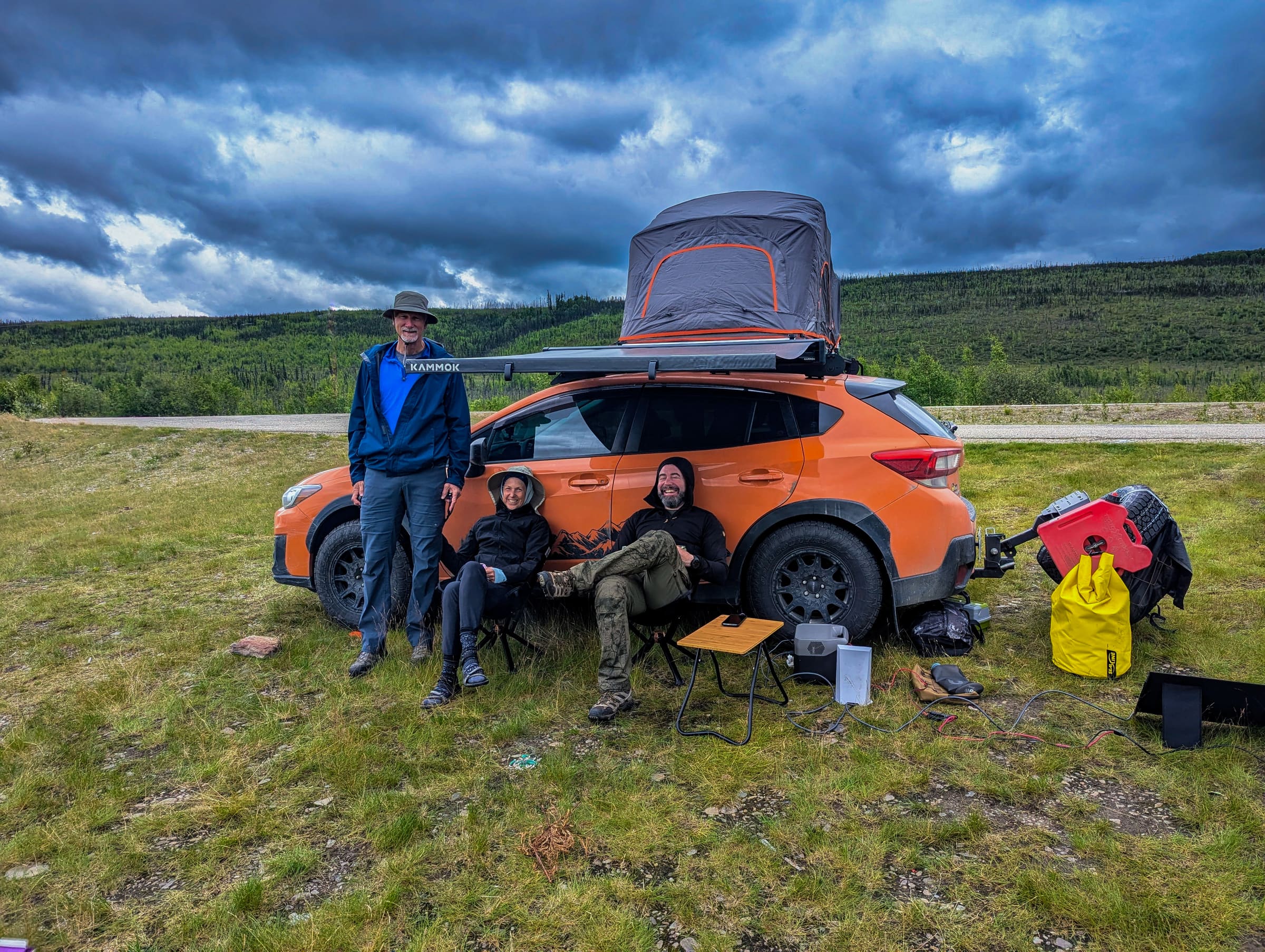
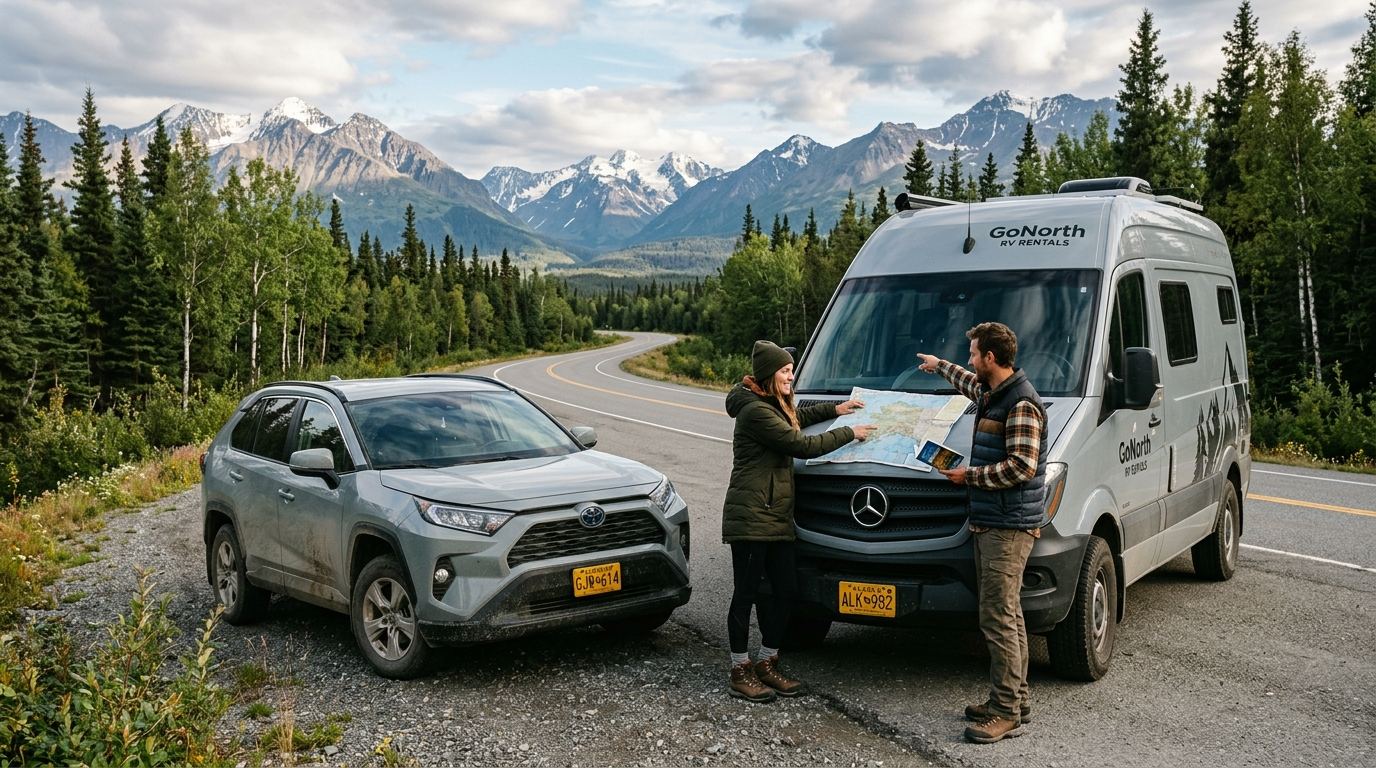
Deciding on an alaska road trip car rental vs campervan setup comes down to a fundamental tradeoff: choose a rental car if you want comfortable hotel beds, hot indoor showers, and the ability to cover 250 to 300 highway miles in a single day without setup routines; choose a campervan if your route is built around multi-night outdoor stays, you prefer cooking your own meals, and you value spontaneous itinerary adjustments over high daily mileage.
The single biggest financial driver of this decision is not the vehicle daily rate—it is lodging. When you rent a campervan, you bundle transportation and accommodations into a single line item, whereas a traditional car rental splits your expenses into two separate, competing budgets. The second major driver is your intended pace. Campervans reward slow, deliberate loops around regions like the Kenai Peninsula, the Matanuska-Susitna Valley, and the Richardson Highway. Rental cars reward long hauls across vast distances, such as driving from Anchorage to Fairbanks or making a single-day push from Anchorage down to Homer. Finally, your travel party dictates the logistics: solo travelers and couples easily adapt to the compact living quarters of a van, while families with small children, groups of four or more adults, and travelers with physical mobility requirements almost often experience a smoother journey using a passenger vehicle paired with pre-booked hotels or cabins.
Remember as you weigh your options that this guide provides a practical decision framework, not a vehicle reservation desk. Whichever route you select, you will book the vehicle and your overnight reservations directly with rental providers and property managers.
The Short Answer: Who Should Rent a Car and Who Should Take the Campervan
Choosing between an alaska road trip car rental vs campervan comes down to clear logistical priorities. If you are trying to make a quick determination before diving into the detailed cost breakdowns, evaluate your trip against these core profiles:
- Choose a rental car if: You are traveling as a family of four or more, you consider a private bathroom and daily hot shower essential, you want to drive long segments (such as 250–350 miles in a day) to connect distant regions, or you are visiting in late August through September when prolonged rain and dropping overnight temperatures make van life damp and confined.
To understand why this choice can make or break an Alaska vacation, you have to look at the financial realities of traveling the Last Frontier in 2026.
What a Rental Car for an Alaska Road Trip Costs in 2026
Renting a standard vehicle in Alaska during the peak summer window (June through August) requires realistic budgeting. Summer rental rates in Anchorage frequently rank among the highest in the country because visitor demand rapidly outpaces seasonal fleet inventory, underscoring the practical need to secure transportation well ahead of your travel dates.
For the 2026 summer season, midsize SUVs out of Ted Stevens Anchorage International Airport (ANC) command premium daily rates, especially once local municipal rental taxes, airport concession recovery fees, and vehicle licensing surcharges are added to the checkout balance. While compact sedans offer initial savings on daily base quotes, they provide lower ground clearance on frost-heaved secondary highway stretches and severely restricted cargo space for rain gear, coolers, and bulky luggage. During high-demand periods like the Fourth of July holiday and the late-July peak of the Kenai River salmon runs, available inventory dwindles quickly and rates rise accordingly.
Add-Ons and Incidental Fees That Catch Drivers Off Guard
When calculating your car rental budget, base rates tell only part of the story. First-time visitors are often blindsided by several common extra charges:
- One-Way Drop Fees: Picking up a vehicle in Anchorage and dropping it off in Fairbanks (or vice versa) simplifies routing, but rental agencies routinely assess substantial one-way repositioning surcharges that can add hundreds of dollars to your reservation.
- Additional Drivers: Most national rental brands charge a recurring daily fee per additional driver, which compounds significantly across an extended multi-day itinerary unless waived through eligible corporate memberships or specific premium credit card perks.
- Insurance and Waivers: Opting for an optional loss-damage waiver (LDW) or collision damage waiver (CDW) at the counter adds a sizable daily cost if you do not already carry personal auto coverage or credit card rental insurance that extends to Alaska rentals.
- Mileage Caps: While major national airport concessions generally provide unlimited mileage, smaller independent operators may cap driving at a set daily allowance, billing per-mile penalties if you exceed that threshold. often verify mileage terms before confirming your rental agreement.
The Real Expense: Peak Lodging Rates
In a car-based road trip, lodging is typically your largest expenditure. Alaska experiences a severe lodging supply shortage during the 90-day summer peak. Standard two-queen hotel rooms and rustic motel units in tourism hubs like Seward, Homer, and outside the Denali National Park entrance routinely price at significant premiums. High-demand boutique cabins and remote lodges can command top-tier rates nightly. If you do not lock in rooms by early spring, you may find yourself forced to book sub-par properties hours away from your planned activities.
Fuel and Operating Expenses
Fuel represents another mandatory expense. Across the road system—including the Parks, Seward, and Glenn Highways—gasoline prices run noticeably higher than the national average due to remote distribution logistics. Modern crossovers and SUVs require careful fuel planning between remote service plazas. When you calculate your total Alaska travel expenses, a realistic 10-day car-based trip for two travelers—including a reliable vehicle, mid-tier lodging, fuel, meals, and standard excursions—demands a carefully managed budget.
What Renting a Campervan in Alaska Costs — and What It Includes
When considering renting a campervan in alaska, you are essentially renting a micro-apartment on wheels. Peak-season rates for a two-person converted campervan (built on platforms such as the Ford Transit, Ram ProMaster, or Mercedes Sprinter) reflect high seasonal demand across Anchorage and Fairbanks. Minimum rental periods of three to five nights are standard practice throughout June, July, and early August.
Because the daily rate combines transit and lodging, you cannot evaluate the expense of a van against a rental car in isolation. The proper mathematical comparison is:
Daily Campervan Rate vs. (Daily Rental Car Rate + Nightly Hotel Room)
What the Base Rate Typically Includes
Most dedicated campervan outfitter packages include:
- A fixed or convertible double/queen platform bed with clean linens, duvets, and pillows.
- A compact kitchen galley featuring a 1- or 2-burner propane stove, cookware, plates, and utensils.
- A 12-volt auxiliary compressor refrigerator or high-efficiency rotomolded cooler.
- A fresh water jug with a manual pump sink or electric faucet, paired with a gray-water collection container.
- An auxiliary electrical system (often solar-assisted with lithium or AGM house batteries) to charge phones, cameras, and power LED lighting without draining the vehicle's engine battery.
- An auxiliary cabin heater (usually diesel- or gasoline-powered) that operates safely overnight without running the vehicle's engine.
Hidden Campervan Expenses
While bundling reduces hotel outlays, the cost of campervan rental alaska comes with unique line items you must incorporate into your ledger:
- Campsite Fees: While boondocking is permitted on select designated public pullouts, established campsites in Alaska State Parks, Kenai Peninsula Borough recreation areas, and federal campgrounds on Recreation.gov charge nightly fees, with full-hookup commercial RV parks charging higher rates.
- Showers: Campervans rarely have built-in indoor showers. You will rely on campground coin-operated washrooms, small boat harbor public facilities, or local municipal recreation centers.
- Consumables: Propane canisters, camp firewood bundles purchased at local highway service stations, and occasional RV dump station sanitation fees add modest recurring costs.
- One-Way Drop Surcharges: Just like passenger car companies, van rental outfitters assess one-way repositioning surcharges between Anchorage and Fairbanks due to specialized fleet constraints.
Fuel economy in a modern campervan is comparable to a full-size pickup or large SUV. When accounting for the van base fee, campground bookings, fuel, grocery provisions, showers, and consumable camp gear, a multi-day campervan journey offers meaningful savings over hotel-dependent travel for two people.
Side-by-Side: Cost, Comfort, Flexibility, and Route Access
To help you weigh the decision of an alaska car rental vs rv or campervan, the table below provides a side-by-side comparison of how these two travel styles perform across the core metrics that determine your trip experience.
| Decision Factor | Rental Car + Hotels / Cabins | Campervan + Campgrounds |
|---|---|---|
| Overall Cost Structure | Higher: Separate vehicle rental, nightly hotel rates, and restaurant meals. | Lower: Bundled transit and sleeping quarters, modest campsite fees, and self-cooked groceries. |
| Sleeping Comfort | High: Standard hotel mattresses, indoor climate control, and sound insulation. | Moderate: High-density foam mattresses; sensitive to outside weather and midnight sun light. |
| Hygiene & Facilities | Private ensuite bathroom with hot running water every night. | Shared campground facilities, vault toilets, or coin-operated public showers. |
| Daily Mileage Pace | Comfortably covers 250–300 miles per driving day. | Best kept to 120–180 miles per day to allow for camp setup and packing routines. |
| Itinerary Flexibility | Low: Bound to fixed hotel bookings that carry cancellation penalties. | High: Can swap campground valleys if poor weather or rain systems settle in. |
| Rain & Weather Resilience | Excellent: Warm, dry indoor space to dry wet rain gear and hiking boots. | Challenging: Cabin interior collects humidity; drying wet hiking layers inside is difficult. |
| Handling & Parking | Easy: Drives like your daily vehicle; fits in standard parking stalls and downtown streets. | Manageable: Fits most standard spaces, but high roof clearance requires care around low branches. |
| Paved vs. Gravel Access | Standard rental contracts strictly prohibit travel on unpaved highways (Denali Hwy, McCarthy). | Most van outfitters restrict gravel roads, though select custom builders permit specific routes. |
Comfort and Weather Realities
The table reveals that comfort is often the true tipping point. Alaska's coastal climate is wet. If you hit a multi-day storm system dumping rain across Prince William Sound or Resurrection Bay, a campervan can quickly begin to feel cramped. Condensation accumulates on interior windows, wet waterproof jackets take a long time to dry inside a compact living space, and stepping out in 45-degree mud to use a campground vault toilet at midnight tests your morale. A hotel room gives you a heated space to dry boots, spread out gear, and recharge. Conversely, during a dry, sunny week in June, sitting outside your campervan next to a river under the midnight sun is an unbeatable Alaskan experience.
Pace and Driving Dynamics
Another major difference lies in daily transit times. In a rental car, you wake up, load two bags into the trunk, and hit the highway. In a campervan, every morning requires a routine: stowing cooking gear, securing cabinet latches, strapping down loose items, folding away bedding, and disposing of gray water. If you pack up and unpack every day, your average speed drops. Expect a campervan to comfortably handle 150 to 180 miles per day on a scenic sightseeing trip, whereas a rental car can easily handle 250 to 300 miles without leaving you exhausted.
Route-by-Route: Where Each Vehicle Wins
Alaska's highway system is relatively small, but each highway corridor exhibits distinct terrain, facility density, and driving characteristics.
Kenai Peninsula Loop (Seward & Sterling Highways): Campervan Territory
The drive south from Anchorage along the Turnagain Arm to Seward, Kenai, and Homer represents premier campervan country. This region features dense state park campgrounds, US Forest Service sites in the Chugach National Forest, and municipal beach camping on the Homer Spit. Drive times between towns are manageable (Anchorage to Seward is 127 miles; Seward to Homer is 168 miles). If coastal fog blankets Seward, you can pivot across the peninsula to the sunnier western beaches of Cooper Landing or Anchor Point without forfeiting expensive lodging.
Anchorage to Denali National Park: Rental Car Advantage
The Parks Highway corridor connecting Anchorage to the Denali canyon spans roughly 240 miles of highway driving. Established public camping near the park entrance (such as Riley Creek) fills months ahead, and private RV parks in the canyon area consist mostly of crowded gravel lots adjacent to the highway. Furthermore, private vehicles—both rental cars and campervans—are restricted from driving past the Savage River checkpoint at Mile 15 on the Denali Park Road.
For the 2026 visitor season, travel into the park interior remains affected by the ongoing Polychrome Pass bridge construction at Mile 43, limiting public transit buses to the East Fork bridge area as detailed in National Park Service road status reports. Because you must use official park transit and tour shuttles to explore beyond Mile 15 anyway, driving a rental car to a comfortable hotel or cabin near Healy or McKinley Village is often far more practical than navigating a campervan around the congested commercial strip.
The Richardson Highway and Valdez: Split Decision
Connecting Fairbanks or Glennallen down to the coastal fjord of Valdez, the Richardson Highway showcases dramatic mountain passes, waterfalls, and access to Worthington Glacier. Excellent state recreation sites dot the route. A campervan allows you to camp right beside alpine tundra at Thompson Pass or along riverbars. However, Valdez itself receives substantial precipitation, making a solid cabin or hotel room a welcome refuge if coastal storms roll off Prince William Sound.
Challenging and Remote Gravel Corridors
Travelers often ask about driving iconic gravel routes such as the Dalton Highway to the Arctic Circle, the Denali Highway between Paxson and Cantwell, or the McCarthy Road into Wrangell-St. Elias National Park. Neither standard car rental agencies nor standard campervan fleets permit driving on these unpaved routes. Standard rental agreements contain strict contract violations for unpaved surfaces, voiding all insurance coverage and sticking you with astronomical towing fees if you suffer a mechanical breakdown. Exploring these routes requires specialized 4x4 rental outfits that explicitly allow rough gravel travel.
The Planning Problem Neither Vehicle Solves
Many travelers assume that booking a campervan eliminates the need for detailed trip planning. They imagine cruising down the highway and casually pulling into scenic riverbanks whenever fatigue sets in. In reality, a campervan rental does not plan your trip. It simply provides a moving bed; it does not tell you which public campground has open sites, which mountain passes have construction delays, or which ocean tours require reservations weeks in advance.
Alaska has zero interstate freeways. Its primary arteries—the Seward, Parks, and Glenn Highways—are two-lane corridors subject to summer frost-heave repair projects, slow-moving RV traffic, and seasonal pilot-car construction delays monitored through Alaska 511 travel advisories.
Moreover, the northern hospitality crunch means that vehicle selection and overnight reservations must be coordinated together. If you choose a rental car, you cannot map out your daily driving distances without first verifying whether rooms are even available in your target towns. If you choose a campervan, you must know in advance which campgrounds accommodate your vehicle length, which ones allow online bookings, and which operate purely on first-come, first-served cash drop boxes.
This is where structured, expert route planning removes the friction. Alaska Road Trip hand-picks lodging and gives you direct booking links, but you book it yourself — it does not make reservations on your behalf, so you keep full control and flexibility. Similarly, Alaska Road Trip recommends activities and tours with timing and booking links; you reserve them yourself. Furthermore, Alaska Road Trip does not book flights or rental cars; you arrange those independently.
By putting route logic ahead of vehicle selection, you avoid common blunders like booking a non-refundable hotel in Homer on the same afternoon you scheduled a Kenai Fjords boat excursion departing out of Seward, a four-hour drive away.
How to Decide in 20 Minutes: A Practical Checklist
To move past decision paralysis, run your travel party through this step-by-step checklist:
- Audit Your Group Size and Physical Requirements:
- 1 to 2 adults: Either vehicle platform works smoothly.
- 3 or more adults, or families with teenagers: Strongly lean toward a rental car or full SUV paired with multi-bed cabins or hotel suites. Living inside a campervan with more than two adults rapidly strains personal space.
- Mobility restrictions: If climbing into elevated platform beds or walking down gravel paths to public restrooms at night is difficult, select a car with accessible hotel rooms.
- Calculate Your Trip Duration:
- 5 nights or fewer: Rent a car. The fixed setup time, grocery provisioning runs, and mandatory outfitter walkthrough orientations of a campervan consume too much of a short trip.
- 6 to 12 nights: This is the sweet spot where campervan rental savings shine, giving you enough time to settle into an efficient routine.
- 13+ nights: Either option works well, though hybrid strategies (such as splitting the trip between camping on the Kenai and booking hotels for the interior) provide the best balance of comfort and adventure.
- Review Your Must-Do Excursion List:
- If your top priorities are wilderness hiking, fly-fishing, photography, and scenic campfire cooking, the campervan aligns perfectly with your goals.
- If your list includes fixed-time commercial adventures—such as a marine wildlife cruise out of Seward, a guided flightseeing glacier landing in Talkeetna, or a deep-sea halibut charter—a passenger vehicle simplifies meeting strict early-morning harbor check-in times.
- Be Honest About Your Weather and Hygiene Tolerance:
- Can you handle two consecutive days of steady 50-degree drizzle while sharing public campground restrooms and coin-operated showers? If your answer is no, book hotels and a car. Your vacation should be restorative, not an endurance exercise.
- Run the True Financial Comparison:
- Price an SUV rental plus regional lodging.
- Price a campervan plus campsite fees, showers, and propane.
- Factor in restaurant dining for the car trip versus grocery store cooking in the van.
- Review Vehicle Availability Before Committing:
- Check vehicle fleet inventory and seasonal pricing before purchasing non-refundable airfare. Peak summer dates in Alaska see tight vehicle supply, making it prudent to verify rental options before finalizing flight schedules.
Booking Timeline for Summer 2026
Alaska's short operating season means booking deadlines hit much earlier than in traditional vacation destinations. Use this operational timeline to ensure you secure vehicle and lodging inventory for the 2026 season:
- November – February: Reserve campervans, converted camper trucks, and specialty 4x4 vehicles. Small, boutique campervan fleets in Anchorage frequently book out their prime June and July weeks by mid-winter.
- January – March 2026: Secure rental cars for the peak summer window. Vehicle rates climb steadily once spring arrives, and inventory tightens rapidly.
- February – April 2026: Reserve high-demand lodging near Denali National Park, Seward, and Homer. During this same window, purchase national park bus tickets to secure departure slots for the modified Denali transit shuttles operating up to Mile 43.
- April – May 2026: Finalize regional state and national park campground reservations as rolling reservation windows open up on government booking portals. Secure seats on popular glacier cruises and flightseeing charters.
- Ongoing: Build your day-by-day routing early in the process so that vehicle pickup locations, daily driving thresholds, and overnight reservations reinforce one another instead of causing logistical bottlenecks.
Frequently Asked Questions
Is a campervan cheaper than a rental car plus hotels in Alaska?
For two people traveling on extended itineraries, a campervan is usually noticeably cheaper overall. The savings do not come solely from vehicle costs, but from bundling transit with lodging and preparing your own meals using the onboard stove rather than dining at expensive sit-down restaurants twice a day. However, for solo travelers on very short trips, or for larger families requiring a four-person camper, renting a standard car or minivan paired with mid-range hotels or vacation rentals often ends up being more cost-effective.
Can you sleep in a rental car in Alaska?
While you can pull into highway safety rest areas to nap when fatigued, sleeping in a standard rental car for your overnight accommodations is impractical and usually prohibited. Most commercial car rental contracts forbid camping inside standard passenger vehicles. Furthermore, passenger cars lack window insulation, insect screens to keep out notorious Alaska mosquitoes, and auxiliary heat, leading to cold, damp, and uncomfortable nights. Pullout parking on private or tribal lands is strictly off-limits, and state highways restrict long-term overnight camping outside of designated public recreation sites.
Do campervans need advance campsite reservations in Alaska?
Yes. While Alaska offers abundant public land, established campgrounds along the popular paved highways (such as the Seward Highway corridor, Kachemak Bay access points, and Riley Creek at Denali) fill months ahead for peak summer weekends. While you can find dry boondocking sites on select gravel pullouts and US Forest Service roads, relying purely on first-come, first-served camping during peak July travel often leaves you scrambling for a safe, legal spot late in the evening.
What is the typical weekly cost to rent a campervan in Alaska?
In the peak summer season (mid-June through mid-August), a one-week campervan rental reflects premium seasonal rates for the vehicle chassis alone, varying by builder and equipment level. When you add campground reservations, fuel, grocery provisions, and incidental expenses like coin showers and cooking fuel, the combined outlay remains competitive against paying for separate car rentals, hotel rooms, and sit-down dining.
Is a campervan or a rental car better for a family of four?
A rental car or midsize SUV paired with pre-booked hotels, cabins, or vacation rentals is almost often the better option for a family of four. Four-sleeper campervans are scarce in Alaska, charge premium daily rates, and quickly become cramped when luggage, rain gear, and children are packed into a compact footprint. A passenger vehicle gives everyone personal space during long drives, provides safer passenger seating configurations, and ensures reliable access to private indoor bathrooms every evening.
The Bottom Line
There is no universally superior choice in the alaska road trip car rental vs campervan debate. Each vehicle serves a specific type of journey. A campervan offers flexibility, immediate immersion in Alaska's natural landscapes, and noticeable savings on dining and lodging for couples willing to embrace shared campground amenities. A traditional rental car delivers superior highway cruising speed, reliable weather protection, and restful nights in private rooms, making it the sensible option for families, larger groups, and travelers eager to cover broad stretches of the state without daily vehicle chores.
Pick the vehicle platform that complements your travel style, pace, and physical comfort needs, and then design your daily routing around that vehicle's strengths. If you want experienced guidance putting your plan together, Alaska Road Trip builds custom day-by-day itineraries with hand-picked lodging and activity links, delivered as a printable, offline-ready PDF in 3 to 5 business days with 1 to 2 revision rounds. Plans start at a one-time flat fee of $97 for a Lite itinerary (1–5 days), $197 for a Standard itinerary (up to 14 days), and $297 for a Plus itinerary (15+ days), or $497 for Concierge service which adds a 30-minute live call with the founder. Alaska Road Trip is a one-time flat fee, not a subscription — there are no recurring charges, and every itinerary is backed by a published 14-day full money-back guarantee, no questions asked.
Every itinerary is hand-built by a named founder who has driven these routes on eight Alaska trips between 2015 and 2024, across four seasons. Itineraries reflect current-season research at the time they are built, ensuring you navigate regional realities like the 2026 Denali Park Road Mile 43 closure with total confidence.

See a real Alaska itinerary before you spend a dollar
A real 3-day plan with driving times, lodging picks, and a daylight chart — free, in your inbox.
One email. No spam. Unsubscribe anytime. Or view it right now — no email needed ↗
Ready for the full plan? Get your custom itinerary — from $197 · 5-day delivery →