A successful alaska road trip for first time visitors requires pacing your route around realistic 45-mile-per-hour averages, booking gateway accommodations months in advance, and understanding remote highway constraints.
Whether you are a couple seeking bucket-list wildlife sightings, a family balancing multi-generational energy levels, or active retirees navigating the state's vast highway system, planning an alaska trip for beginners demands respect for the state's sheer scale. This guide breaks down the seven most expensive and exhausting mistakes first-time travelers make across Alaska's road corridors in 2026, giving you field-tested strategies to build a seamless self-drive vacation.
The Scale Trap: Why Driving in Alaska Takes Double What Navigation Apps Predict
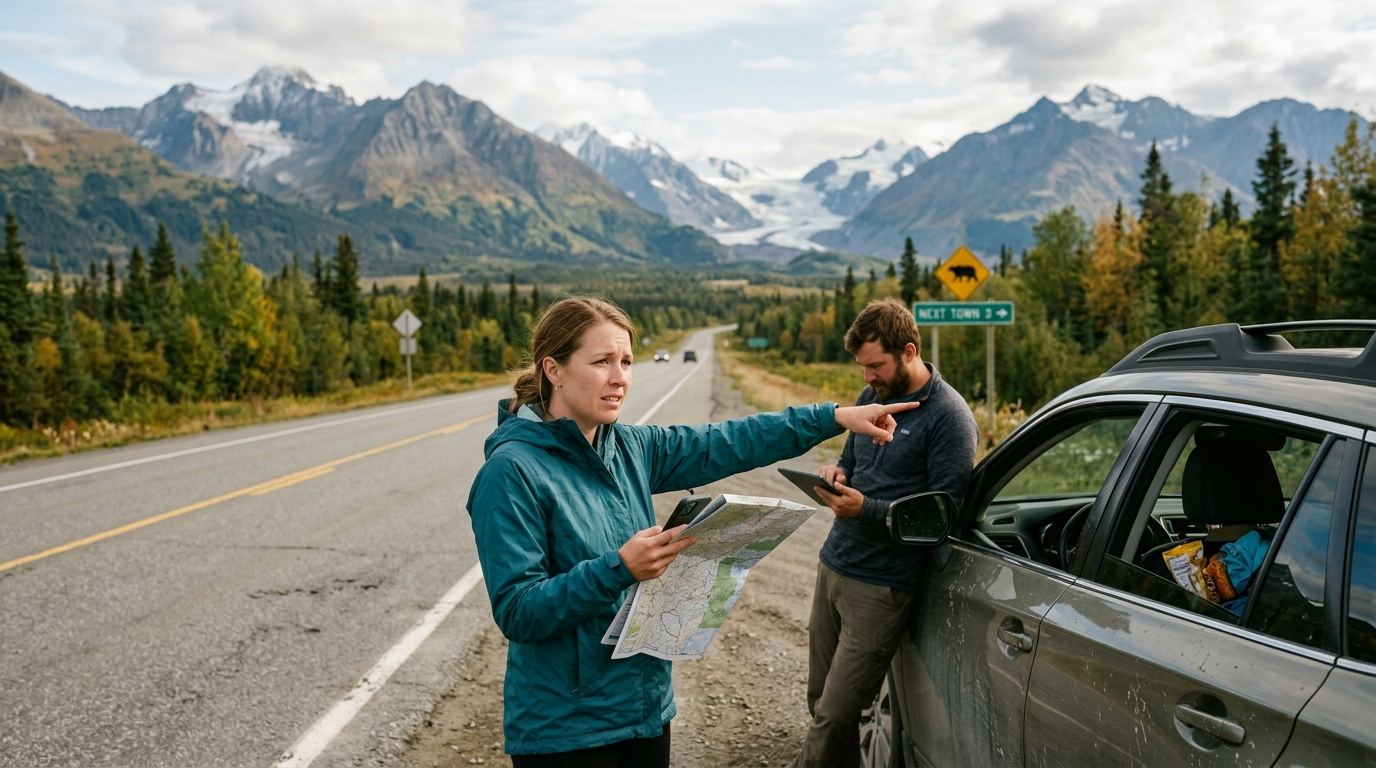
The single most common mistake on an alaska road trip for first time visitors is trusting mapping applications. Digital map engines calculate trip duration using posted speed limits—frequently many to many mph on state highways—assuming free-flowing traffic, flat terrain, and dry asphalt. On Alaska's primary paved arteries, those assumptions collapse under real-world summer conditions.
Between late May and mid-September, the state works through an intense, condensed highway construction season. based on the Alaska 511 travel information system operated by the Alaska Department of Transportation & Public Facilities, single-lane closures, gravel resurfacing, and pilot-car queues are routine along major two-lane corridors. On routes like the Seward Highway (Alaska Route 1) between Anchorage and the Kenai Peninsula, or the Parks Highway (Alaska Route 3) connecting Anchorage to Fairbanks, waiting for pilot cars can add substantial delays to your trip. Furthermore, summer brings thousands of wide, slow-moving recreational vehicles negotiating mountain passes and steep grades. Passing opportunities on two-lane highways are limited, meaning passenger cars often trail commercial motorhomes moving at 35 to 40 mph for 20-mile stretches.
Roadbed geology creates an additional speed penalty. Alaska's highways traverse extensive discontinuous permafrost. When seasonal ground thawing occurs, frost heaves buckle the asphalt into roller-coaster undulations, sudden dips, and broken pavement transitions. Hitting an unmarked frost heave at 65 mph can severely damage a vehicle's suspension or puncture a tire. Prudent driving demands slowing to 45 or 50 mph through marked subsidence zones. Add narrow shoulders, sudden coastal fog along Turnagain Arm, and heavy rain showers, and defensive driving becomes non-negotiable.
The psychological toll of underestimating drive times is severe. Planning back-to-back six-hour driving stretches through remote wilderness corridors leaves travelers mentally drained. By the third consecutive day behind the wheel, vacation momentum evaporates. Instead of arriving in gateway towns relaxed and ready for an evening wildlife hike or a local dinner, visitors arrive after 9:00 PM with highway fatigue, facing shuttered kitchens and zero downtime. If you are comparing your route options, checking our Seward Highway guide reveals the specific coastal slowdowns that trip up beginner itineraries.
Structuring an Alaska Road Trip for First Time Visitors: Pacing, Hubs, and Corridor Selection
First-time road trippers frequently attempt to conquer the entire road system in a single vacation. They try to string together the Kenai Fjords, Denali National Park, Fairbanks, Valdez, and Wrangell-St. Elias into a whirlwind loop. In Alaska, trying to see everything guarantees you experience very little outside the driver's seat.
For an optimal alaska road trip for first time visitors, your primary decision is choosing between two major geographical corridors:
- The Kenai Peninsula: Focuses on coastal fjords, dramatic marine ecosystems, deep glacial valleys, and accessible boat charters out of Seward and Homer. This corridor is ideal for travelers wanting shorter driving distances, marine wildlife (orcas, humpbacks, sea otters), and cooler maritime air.
- The Interior Corridor: Centers on the Parks Highway, Talkeetna, the vast taiga forests of Denali, and the sub-Arctic hub of Fairbanks. This route appeals to those focused on expansive tundra, interior river valleys, gold rush history, and terrestrial megafauna like grizzly bears, moose, and caribou.
Unless you have substantially more than 10 days on the ground, do not force both full corridors into one run. If you try, you spend your vacation checking into and out of hotels every morning without ever settling into the landscape. You can study realistic corridor pacing in our deep-dive breakdown of the Kenai Peninsula loop.
To eliminate travel exhaustion, implement the "hub-and-spoke" accommodation framework. Rather than packing your bags every single morning, select two or three strategic base towns and book two to three consecutive nights in each. For instance, base out of Seward to explore Kenai Fjords National Park, Exit Glacier, and local coastal hikes. Base out of Talkeetna or Healy to access Denali-area excursions. This structure cuts morning check-out stress, provides a stable base if someone in your party needs an afternoon of downtime, and creates operational flexibility if severe weather derails a day's outdoor itinerary.
Your daily mileage target should stay under 150 miles on touring days. A 150-mile run in Alaska typically equates to three to four hours of driving time once you account for slow turns, scenic pullouts, photo stops, and wildlife bottlenecks. Structuring your schedule around this threshold leaves ample room for unscripted discoveries—such as an unexpected stop at a working salmon weir or a short detour up Hatcher Pass—without risking a late arrival at your evening lodging.
Finally, incorporate built-in rest and buffer days. Coastal low-pressure systems and interior cloud banks are standard summer weather patterns. If your budget and schedule only allocate one specific morning for a Kenai Fjords marine charter or a Denali flightseeing tour, a single rainy squall can wipe out the centerpiece of your trip. Having a flexible buffer day prevents logistical heartbreak.
The 2026 Denali Reality: Navigating the Pretty Rocks Slide and Mile 43 Closure
Denali National Park and Preserve remains a crown jewel for first-time travelers, but out-of-date planning advice ruins countless visits. The Denali Park Road runs 92 miles from the park entrance to Kantishna, but private vehicles are restricted past Mile 15 (Savage River) under standard park regulations. To venture deeper, visitors must book seats on park transit buses or narrated tour buses operated by the park concessionaire. Source: Nps source.
Crucially for 2026 travel planning, road access remains truncated. The Pretty Rocks Landslide at Mile 43 continues to restrict east-to-west transit while the Federal Highway Administration constructs an engineered bridge solution. According to the National Park Service - Denali National Park & Preserve, all bus transit terminates at Mile 43 (East Fork bridge area) through the 2026 summer season. You cannot drive, bus, or transit all the way to Kantishna or Wonder Lake during 2026.
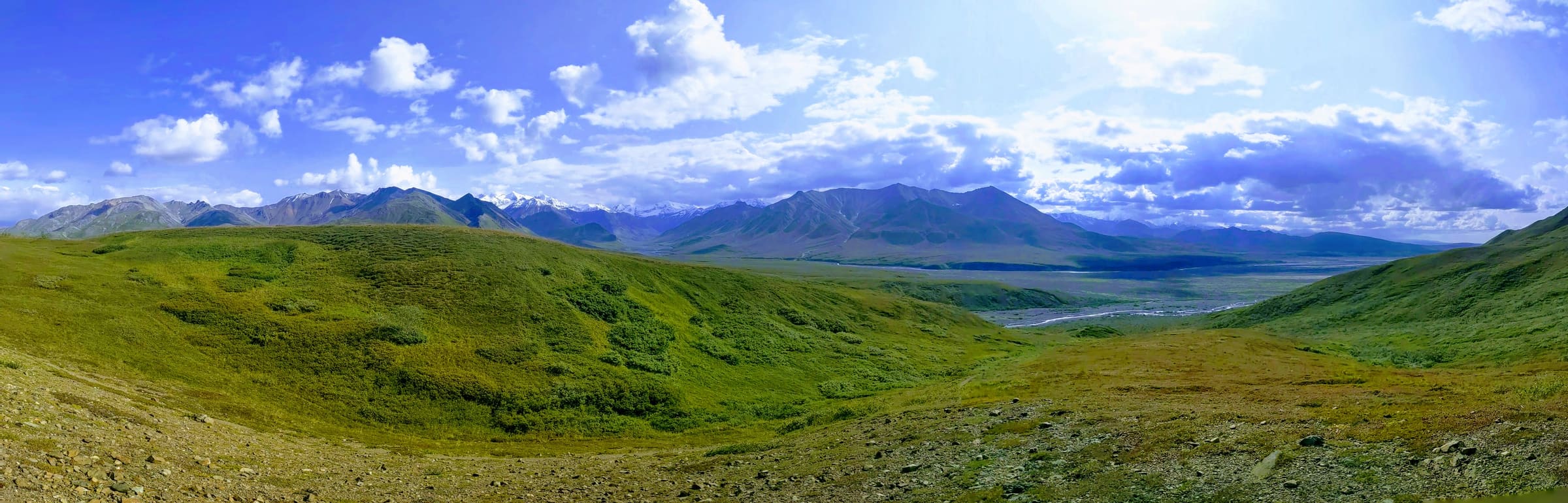
This limitation should not cause you to eliminate Denali from your route, but it requires setting realistic expectations. The front 43 miles of the Denali Park Road climb through boreal forest, cross the Savage and Sanctuary River flats, traverse the Teklanika valley, and crest the stunning tundra ridgelines of Polychrome Pass. Wildlife viewing across this accessible segment remains world-class. Grizzly bears, moose, Dall sheep on high rocky bands, and willow ptarmigan are routinely spotted along these accessible miles.
When securing your seats through the park concessionaire, understand the difference between the two primary bus categories:
- Transit Buses (Non-narrated): These green buses are more affordable, function as hop-on/hop-off transit for backcountry hikers, and provide an informal, quiet wildlife-viewing platform. The driver focuses strictly on driving and safety, though they stop whenever passengers spot wildlife.
- Narrated Tour Buses: These tan buses include a certified naturalist driver-guide who provides a structured educational narrative over an onboard PA system, along with boxed lunch options on longer runs. They operate on fixed turnaround schedules and do not accommodate backcountry drop-offs.
Because bus capacity is tightly constrained by the Mile 43 turnaround limits, reservations open months ahead of the season and sell out during peak summer weeks. If your primary goal is seeing the towering summit of Denali (20,310 feet), remember that the mountain generates its own localized weather systems; two out of three summer visitors never see the peak from ground level. To maximize your chances, consider supplementing your ground transit with a glacier landing flight out of Talkeetna or scheduling stops at south-side highway viewpoints such as Denali Viewpoint South along the Parks Highway. You can review detailed transit planning in our guide to driving from Anchorage to Denali.
First Time Alaska Travel Tips for Rental Cars, Paved Highways, and Gravel Restrictions
Securing a rental vehicle in Alaska involves legal, financial, and mechanical rules that differ sharply from the contiguous United States. Reviewing these first time alaska travel tips before signing a rental agreement will save you thousands of dollars in unexpected penalties or voided insurance coverage.
Major corporate rental brands operating out of Ted Stevens Anchorage International Airport (ANC) or Fairbanks International Airport (FAI) include strict unpaved road prohibitions in their standard contracts. Driving a standard fleet vehicle onto designated gravel state routes—including the Denali Highway (Route 8), the Dalton Highway (Route 11), the McCarthy Road to Kennicott, or the Hatcher Pass summit road—explicitly breaches your rental contract. If you suffer a mechanical breakdown, flat tire, or cracked oil pan on these unpaved surfaces, the rental company will hold you fully liable for towing fees (which regularly reach thousands of dollars in remote areas) and total repair costs, regardless of whether you purchased credit card CDW or counter insurance.
If your intended itinerary includes unpaved backroads, you must bypass airport corporate desks and reserve through specialty local operators that permit gravel driving. These specialized vehicles come equipped with heavy-duty all-terrain tires, full-size spares, and gravel-ready suspensions, though they command higher daily rates.
Windshield and tire damage are nearly intended risks on an extended Alaska self-drive trip. Even on fully paved highways like the Richardson or Sterling, ongoing maintenance leaves loose pea-gravel on road surfaces. High-speed semi-trucks and RVs kick up gravel spray that chips paint and cracks laminated glass. Review your personal auto policy and credit card vehicle damage coverage carefully. Many travelers find that taking zero-deductible comprehensive insurance directly through their vehicle provider provides genuine peace of mind against inevitable Alaska glass fractures.
When taking delivery of your vehicle at pickup, do not rush off the lot. Conduct a thorough manual inspection with the following checklist:
- Inspect the spare tire: Insist on a real, inflated full-size spare tire. A tiny, temporary "donut" spare tire is hazardous and legally limited on remote stretches where the nearest service garage is 120 miles away.
- Verify the tire-change kit: Ensure the jack, lug wrench, and wheel lock key (if applicable) are present, functional, and fit the vehicle's hardware.
- Check fluid levels: Verify that the engine oil, coolant, and washer fluid reservoir are topped off. Summer driving along coastal and boggy river valleys coats windshields in heavy insect residue; running dry on wiper fluid creates an immediate visibility hazard.
- Document existing glass and body chips: Photograph all pre-existing gravel dings, bumper scrapes, and windshield micro-stars with your smartphone, ensuring the rental agent marks them on your checkout sheet.
Lodging Constraints: Why the Last Frontier Punishes Spontaneous Itinerary Changes
The romantic ideal of an open-ended road trip—driving until you feel tired, pulling off the highway, and finding a cozy roadside motel room—does not work in Alaska. The state's physical tourism infrastructure is small, while summer demand from independent drivers, cruise-tour extensions, and sportfishing groups is immense.
In gateway communities such as Seward, Girdwood, Talkeetna, Healy, and Homer, lodging inventory is strictly limited. Seward, for example, is wedged between Resurrection Bay and steep mountain walls; the town cannot easily expand its footprint. During peak summer weeks (late June through early August), citywide room occupancy routinely nears 100 percent. Unprepared road trippers who attempt to secure walk-in rooms frequently discover that the only available bed is an exorbitant last-minute cabin or an emergency 90-mile drive back to Anchorage at midnight.
For peak-season travel, your baseline timeline should involve locking down accommodations six to nine months ahead. The best boutique cabins, family-run B&Bs, and centrally located motels sell their prime calendar slots by December or January for the following summer. Waiting until spring leaves travelers with low-value, poorly located leftovers far outside their intended activity hubs.
Cancellation policies across rural Alaska are also significantly more rigid than standard corporate hotel chains. Independent lodge owners operate within a tight many-to-many-day summer revenue window that must sustain their businesses year-round. Consequently, many independent Alaska lodges enforce strict 30-day, 45-day, or 60-day non-refundable cancellation windows. If weather or a mechanical breakdown delays your driving progress, you cannot simply cancel your room reservation at 4:00 PM without forfeiting your payment. Managing these booking links directly with property operators gives you direct communication channels if highway delays emerge, ensuring you retain personal control over reservation changes.
Remote Highway Logistics: Fuel Stops, Connectivity, and Pullout Etiquette
Alaska's highway system features immense stretches of untamed boreal forest, tundra plains, and mountain valleys completely devoid of commercial services. Operating safely demands adjusting your daily habits around fuel, communications, and road-sharing rules.
The primary tactical rule for remote travel is the "half-tank rule." rarely drive past an open, operating service station if your fuel gauge reads at or below half a tank, especially along routes like the Glenn Highway, Richardson Highway, or Tok Cut-Off. A town marked on a standard highway map may consist of nothing more than a closed post office and a decommissioned trading post. Furthermore, remote private gas stations can unexpectedly run out of fuel deliveries or suffer generator failures during local utility blackouts. Treating your half-tank mark as empty prevents high-stress searches for gas in cell-phone dead zones.
Do not expect reliable cellular connectivity outside municipal pockets. While Anchorage, Fairbanks, and central Kenai hubs offer standard 4G/5G coverage, cellular signals drop sharply just a few miles beyond town borders. Deep mountain passes, river canyons, and highway flats have zero coverage across all major carriers. To maintain navigation capabilities, download complete offline geographic maps on Google Maps or Apple Maps before departing your hotel's Wi-Fi network. Additionally, keep a current physical copy of The Milepost—the definitive mile-by-mile highway guide published annually—in your glove box. It details every bridge, pullout, operating gas pump, and historical marker along the road system without requiring battery life or cellular towers.
Alaska state law enforces strict rules regarding highway congestion. On two-lane rural highways, slow-moving vehicles must pull off the roadway at designated turnouts whenever five or more trailing vehicles have accumulated behind them. Holding up a long line of local commuter or freight traffic is not just poor road etiquette; it is an infraction subject to state trooper citations. Regularly monitor your rearview mirrors. If you see a cluster of commercial pickups or local vehicles closing behind you, signal right and pull cleanly onto the next paved turnout to let them pass.
When you encounter roadside wildlife—a moose browsing willow scrub or a sow black bear with cubs along the verge—turnout safety is critical. rarely slam on your brakes in the middle of a live travel lane. Activate your hazard lights, confirm no commercial trucks are riding your bumper, and pull completely onto the shoulder beyond the white fog line. Remain inside or immediately adjacent to your vehicle. rarely approach a wild animal on foot for a closer photo; moose and bears can close a 50-yard gap in seconds if they feel cornered or threatened.
DIY Overwhelm vs. Expert Planning: How to Simplify Your Route
Organizing an Alaska road trip yourself quickly turns into an exhausting administrative chore. First-time planners routinely juggle 40 or more open browser tabs, trying to align Alaska Marine Highway ferry sailings, tides, concessionaire bus schedules, glacier hike timing, and strict lodge cancellation windows. The sheer volume of conflicting travel-forum advice leaves many travelers feeling paralyzed.
When planning a self-drive vacation, you face a core strategic choice: do you spend weeks piecing together confusing route details alone, or do you work from an expertly organized master route? The table below outlines how independent DIY planning compares with having a route professionally structured by our team at Alaska Road Trip.
| Planning Dimension | Independent DIY Planning | Alaska Road Trip Custom Itinerary |
|---|---|---|
| Drive Pacing & Times | Based on inaccurate mapping apps; prone to severe fatigue from roadwork delays. | Built using real-world 45 mph averages, verified local transit times, and road construction buffers. |
| Lodging Management | Hours of cross-checking map locations, scattered room reviews, and confusing cancellation fine print. | Alaska Road Trip hand-picks lodging and gives you direct booking links, but you book it yourself — it does not make reservations on your behalf, so you keep full control and flexibility. |
| Activity Selection | Trial-and-error picking from hundreds of commercial tour operators with varying safety track records. | Alaska Road Trip recommends activities and tours with timing and booking links; you reserve them yourself. |
| Field Navigation | Requires constant mobile service for mapping updates; leaves travelers vulnerable in remote dead zones. | Delivered as a printable, offline-ready PDF in 3-5 business days, with 1-2 revision rounds, readable anywhere. |
| Local Expertise | Outdated blog posts and generic travel forums that frequently miss critical season closures. | Custom day-by-day Alaska road-trip itinerary, hand-built by a named founder who has driven thousands of Alaska miles across multiple seasons. |
| Pricing & Risk | Costly trial-and-error mistakes; non-refundable deposits lost to poor schedule pacing. | Plans are typically available for a flat one-time fee tiered by trip duration, with premium options offering direct consultations. Published 14-day money-back guarantee, full refund, no questions asked. |
Every custom itinerary reflects current-season research at the time it is built, accounting for specific route conditions like the 2026 Denali Park Road Mile 43 closure. Alaska Road Trip does not book flights or rental cars; you arrange those independently, ensuring you control your airline rewards, vehicle insurance choices, and overall vacation budget. Alaska Road Trip is a one-time flat fee, not a subscription — there are no recurring charges. This approach removes the guesswork, protects your vacation time, and provides an offline blueprint built for the specific realities of Alaska driving.
Packing and Preparation Checklist for an Alaska Road Trip for First Time Visitors
Packing for Alaska requires leaving fashion priorities behind in favor of technical utility. Alaska's weather fluctuates violently; a single afternoon can shift from 72°F and sunny to 48°F with driving coastal rain. Staying warm and dry requires an adaptable layering system.
The Three-Layer Garment Strategy
Dressing in three functional layers keeps you comfortable across varying elevations and coastal boat decks:
- Base Layer: Moisture-wicking synthetic (polyester, polypropylene) or merino wool tops and bottoms. Completely avoid cotton, including standard denim jeans and cotton t-shirts. When cotton gets wet from sweat or rain, it loses all insulating properties and holds moisture against your skin, accelerating hypothermia risks.
- Mid-Layer: An insulating layer designed to trap body heat. High-loft fleece pullovers, wool sweaters, or lightweight packable down/synthetic puffer jackets provide excellent warmth-to-weight ratios without restricting driving comfort.
- Outer Shell: A genuine waterproof and windproof jacket with taped seams (such as Gore-Tex or proprietary multi-layer laminates). Do not rely on inexpensive "water-resistant" windbreakers. A four-hour Kenai Fjords catamaran tour on a rainy deck will penetrate water-resistant fabric in fifteen minutes.
Bear Safety Protocols and Air Travel Rules
Encountering brown or black bears is a real possibility on trails, scenic turnouts, and near salmon streams. Carrying EPA-approved bear spray (an aerosolized capsaicin deterrent) is essential outdoor safety equipment. However, the Transportation Security Administration (TSA) strictly prohibits bear spray in carry-on baggage, and it is almost universally restricted by major commercial airlines in checked baggage due to the hazardous pressure canister design.
Do not attempt to fly with bear spray. Purchase or rent your canister upon arrival in Anchorage or Fairbanks at outdoor retailers such as REI, Cabela's, or local sporting good outfitters. When traveling by car, store your canister in an accessible location inside the passenger cabin—such as a door pocket—away from direct sun. rarely store bear spray canisters in an unventilated vehicle trunk or on the dashboard, where summer solar heat can trigger a disastrous internal canister explosion.
Insect Defense in the Boreal Forest
Alaska's state bird is jokingly referred to as the mosquito, but in June and July across the Interior and boggy taiga corridors, insect swarms are an intense reality. Standard cosmetic bug sprays rarely deter northern mosquitoes. Equip yourself with repellents utilizing many to many DEET or Picaridin. If you plan on hiking wilderness trails near Healy, Fairbanks, or the Copper River basin, pack an ultralight mesh bug jacket or head net. It packs down to the size of a lemon and guarantees you can enjoy scenic vistas without constant swatting.
Traction Footwear
Leave delicate sneakers and smooth-soled running shoes at home. Alaska trails, scenic pullouts, and glacial moraines are composed of damp crushed rock, slick mud, and exposed tree roots. Invest in sturdy, broken-in waterproof hiking boots with aggressive Vibram-grade lug soles. Proper ankle support and deep tread prevent slipping on wet footbridges or rocky coastal paths.
Frequently Asked Questions
How many days should a first-time visitor spend on an Alaska road trip?
A first-time visitor should allocate a minimum of 7 to 10 full days on the ground, excluding flights. On routes like the Seward Highway (Alaska Route 1) between Anchorage and the Kenai Peninsula, or the Parks Highway (Alaska Route 3) connecting Anchorage to Fairbanks, waiting for pilot cars can add substantial delays to your trip. If your schedule permits 10 to 14 days, you can comfortably link both corridors while preserving crucial buffer days for weather-dependent excursions like glacier boat charters or flightseeing.
Can you drive all the way through Denali National Park in 2026?
No. Standard private vehicles can only drive up to Mile 15 (Savage River) during the summer season. To travel further into the park interior, you must book transit or narrated tour buses. Furthermore, because of the ongoing Pretty Rocks Landslide repair work, all park bus transit terminates at Mile 43 (East Fork) through the entire 2026 season. The final 49 miles of the Denali Park Road to Kantishna remain inaccessible to vehicle transit.
Is a 4WD or SUV necessary for driving paved highways in Alaska during summer?
No, a standard front-wheel-drive sedan is entirely sufficient for driving the primary paved highway network between May and September, including the Seward, Parks, Sterling, and Glenn Highways. However, an SUV or crossover vehicle is highly beneficial for its higher ground clearance, which helps you safely navigate frost heaves, road construction gravel transitions, and uneven turnout shoulders.
When is the best month for first-time visitors to take an Alaska road trip?
July and August offer the most dependable summer conditions, warmest temperatures (mid-60s to low-70s), peak wildlife activity, and accessible hiking trails, making them the most popular months for beginners. Late June offers nearly 24 hours of daylight and lower rainfall, while late August through early September delivers brilliant autumn tundra foliage, active salmon runs, diminishing mosquito counts, and early opportunities to view the northern lights.
Skip 40+ hours of DIY research and stressful logistics. Get a custom day-by-day Alaska road-trip itinerary hand-built by our named founder who has driven thousands of Alaska miles across multiple seasons. You receive verified drive times, corridor pacing, and hand-picked recommendations with direct booking links for your lodging and tours so you reserve them directly. Backed by our published 14-day money-back guarantee, full refund, no questions asked.
See a real Alaska itinerary before you spend a dollar
A real 3-day plan with driving times, lodging picks, and a daylight chart — free, in your inbox.
One email. No spam. Unsubscribe anytime. Or view it right now — no email needed ↗
Ready for the full plan? Get your custom itinerary — from $197 · 5-day delivery →