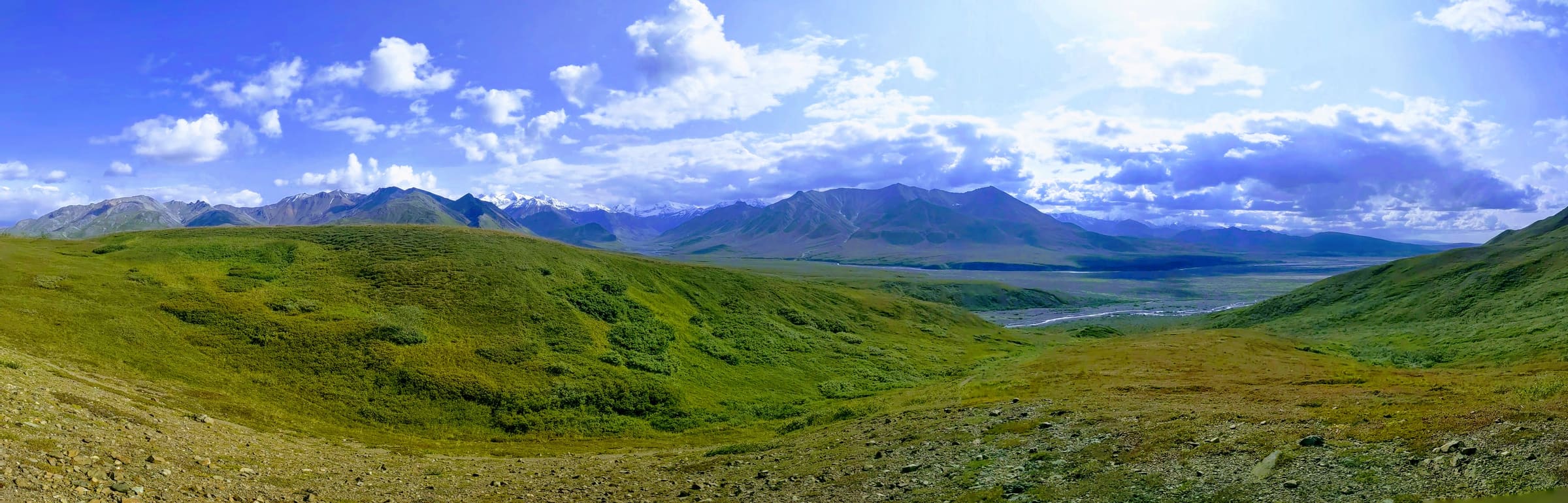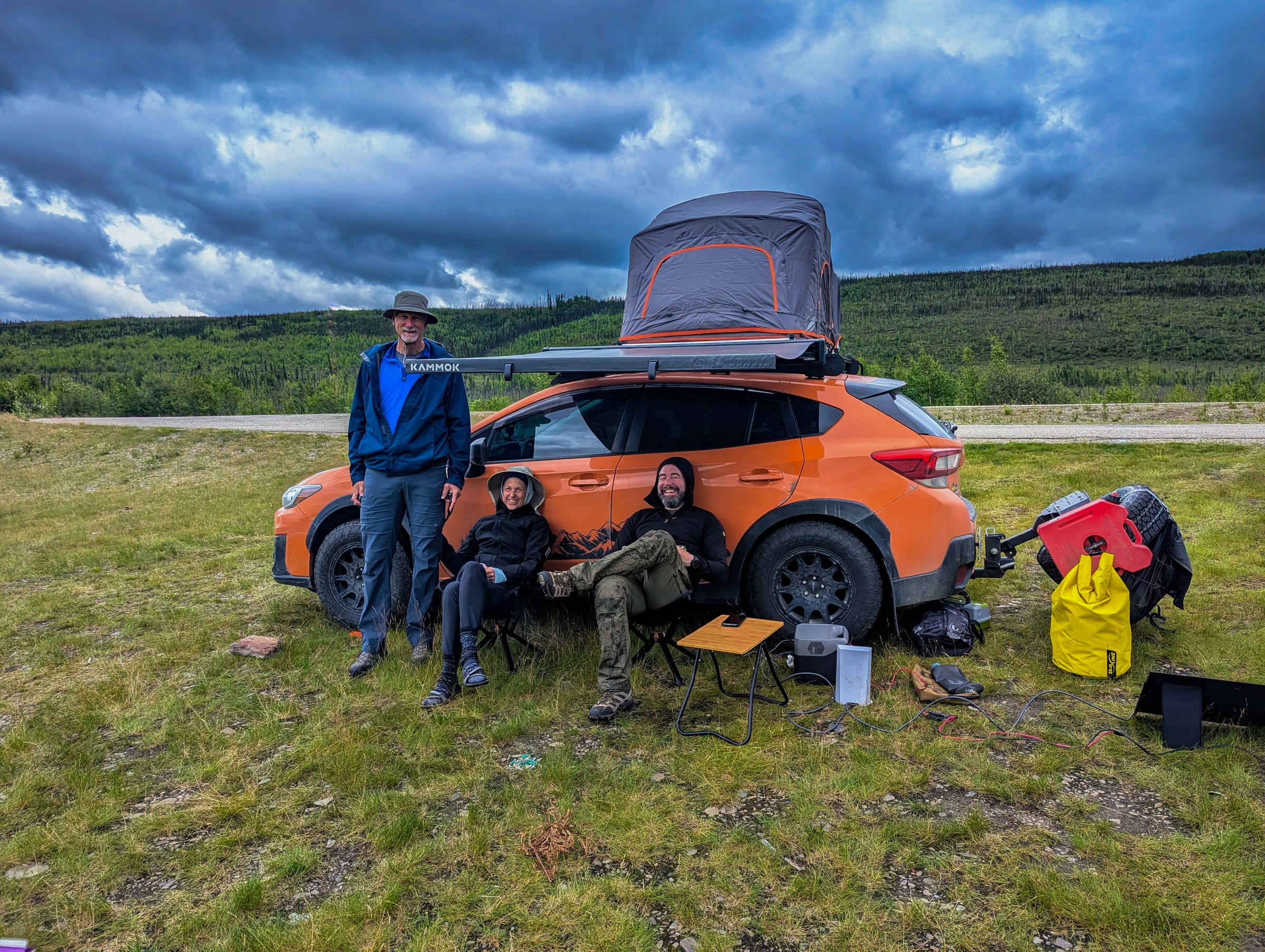
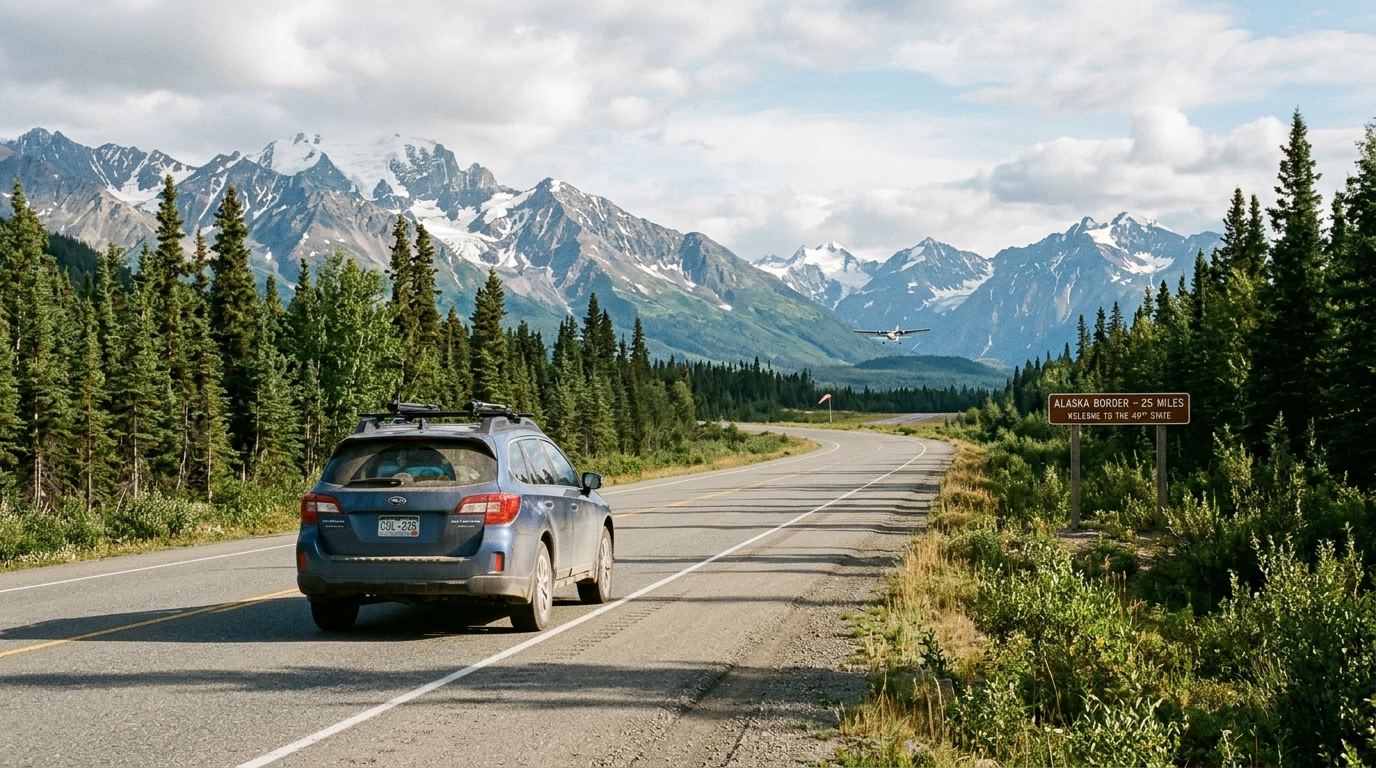
To travel to Alaska from the contiguous United States, you have two practical choices: book a commercial flight into Anchorage or Fairbanks, or drive north through Canada via the Alaska Highway. There is no direct road between the lower 48 and Alaska that bypasses Canada, and no scheduled car-ferry sails from Seattle directly to the main Alaska road network.
Your choice between flying and driving dictates the structure of your entire vacation. If you have fewer than three weeks, driving thousands of transit miles through British Columbia and the Yukon burns the majority of your time outside Alaska itself. Flying lands you directly in the state, where you pick up a rental car and spend your vacation driving scenic corridors like the Kenai Peninsula and the Parks Highway. Understanding how to get to alaska from the united states comes down to evaluating your calendar, your budget, and how you want to spend your driving hours in 2026.
Flying to Alaska: routes, airports, and flight costs
Flying is the fastest way to begin an in-state road trip. The primary commercial airport is Ted Stevens Anchorage International Airport (ANC), which handles the largest volume of domestic passenger traffic. Fairbanks International Airport (FAI) is the northern hub, sitting closer to the Arctic Circle and Denali National Park and Preserve. Smaller regional airports like Juneau (JNU) and Ketchikan (KTN) serve Southeast Alaska, but those communities sit on islands or isolated coastal strips without road connections to the interior road network.
Direct flights into Anchorage run year-round from major West Coast hubs. Nonstop flights from Seattle-Tacoma International Airport (SEA) take roughly 3.5 hours. Portland, Oregon also offers daily nonstop service. During the peak summer travel window between late May and early September, airlines add direct seasonal flights from Minneapolis-Saint Paul, Chicago O'Hare, Denver, Salt Lake City, San Francisco, and Los Angeles. Traveling to Alaska from the East Coast or the South typically requires a single connection in Seattle, Minneapolis, or Chicago.
Airfare to Alaska follows sharp seasonal swings. Round-trip economy airfares from Seattle to Anchorage during the shoulder months of April, May, or September decrease substantially compared to midsummer peaks. During July and August, strong demand pushes seat prices up, particularly for weekend departures booked fewer than four months out. Flying mid-week usually reduces the cash outlay.
Rental vehicles booked at Alaska airports represent another major cost factor. Summer rental car rates in Anchorage and Fairbanks are steep due to limited fleet capacity. Picking up a vehicle in Anchorage and dropping it off in Fairbanks, or the reverse route, triggers heavy one-way drop fees on top of standard daily rates. Completing an in-state loop that starts and ends at the same airport avoids these one-way surcharges.
Flying saves vacation days. It preserves your physical energy, avoids multi-day customs logistics, and allows families or retirees with limited driving tolerance to dedicate all their road-trip hours to Alaska proper.
Driving to Alaska from the United States: the route through Canada
Driving to Alaska is an expedition in its own right. The journey requires crossing the international border into Canada, traversing British Columbia and the Yukon Territory, and entering eastern Alaska at the Alcan-Beaver Creek border crossing. The Alaska Highway, officially designated as BC Highway 97, Yukon Highway 1, and Alaska Route 2, begins at Mile 0 in Dawson Creek, British Columbia, and runs 1,387 miles to Delta Junction, Alaska.
Getting to Dawson Creek from the lower 48 requires substantial road time before you even touch the Alaska Highway:
- From Seattle, Washington: roughly 2,300 miles to the Alaska border, requiring 42 to 48 hours of pure driving time.
- From San Francisco, California: roughly 3,100 miles, requiring 55 to 62 hours behind the wheel.
- From Minneapolis, Minnesota: roughly 2,800 miles via North Dakota and Alberta, taking 50 to 55 hours of driving.
Driving takes time. A safe transit pace demands 5 to 7 days in each direction. Pushing harder risks driver fatigue on two-lane highways that demand high alertness for wildlife, frost heaves, and seasonal construction zones.
Depending on your starting point in the lower 48, common ports of entry into Canada include Peace Arch or Pacific Highway (Blaine, Washington into British Columbia), Abbotsford-Huntingdon (Sumas, Washington), Osoyoos (Washington into the Okanagan Valley), and Sweetgrass-Coutts (Montana into Alberta). If you cross in Montana, you can follow the Stewart-Cassiar Highway (BC Highway 37) as an alternative wilderness route to Watson Lake, though it has fewer services than the standard Alaska Highway through Fort St. John and Fort Nelson.
Road conditions between June and August vary significantly. Long stretches of the road surface suffer from permafrost thaw, resulting in sudden dips called frost heaves that can damage suspension components if hit at speed. Highway maintenance crews work constantly during the brief summer thaw, meaning you will encounter gravel pilot-car zones that cause windshield chips and delays. Driving this corridor between October and April requires extreme cold-weather gear, studded tires or chains, and careful monitoring of remote fuel stations that reduce their operating hours in winter.
Fuel stops are scarce. While gas stations operate along the corridor, stretches such as the segment between Fort Nelson and Watson Lake (roughly 315 miles) have wide gaps between open pumps. Remote stations can run out of fuel or close without warning in the evening. Carry a five-gallon container of fuel, check station operating hours ahead of time, and never pass an open pump if your fuel gauge reads half-empty. You can read more about remote logistics in this guide to fuel planning in Alaska.
Driving to Alaska requirements: passport, border, and vehicle rules
Border rules are strict. Because you must transit Canada, driving to Alaska involves international customs enforcement in both directions. You clear Canadian customs when leaving the lower 48, and you clear United States customs twice: first when entering Alaska, and again when re-entering the contiguous US on your drive home. Meeting all driving requirements avoids delays or refusals at the port of entry.
According to the Canada Border Services Agency, US citizens driving across the border must present identification that establishes citizenship and identity. An original valid US passport book is standard. For land crossings only, the Western Hemisphere Travel Initiative permits US citizens to use a US Passport Card or an Enhanced Driver's License (EDL), as documented by US Customs and Border Protection. A standard state driver's license or REAL ID card is not sufficient for international border crossings. US citizens entering Canada by land do not need an Electronic Travel Authorization (eTA), which applies exclusively to air travelers.
Border agents evaluate admissibility at the primary inspection booth. Be ready to explain your intended route, where you plan to sleep each night, your departure date from Canada, and how you will cover your expenses. Carrying a printed document outlining your transit route and lodging stops gives agents clear evidence of your timeline.
Specific goods face strict border restrictions:
- Canada strictly regulates weapons. Handguns, assault weapons, and short-barreled rifles are prohibited. Transporting non-restricted hunting rifles requires advance declaration, paperwork, and an administrative fee. Handguns cannot transit through Canada to Alaska in personal vehicles.
- EPA-approved bear spray clearly labeled for wildlife defense is generally permitted. Self-defense pepper sprays intended for use against humans are prohibited weapons under Canadian law.
- Recreational cannabis is legal in Canada and Alaska, but moving it across international borders in either direction remains illegal under both Canadian and US federal law. Even medical cards do not exempt travelers. Leave all cannabis products at home.
- Canada enforces strict rules regarding previous criminal convictions. An operating-while-intoxicated or driving-under-the-influence (DUI) offense on your record can render you inadmissible, even if the infraction was considered a misdemeanor in your home state.
For your vehicle, carry the valid registration certificate and an insurance card. Ask your insurance provider for a Canadian Non-Resident Inter-Province Motor Vehicle Liability Insurance Card, which proves your policy meets Canadian minimum liability standards. If you travel with a dog or cat, you must present a valid rabies vaccination certificate signed by a licensed veterinarian showing the pet's microchip number, breed, age, and vaccination expiration date, as required by the Canadian Food Inspection Agency.
Driving vs. flying: a side-by-side comparison for a 10 to 14-day trip
Most travelers have two weeks or less for their annual vacation. Choosing your arrival method determines how much time you spend touring national parks versus driving across western Canada.
| Decision Factor | Flying into Alaska | Driving through Canada |
|---|---|---|
| Transit Days from Seattle | 1 day each direction (air travel) | 5 to 7 days each direction (road travel) |
| Days Remaining for In-State Parks | 8 to 12 days within Alaska | 0 to 4 days within Alaska |
| Border Crossings Required | Zero international land crossings | 4 international border stops (round trip) |
| Vehicle Expenses | Rental car rates and airport fees | Gasoline, vehicle wear, oil, tire risk |
| Suitability for Trips Under 14 Days | High: maximizes time on the ground | Low: consumes entire vacation in transit |
| Gear and Pet Flexibility | Airline baggage and pet limits apply | Uncapped gear capacity in your vehicle |
The math is simple. If you take a 12-day vacation and drive your own vehicle from Seattle to Anchorage and back, you spend 10 to 12 days purely in transit. You catch glimpses of the northern Rockies and the Yukon, but you arrive at the Alaska border with almost no time left to explore Seward, Homer, or Denali. Conversely, flying into Anchorage on day one lets you start exploring the Chugach Mountains that afternoon.
Driving works when your calendar has four weeks or more. Retirees spending the entire summer on the road or families with camper trailers benefit from spreading transit costs over two months while bringing fishing gear, camping equipment, and pets without airline baggage limits. If you have two weeks, flying is the practical choice.
Some travelers consider a hybrid route: driving north through Canada in their own vehicle, and then booking a vehicle space on the Alaska Marine Highway System ferry from Haines or Skagway back down to Bellingham, Washington. Mainline Alaska state ferry sailings to Bellingham run infrequently, cost thousands of dollars for a passenger vehicle and stateroom, and sell out vehicle deck space months in advance.
What changes once you arrive: timing, Denali, and lodging
Getting to Alaska is only the first hurdle. Once inside the state, road travelers must navigate regional geography, extreme seasonal changes, and strict infrastructure constraints.
Alaska's full road-trip season runs from late May to early September. In April and May, high-elevation highway passes can see winter storms, lakes remain frozen, and small-town seasonal restaurants remain shuttered. By late September, many visitor centers, glacier tour operators, and remote lodging properties close for the winter. Peak wildlife viewing, wildflower blooms, and daylight occur between June 15 and August 15.
Denali National Park faces unique access limits. A massive permafrost slide at Pretty Rocks caused a major closure on the Denali Park Road at mile 43. Construction crews are building a 475-foot suspension bridge over the slide zone. As documented by the National Park Service, visitor transit and tour buses cannot drive past mile 43 due to this ongoing construction project. Day trips into the park turn around at East Fork, giving travelers roughly half the road depth available in past decades. You must adapt your hiking plans, bus bookings, and photography expectations to account for this active constraint. For detailed analysis of the construction schedule, review the Denali Park Road guide.
Lodging availability poses an even tighter bottleneck than road construction. Small gateway communities have tiny room inventories. Towns like Seward, Homer, Talkeetna, and the roadside settlements around Denali have fewer hotels than popular national park towns in the lower 48. Independent cabins and decent motel rooms in these hubs sell out 6 to 9 months ahead for peak July dates. If you finalize travel dates without securing rooms, you may be forced to book lodging 90 miles away from your target hikes and harbor departures, adding three hours of driving to each day. If you want to see where hotel crunches hit hardest, check the Alaska lodging availability tracker.
The part most people underestimate: sequencing the in-state route
Many travelers book their flights into Anchorage first, secure a car, and then attempt to string destinations together haphazardly. This order creates logistical conflict.
Distances in Alaska are vast. Anchorage sits at the center, Denali lies to the north, and the Kenai Peninsula stretches to the south. You cannot drive in a simple small circle; you must traverse highway corridors and return through major transit choke points. A classic route connects Anchorage to Denali along the Parks Highway, drops south through the Susitna Valley to Girdwood, and follows the Seward Highway down the Kenai Peninsula to Seward and Homer. This is known as the Kenai Peninsula loop, which requires careful timing to avoid weekend traffic delays along the Turnagain Arm.
Point-to-point driving times routinely exceed GPS estimates:
- Anchorage to Seward: 125 miles, officially 2.5 hours, but often 3 to 3.5 hours along the two-lane Seward Highway when summer campers back up behind slow vehicles.
- Seward to Homer: 170 miles, roughly 3.5 to 4 hours across interior peninsula ridges.
- Anchorage to Homer: 220 miles, typically 4.5 to 5 hours of continuous driving.
Sequencing mistakes waste days. DIY planning turns into a messy spreadsheet battle. You have to cross-reference tidal tables for ocean departures in Kenai Fjords National Park, ferry connections across Kachemak Bay, seasonal opening dates for remote mountain passes, wildlife feeding windows, and lodging gaps across three different regions. One fully booked night in Seward breaks a driving sequence, forcing you to redesign your entire route from scratch.
This sequencing problem is why an expert layout saves weeks of frustration. Alaska Road Trip hand-picks lodging and gives you direct booking links, but you book it yourself—it does not make reservations on your behalf, so you keep full control and flexibility. You skip the guesswork of whether a four-hour drive leaves enough daylight for an afternoon boat trip.
When to pay someone to plan your itinerary (and when not to)
Not every visitor needs a custom itinerary service. If you have two full weeks, total date flexibility, travel solo or with one easygoing partner, and plan to stick to a simple back-and-forth drive between Anchorage and Fairbanks, planning it yourself is straightforward. You book rooms where you can find them and accept long driving days when connections fall short.
DIY planning breaks down when constraints pile up. If you are coordinating a 10 to 14-day trip for a family, an older couple with specific mobility needs, or a small group with non-negotiable vacation dates, an inefficient route wastes money and creates exhaustion. Spending twenty hours scouring hotel review boards, cross-referencing road work advisories, and hunting for activity operators burns valuable personal time.
Alaska Road Trip solves this sequencing burden directly. Every itinerary is hand-built by a named founder who has driven these routes on eight Alaska trips between 2015 and 2024, across four seasons. The service eliminates the spreadsheet headache by delivering a custom day-by-day plan tailored to your travel style, pace, and interests. Itineraries reflect current-season research at the time they are built, accounting for issues like the Denali Park Road mile 43 closure. Alaska Road Trip does not provide real-time booking availability, live tracking, or guaranteed live condition monitoring.
The pricing structure is simple and transparent. Alaska Road Trip is a one-time flat fee, not a subscription—there are no recurring charges:
- Lite Plan covers shorter trips of 1 to 5 days.
- Standard Plan covers comprehensive itineraries up to 14 days.
- Plus Plan covers extended travel of 14 days or longer.
- Concierge Plan includes the complete custom itinerary plus a 30-minute live phone call with the founder.
Every plan comes with a published 14-day money-back guarantee with a full refund, no questions asked. Plans arrive as an offline-ready, printable PDF in 3 to 5 business days, complete with 1 to 2 revision rounds to dial in your exact preferences.
Service boundaries are clear. Alaska Road Trip does not book flights or rental cars; you arrange those independently. Alaska Road Trip recommends activities and tours with timing and booking links; you reserve them yourself. This model leaves you in full control of your credit cards, airline miles, cancellation policies, and tour times while providing an operational blueprint for each day on the road.
A simple decision path for your 2026 trip
Use this five-step sequence to clarify your travel strategy without spinning your wheels:
- Count your total vacation days door-to-door. If you have fewer than 16 days, eliminate driving from the lower 48 immediately. Book flights into Anchorage or Fairbanks to protect your time.
- Assess your vehicle needs. If you require a custom overland rig, plan to camp in an RV for six weeks, or travel with large working dogs, driving through Canada is the path forward. Otherwise, reserve an in-state rental car.
- Check regional lodging availability before buying plane tickets. Look at lodging in Seward and Denali for your target weeks. If the gateway towns have no vacancies during your target window, shift your vacation dates before locking in flights.
- Build your in-state route around fixed geographic anchors. Plan your days in logical geographical blocks: Kenai Peninsula first, then Mat-Su Valley, then interior Denali. Avoid crisscrossing the state on the same highway twice whenever possible.
- Hand off the sequencing if the logistics overwhelm you. If balancing drive times, ferry links, and lodging options becomes a headache, get a custom roadmap from an expert who knows the road network firsthand.
Frequently asked questions
How do I get to Alaska?
You can get to Alaska by air on commercial flights landing primarily in Anchorage or Fairbanks, or by driving personal vehicles across the Canadian border via the Alaska Highway. Seasonal cruises and state-operated ferries also run through the coastal Inside Passage, though most communities on the ferry network do not connect directly to the main interior road grid.
How can you get to Alaska?
Travelers can fly nonstop or via West Coast hubs, drive their own passenger car, truck, or RV through British Columbia and the Yukon, or ride a passenger vessel along the coastline. For an independent road trip through central Alaska, flying into an international airport and renting a vehicle locally is the most common option for visitors with limited vacation time.
How do you get to Alaska from the United States?
From the lower 48 states, travelers can take a domestic flight directly from hubs like Seattle, Portland, Minneapolis, or Denver to Ted Stevens Anchorage International Airport. Travelers driving their own vehicles must enter Canada through a land border crossing in Washington, Idaho, or Montana, follow Canadian highways to the Alaska Highway, and cross into eastern Alaska near Tok.
Can you drive to Alaska from the United States without going through Canada?
No. There are no highways or bridges connecting the contiguous United States directly to Alaska without crossing Canadian territory. Every road route passes through British Columbia and the Yukon. No continuous domestic car-ferry links the lower 48 directly to the central Alaska road network without passing through international waters or Canadian ports.
How many days does it take to drive to Alaska from the lower 48?
Driving from northern border states like Washington or Montana to the Alaska border takes between 5 and 7 full driving days under good summer conditions. Travelers starting from the southern or eastern United States generally need 8 to 12 days each direction to cover the distance safely.
If you have chosen your arrival method and want to avoid the stress of sequencing Denali, the Kenai Peninsula, and regional lodging, Alaska Road Trip builds a custom day-by-day road-trip itinerary for a flat one-time fee. Every plan is backed by a published 14-day money-back guarantee with a full refund, no questions asked, and is delivered as an offline-ready, printable PDF in 3 to 5 business days with 1 to 2 revision rounds.
See a real Alaska itinerary before you spend a dollar
A real 3-day plan with driving times, lodging picks, and a daylight chart — free, in your inbox.
One email. No spam. Unsubscribe anytime. Or view it right now — no email needed ↗
Ready for the full plan? Get your custom itinerary — from $197 · 5-day delivery →