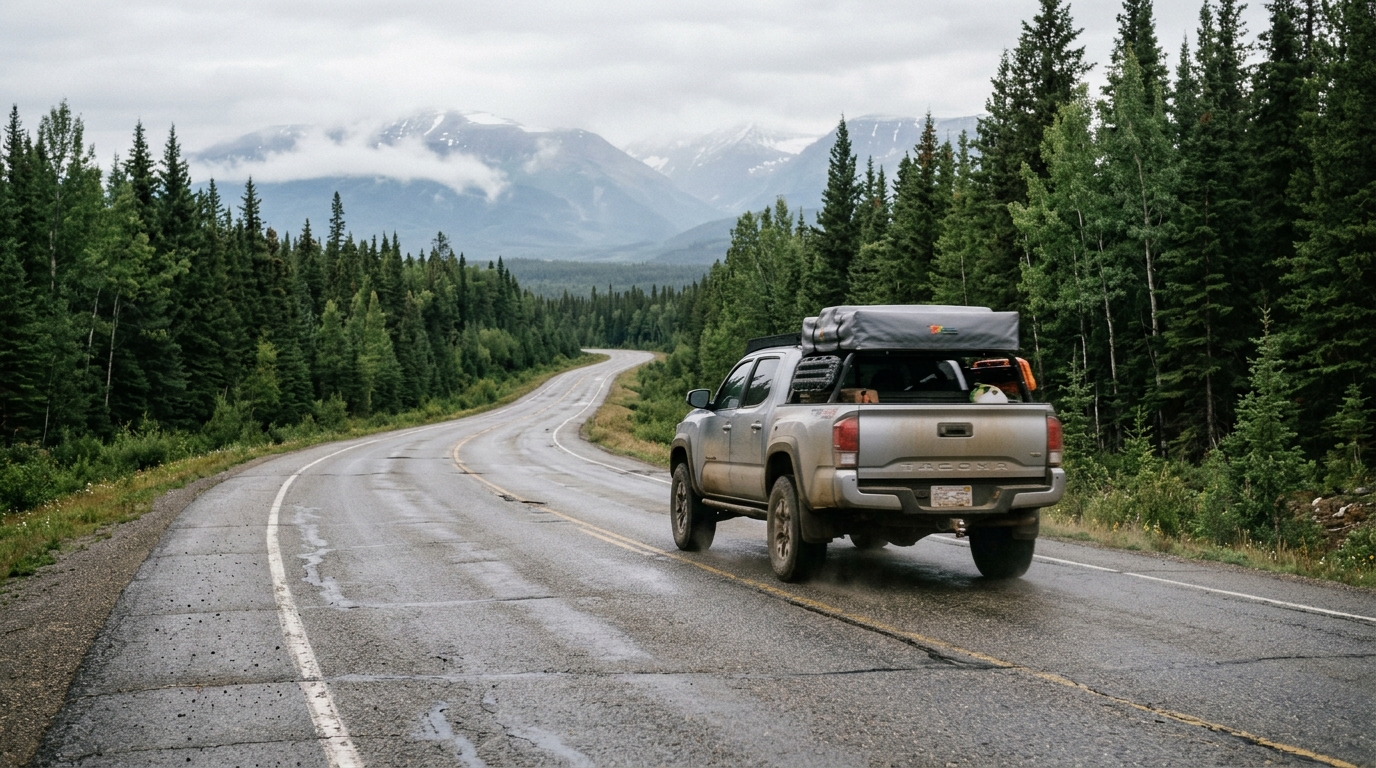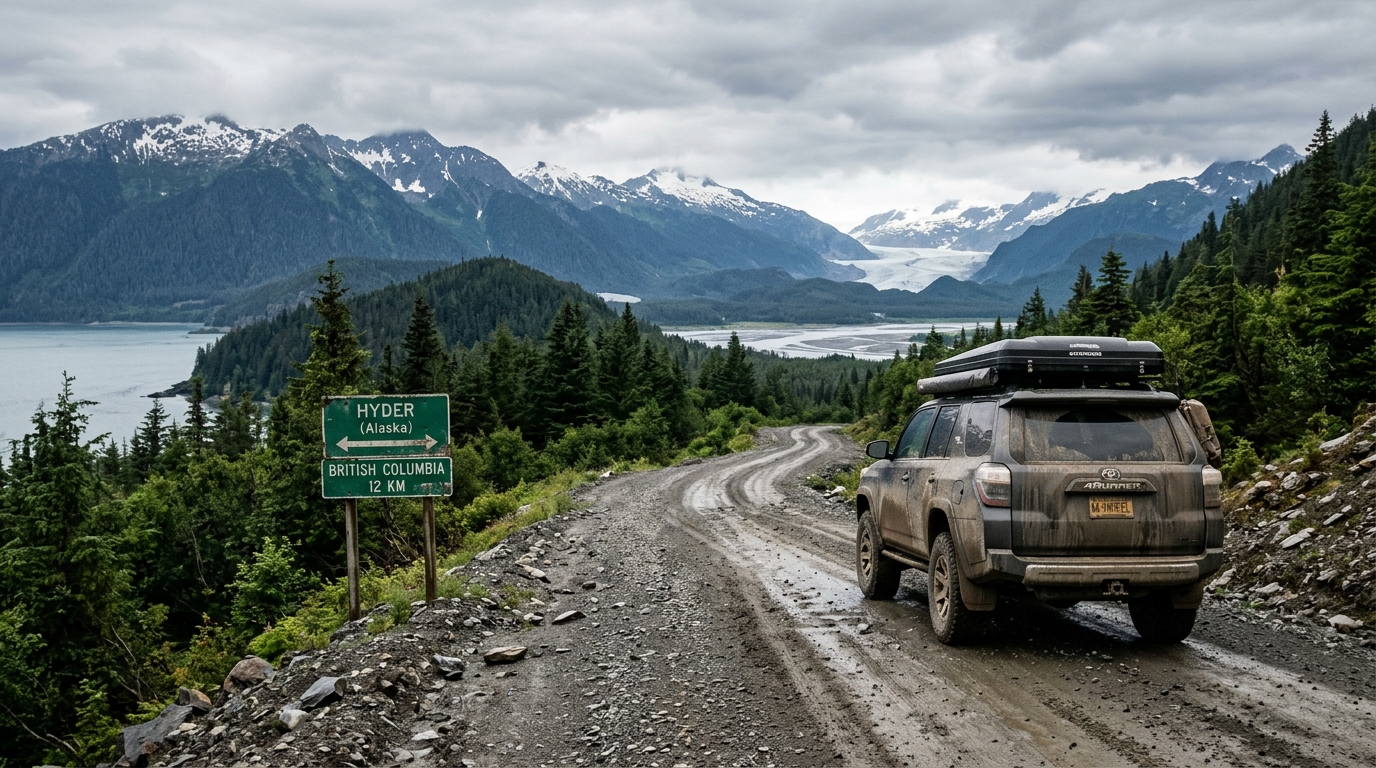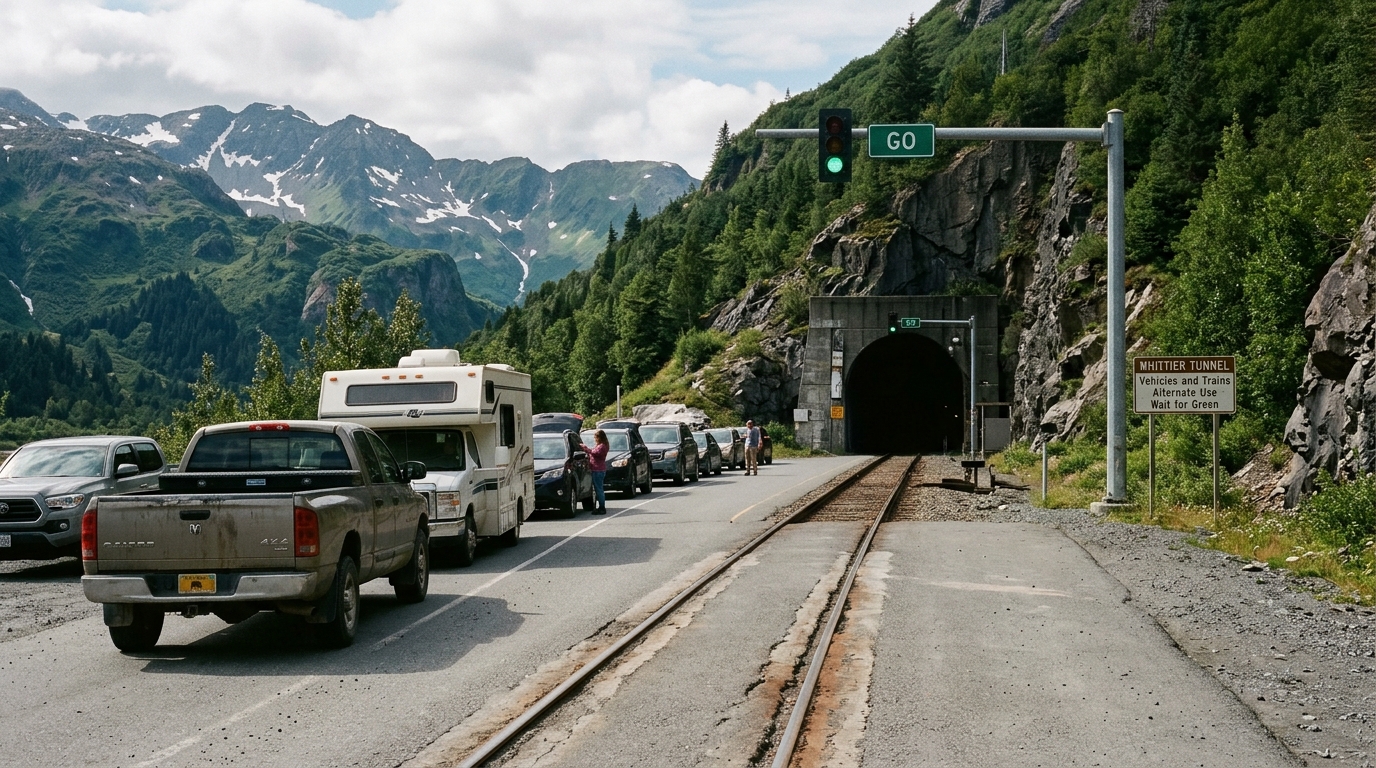

Yes, you need a passport to drive to Alaska from the contiguous United States because every overland route passes through Canada. Understanding the specific passport requirements for driving to Alaska ensures you cross both international borders without delays, secondary vehicle searches, or being turned away at the gate.
Every highway route originating in the Lower 48 requires entering Canadian territory before you can re-enter the United States in Alaska. That makes a self-drive trip an international journey twice over, even though your final destination is an American state. According to the Canada Border Services Agency, U.S. citizens can enter Canada by presenting a valid passport or other approved documents proving citizenship and identity. While certain alternative documents exist for land travel, carrying a standard passport book remains the most reliable way to navigate both the Canadian border and the Alaska frontier.
The border crossing is only one logistical hurdle on this drive. Clearing customs takes twenty minutes, but managing fuel stops, seasonal road construction, and lodging across the 1,400-mile Alaska Highway takes weeks of precise preparation. Getting your paperwork in order is the first step before tackling the full overland route.
The short answer: yes, you need a passport to drive to Alaska through Canada
Because Alaska does not share a land border with any other US state, driving there requires crossing into Canada at a southern port of entry and exiting through a northern checkpoint into eastern Alaska. Under Canadian immigration law, foreign nationals entering Canada must establish their identity and right to enter. According to the Canada Border Services Agency, border officers require secure, tamper-resistant proof of citizenship and identity for all travelers seeking entry.
A standard US passport book covers all border requirements for entering Canada and returning to the United States under the rules defined by the U.S. Customs and Border Protection Western Hemisphere Travel Initiative. US citizens entering Canada by land can technically use a limited set of alternative documents, such as an Enhanced Driver's License or a NEXUS card. However, relying on cards creates practical risks. If your vehicle breaks down in the Yukon Territory or you suffer a medical emergency that requires a flight home, land-only cards will not allow you to board an international commercial flight.
Border authorities inspect every vehicle entering Canada. Officers evaluate your admissibility, the condition and contents of your vehicle, and the credibility of your travel plan. Even then, maritime stops in Canadian waters can impose documentation checks, making a passport necessary for any overland or coastal itinerary.
Passport requirements for driving to Alaska, document by document
Before packing your vehicle, verify that every passenger has the correct identification documents in hand. Check all expiration dates early. The following breakdown outlines the acceptable credentials and the functional limitations of each option under current 2026 border regulations.
According to the Canada Border Services Agency, U.S. citizens can enter Canada by presenting a valid passport or other approved documents proving citizenship and identity.
The US passport book is valid for all modes of travel: land crossings, sea routes, and commercial flights. The U.S. Department of State Canada information page notes that Canada requires your passport book to remain valid for the duration of your intended stay. If your passport expires while you are traveling between Dawson Creek and Tok, border officers can refuse entry. Carrying a passport book with several months of remaining validity protects you if your road trip takes longer than anticipated due to mechanical repairs or weather delays.
US passport card
A US passport card is an official wallet-sized credential issued by the Department of State. It is valid for entry into Canada and re-entry into the United States by land and sea only. It satisfies the basic passport requirements for driving to Alaska at physical roadway border crossings. Its critical drawback is air travel exclusion: you cannot use a passport card to board a commercial flight from Canada to the United States. If you hit severe mechanical failure along the Alcan Highway and decide to fly out of Whitehorse, a passport card leaves you stranded until you obtain an emergency travel document from a consulate.
Enhanced driver's license (EDL)
An Enhanced Driver's License establishes citizenship in addition to driving privileges. Only five US states issue EDLs: Washington, Michigan, Minnesota, New York, and Vermont. Like the passport card, an EDL is valid only for land and maritime ports of entry. Standard driver's licenses and basic REAL ID driver's licenses do not establish citizenship. A REAL ID gets you past domestic TSA airport checkpoints, but it does not permit entry into Canada.
NEXUS card
The NEXUS program expedites border clearance for pre-approved, low-risk travelers between the United States and Canada. A NEXUS card is an accepted land-crossing document at all border stations. If every passenger in your car holds an active NEXUS membership, you can use dedicated NEXUS lanes at major southern crossings like Blaine or Abbotsford. Remote northern crossings along the Yukon-Alaska border rarely operate dedicated NEXUS lanes. Applying for NEXUS requires an extensive background review and an in-person interview, making it impractical as a last-minute fix.
A summary of acceptable travel documents clarifies the operational differences for road travelers:
| Document Type | Land Border Entry | Commercial Air Transit | Key Operational Limitation |
|---|---|---|---|
| According to the Canada Border Services Agency, U.S. citizens can enter Canada by presenting a valid passport or other approved documents proving citizenship and identity. | Yes | Yes | Highest processing cost and physical bulk, but zero travel restrictions. |
| US Passport Card | Yes | No | Cannot be used for emergency air evacuation from Canadian airports. |
| Enhanced Driver's License (EDL) | Yes | No | Only issued to residents of WA, MI, MN, NY, and VT. Not valid for air travel. |
| NEXUS Card | Yes | Airports with NEXUS kiosks only | All vehicle occupants must hold active membership to use expedited lanes. |
| Standard REAL ID Driver's License | No | No (Domestic US only) | Does not prove citizenship. Rejected at Canadian land border checkpoints. |
| Birth Certificate + State ID (Under 16) | Yes | No | Valid only for land crossings for minors accompanied by custodial adults. |
Border rules for children, criminal records, pets, and firearms
Crossing international boundaries by road involves rules beyond identity cards. Canadian border officers enforce strict regulations regarding child safety, criminal admissibility, animal health, and weapons possession. Overlooking any of these items can stop your Alaska road trip at the port of entry.
Traveling with minor children
Canada strictly monitors the transit of minors to prevent international child abduction. If you travel with children under age 16, they do not necessarily require a passport book for land crossings. A US citizen child under 16 can present an original birth certificate, a consular report of birth abroad, or a naturalization certificate at land ports of entry.
When both parents do not accompany the child, documentation requirements increase. If you travel as a solo parent, grandparent, or guardian, carry a signed letter of consent from the non-accompanying parent or legal guardian. The consent letter should list the child's full name, dates of travel, destinations, and the contact phone numbers and addresses of both parents. If one parent has sole custody, bring certified copies of the court custody agreement or death certificate. Officers routinely pull vehicles into secondary screening to verify that the non-traveling parent authorized the trip.
Criminal inadmissibility and past convictions (including DUIs)
Canada treats driving under the influence (DUI, DWI, OWI, or reckless driving involving alcohol) as a serious criminal offense under its federal Criminal Code. An American traveler with a single DUI conviction on their criminal record is generally inadmissible to Canada, regardless of how long ago the incident occurred or whether the state classified it as a misdemeanor.
Canadian border stations have direct electronic access to the FBI National Crime Information Center database. Border officers run background checks on drivers and passengers as a standard screening procedure. If you have an impaired driving conviction, border officers will turn your vehicle around unless you have secured formal legal relief before arriving. Relief options include applying for a Temporary Resident Permit or obtaining Criminal Rehabilitation through the Canadian government. Both processes take several months to complete and require formal legal filings. If anyone in your traveling party has a past conviction, do not attempt to drive through Canada without resolving their admissibility in advance.
Transporting pets across the border
Many travelers drive to Alaska with dogs or cats. To bring a domestic dog or cat through Canada, you must carry a valid rabies vaccination certificate signed by a licensed veterinarian. The certificate must describe the animal clearly, identify its breed, sex, color, and age, and specify the rabies vaccine product name, serial number, and expiration date.
Canada does not require quarantine for healthy domestic pets entering from the United States with valid paperwork. When you re-enter the United States at the Alaska border, US customs officials also require proof of rabies vaccination for dogs. Keep pet vaccination records in an easily accessible folder alongside your human passports.
Firearms, bear spray, and restricted goods
Transporting firearms through Canada to Alaska involves complex restrictions. Canada classifies firearms into three categories: non-restricted (most ordinary hunting rifles and shotguns), restricted (certain handguns and semi-automatic rifles), and prohibited (short-barreled handguns, automatic firearms, and large-capacity magazines). The Royal Canadian Mounted Police classifies handguns as restricted firearms, while models with short barrels are prohibited. You cannot transport handguns through Canada for personal protection or road-trip security.
If you plan to bring an ordinary hunting rifle or shotgun to Alaska through Canada, you must complete a Non-Restricted Firearms Declaration form (RCMP GRC 5589) in triplicate. Do not sign the form until you are in the physical presence of a Canadian customs officer. A non-refundable processing fee applies. The declaration is a temporary firearm license and registration valid for 60 days.
Under Canada Border Services Agency guidelines, bear spray is permitted through customs only if the container label specifies that it is for use against animals only and the product complies with the Pest Control Products Act. The canister must not exceed 500 milliliters. Personal defense pepper spray intended for use against humans is classified as a prohibited weapon under the Canadian Criminal Code. Officers will confiscate unauthorized pepper spray and can issue substantial fines or detain travelers who fail to declare it.
Border crossings on the overland route to Alaska
Driving to Alaska requires selecting an entry checkpoint from the Lower 48 into Canada, and an exit checkpoint from Canada into Alaska. Distances between services can reach 100 to 200 miles in northern sections, so knowing crossing locations and operational hours is critical to route planning.
Southern border crossings into Canada
Travelers from the Pacific Northwest generally cross into British Columbia through Washington State. The Peace Arch and Pacific Highway crossings in Blaine, Washington, and the Sumas crossing in Abbotsford, British Columbia, operate 24 hours a day with full customs services. These crossings funnel drivers directly onto BC Highway 1 and BC Highway 97 north toward Prince George and Dawson Creek.
Travelers heading north through the Rocky Mountains or Midwest typically cross through Montana or North Dakota. The Sweet Grass, Montana to Coutts, Alberta border crossing is on Interstate 15 and operates 24 hours daily. From Coutts, drivers proceed north past Calgary and Edmonton before connecting with Highway 43 toward Dawson Creek, which marks Mile 0 of the Alaska Highway.
Northern border crossings into Alaska
Once you navigate northern British Columbia and the Yukon Territory, you must clear US Customs and Border Protection to enter Alaska. Two primary highway checkpoints connect the Yukon to Alaska:
- The Alcan Border Port of Entry is at Mile 1221 of the Alaska Highway, between Beaver Creek, Yukon, and Tok, Alaska. This is the main commercial and passenger route into interior Alaska. It operates 24 hours a day year-round. It carries the vast majority of overland vehicle traffic heading toward Fairbanks, Anchorage, and the Kenai Peninsula.
- The Poker Creek Port of Entry is on the Top of the World Highway, connecting Dawson City, Yukon, to Boundary, Alaska. Poker Creek is the northernmost international land border crossing in North America. It is a seasonal facility, opening in late May or early June and closing in mid-September when winter storms make the unpaved highway impassable. Its operating hours are restricted to daytime shifts. If you plan to drive this remote route, verify that the border post and the Dawson City river ferry are open before departing Dawson City.
Overland logistics: border paperwork versus practical driving reality
Passing through customs takes only a fraction of the total journey. The drive from the Lower 48 border to interior Alaska covers roughly 2,000 to 2,500 miles, including 1,400 miles along the Alaska Highway itself. Completing this drive requires handling practical road hurdles that paperwork cannot solve.
Driving the Alaska Highway exposes your vehicle to continuous frost heaves, loose gravel breaks, flying rocks from passing tractor-trailers, and long stretches with no cellular coverage. Fuel stops can be spaced 100 to 150 miles apart in remote parts of northern British Columbia and the Yukon. During late spring and early autumn, small roadside lodges, service stations, and RV parks operate on reduced schedules or shut down entirely for the season.
Once you clear the Alcan checkpoint at Tok, the road-trip planning challenge shifts from border bureaucracy to Alaska territory logistics. Driving inside Alaska requires calculating realistic drive times on two-lane highways, timing stops around wildlife viewings, and organizing reservations around limited lodging inventory in gateway towns like Seward, Talkeetna, and Valdez. For instance, traveling the Parks Highway between Anchorage and Fairbanks takes six to seven hours without stops, but road construction and slow-moving recreational vehicles routinely push that travel time higher.
Every itinerary from Alaska Road Trip is hand-built by a named founder who has driven these routes on eight Alaska trips between 2015 and 2024, across four seasons. The service helps self-drive visitors eliminate the research burden of planning an in-state route. Alaska Road Trip hand-picks lodging and gives you direct booking links, but you book it yourself—it does not make reservations on your behalf, so you keep full control and flexibility. Alaska Road Trip recommends activities and tours with timing and booking links; you reserve them yourself. Alaska Road Trip does not book flights or rental cars; you arrange those independently.
Pricing follows a transparent structure. Alaska Road Trip is a one-time flat fee, not a subscription—there are no recurring charges. Available tiers cover short visits of up to five days, standard trips up to two weeks, and extended routes beyond two weeks. A Concierge tier adds a thirty-minute live call with the founder. Every plan comes with a published 14-day money-back guarantee, full refund, no questions asked. Plans are delivered as printable, offline-ready PDFs in 3 to 5 business days, including 1 to 2 revision rounds. Itineraries reflect current-season research at the time they are built, including details such as the 2026 Denali Park Road mile 43 closure. Alaska Road Trip does not provide real-time booking availability, live tracking, or guaranteed live condition monitoring, giving you a grounded, realistic driving plan that works without relying on roadside mobile data.
Frequently asked questions
Do you need a passport to drive to Alaska if you do not stop in Canada?
Yes. Even if you drive straight through Canada without spending the night or visiting tourist sites, you must clear Canadian customs to enter the country and US customs to enter Alaska. There is no special bonded corridor or highway lane that allows drivers to bypass Canadian immigration inspections. Every vehicle traveling overland between the Lower 48 and Alaska must present valid travel documents at both borders.
Can you drive to Alaska with just a REAL ID driver's license?
No. A standard REAL ID driver's license establishes identity for domestic air travel within the United States, but it does not establish US citizenship. Canadian border officials will not accept a standard REAL ID driver's license for entry into Canada. You must present a US passport book, US passport card, or an Enhanced Driver's License issued by Washington, Michigan, Minnesota, New York, or Vermont.
Can you drive through Canada to Alaska with a DUI on your record?
In almost all cases, no. Under Canadian law, driving under the influence is considered an indictable offense equivalent to a felony. Anyone with a DUI conviction on their criminal record is deemed criminally inadmissible to Canada. Border officers will turn you away unless you have previously received formal Criminal Rehabilitation approval or an official Temporary Resident Permit from the Canadian government.
Can you bring bear spray across the Canadian border when driving to Alaska?
Yes, provided the canister is clearly labeled as bear deterrent spray and is registered with the US Environmental Protection Agency. The container cannot exceed 500 milliliters. Personal defense sprays designed for use against humans, such as mace or personal pepper spray, are classified as prohibited weapons in Canada and will be seized at the border, potentially resulting in fines or delays.
How long does the border crossing take when driving to Alaska?
Primary screening at standard border checkpoints typically takes between five and fifteen minutes per vehicle if your paperwork is organized and you have no restricted goods. Lines can be longer at busy southern crossings such as Blaine or Sweet Grass during summer holiday weekends. Northern crossings along the Alaska-Yukon border, like Alcan and Poker Creek, rarely experience major vehicle queues, though individual vehicle inspections can extend wait times if secondary screening is required.
What happens if you are denied entry at the Canadian border?
If Canadian immigration officers deem you inadmissible, you will receive a formal refusal of entry document, and officers will direct your vehicle to make a U-turn back to the US border post. You will then have to clear US Customs and Border Protection to return to the United States.

See a real Alaska itinerary before you spend a dollar
A real 3-day plan with driving times, lodging picks, and a daylight chart — free, in your inbox.
One email. No spam. Unsubscribe anytime. Or view it right now — no email needed ↗
Ready for the full plan? Get your custom itinerary — from $197 · 5-day delivery →