The Unpredictable Call of the Wild: Why DIY Recovery Matters in Alaska
Embarking on an Alaska road trip is an adventure unlike any other, promising breathtaking vistas, abundant wildlife, and the profound solitude of the Last Frontier. Yet, this very remoteness, while enchanting, presents unique challenges. Unlike more populated regions, a simple roadside breakdown or getting stuck in soft gravel can quickly escalate into a serious situation. In rural Alaska, tow trucks aren't a 24/7 service waiting around the corner; sometimes, you are your own tow company. This reality underscores the critical importance of mastering essential alaska road trip safety tips, particularly those concerning DIY vehicle recovery.
At Alaska Road Trip, we understand that preparedness is paramount to a successful and safe journey. Our goal is to empower you with the knowledge and tools to navigate these challenges confidently. This comprehensive guide will delve into the essential gear you need, the safety protocols for performing a recovery, and the etiquette for seeking assistance when self-reliance isn't enough. By understanding these principles, you'll not only enhance your safety but also deepen your appreciation for the rugged beauty of Alaska, knowing you're ready for whatever the road throws your way.
The Harsh Reality of Alaskan Roads: Expect the Unexpected
Alaska's road network, while extensive, often includes long stretches of unpaved roads, gravel shoulders, and areas prone to mud, especially during spring thaw or heavy rains. Even paved highways can have soft shoulders that can quickly swallow a tire if you drift off course. The sheer scale of the state means that help, when available, can be hours, if not days, away. Cellular service is notoriously spotty outside major towns, making communication difficult or impossible in vast areas, particularly along remote routes like the Dalton Highway or sections of the Denali Park Road. Understanding these unique conditions is fundamental to any successful Alaska road trip planning. Source: Rvmobileinternet source.
This isn't meant to deter you, but rather to prepare you. Understanding these conditions is the first step in implementing effective alaska road trip safety tips. Whether you're exploring the Denali Park Road, venturing along the Kenai Peninsula Loop, or tackling more remote routes, the potential for getting stuck is a real consideration. Being equipped to handle minor incidents yourself can save you significant time, stress, and potentially, a hefty recovery bill. For up-to-date information on road conditions and closures, we recommend checking the Alaska Department of Transportation & Public Facilities (DOT&PF) website before and during your journey, especially during shoulder seasons in 2026.
Essential DIY Vehicle Recovery Gear for Your Alaska Road Trip
Before you even think about pulling over, ensure your vehicle is stocked with the right recovery gear. This isn't just about getting unstuck; it's about doing so safely and efficiently. Consider these items non-negotiable for your Alaska road trip packing list:
Traction Boards (Recovery Boards)
- What they are: Durable, often brightly colored, plastic or composite boards with aggressive cleats designed to provide traction under a stuck tire.
- How they work: Placed firmly under the drive wheels, they give the tire something solid to grip, allowing the vehicle to slowly drive out of sand, mud, or snow. They are lightweight, easy to use, and highly effective for minor to moderate stuck situations. often ensure the path is clear before attempting to drive onto them.
Heavy-Duty Shovel
- What it is: A sturdy, preferably collapsible, shovel.
- How it works: Essential for clearing away mud, sand, snow, or gravel from around your tires and undercarriage. Digging a path or creating a ramp can significantly reduce the effort required for recovery and prevent damage to your vehicle. A good shovel is indispensable for any Alaska road trip into less-traveled areas.
Recovery Strap or Kinetic Rope
- What it is: A specialized strap or rope designed to stretch and absorb kinetic energy, providing a smoother, less jarring pull than a standard tow strap.
- How it works: Used with another vehicle, a kinetic rope allows for a dynamic pull, using the elasticity to gently 'snatch' a stuck vehicle free. Ensure both vehicles have appropriate recovery points (tow hooks or rated shackles) and that the strap is rated for the weight of your vehicle. rarely use a chain for vehicle recovery, as it can snap dangerously.
High-Lift Jack (Farm Jack)
- What it is: A versatile mechanical jack capable of lifting a vehicle much higher than a standard scissor or bottle jack.
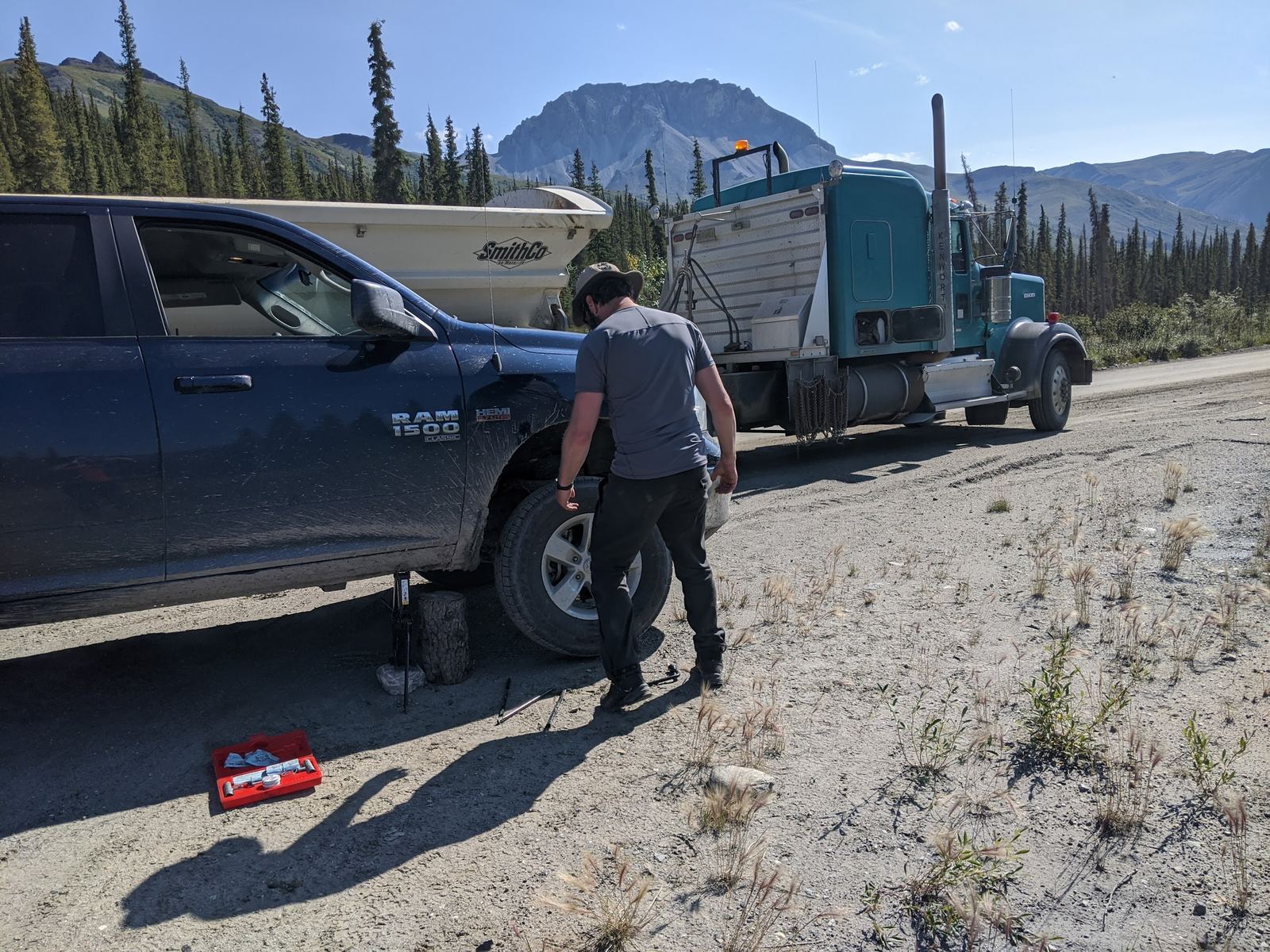
- How it works: Useful for lifting a vehicle out of a rut, changing a tire on uneven terrain, or even moving the vehicle sideways. High-lift jacks require careful handling and proper technique due to their inherent instability. often use a stable base plate and ensure the vehicle is chocked and stable before working under it. Source: Scoutofmind source.
Tire Repair Kit and Air Compressor
- What they are: A kit containing plugs and tools to repair punctures, and a portable 12V air compressor to reinflate tires.
- How they work: Alaskan roads are notorious for causing punctures. A repair kit can temporarily fix minor holes, while an air compressor is vital for reinflating after a repair or adjusting tire pressure for different terrains (e.g., deflating slightly for sand, then reinflating for pavement).
Communication Devices
- What they are: Beyond a cell phone, consider a satellite messenger (e.g., Garmin InReach, Spot X) or a satellite phone.
- How they works: These devices provide reliable communication in areas without cellular service, allowing you to send emergency messages, share your location, or even have two-way text conversations. This is a critical safety item for any remote Alaska road trip. For more information on satellite communication in remote areas, consult resources like REI's guide to satellite messengers.
Gloves, Headlamp, and Basic Tool Kit
- What they are: Durable work gloves, a powerful headlamp with extra batteries, and a basic set of wrenches, pliers, and screwdrivers.
- How they work: Gloves protect your hands during recovery efforts. A headlamp is crucial for working in low light or at night, which can happen unexpectedly. A basic tool kit can help with minor repairs or adjustments needed during a recovery.
Safe DIY Vehicle Recovery Techniques and Best Practices
Having the right gear is only half the battle; knowing how to use it safely and effectively is paramount. Rushing into a recovery attempt without proper planning can lead to further damage, injury, or worsening the situation. often prioritize safety for yourself, your passengers, and your vehicle. For detailed recovery techniques, reputable off-road resources like WARN's recovery basics guide offer valuable insights.
Assess the Situation Thoroughly
- Stop and Evaluate: Before doing anything, take a moment to calm down and assess the situation. Where exactly are you stuck? What type of terrain is it (mud, sand, snow, gravel)? Which wheels are stuck? Is the vehicle leaning dangerously?
- Identify Hazards: Look for hidden obstacles like rocks, tree stumps, or steep drop-offs. Note any potential environmental risks or approaching weather changes.
- Plan Your Escape: Determine the easiest and safest direction to move the vehicle. Often, going backward is simpler than trying to force it forward.
Utilizing Traction Boards
- Clear a Path: Use your shovel to clear away any material (mud, sand, snow) from around the stuck tires and in the direction you plan to move.
- Position Boards: Wedge the traction boards firmly under the leading edge of the drive tires, ensuring they have a good purchase on the ground and are angled to create a ramp.
- Gentle Acceleration: Get back in the vehicle, ensure it's in a low gear (or 4WD low if applicable), and apply gentle, steady throttle. Avoid spinning your wheels, which can melt plastic boards or dig you in deeper. Once the vehicle gains traction, continue slowly until you are on stable ground.
- Retrieve Boards: Don't forget to retrieve your boards! They can get flung out during recovery.
Shoveling and Creating a Path
- Digging Out: If deeply stuck, shovel material from in front of and behind the tires, and from under the vehicle's chassis if it's high-centered.
- Building a Ramp: Create a gradual ramp in the direction of escape using the cleared material or by compacting existing terrain. This reduces the angle the vehicle needs to climb.
Using a Recovery Strap or Kinetic Rope (with another vehicle)
- Secure Attachment Points: Only attach recovery straps to designated, factory-installed recovery points on both vehicles (tow hooks, rated shackles). rarely attach to bumpers, axles, or suspension components not designed for recovery, as they can fail catastrophically.
- Clear the Area: Ensure no one is standing between the two vehicles or in the potential path of the strap if it breaks. A good rule of thumb is to keep bystanders at least 1.5 times the length of the strap away.
- Gentle Pull: The recovery vehicle should move slowly and steadily, allowing the kinetic rope to stretch and build energy before gently pulling the stuck vehicle. Avoid sudden jerks.
- Dampener: Place a heavy blanket, jacket, or a purpose-built recovery dampener over the middle of the strap. This will help absorb energy and drop the strap to the ground if it breaks.
General Safety Protocols for Any Recovery
- Visibility: Wear bright clothing, especially if working near a road. Set up warning triangles or flares if safe to do so.
- Communication: If working with others, establish clear hand signals or use two-way radios.
- Vehicle Off and Chocked: If you're working outside the vehicle, ensure the engine is off, the parking brake is engaged, and the wheels are chocked (blocked) to prevent unintended movement.
- Gloves and Eye Protection: often wear sturdy gloves to protect your hands from sharp objects and friction. Eye protection is also advisable.
- Stay Clear of Tension: rarely stand in the line of a taut recovery strap, winch cable, or near a high-lift jack under load.
Prioritizing Safety and Knowing When to Seek Professional Help
While DIY recovery skills are invaluable for alaska road trip safety tips, there are times when self-reliance isn't enough, or the risks outweigh the benefits. Knowing your limits and when to call for professional assistance is a crucial part of responsible travel in Alaska.
Personal Safety Above All Else
Your personal safety and the safety of your passengers are the absolute top priority. If the situation feels too dangerous, if you are injured, or if weather conditions (e.g., rapidly dropping temperatures, blizzard) make it unsafe to work outside, stop your recovery efforts. It's better to wait for help than to risk injury or hypothermia.
When to Call for Professional Assistance
- Beyond Your Capabilities: If you've tried your recovery methods and are still stuck, or if the vehicle is in a precarious position (e.g., on a steep incline, near a drop-off, deep in water), it's time to call for professional help.
- Vehicle Damage: If your vehicle sustains significant damage during an attempt (e.g., broken axle, damaged steering), further DIY attempts could worsen the problem.
- Lack of Proper Gear or Knowledge: rarely attempt a recovery with inadequate or inappropriate gear, or if you are unsure of the correct techniques. Improvised recovery can be extremely dangerous.
- Injury or Medical Emergency: Any injury, even a minor one, should prompt a call for help. Alaska's remote nature means medical assistance can be far away.
- Dangerous Environment: If you're stuck in an active wildlife area, during a severe storm, or in an area with unstable ground, professional assistance is the safest option.
Preparing for an Extended Wait
Even with communication devices, help can take hours or even days to reach you in remote Alaskan locations. often carry an emergency kit that includes:
- Warm Clothing: Layers, hats, gloves, and waterproof outerwear, even in summer. Temperatures can drop unexpectedly.
- Food and Water: Enough non-perishable food and water for at least 2-3 days for all occupants.
- First Aid Kit: A comprehensive kit for treating injuries.
- Emergency Shelter: A tarp, emergency blanket, or sleeping bags.
- Fire Starter: Matches, lighter, or ferro rod for warmth and signaling.
- Signaling Devices: Whistle, signal mirror, or bright fabric.
Conserve fuel, stay with your vehicle (it's easier to spot), and keep yourself and your passengers warm and hydrated. These are crucial alaska road trip safety tips for any unexpected delay.
Environmental Responsibility
When performing any recovery, be mindful of the fragile Alaskan environment. Try to minimize your impact by avoiding unnecessary damage to vegetation or terrain. Pack out everything you pack in, including any debris from your recovery efforts. Leave no trace.
Frequently Asked Questions
What's the most common reason vehicles get stuck in Alaska?
Vehicles most commonly get stuck in Alaska due to soft shoulders on paved roads, deep gravel on unpaved routes, mud during spring thaw or heavy rains, and snow or ice during colder months. Drifting off the main track, especially on remote or less-maintained roads, is a frequent culprit. Being prepared for varied terrain is a key aspect of alaska road trip safety tips.
Can I use a regular tow strap for vehicle recovery?
While a regular tow strap can be used for light towing on a hard surface, it is generally not recommended for vehicle recovery from being stuck. Tow straps are designed for static pulls and lack the elasticity of a kinetic recovery rope. Using a non-elastic strap for a dynamic pull can create dangerous shock loads, potentially damaging both vehicles or causing the strap to snap and become a deadly projectile. often use a kinetic recovery rope or a purpose-built recovery strap for extracting a stuck vehicle.
How important is a satellite communication device for an Alaska road trip?
A satellite communication device (like a satellite messenger or phone) is extremely important, if not essential, for an Alaska road trip, especially if you plan to venture outside major towns or onto remote highways. Cellular service is unreliable or nonexistent in vast areas of the state. These devices provide a lifeline for emergency communication, allowing you to call for help, share your location, and stay in touch when traditional cell service fails. This is a critical component of comprehensive alaska road trip safety tips.
What should I do if I get stuck and don't have recovery gear?
If you find yourself stuck without proper recovery gear, the first step is to remain calm. Assess the situation for safety. If possible, try to gently rock the vehicle back and forth to gain a little momentum, but avoid excessive wheel spin. If you have floor mats, you can try placing them under the drive wheels for temporary traction (though this can damage the mats). If these attempts fail, your primary focus shifts to signaling for help and preparing for an extended wait. Use any communication device you have, activate your hazard lights, and stay with your vehicle. Conserve resources and ensure you have adequate warmth and supplies while waiting for assistance. This highlights why carrying essential gear is a top alaska road trip safety tip.
Are there specific times of year when getting stuck is more likely?
Yes, certain times of year present higher risks for getting stuck. Spring (April-May) is particularly challenging due to thawing permafrost and heavy mud on unpaved roads. Late fall and winter (October-March) bring snow, ice, and frozen ground, increasing the risk of sliding off roads or getting stuck in snowdrifts. Even summer (June-September) can see heavy rains that turn gravel roads into muddy traps. often check seasonal road conditions and weather forecasts for 2026 before and during your travel, and adjust your preparedness accordingly.

See a real Alaska itinerary before you spend a dollar
A real 3-day plan with driving times, lodging picks, and a daylight chart — free, in your inbox.
One email. No spam. Unsubscribe anytime. Or view it right now — no email needed ↗
Ready for the full plan? Get your custom itinerary — from $197 · 5-day delivery →