Finding reliable alaska road trip lodging recommendations requires understanding that outside Anchorage and Fairbanks, highway room inventory is strictly limited and spaces book out months in advance. Securing the right accommodations along your driving route determines not just where you sleep, but how far you can safely drive each day without risking exhaustion on remote northern corridors.
Whether you are planning a bucket-list retirement vacation or a multi-generational family journey, independent travel across Alaska requires precise basecamp selection. Choosing the right cabins, historic roadhouses, and boutique properties prevents marathon driving days, minimizes unpacking fatigue, and puts you in position for wildlife excursions and glacier tours before the tour buses arrive.
+-----------------------------------------------------------------------------------+
|                        ALASKA LODGING LOGISTICS AT A GLANCE                       |
+----------------------+--------------------+-------------------+-------------------+
| Region / Corridor    | Primary Stay Types | Key Bottlenecks   | Ideal Booking Window|
+----------------------+--------------------+-------------------+-------------------+
| Kenai Peninsula      | Coastal Inns,      | Homer Spit,       | 7–10 months ahead |
| (Seward & Homer)     | River Cabins       | Seward Harbor     | (Autumn / Winter) |
+----------------------+--------------------+-------------------+-------------------+
| Parks Highway        | Timber Lodges,     | Denali Canyon &   | 8–10 months ahead |
| (Talkeetna & Denali) | Riverside Cabins   | Carlo Creek       | (Autumn / Winter) |
+----------------------+--------------------+-------------------+-------------------+
| Copper River &       | Historic Roadhouses| Glennallen Junction| 6–8 months ahead |
| Richardson Highway   | Mountain Chalets   | & Valdez Harbor   | (Winter / Spring) |
+----------------------+--------------------+-------------------+-------------------+
The Reality of Alaska Highway Accommodations: Scarcity, Geography, and Pacing
Driving in Alaska is fundamentally different from a road trip in the Lower 48. In standard interstate travel, missing an exit or driving an extra hour simply means pulling into another cluster of brand-name chain hotels with 200 rooms each. In rural Alaska, standard highway exits do not exist. Once you leave the municipal footprints of Anchorage and Fairbanks, driving corridors stretch across vast wilderness where settlements are separated by 50 to 100 miles of uninhabited terrain.
This geographic isolation creates severe structural scarcity:
- Micro-inventories: Many of the best-reviewed properties along the highway system are family-run lodges or cabin clusters featuring between 6 and 20 total guest units.
- Tour operator allocations: Commercial cruise lines and packaged bus tours reserve large blocks of rooms at premier roadside hotels years in advance, leaving limited nightly allocations for independent self-drive visitors.
- Limited infrastructure: In frontier towns, utility access, septic capacity, and seasonal staffing limits prevent new hotels from expanding quickly.
Lower 48 Interstate Corridor:
[Town A (400 Rooms)] --- 10 miles ---> [Town B (350 Rooms)] --- 10 miles ---> [Town C (500 Rooms)]

Alaska Highway Network:
[Anchorage] ---------------- 115 miles ----------------> [Seward (Limited Harbor Rooms)]
                        (No major hotel chains)
Your booking rhythm dictates your daily safety. With summer daylight lasting 18 to 22 hours across the state, it is easy to succumb to driving fatigue. The midnight sun frequently tricks drivers into pushing past their physical limits. Planning daily segments around pre-secured accommodations ensures you are off the road before driver fatigue sets in.
Furthermore, dynamic road conditions make rigid, high-mileage schedules dangerous. Seasonal highway construction, pilot cars, gravel-resurfacing zones, and wildlife bottlenecks can turn a projected three-hour drive between Wasilla and Talkeetna into a five-hour delay. You can monitor active roadwork and seasonal highway alerts via the Alaska 511 Travel Info system. If your next bed is 200 miles down the road and your lodging provider enforces an 8:00 PM check-in cutoff, a single road delay can disrupt your entire schedule. To plan your driving segments properly, review our guide to the Seward Highway route before locking in non-refundable rooms.
Core Alaska Road Trip Lodging Recommendations by Major Route
Selecting lodging based on strategic positioning along primary highways prevents backtrack mileage and optimizes your daily pacing. Below are vetted lodging corridors across the state's main driving routes.
                 PARKS HWY                     GLENN & RICHARDSON HWY
                 [Healy / Denali]              [Matanuska Glacier]
                        |                               |
                 [Carlo Creek]                 [Copper Center]
                        |                               |
                 [Talkeetna]                   [Valdez Harbor]
                        \                              /
                         \-----> [ANCHORAGE] <--------/
                                      |
                                      | SEWARD HWY
                                      v
                               [Cooper Landing]
                                      |
                               [Seward Harbor]
                                      |
                               [Homer Spit]
Seward Highway & Kenai Peninsula
The Kenai Peninsula offers some of the most diverse coastal and rainforest ecosystems in the state. Accommodations here fill up fastest due to their accessibility from Anchorage.
- Seward Waterfront and Small Boat Harbor: Staying within walking distance of the Seward Small Boat Harbor allows you to wake up and walk directly to morning Kenai Fjords boat excursions without fighting for daily harbor parking. Look for historic harbor-front inns and independent boutique hotels along 4th Avenue and the waterfront boardwalk.
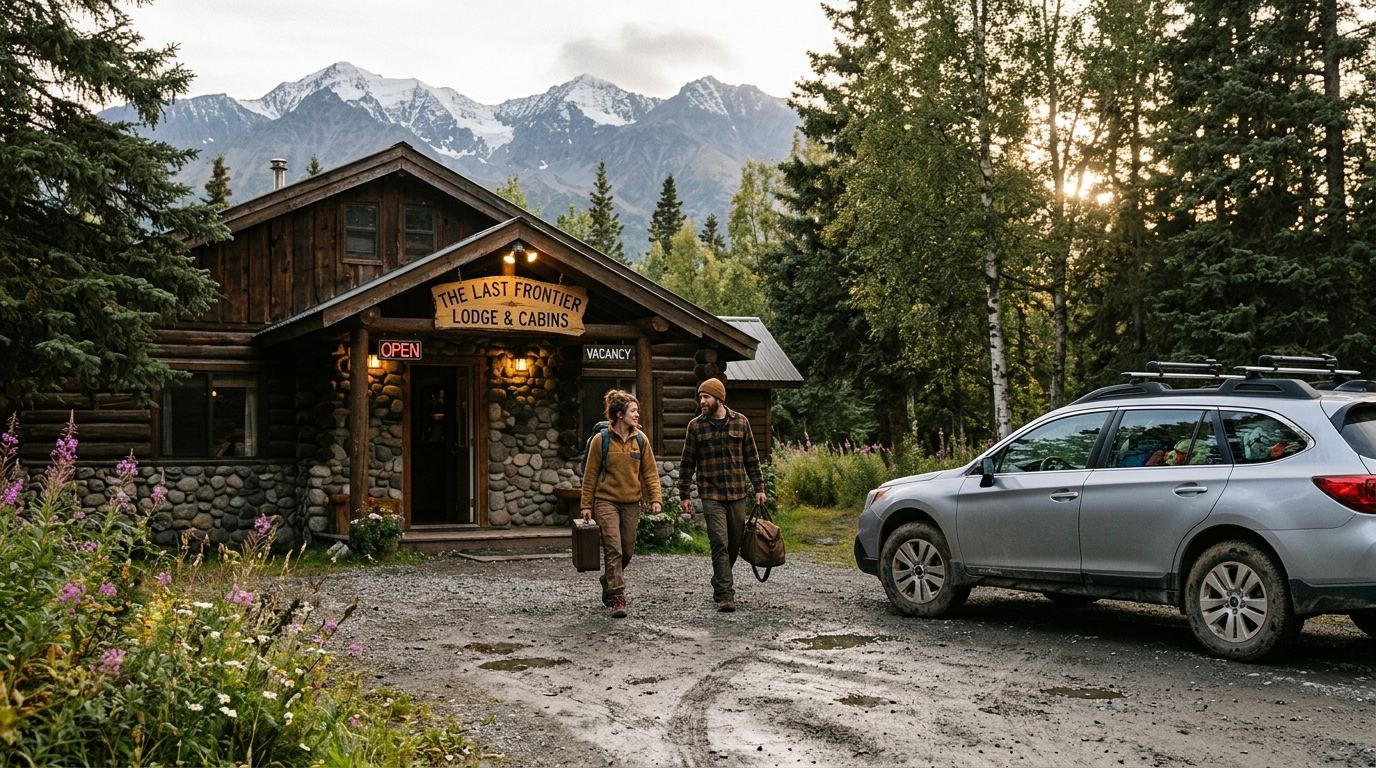
- Cooper Landing Wilderness Cabins: Situated along the upper Kenai River where Kenai Lake empties into turquoise glacier water, Cooper Landing serves as a tranquil, wooded midpoint. Hand-crafted log cabins nestled along the Sterling Highway offer direct river access, drift-boat launches, and immediate proximity to the Russian River Falls trail.
- Homer Spit and Bay-View Properties: Homer sits at the southern terminus of the Sterling Highway. You must choose between staying directly on the active marine boardwalk of the Homer Spit or sleeping on the bluff overlooking Kachemak Bay. Spit properties offer immediate access to charter fishing vessels and water taxis, while bluff accommodations provide quiet, elevated views of active volcanoes across the water.
Parks Highway & Denali Corridor
The George Parks Highway connects Anchorage to Fairbanks, running through the Mat-Su Valley and skirting the base of the Alaska Range. Finding comfortable, strategic bases along this corridor is essential for exploring the national park.
- Talkeetna Historic Basecamps: Located at Milepost 98.7 of the Parks Highway, historic Talkeetna preserves turn-of-the-century mining and mountaineering heritage. Opt for historic downtown inns near Main Street or tucked-away chalets on the Talkeetna Spur Road. Staying here positions you for early-morning Denali flightseeing tours while avoiding mainstream highway motel chains.
- Situated around Milepost 224 on the Parks Highway, Carlo Creek sits approximately 13 miles south of the park entrance. This corridor features riverside log cabins, locally owned roadhouses, and artisanal bakeries tucked into the spruce forest. Carlo Creek provides a serene alternative to the high-density hotel strip immediately adjacent to the park gates. Source: Nps source.
- Situated around Milepost 224 on the Parks Highway, Carlo Creek sits approximately 13 miles south of the park entrance. It serves as an accessible basecamp with full grocery, fueling, and dining services. Source: Nps source.
When planning stays near the park, keep in mind that the Denali Park Road was closed to private vehicles past Mile 43 (Polychrome Pass) through the 2026 season for bridge reconstruction; access past Mile 43 returns for the 2027 season. You can verify current access conditions directly through the National Park Service Denali conditions update. If you are structuring a drive northward, consult our detailed breakdown of the drive from Anchorage to Denali for accurate highway mileposts.
Glenn & Richardson Highways
The eastern highway loop traverses remote alpine passes, sweeping glacier valleys, and dramatic coastal fjords.
- Matanuska Glacier Corridor (Mile 100 Glenn Highway): High-elevation mountain chalets and cliffside cabins line the Glenn Highway between Palmer and Eureka Summit. Choosing a property with panoramic deck views of the Matanuska Glacier terminus lets you experience raw icefield vistas without the midday tourist crowds.
- Copper Center Historic Roadhouses: Located near the junction of the Glenn and Richardson Highways, Copper Center serves as a gateway to Wrangell-St. Elias National Park and Preserve. Staying in an authentic, multi-generational roadhouse along the Klutina River immerses you in early-1900s gold rush history while positioning you for park explorations (consult the official National Park Service Wrangell-St. Elias trip planning guide for seasonal visitor center operations).
- Valdez Waterfront Accommodations: Reaching Valdez requires crossing Keystone Canyon and driving past Worthington Glacier via Thompson Pass. Book a harbor-view hotel or a self-contained bayfront bungalow so you can watch sea otters and commercial fishing tenders return to port each evening.
Along these remote interior corridors, you will balance historic roadhouse architecture with modern boutique rentals. Historic lodges prioritize communal atmosphere, pioneer artifacts, and hand-cooked meals, whereas modern modular rentals offer reliable heating, soundproofing, and updated electrical grids.
Types of Stays: Wilderness Cabins, Historic Roadhouses, and B&Bs
Alaska’s accommodation landscape diverges sharply from standard commercial hotel brands. Understanding the physical layout, amenity limitations, and operational styles of local properties prevents unpleasant surprises at check-in.
+---------------------------------------------------------------------------------------------------+
|                              ACCOMMODATION CHARACTERISTICS COMPARISON                             |
+----------------------+--------------------+--------------------+-------------------+--------------+
| Property Category    | Privacy Level      | Bathroom Standard  | Wi-Fi Expectation | Food Service |
+----------------------+--------------------+--------------------+-------------------+--------------+
| Historic Roadhouse   | Moderate to Low    | Shared or Private  | Slow / Satellite  | Family-Style |
|                      | (Thin timber walls)| En-Suite           | (Communal Area)   | On-Site Cafe |
+----------------------+--------------------+--------------------+-------------------+--------------+
| Full-Service Lodge   | High (Detached)    | Private En-Suite   | High-Speed / Starlink | Full-Board or |
|                      |                    | (Modern Plumbing)  |                   | Fine Dining  |
+----------------------+--------------------+--------------------+-------------------+--------------+
| Self-Contained Cabin | Complete Privacy   | En-Suite or Out-   | Variable          | Self-Catered |
| (Modern or Dry)      |                    | house / Dry        | (Cellular Backup) | (Kitchenette)|
+----------------------+--------------------+--------------------+-------------------+--------------+
| Traditional B&B      | Moderate           | Private or Semi-   | Moderate / Home   | Cooked Fresh |
|                      | (Home-Style Rooms) | Private Bath       | Network           | by Host      |
+----------------------+--------------------+--------------------+-------------------+--------------+
Historic Alaskan Roadhouses
Originally built every 15 to 20 miles along horse, dog sled, and wagon trails, roadhouses served as vital shelter, supply posts, and communication points.
- The Experience: These properties feature heavy log construction, rustic dining rooms, wood stoves, and extensive private collections of frontier antiques.
- The Reality: Acoustic isolation is rare. Timber frame walls transmit floorboard creaks and conversational audio between rooms. While select historic roadhouses have renovated suites with private baths, many rooms retain traditional shared hallway bathrooms. They are ideal for travelers who value heritage, regional conversation, and home-style baking over ultra-modern luxury.
Self-Contained Dry Cabins vs. Luxury Wilderness Lodges
Independent cabins span the entire spectrum from off-grid, primitive structures to upscale eco-lodges.
- Dry Cabins: Across interior Alaska, you will frequently see rental listings for "dry cabins." This means the cabin has an electrical hookup or generator, but no indoor running water or indoor flush toilets. Guests use a clean, maintained outhouse and collect water from an on-site tank or communal bathhouse. While cost-effective for solo adventurers, dry cabins are rarely suitable for travelers seeking en-suite comfort.
- Full-Service Wilderness Lodges: Luxury wilderness lodges combine secluded, raw Alaskan settings with private en-suite tiled bathrooms, heated flooring, premium bedding, and on-site culinary dining. Reaching some of these properties requires crossing a lake or taking a short gravel access road, making them exceptional bases for couples and retirees looking to disconnect without sacrificing comfort.
Traditional Bed-and-Breakfasts
Independent B&Bs throughout Homer, Palmer, Fairbanks, and Seward offer immediate access to local intelligence. Alaskan B&B hosts are often retired bush pilots, commercial fishermen, or long-time state residents who share actionable driving advice, unlisted wildlife viewing points, and real-time road conditions over breakfast.
Essential Amenities Checklist to Confirm Before Booking
Before finalizing reservations along secondary highways, verify that your chosen properties provide these non-negotiable features:
- Blackout Window Treatments: Midsummer daylight shines through thin window shades at 2:00 AM. Ensure your room has heavy blackout curtains or roller shades.
- Dedicated Private Bathrooms: Read room-tier descriptions carefully to confirm the bathroom is inside your suite rather than down the hall.
- Starlink or Fiber Wi-Fi: If you need to monitor travel routes or keep in touch with family, verify whether the lodge uses modern low-earth orbit satellite networks or legacy, weather-vulnerable dial-up satellites.
- On-Site Dining or Kitchenettes: Remote highway lodges often operate beyond town limits where all commercial restaurants close by 8:00 PM. Confirm the property has an open dining room or a room with a refrigerator and prep counter.
Regional Alaska Road Trip Lodging Recommendations: Strategic Hubs vs. Remote Stops
A frequent mistake when planning a route is the "one-night-everywhere" itinerary. Moving to a new hotel every single night turns your vacation into an exhausting cycle of packing suitcases, checking out by 10:00 AM, driving with all your luggage in the vehicle, and checking in again at 4:00 PM.
ONE-NIGHT FRAGMENTED PATTERN (High Fatigue):
Anchorage (1 Night) -> Talkeetna (1 Night) -> Denali (1 Night) -> Fairbanks (1 Night) -> Paxson (1 Night) -> Valdez (1 Night)

TWO-NIGHT REGIONAL HUB STRATEGY (Low Fatigue & Flexible):
Anchorage Base (1 Night) -> Denali Corridor Hub (2 Nights) -> Mat-Su/Palmer Hub (2 Nights) -> Seward Harbor Hub (2 Nights)
The Tactical Advantage of Two-Night Hub Stays
Structuring your lodging around multi-night hub stays gives you operational buffers against unpredictable weather. If bad weather grounds your flightseeing tour in Talkeetna or cancels your Kenai Fjords catamaran tour in Seward on Day 1, having a second night at that same lodge allows you to reschedule for the following morning without having to rearrange all your downstream bookings.
Hub bases like Seward, Cooper Landing, and Talkeetna provide stable access to grocery markets, diverse dining, vehicle fueling, and outdoor outfitters. From a single cabin in Cooper Landing, for instance, you can easily explore Kenai, Soldotna, and Homer via day trips without moving your luggage. For route pacing ideas that take advantage of these hubs, see our comprehensive Kenai Peninsula Loop breakdown.
Trailhead/Glacier Lodges vs. Established Towns
Choosing whether to sleep adjacent to a wilderness trailhead or in an established town comes down to a clear trade-off:
- Trailhead Lodges: Placing yourself at the foot of a glacier or mountain pass lets you hit the trail at 6:30 AM before tour buses arrive. You experience absolute silence and early morning wildlife activity. However, food choices are strictly limited to the lodge’s fixed-menu kitchen.
- Established Gateway Towns: Staying in towns like Seward, Homer, or Palmer gives you a selection of five to ten restaurants, local bakeries, tackle shops, fuel stations, and walk-in medical clinics. For couples and retirees who prefer diverse dinner options, gateway towns are generally more comfortable.
Shoulder Season Operating Windows (May & September)
If you drive during the shoulder season, keep seasonal operating schedules in mind:
- Opening Dates: Many seasonal lodges outside Denali and along the Denali Highway do not open until May 15 to May 25.
- Closing Dates: In the fall, remote lodges often shut their water systems down and close immediately after Labor Day weekend (first week of September) to prevent frozen plumbing. Always verify whether off-peak heating is fully operational in May and September. For full seasonal breakdowns, review our guide to traveling Alaska during summer months.
Booking Timelines and Cancellation Policies for Summer 2026
Summer accommodation capacity in Alaska is strictly constrained by a short 100-day peak operational window. As a result, standard last-minute booking strategies will leave you with substandard rooms or multi-hour detours.
RECOMMENDED BOOKING HORIZON (SUMMER SEASON):

[October – December] --------> Book Denali Gateway & Seward Harbor Rooms (High Demand)
[January – February] --------> Book Talkeetna, Homer Spit, & Matanuska Cabins
[March – April] ------------> Finalize Anchorage & Fairbanks Airport Transit Hotels
[May – August] --------------> Peak Summer Travel Execution (Highway Inventory Sold Out)
Lead-Time Milestones for Summer 2026
- Denali and Seward (8 to 10 Months Ahead): For peak summer travel in June, July, and August 2026, premier waterfront properties in Seward and boutique cabins near Denali should ideally be booked 8 to 10 months in advance.
- Talkeetna and Homer (6 to 8 Months Ahead): Desirable bay-view chalets, remote wilderness river cabins, and central downtown properties should be locked down 6 to 8 months ahead of departure.
- Anchorage and Fairbanks Urban Centers (3 to 5 Months Ahead): Standard chain hotels in larger cities have higher capacity and can safely be booked in early spring.
Understanding Independent Lodge Deposit and Cancellation Structures
Unlike national hotel chains that permit free cancellation up to 24 hours before arrival, independent Alaskan properties operate under strict financial policies:
- High Initial Deposits: Independent lodges routinely require a many to many deposit at the time of booking.
- Extended Cancellation Windows: Full refunds typically require 30 to 60 days advance notice. Cancellations made inside 30 days of arrival often forfeit the entire deposit unless the operator is able to re-book the room.
- Remote Weather Realities: Mountain passes and coastal highways can experience seasonal rockslides or flood washouts. Lodge cancellation policies generally state that weather disruptions, airline cancellations, and road closures are outside their financial liability.
Protect your lodging investment by using a comprehensive travel insurance policy that includes trip interruption, non-refundable lodging reimbursement, and remote medical evacuation coverage.
DIY Lodging Spreadsheet Overload vs. Done-For-You Route Curation
Planning your own Alaska road trip lodging often leads to research fatigue. Independent travelers regularly find themselves managing 40 open browser tabs, cross-referencing listings across Airbnb, VRBO, direct lodge websites, dynamic Google Maps drive calculators, and seasonal ferry timetables.
DIY LODGING RESEARCH FRICTION:
[40 Browser Tabs] ---> [Conflicting Drive Times] ---> [Mismatched Check-in Cutoffs] ---> [Non-Refundable Route Lock-in]

DONE-FOR-YOU ROUTE CURATION:
[Custom Route Plan] ---> [Curated Lodging Recommendations] ---> [Direct Booking Links] ---> [You Control Reservations]
A common hazard of DIY planning is booking rooms with mismatched check-in cutoffs and unrealistic driving estimates. When you rely solely on online mapping tools, you miss local context like gravel road slowdowns, construction pilot cars, wildlife viewing traffic, and seasonal ferry connection buffers. Booking an isolated cabin with an 8:00 PM check-in cutoff 250 miles away from your morning wildlife cruise creates high stress on the road.
This is where specialized route planning delivers practical value. Alaska Road Trip hand-picks lodging and gives you direct booking links, but you book it yourself — it does not make reservations on your behalf, so you keep full control and flexibility. This model ensures you hold the direct reservation, manage your own rewards accounts, and retain direct communication with the property manager.
Every itinerary is hand-built by a named founder who has driven thousands of Alaska miles across multiple seasons. Rather than relying on static algorithms or generic templates, your route balances real-world drive times with vetted property recommendations matched to your travel pace.
The service operates on a clear, flat one-time fee structure:
- Lite Tier (a measurable budget): Covers routes spanning 1 to 5 days.
- Standard Tier (a measurable budget): Covers complete driving routes up to 14 days.
- Plus Tier (a measurable budget): Designed for extended expeditions spanning 14 or more days.
- Concierge Tier (a measurable budget): Adds a live, 30-minute founder consultation call to review your customized route and verify critical logistics.
All itineraries are delivered as clean, printable, offline-ready PDF packages in 3 to 5 business days and include 1 to 2 revision rounds. If the itinerary does not fully meet your expectations, every order is backed by a published 14-day money-back guarantee, full refund, no questions asked. Discover how a custom route simplifies your journey on our itinerary planning page, and read our clear 14-day refund policy.
Essential Packing and Comfort Checklist for Alaska Accommodations
Preparing for the quirks of rural Alaskan lodging ensures a comfortable stay regardless of property age or location. Pack these practical items in your carry-on luggage:
- Contoured Blackout Sleep Masks: Even properties with heavy drapes can let ambient midnight sun glow through at the edges. A molded eye mask is essential for quality sleep.
- Portable White Noise Machine or High-Grade Earplugs: Historic log roadhouses and timber cabins feature natural wood construction that easily transmits footstep and hallway sound.
- Slip-On Waterproof Footwear: If you stay in a cabin with a detached private bathhouse or want to step out onto a dew-covered cedar deck to view wildlife at 5:00 AM, slip-on rubber shoes (such as classic deck boots) keep your socks dry.
- Multi-Plug Travel Power Strip: Historic wilderness properties and remote cabins often have only one or two usable electrical wall outlets in the bedroom. A compact outlet strip lets you charge your phone, camera batteries, tablet, and GPS unit simultaneously without hunting for plugs behind heavy timber furniture.
- Printed Offline PDFs and Hardcopy Route Maps: Cellular reception frequently drops between mountain passes. often keep a printed copy of your lodging confirmations, physical check-in instructions, door keypad codes, and route maps in your glove compartment.
Frequently Asked Questions
When should I book lodging for a summer 2026 Alaska road trip?
For peak summer travel between June and August 2026, you should reserve lodging 6 to 9 months in advance. High-demand hubs such as Seward, Homer, and the Denali National Park corridor experience near-total occupancy by early spring. Securing independent cabins, boutique lodges, and harbor-front hotels 6 to 9 months before departure ensures access to the best properties and daily rates.
Do most Alaska road trip hotels and lodges offer private bathrooms and Wi-Fi?
Modern hotels, boutique inns, and full-service lodges feature private en-suite bathrooms and high-speed satellite Wi-Fi (such as Starlink). However, historic roadhouses and primitive dry cabins may utilize shared hallway bathrooms or outdoor facilities. often verify the property's specific amenities before booking if a private bathroom and fast internet connection are essential for your party.
Is it better to stay inside Denali National Park or in nearby gateway communities?
Private vehicle access is restricted inside Denali National Park, and road reconstruction at Mile many limits vehicle traffic through 2026. As a result, most independent drivers stay in gateway communities along the Parks Highway. Carlo Creek (13 miles south) and Healy (11 miles north) offer quieter cabin and lodge alternatives to the busy commercial hotels directly outside the main park gates.
What happens if construction or road closures delay my arrival at a booked lodge?
Rural Alaskan accommodations often have strict evening check-in cutoffs and limited front-desk hours. If highway construction, wildlife delays, or weather conditions slow your progress, call the property operator as soon as possible while you have cellular signal. Most independent lodge hosts will accommodate late arrivals by providing a lockbox code or leaving physical keys and check-in instructions at the door.
Ready to bypass hours of hotel research and avoid sold-out dead ends? Get a custom, day-by-day itinerary hand-built by a founder with hand-picked lodging links tailored to your pace.
See a real Alaska itinerary before you spend a dollar
A real 3-day plan with driving times, lodging picks, and a daylight chart — free, in your inbox.
One email. No spam. Unsubscribe anytime. Or view it right now — no email needed ↗
Ready for the full plan? Get your custom itinerary — from $197 · 5-day delivery →