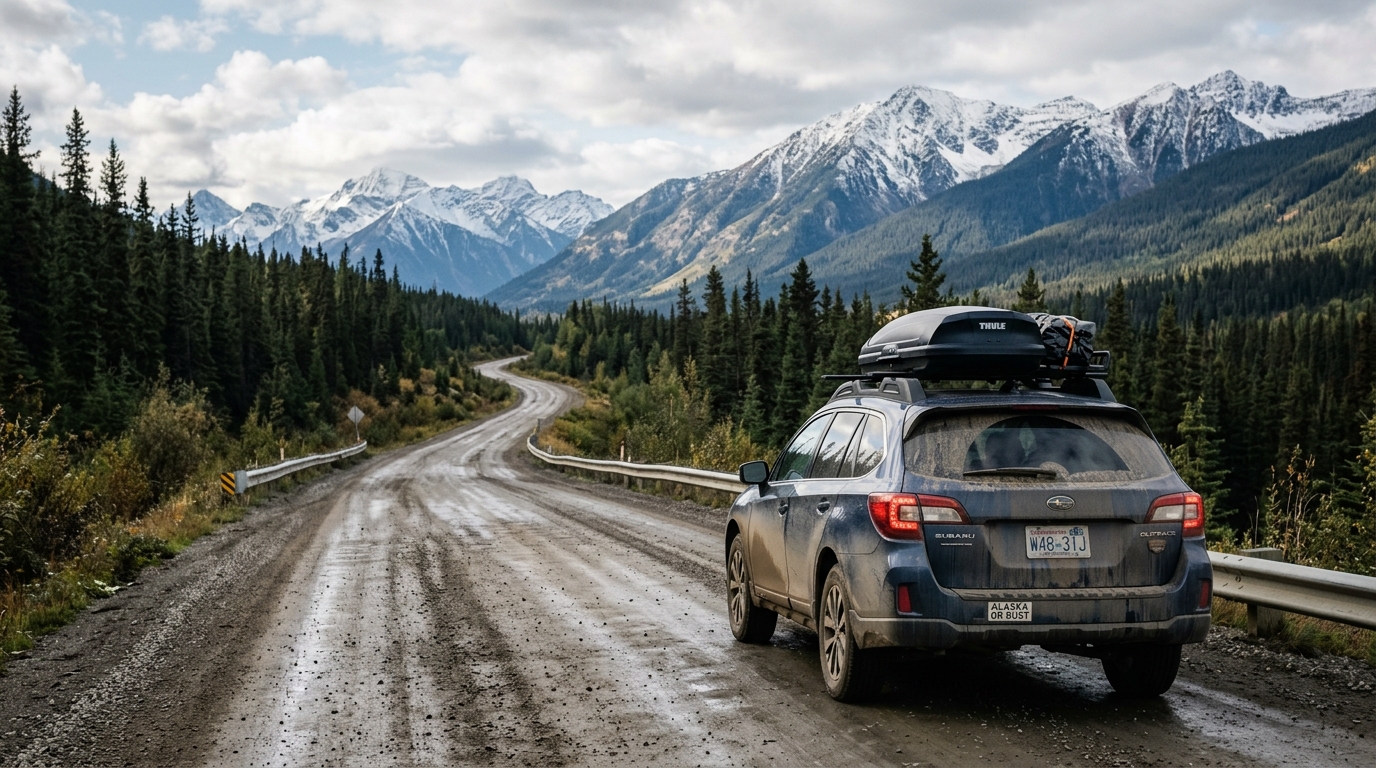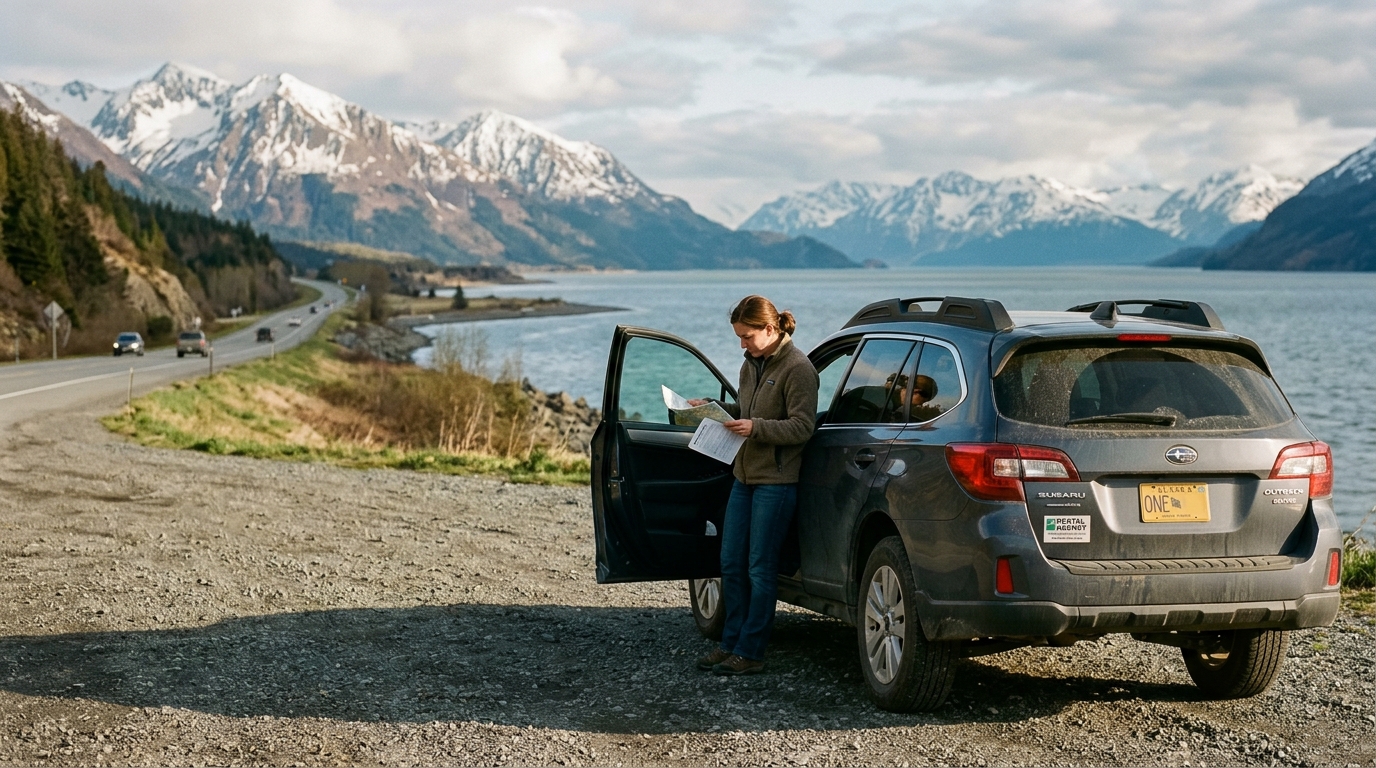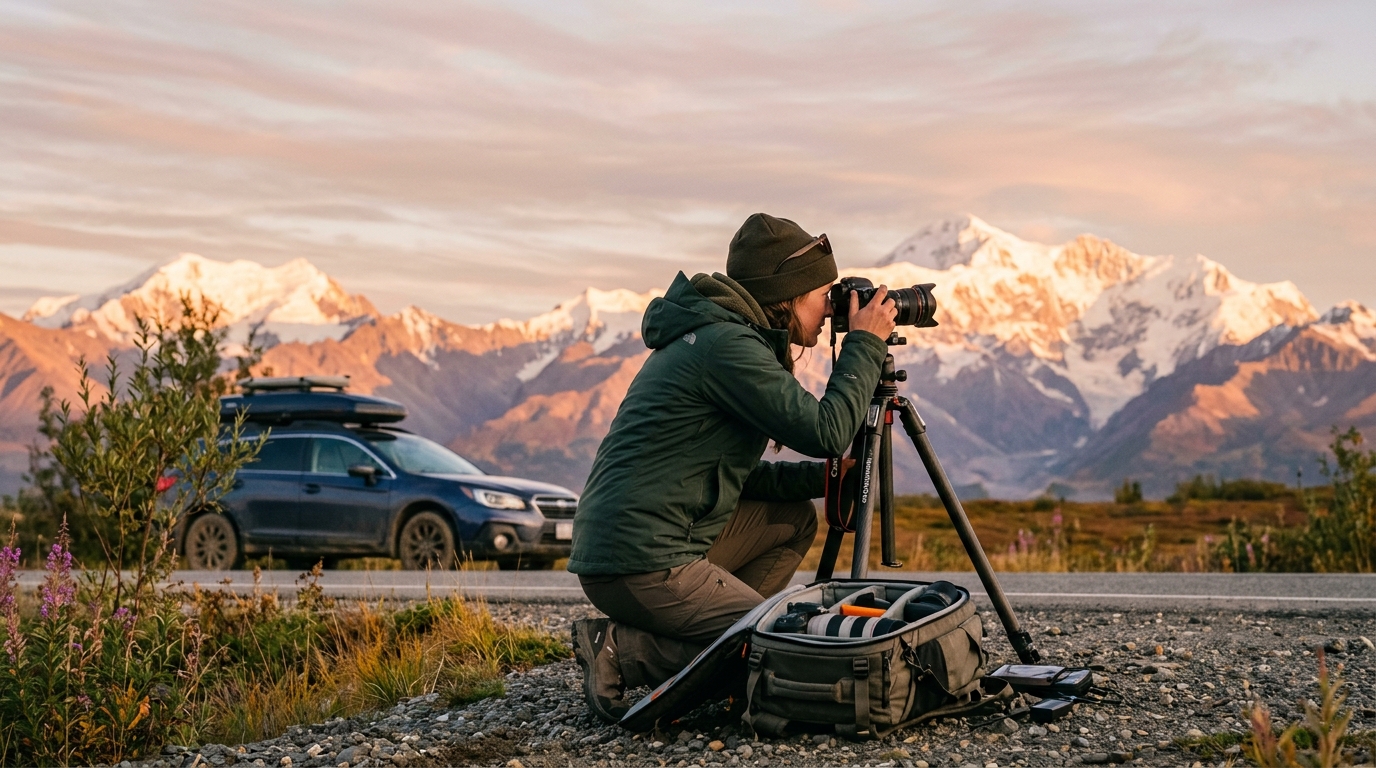

Technically, the summit of Denali is visible from a small handful of elevated vantage points around Anchorage on exceptionally clear days. However, if you are planning a standard vacation timeline, the practical answer to can you see Denali from Anchorage is almost certainly no, and you should plan on driving north if seeing North America's tallest peak is on your bucket list.
Denali sits roughly 150 air miles north-northwest of downtown Anchorage. Between the city and the 20,310-foot summit lie the broad flats of the Susitna River valley, the southern edges of the Alaska Range, and volatile marine air masses rolling off Cook Inlet. For first-time visitors building a self-drive trip, treating Anchorage as your mountain-viewing base usually leads to disappointment. If you want a genuine, towering view of the mountain, you need to budget driving time along the George Parks Highway (Alaska Route 3) toward Talkeetna and Denali State Park.
The Short Answer: Can You See Denali from Anchorage?
When travelers ask, "can you see Denali from Anchorage?" they are often looking at a promotional postcard or a map showing a straight line of sight across south-central Alaska. While the top of the mountain can peak above the horizon from high points like Point Woronzof or the Glen Alps Trailhead in the Chugach foothills, you will not step out of Ted Stevens Anchorage International Airport or stroll down 4th Avenue and see a giant mountain dominating the skyline.
The geometry explains why. At 150 miles away, atmospheric haze, humidity, and the curvature of the earth diminish the mountain's apparent height. More importantly, intervening ridgelines and constant coastal weather systems routinely block the line of sight. When the mountain does reveal itself from the city, long-time Alaskans say "the mountain is out." The phrase itself exists precisely because it happens so infrequently. If locals treat a clear view from the coastal trail as a notable event, an out-of-state visitor spending two nights in town cannot count on catching it.
This reality matters because trip planning requires deliberate trade-offs. A short itinerary focused exclusively on Anchorage, Girdwood, and the Kenai Peninsula will likely produce zero sightings of Denali. If seeing the mountain matters to your travel group, you cannot treat it as an Anchorage day-trip afterthought; you must deliberately route your vehicle north.
Why Denali Visibility from Anchorage Is So Unreliable
Understanding denali visibility from anchorage requires looking at geography and atmospheric dynamics rather than sheer mountain elevation.
Even on an afternoon with cloudless blue skies over downtown Anchorage, you are looking through 150 miles of dense, lower-atmosphere air. Road dust, moisture from the inlet, and summer wildfire smoke frequently stack up in the Susitna Basin. Under those conditions, a 20,310-foot peak does not look like an imposing granite citadel. It appears as a pale, low-contrast white smudge on the far northern horizon—easy to mistake for a low-hanging cumulus cloud.
Cloud ceiling is the primary gatekeeper. Denali and the surrounding peaks of the Alaska Range are massive enough to generate localized weather patterns. According to the National Park Service guide on photographing Denali, cloud cover and severe mountain-generated weather mean the summit is obscured by clouds on the majority of summer days. Climate observations from the National Park Service weather and climate monitoring in Denali show that localized mountain storms frequently build along the Alaska Range even when coastal valleys enjoy clear skies. A completely clear day in Anchorage often coincides with dense storm clouds banked directly against the south face of the mountains.
Seasonal patterns also dictate visibility:
- April to May: Air is generally drier and crisper, and seasonal snow cover on surrounding ridges provides high visual contrast before summer haze rolls in. Road conditions can be slushy, but sky clarity is often favorable.
- June to August: This brings peak daylight and accessible hiking trails, but warm temperatures pull moisture off the Gulf of Alaska through Cook Inlet. Marine clouds push up the river valleys, frequently shutting down long-range visibility from Anchorage.
- September: As temperatures drop, coastal moisture decreases, often yielding crisp fall mornings with clear mountain views. However, daylight shrinks rapidly and freezing temperatures return to higher highway elevations.
The practical takeaway is straightforward: treat any glimpse of Denali from Anchorage as an unexpected travel bonus. If your vacation goal includes seeing the mountain clearly, you must point your rental vehicle north toward dedicated viewpoints.
The Best Places to See Denali on an Anchorage-Based Trip
To move past distant horizon-scanning and secure a true view of the Alaska Range, you have to hit the road. Here are the best places to see denali ranked by realistic driving effort, highway access, and visual payoff.
1. Talkeetna (Roughly 2 to 2.5 Hours North)
Talkeetna is the classic first stop for mountain viewing. Situated at the confluence of three glacial rivers, the town offers an unobstructed look straight up the Susitna drainage directly toward the south face of Denali, Mount Foraker, and Mount Hunter. The public riverfront park in downtown Talkeetna and the broad gravel bars along the river provide wide, low-elevation sightlines. Because Talkeetna is located at Mile 98.7 of the Parks Highway spur, it fits smoothly into a single-day driving plan without requiring an exhausting haul all the way to the national park gate.
2. Denali State Park Overlooks (Parks Highway Mileposts 135–163)
For roadside road-trippers, the elevated pullouts within Denali State Park offer some of the highest-percentage views anywhere on Alaska's road system. Unlike the lower river valley in Talkeetna, the Parks Highway climbs along the Curry and Kesugi Ridges here. Key stopping points include:
- Denali View South (Mile 135.2): A large paved rest area with interpretive signs, viewing platforms, and clear lines of sight across the Chulitna River toward the mountain's vertical relief.
- Denali View North (Mile 162.7): Located higher along the highway grade, bringing you roughly 35 miles closer to the peak than Talkeetna. On a clear day, the full scale of the massif is immediately obvious from the parking area.
3. Denali National Park Entrance and the Park Road (Mile 237)
Driving to the entrance of Denali National Park near Healy puts you close to the park boundaries, but it introduces a major catch: you cannot see the mountain from the park entrance, visitor center, or the surrounding commercial lodging strip. The lower peaks of the Outer Range completely block the view from the highway corridor.
To see the mountain inside the park, you must travel deep along the Park Road via the transit or tour bus system. Travelers planning a trip must note that operational closures remain in effect. Per the National Park Service Denali operating hours and seasons schedule, access along the Denali Park Road is currently restricted due to the ongoing Pretty Rocks landslide repair project. The road remains closed to public transit past Mile 43, which affects access to classic western vista points like the Eielson Visitor Center (Mile 66) and Wonder Lake (Mile 85). Because of this limitation, the elevated viewpoints along the Parks Highway in Denali State Park often provide more consistent mountain viewing for self-drive travelers than the park entrance itself.
Building the Drive North Into Your Route (Without Wasting a Day)
Many travelers try to squeeze a Denali viewing excursion into a casual afternoon while staying in an Anchorage hotel. In practice, driving from Anchorage to Talkeetna takes roughly 2 to 2.5 hours each way under clear summer traffic. Driving all the way to the Denali National Park entrance requires 4.5 to 5 hours of continuous wheel time in one direction, without factoring in construction stops or pullout breaks.
Attempting to do this as a single-day round trip from Anchorage turns your vacation into an exhausting 10-hour driving marathon behind slow motorhomes. Instead, you need to sequence the northbound leg as an intentional route transition. If you are mapping your driving segments, consult our detailed Anchorage to Denali drive guide for specific mile-by-mile rest stops, fuel points, and construction bottlenecks.
Consider these sequencing rules when building your itinerary:
- Place the northern leg early: Do not save your mountain-viewing drive for the final day before your flight out of Anchorage. If cloud cover rolls in, an itinerary with no room to move leaves you empty-handed. Placing the northbound leg early allows you to slide your driving segments around if weather fronts shift.
- Secure an overnight base north of Wasilla: Mountain visibility is typically sharpest between 6:00 AM and 10:00 AM, before daytime surface heating generates convective cloud cover over the peaks. Overnighting in Talkeetna or near Trapper Creek allows you to wake up within striking distance of the viewpoints before mid-morning clouds settle over the Alaska Range.
- Balance the Kenai Peninsula trade-off: Every day you assign to driving north along the Parks Highway is a day removed from coastal fjords, marine wildlife cruises, and glaciers in Seward or Homer. Decide as a group whether seeing Denali's summit or exploring coastal waters takes priority, rather than trying to rush both into an overly tight schedule.
Timing Your Trip Around Denali's Cloud Cover
Because the summit is clouded over on a majority of summer afternoons, standard sightseeing assumptions fail. You cannot pick a single Tuesday afternoon on your calendar, book a lunch reservation, and expect to view the peak.
Experienced road-trippers use a two-chance or three-chance rule. You need at least two distinct calendar windows—ideally across separate mornings—where your vehicle is positioned near an open viewing corridor. If morning one is socked in by low gray ceiling, morning two gives you another roll of the dice.
Watch the diurnal cloud pattern closely. On typical interior Alaska summer days, nights are relatively clear. As the morning sun warms the valley floor, moisture evaporates, forms cumulus clouds against the foothills, and by 1:00 PM the summit is wrapped in thick white overcast. By 8:00 PM or 9:00 PM, temperatures fall, convective lift slows down, and the mountain may drop its cloud veil right before twilight. An early start out of your lodging beats a casual late-morning departure every time.
Finally, rely on proper forecasting tools. The weather forecast for Anchorage or Fairbanks tells you nothing about visibility at Denali View North. Check the live cameras on the FAA aviation weather cameras network located at Talkeetna and Summit Airport, and monitor National Weather Service spot forecasts specifically centered on the Alaska Range. If you wake up in Talkeetna and see blue skies stretching toward the north, alter your schedule immediately, pack your gear, and get to a viewpoint before midday thermals build up cloud cover.
What a Clear Denali Day Actually Looks Like — and What It Doesn't
First-time visitors often bring cinematic expectations to Alaska. Knowing what the mountain actually looks like from highway distances keeps you from staring right at it without realizing what you are seeing.
Denali does not look like a typical jagged Rocky Mountain peak jutting sharply into the blue. Because it rises from a base elevation of roughly 2,000 feet up to 20,310 feet, it possesses greater vertical relief than Mount Everest when measured from base to peak. From 50 to 80 miles away, it does not look like a single mountain; it presents as an immense, frozen horizontal wall of snow, ice, and granite that dominates the entire sector of the sky.
This massive scale causes the common "is that really it?" reaction. At 70 miles away, nearby foothills that stand only 4,000 feet tall look sharper, darker, and more prominent because they are only 10 miles from the highway. Meanwhile, Denali sits far behind them, so pale and colossal that your eyes initially interpret the summit ridge as an atmospheric cloud bank. Look for permanent blue-white glacial fields and hard shadow lines along granite ridges to differentiate the mountain from atmospheric vapor.
For photography, lens selection is critical:
- Wide-angle lenses (16–35mm): Great for capturing foreground taiga and river bends, but they will shrink the mountain into an insignificant bump on the distant horizon.
- Telephoto lenses (70–200mm or longer): Essential for roadside photography. A telephoto focal length compresses the visual distance, pulling the jagged relief of the South Buttress and Ruth Gorge up behind foreground spruce forests.
One common regret we hear from DIY planners is booking a single night along the highway corridor, running into heavy rain, and concluding that Denali was simply "closed" for their vacation. That is rarely bad luck; it is usually an itinerary design failure that failed to account for regional climate realities.
Where DIY Planning Goes Wrong on This Question
The core mistake independent travelers make is treating Alaska driving like a standard lower-48 interstate road trip. When researching how to spot Denali, DIY planning typically breaks down in three specific ways:
- The Rigid Hotel Trap: Booking non-refundable rooms in Anchorage for four nights, followed by a single fixed night near the park entrance. If a storm system tracks across interior Alaska during that lone 24-hour window, the view is completely lost with no structural room to swap days.
- The Horizon Assumption: Relying on marketing copy that describes Anchorage as "having mountain views," leading travelers to skip the Parks Highway drive entirely and assume they can catch the peak while walking along the coastal trail.
- Underestimating Driving Fatigue: Skimming Google Maps, assuming Talkeetna is a quick roadside detour, and failing to account for summer highway construction zones, heavy RV traffic, and fuel stops, which leaves travelers exhausted before reaching the prime viewpoints.
This is where structured, expert planning eliminates the guesswork. Rather than spending weeks sifting through contradictory forum posts, you can rely on a route built around verified geography, seasonal limitations, and realistic drive times.
At Alaska Road Trip, every custom itinerary is hand-built by a named founder who has personally driven these routes on eight Alaska trips between 2015 and 2024, across four seasons. We build itineraries that properly sequence your northbound driving legs, incorporate weather-flex windows, and identify the exact milepost pullouts worth pulling over for.
Our pricing is simple, transparent, and built around a flat one-time fee structure across four plan levels:
- Lite: Structured, day-by-day routing for focused getaways of up to five days.
- Standard: Comprehensive day-by-day routing for full-length road trips of up to two weeks.
- Plus: Expanded routing and regional sequencing for extensive itineraries extending beyond two weeks.
- Concierge: Adds a thirty-minute live video planning consultation with the founder to your complete itinerary package.
Every itinerary is delivered to your inbox as a printable, offline-ready PDF within 3 to 5 business days, supported by 1 to 2 revision rounds and backed by our published 14-day money-back guarantee with a full refund and no questions asked. Alaska Road Trip hand-picks lodging and gives you direct booking links, but you book it yourself — it does not make reservations on your behalf, so you keep full control and flexibility. Alaska Road Trip recommends activities and tours with timing and booking links; you reserve them yourself. Alaska Road Trip does not book flights or rental cars; you arrange those independently. Alaska Road Trip is a one-time flat fee, not a subscription — there are no recurring charges.
A Realistic Two-Chance Denali Plan for a 7-10 Day Trip
If you have a week to ten days for your journey, you do not have to gamble on a single afternoon. Here is an efficient structural framework that builds in two legitimate chances to view Denali without wrecking the rest of your travel schedule.
Day 1: Anchorage Arrival and Route Staging
Arrive at Ted Stevens Anchorage International Airport, pick up your rental car, complete grocery shopping, and adjust to the daylight. Do not spend time searching for mountain views from downtown. Rest up for an early highway departure.
Day 2: The Northbound Push to Talkeetna (Chance 1)
Depart Anchorage early on the Glenn Highway, connecting directly to the Parks Highway northbound. Plan on reaching Talkeetna by midday. Check riverfront visibility at the public river park. If the weather is clear, take advantage of the afternoon light immediately to photograph the range from the Susitna riverbed. Overnight in Talkeetna or nearby along the highway corridor.
Day 3: The Parks Highway Viewpoints to Denali State Park (Chance 2)
Wake up early to catch morning visibility before thermal clouds form. Drive north into Denali State Park. Stop at Denali View South (Mile 135.2) and Denali View North (Mile 162.7). If the mountain was clouded out yesterday, this second morning window provides an independent shot at catching the summit under crisp early light. From here, you can continue north toward the park entrance area near Healy or pivot your day based on mountain conditions.
Day 4: The Strategic Flex Day
This is the critical element DIY itineraries omit. Build this day as a buffer:
- If the mountain was socked in on Days 2 and 3: You have a third morning window along the Parks Highway corridor before pointing your vehicle back south.
- If you already scored clear mountain views: Cash in the flex day immediately. Pivot east through the Matanuska-Susitna Valley, explore the dramatic alpine switchbacks of Hatcher Pass, or begin your route south toward the Kenai Peninsula without feeling rushed.
Itineraries reflect current-season research at the time they are built. This includes tracking operational constraints such as the 2026 Denali Park Road Mile 43 closure, ensuring you do not map driving segments past operational roadblocks. Note that itineraries reflect current-season research at the build stage; Alaska Road Trip does not provide real-time booking availability, live tracking, or guaranteed live condition monitoring.
For travelers planning a broader regional route that connects interior viewpoints with southern coastal ports, explore our comprehensive 10-day Alaska road trip itinerary for balanced drive times and overnight staging strategies.
Frequently Asked Questions
Can you see Denali from Anchorage?
Only rarely and under optimal atmospheric conditions. Denali sits roughly 150 air miles north of the city. While the highest point of the summit can be spotted from elevated locations like Point Woronzof or the Glen Alps Trailhead on exceptionally clear, low-humidity days, intervening terrain, coastal haze, and persistent cloud cover block the view for the vast majority of visitors staying in the city.
Can I see Denali from Anchorage?
If you are visiting for only a few days and staying strictly within Anchorage city limits, you should not count on seeing the mountain. To guarantee an unobstructed view of the peak, you must drive north along the Parks Highway toward Talkeetna, Trapper Creek, or Denali State Park, where the vertical relief rises clearly above the surrounding horizon.
Can you see Denali from downtown Anchorage on a clear day?
No. Downtown Anchorage sits at a low coastal elevation along Cook Inlet, surrounded by commercial buildings, trees, and localized ridges. Intervening hills and the curvature of the earth prevent a direct line of sight to the summit from standard downtown sidewalks. You must travel to specific, elevated vantage points on the outskirts of town just to catch a distant glimpse.
What is the closest place to Anchorage where you can reliably see Denali?
Talkeetna, located about 115 road miles (a 2 to 2.5-hour drive) north of Anchorage, is the closest community offering direct, reliable views of Denali's south face when the weather is clear. For elevated highway pullouts with expansive viewing platforms, Denali View South in Denali State Park (Parks Highway Mile 135.2) sits roughly 2.5 to 3 hours north of the city.
How many days do I need to add to an Anchorage trip to see Denali?
You should add at least two full calendar days to an Anchorage-based trip to attempt viewing Denali. This provides enough driving time to reach the viewpoints in Talkeetna or Denali State Park, overnight in the area, and give yourself two distinct morning windows when cloud cover is generally at its lowest.
Plan Your Alaska Route Without the Guesswork
If you would rather not gamble your one Denali morning on a guess, Alaska Road Trip builds a custom day-by-day itinerary that sequences the northbound leg, builds in a weather-flex day, and flags the pullouts worth stopping for. With a transparent flat one-time fee, your printable PDF is delivered in 3 to 5 business days and backed by a published 14-day money-back guarantee — start on the plan-your-trip page.

See a real Alaska itinerary before you spend a dollar
A real 3-day plan with driving times, lodging picks, and a daylight chart — free, in your inbox.
One email. No spam. Unsubscribe anytime. Or view it right now — no email needed ↗
Ready for the full plan? Get your custom itinerary — from $197 · 5-day delivery →