If you are planning an alaska road trip car rental for gravel roads, the short answer is that the vast majority of standard national rental contracts explicitly prohibit driving on unpaved highways. Taking a standard fleet vehicle onto routes like the Denali Highway, McCarthy Road, or the Dalton Highway constitutes a breach of contract that voids your insurance and makes you personally liable for every dollar of mechanical damage, recovery, and towing.
This is not a theoretical gray area or a minor technicality. In Alaska, a single cracked windshield, shredded off-road tire, or damaged oil pan on an unpaved corridor can easily result in substantial out-of-pocket expenses. Before choosing your vehicle class or reserving flights, you need to understand how rental policies treat unpaved surfaces, which major corridors are actually paved, and how to match your vehicle to your intended route.
The Short Answer: Most Standard Alaska Rentals Cannot Leave Pavement
Most travelers flying into Ted Stevens Anchorage International Airport (ANC) or Fairbanks International Airport (FAI) walk up to standard national rental counters expecting that an SUV booking covers rugged Alaska exploration. It does not. The standard master agreement used by major airport agencies strictly confines vehicles to paved, publicly maintained state and federal highways.
When you sign that digital agreement, violating the vehicle use restrictions carries immediate legal and financial consequences:
- Secondary and credit card insurance denies claims: Credit card auto rental collision benefits and personal insurance policies require you to operate within the legal boundaries of your rental contract. If the rental company flags a contract violation, your personal insurer will almost certainly refuse coverage for resulting undercarriage or mechanical damage.
- Astronomical towing and extraction costs: Breaking down deep on an unpaved route means paying private heavy-wrecker rates. Long-distance remote towing in rural Alaska can easily reach thousands of dollars, with no roadside assistance reimbursement allowed under prohibited-use rules.
The Alaska road network divides sharply into two categories: fully paved state routes and unpaved or mixed-surface highways. Paved corridors include the Seward Highway, Sterling Highway, Parks Highway, Richardson Highway, Glenn Highway, Alaska Highway, and Klondike Highway. By contrast, adventure routes like the Denali Highway, McCarthy Road, Dalton Highway, and Top of the World Highway feature substantial unpaved stretches that require specialized rental arrangements.
How to Read a Rental Car Gravel Road Policy in Alaska
Understanding the gravel road policies that rental agencies write into their paperwork requires knowing where to look. Rental desk staff rarely bring up off-pavement restrictions unless you ask specific, direct questions. Standard confirmation emails rarely highlight operational limitations; these rules typically sit inside the full terms and conditions document.
Where the Restriction Hides
Look for the section titled "Prohibited Uses," "Vehicle Use Restrictions," or "Use of Vehicle." This section lists activities that constitute an immediate default of the contract. Alongside reckless driving and unauthorized drivers, you will find specific geographical and surface bans. In standard agreements, the language typically prohibits driving on "unpaved roads," "dirt roads," "unmaintained surfaces," or "non-public roads."
Deceptive Vocabulary in Alaska Road Descriptions
One major trap for travelers is the word "Highway." In Alaska, an official state route can bear the title of "Highway" while consisting almost entirely of graded gravel, crushed rock, and dirt. A standard contract may state that vehicles are permitted on "all public highways," but a subsequent sub-clause will clarify "provided such highways are paved." Do not assume an officially numbered route is permissible simply because your mapping app labels it a state highway. You can check current surface designations and construction notices directly through the state's official traveler portal on Alaska 511.
Four Questions to Ask Before You Drive Away
Written documents govern the rental, so avoid relying on casual verbal remarks from counter staff. Contact the rental provider's local branch in writing or directly review the signed counter slip using these four questions:
- Is [specific highway name] explicitly allowed under this contract? Name the road directly (such as the Denali Highway or McCarthy Road).
- Does the purchased or included damage waiver remain active while on approved gravel surfaces? Some niche providers permit gravel driving but carry a distinct deductible or exclude windshield and tire punctures.
- Is there a specific off-pavement surcharge or daily remote-road fee? Local independent outfits often permit unpaved driving by charging a flat daily supplement.
- What is the towing and roadside recovery protocol if a breakdown occurs miles from pavement? Confirm who dispatches recovery and what portion of the remote transport bill you are responsible for.
Before leaving the lot, practice strict documentation. Photograph the entire undercarriage, tires, bumper lips, and glass from multiple angles in clear daylight. Make sure existing stone chips or underbody scrapes are documented on the counter condition report so you are not held liable upon vehicle return.
Which Alaska Roads Are Actually Paved — and Which Are Not
To avoid violating your rental agreement, you must know which scenic routes are paved and fully compatible with standard airport car rentals, and which demand either specialized vehicles or itinerary adjustments.
If you are plotting a self-drive trip, exploring a classic Kenai Peninsula loop offers some of the best driving in the state without touching a single mile of prohibited gravel. Similarly, traveling between Anchorage and the Kenai Peninsula along the Seward Highway guide corridor keeps you entirely on paved, well-maintained asphalt.
Major Paved Corridors (Permitted by Standard Rentals)
- Parks Highway (Route 3): Fully paved connection between Anchorage, Denali National Park entrance, and Fairbanks.
- Seward Highway (Route 1): Fully paved National Scenic Byway running south from Anchorage to Seward.
- Sterling Highway (Route 1): Fully paved route cutting through the Kenai Peninsula down to Homer.
- Glenn Highway (Route 1): Fully paved corridor running northeast from Anchorage toward Palmer and Glennallen.
- Richardson Highway (Route 4): Fully paved north-south artery connecting Valdez to Delta Junction and Fairbanks.
- Alaska Highway (Route 2): Fully paved across the state border through Tok to Delta Junction.
- Klondike Highway (Route 98): Paved through Skagway toward the Canadian border.
Unpaved or Mixed Corridors (Restricted by Standard Rentals)
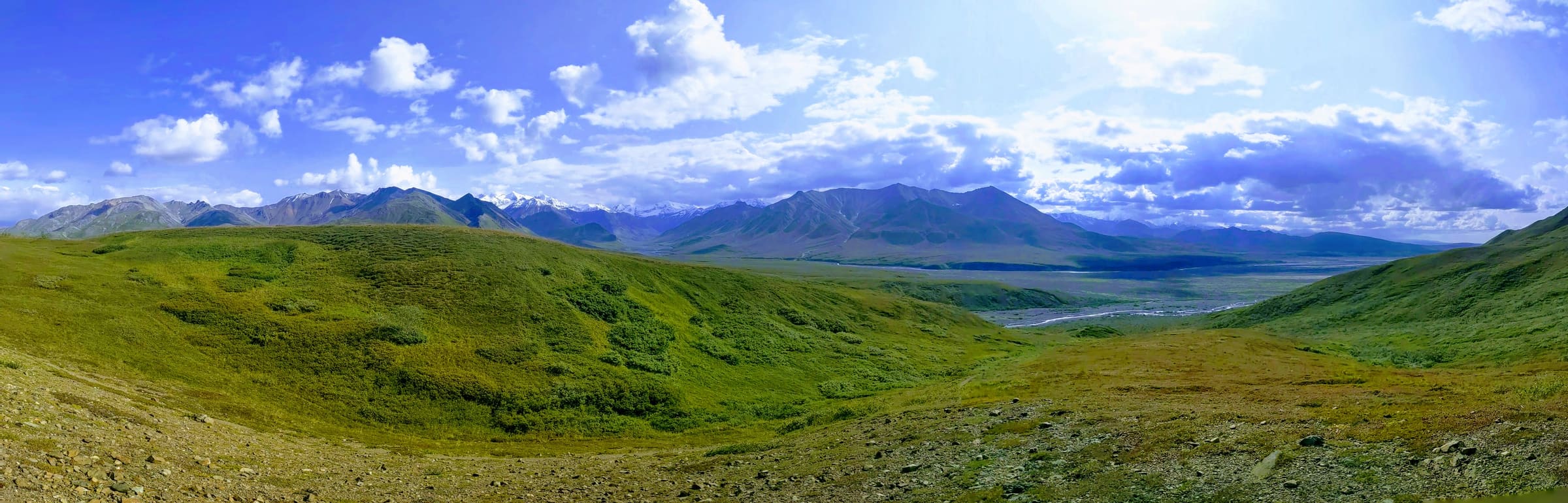
- Denali Highway (Route 8): 135 miles connecting Paxson and Cantwell. Roughly 105 miles are rough, unpaved gravel. Prohibited by virtually all national airport rental agencies. Detailed road condition updates and BLM recreation site notes are maintained by the Bureau of Land Management.
- McCarthy Road: 59 miles of narrow, unpaved gravel following an old railway bed from Chitina into Wrangell-St. Elias National Park and Preserve. Known for surface railroad spikes and sharp rock fragments. Prohibited by standard fleets. Surface warnings and vehicle advisories are published by the National Park Service McCarthy Road Guide.
- Dalton Highway (Route 11): 414 miles from north of Fairbanks to Deadhorse. Dominated by industrial haul trucks, heavy mud, and coarse gravel. Strictly prohibited by mainstream airport counters.
- Top of the World Highway (Route 9): Connects Chicken, Alaska, to Dawson City, Yukon. Contains extended gravel sections, heavy dust, and seasonal border operational hours.
- Denali Park Road: Private passenger vehicles are only allowed on the first 15 paved miles up to Savage River without a special permit. Road access guidelines are detailed by the National Park Service, where public vehicle traffic remains strictly regulated, and private through-drives are prohibited regardless of rental status. Because of the Pretty Rocks landslide, the road was closed to all traffic at mile 43 through the 2026 season; access past Mile 43 returns for the 2027 season.
On unpaved Alaska roads, drive times can easily double. While you can cruise smoothly on the paved Glenn or Parks Highways, gravel roads like the Denali Highway require substantially reduced speeds. A remote gravel stretch that looks brief on a map can easily take twice as long as expected once you factor in frost heaves, washboard sections, and single-lane bridge crossings.
Best Rental Cars for Alaska Highways: Matching Vehicle to Route
Choosing the best rental vehicle for Alaska highways requires matching your vehicle selection to your specific itinerary, rather than simply paying extra for an aggressive-looking truck you might not need.
1. Paved-Only Highway Itineraries
If your route stays entirely on paved corridors like the Parks, Seward, Glenn, and Richardson Highways, a standard intermediate SUV or full-size sedan is entirely sufficient. All-wheel drive (AWD) is helpful during shoulder-season storms in May or September, but maintained summer highways do not require excessive ground clearance. Your primary concerns are cabin comfort, visibility, and tire quality.
2. Mixed-Surface and Gravel Routes
If your plans involve legal travel on approved gravel routes, you must rent from specialized local outfitters (such as Arctic Outfitters, GoNorth, or Alaska 4x4 Rentals) that specifically contract for off-pavement driving. For these roads, prioritize:
- High ground clearance: Ample clearance to navigate crowned gravel centers and frost-heave dips without scraping the underbody.
- Light truck (LT) or all-terrain tires: Standard low-profile touring tires found on modern crossovers are susceptible to sidewall cuts from sharp shale and crushed rock.
- A full-size matching spare tire: A compact space-saver temporary spare is useless on remote gravel highways. Driving extended distances on rough rock with a temporary spare compromises vehicle handling and risks stranding you without a backup.
If you are deciding between a traditional passenger vehicle or a self-contained rig, reviewing a breakdown of RV vs car travel in Alaska helps clarify the logistical differences before booking.
| Route Category | Representative Alaska Roads | Minimum Recommended Vehicle Class | Permitted by Airport Counters? |
|---|---|---|---|
| Paved Loop | Parks, Seward, Sterling, Glenn Highways | Standard Sedan or Compact Crossover | Yes (Fully Permitted) |
| Secondary Scenic Paved | Hatcher Pass (paved side), Richardson Hwy | Mid-Size SUV (AWD Recommended) | Yes (Check Local Spurs) |
| Maintained Gravel | Denali Highway, Top of the World | High-Clearance SUV or 1/2-Ton Truck | No (Requires Specialist Contract) |
| Rugged Remote Gravel | Dalton Highway, McCarthy Road | 4WD Truck with Heavy-Ply A/T Tires | No (Strictly Prohibited) |
Insurance, Damage Waivers, and the Gravel Gray Area
Many travelers attempt to rely on corporate travel perks or premium credit card coverages when planning an Alaska driving vacation. When it comes to gravel roads, this assumption frequently collapses under scrutiny.
The Credit Card Benefit Trap
Credit card rental coverage (even primary auto rental collision damage insurance) uniformly operates under a baseline condition: the vehicle must be operated in strict accordance with the terms of the rental agreement. If you drive a national agency sedan down the McCarthy Road, you have breached your rental agreement. The moment that breach occurs, credit card claim administrators will deny coverage for any resulting accident, body damage, or cracked oil pan.
Additionally, many standard personal auto insurance policies include geographical exclusions or language excluding unpaved or non-gazetted roads. Before leaving home, review your auto policy's declarations page and call your insurance agent to ask specifically whether your comprehensive and collision coverages apply to unpaved public highways in Alaska.
The Most Common Damage Claims
On gravel roads, sheet metal collisions with other vehicles are relatively rare. The vast majority of financial claims involve three distinct vehicle components:
- Windshields: Oncoming traffic kicks up loose aggregate. Star cracks and bullseye fractures are common. Many specialty Alaska rental companies offer standalone windshield waivers for this exact reason.
- Tires: Sharp slate on roads like the McCarthy corridor or Dalton Highway causes punctures that cannot be plugged safely, requiring full tire replacement.
- Undercarriage Components: Flying rocks can strike brake lines, puncture transmission oil pans, or damage exhaust hangers. Undercarriage damage is the most contentious line item on return inspections because it is invisible during casual walkarounds.
To reduce risk when traveling approved gravel routes, increase your following distance behind other vehicles, slow down substantially when passing oncoming traffic to reduce projectile rock velocity, and avoid driving through deep standing mud puddles where subsurface boulders may be hidden.
Route-by-Route Notes for Gravel-Curious Drivers
If you want to experience Alaska's remote backcountry corridors, you must evaluate the distinct operational demands of each major route before committing your vacation days.
1. Denali Highway (Route 8)
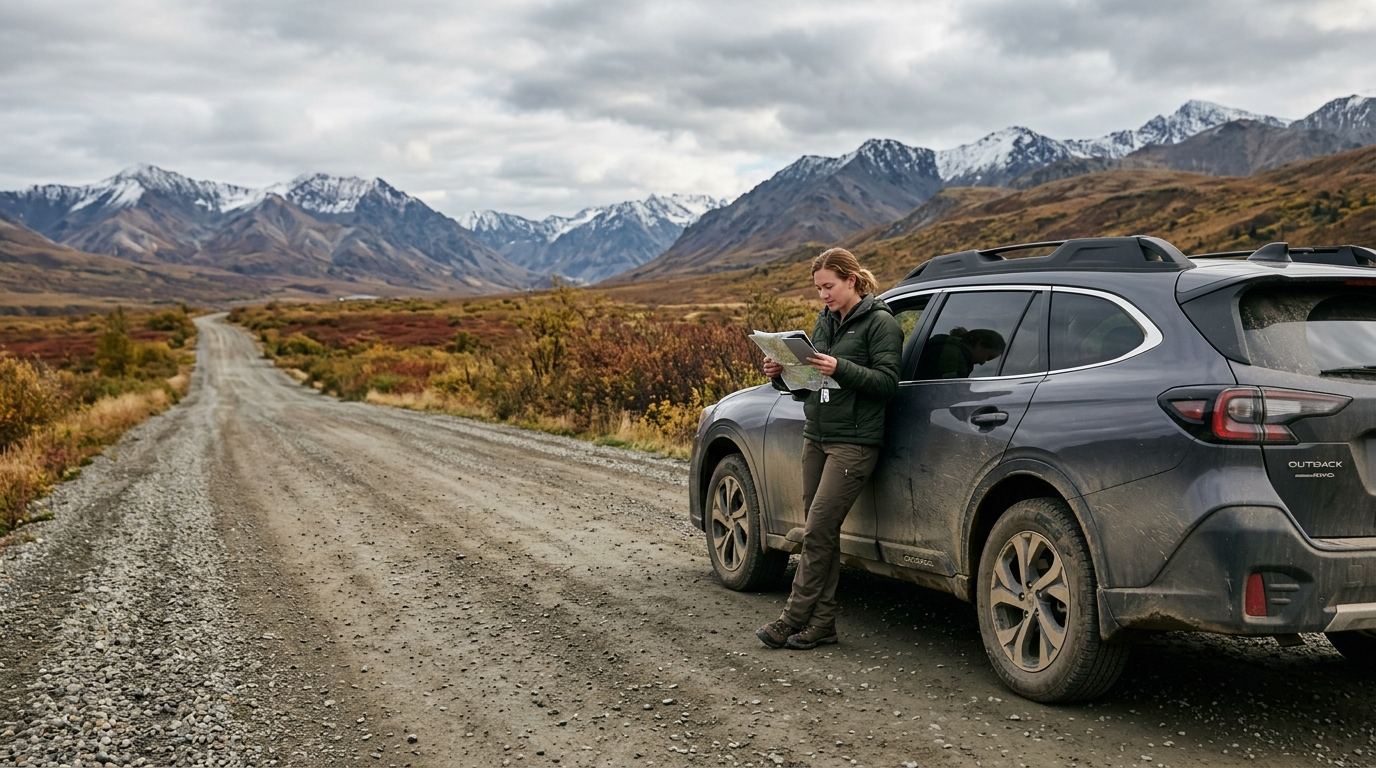
Running 135 miles between Paxson and Cantwell, the Denali Highway offers sweeping tundra views of the Alaska Range. However, only roughly 30 miles are paved; the remaining 105 miles consist of dirt and gravel that can develop severe washboard conditions by mid-summer. Services are extremely scarce, with only a handful of rustic lodges offering seasonal fuel and emergency assistance. Summary: Ideal for landscape photographers and wildlife watchers; requires an authorized high-clearance SUV from a specialist rental provider.
2. McCarthy Road
Branching off from Chitina, this 59-mile gravel route dead-ends at the footbridge to Kennicott and McCarthy inside Wrangell-St. Elias National Park. Built directly over the historic Copper River and Northwestern Railway bed, the road surface is notorious for exposing old rail spikes after heavy road-grading operations. The driving pace is slow, narrow, and winding. Summary: Best for historical exploration and backcountry trekking; requires an authorized vehicle carrying a full-size spare and tire-changing tools.
3. Dalton Highway (Route 11)
The Haul Road spans 414 miles from north of Fairbanks to Deadhorse near the Arctic Ocean. It was designed to support the Trans-Alaska Pipeline System and remains a demanding industrial route. Massive tractor-trailers have the right of way, throwing dust plumes in dry weather and thick, slick mud when wet. Services are hundreds of miles apart. For a deeper breakdown of this challenging trek, read our dedicated Dalton Highway guide. Summary: Strictly for experienced long-distance expedition drivers; requires specialized 4WD vehicles equipped with dual spare tires, CB radio, and commercial-grade off-pavement insurance.
4. Top of the World Highway (Route 9)
Connecting the Taylor Highway at Tetlin Junction near Tok to Dawson City in Canada's Yukon Territory, this route winds across mountain ridges above the tree line. The unpaved stretches can become remarkably slick after summer rainstorms. Operating hours at the Poker Creek / Little Gold Creek border crossing are seasonally restricted, typically closing down entirely by mid-to-late September. Summary: Exceptional high-elevation vistas for cross-border journeys; check current border hours and secure written clearance to take your rental into Canada.
5. Denali Park Road
While the first 15 miles of this 92-mile corridor are paved and accessible to personal cars, private vehicles are not permitted deeper into the park. The road was also closed to all vehicles at mile 43 through 2026 due to the Pretty Rocks landslide. If your goal is to experience Denali's interior wilderness, plan on booking transit or tour buses operated by the park concessionaire rather than attempting to navigate the park road in a rental vehicle.
How to Plan a Gravel-Compatible Alaska Road Trip Without the Guesswork
The DIY pain of piecing together an Alaska road trip comes down to hidden friction points: surface closures, unexpected ferry schedules, rental contract fine print, and overly optimistic drive times. Many travelers lose whole vacation days backtracking because a digital navigation app routed them onto an unpaved road their airport rental contract forbids them to touch.
That is why working with a professional itinerary specialist saves money, prevents logistical dead-ends, and protects you from costly rental contract violations.
Every itinerary is hand-built by a named founder who has driven these routes on eight Alaska trips between 2015 and 2024, across four seasons. The routing sequences your days so that your vehicle matches the pavement conditions on the ground, clearly indicating when standard airport rentals are safe to use and when specialized transportation or local shuttle services are needed.
Here is exactly how the process works:
- Alaska Road Trip hand-picks lodging and gives you direct booking links, but you book it yourself — it does not make reservations on your behalf, so you keep full control and flexibility.
- Alaska Road Trip recommends activities and tours with timing and booking links; you reserve them yourself.
- Alaska Road Trip does not book flights or rental cars; you arrange those independently.
- Itineraries reflect current-season research at the time they're built, including the 2026 Denali Park Road mile 43 closure; they are not a real-time feed.
Alaska Road Trip is a one-time flat fee, not a subscription — there are no recurring charges. Transparent options published on our pricing and options page outline straightforward tiers for every journey: Lite is $97 (1–5 days), Standard is $197 (up to 14 days), Plus is $297 (15+ days), and Concierge is $497 (which adds a 30-min live founder call).
Every itinerary is backed by a published 14-day money-back guarantee, full refund, no questions asked.
Common Mistakes That Turn a Gravel Day Into a Damage Claim
Self-drive visitors repeatedly fall into predictable traps when heading onto Alaska's secondary road network. Avoiding these five critical errors will keep your trip moving smoothly:
- Equating the title "State Route" or "Highway" with asphalt: Many official routes in Alaska transition from smooth tarmac to unpaved crushed rock without fanfare. Verify your route surface mile-by-mile on state road portals before departing.
- Booking the lowest-tier airport economy car for remote detours: Low-slung compact cars lack the ground clearance and tire sidewall strength required for sudden frost heaves and washboard corrugations.
- Rushing through the vehicle inspection report at pickup: If you accept a car without noting tiny rock chips on the windshield or scrape marks along the rocker panels, you risk paying for the previous renter's off-road excursions upon drop-off.
- Treating gravel like interstate asphalt: Driving at high speeds on loose gravel drastically reduces braking efficiency, cuts cornering traction, and throws sharp stones directly into your vehicle's wheel wells and following cars. Drop your speed significantly on unpaved stretches.
- Misjudging rural fuel ranges: Remote unpaved corridors rarely feature gas stations. The Denali Highway and Dalton Highway have extensive stretches with zero operational services. Operating on half a tank on gravel roads invites an expensive recovery bill.
Frequently Asked Questions
Can I drive a standard rental car on the Denali Highway?
No. Standard national car rental companies operating out of Anchorage and Fairbanks airports strictly prohibit their vehicles from driving on the Denali Highway, which includes roughly 105 miles of gravel. Violating this rule voids your rental contract and damage waivers. If you want to drive the Denali Highway, you must rent through an authorized local specialty outfitter that explicitly permits travel on unpaved roads.
Does my rental car insurance cover gravel road damage in Alaska?
If you are driving a standard airport rental car on an unpaved road where prohibited by your contract, neither the rental agency's Loss Damage Waiver (LDW) nor your personal credit card auto coverage will protect you. Because operating off pavement violates the master rental agreement, claims for cracked windshields, tire blowouts, or undercarriage damage will be denied, leaving you fully responsible for repair and remote towing costs.
What is the best rental car for the Dalton Highway?
The best vehicle for the Dalton Highway is a high-clearance, four-wheel-drive light truck or heavy-duty SUV equipped with durable all-terrain tires, rented through an authorized outfitter like Arctic Outfitters or Alaska 4x4 Rentals. Standard airport sedans and crossovers are not permitted on the route and lack the tire durability and dual spares necessary to survive commercial haul-truck debris.
Is the Denali Park Road open past mile 43 in 2026?
No. The Denali Park Road was closed to all public and transit traffic at mile 43 (near Pretty Rocks) throughout the 2026 summer season while the National Park Service finished a bridge bypass over an active landslide zone. The bridge was completed in September 2026, and access past Mile 43 returns for the 2027 season. Private passenger vehicles remain restricted to the first 15 paved miles up to Savage River, with deeper access handled exclusively via park-operated transit and tour buses (to mile 43 in 2026).
Do I need a 4WD for an Alaska road trip?
You do not need a four-wheel-drive vehicle if your itinerary sticks to Alaska's primary paved highway network (including the Parks, Seward, Glenn, Sterling, and Richardson Highways) during the summer season between June and August. A standard front-wheel-drive sedan or all-wheel-drive crossover handles these paved corridors comfortably. You only need a dedicated 4WD vehicle with high clearance if you plan to legally tackle authorized unpaved routes like the McCarthy Road or Dalton Highway.
Conclusion: Match the Contract to the Road Before You Book
A self-drive Alaska vacation offers unmatched freedom, dramatic mountain passes, and incredible wildlife viewing. However, treating an alaska road trip car rental for gravel roads like a casual suburban car rental can quickly lead to denied insurance claims, damaged vehicles, and massive remote towing bills.
Decide on your route first. If you want to experience the unpaved majesty of the Denali Highway or the historic isolation of McCarthy, budget for a specialty rental company whose contract explicitly permits gravel operations. If you prefer the comfort and affordability of a standard airport rental, plan your route around Alaska's breathtaking paved highway network.
If you would rather not spend your evenings cross-referencing rental contracts against road-surface maps, Alaska Road Trip builds a custom day-by-day itinerary that matches your vehicle to the roads you actually want to drive. Alaska Road Trip does not book flights or rental cars; you arrange those independently. You get a one-time flat fee, a printable PDF in 3-5 business days, and a published 14-day money-back guarantee, full refund, no questions asked. Explore our options to plan your trip today and hit the open road with complete confidence.
See a real Alaska itinerary before you spend a dollar
A real 3-day plan with driving times, lodging picks, and a daylight chart — free, in your inbox.
One email. No spam. Unsubscribe anytime. Or view it right now — no email needed ↗
Ready for the full plan? Get your custom itinerary — from $197 · 5-day delivery →