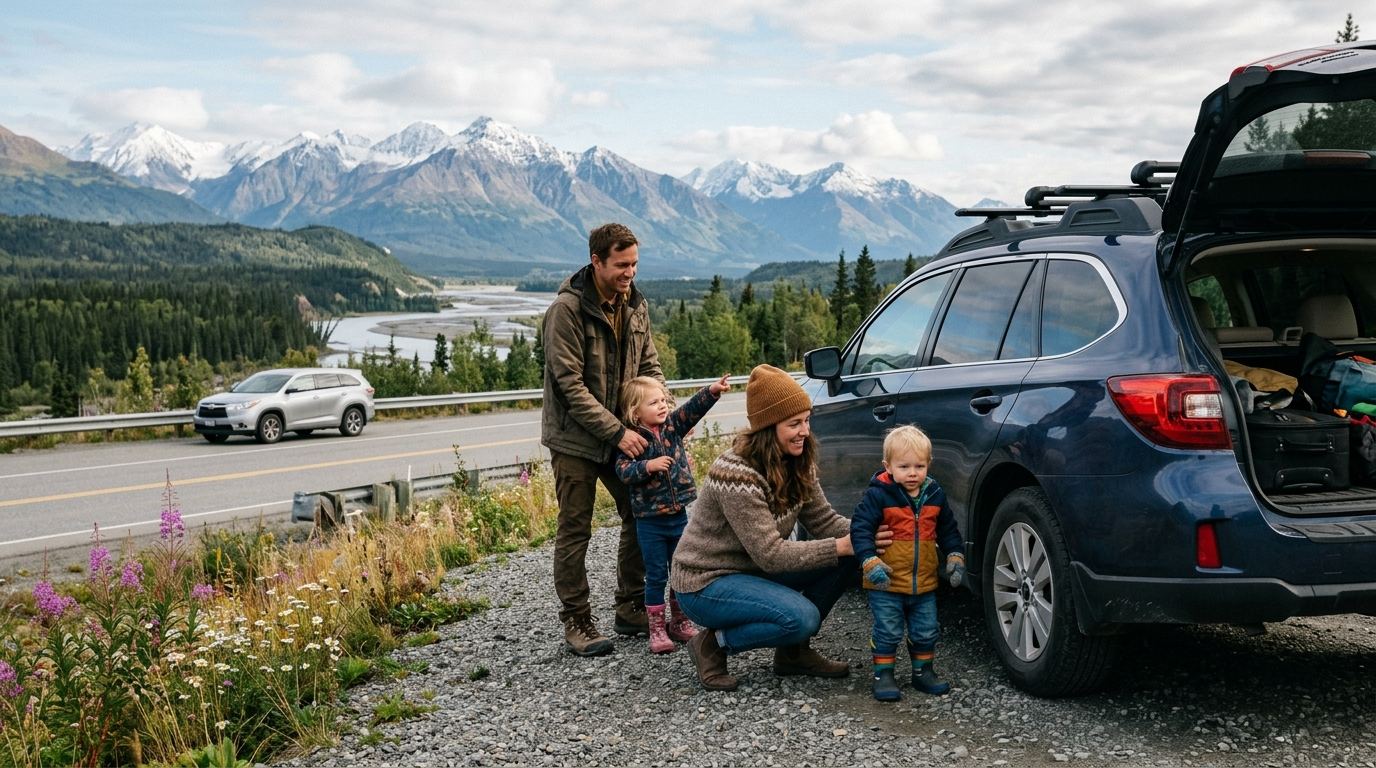
Planning an alaska road trip for families with toddlers requires cutting your usual daily driving estimates in half and anchoring your route around predictable supply hubs. If you attempt to cover Alaska the way a solo adult or couple does, long stretches between services and slow highway corridors will quickly derail your family vacation.
Traveling with children ages one through four in the Last Frontier is entirely manageable when you understand road topography, seasonal driving realities, and realistic pacing. This comprehensive guide details kid-tested routes, safe roadside detours, remote gear logistics, and wildlife protocols tailored specifically for parents traveling with young children.
The Golden Rule of Pacing: Drive Times on an Alaska Road Trip for Families with Toddlers
The single biggest mistake parents make when planning an alaska road trip for families with toddlers is trusting standard GPS drive times. On paper, a 120-mile stretch looks like an easy two-hour trip. In Alaska, that same drive routinely takes three to four hours due to summer road construction, single-lane highway corridors, slow-moving recreational vehicles, and frost heaves that demand reduced speeds.
Before mapping any route, check the Alaska Department of Transportation 511 system for real-time construction schedules, seasonal gravel sections, and pilot-car delays. A 20-minute construction stop where engines must be shut off can disrupt a carefully timed toddler car nap.
The Two-to-Three-Hour Daily Driving Ceiling
To avoid severe travel fatigue and emotional meltdowns, cap your actual seat time at two to three hours per day. Rather than changing hotels every night, structure your route around multi-night "hub stays." Establishing a basecamp for two to three nights in walkable, resource-dense towns like Seward, Girdwood, or Palmer allows you to explore regional sights during morning wake windows without packing luggage and re-installing car seats every morning.
Managing the Midnight Sun Effect on Toddler Sleep
Alaska's summer daylight spans 18 to 22 hours depending on the month and latitude. Toddlers rely heavily on ambient light cues to produce melatonin, meaning prolonged daylight can easily scramble bedtime routines. Apply these essential alaska family travel tips to protect your child's sleep schedule:
- Bring portable suction-cup blackout curtains: Many Alaska cabins, historic lodges, and vacation rentals feature standard blinds that let in substantial ambient light at 11:00 PM. Pack lightweight travel blackout shades with suction cups to darken your sleeping area completely.
- Enforce a strict car-nap strategy: Plan your primary driving legs to align precisely with your child's normal midday nap window. Keep the vehicle cabin cool and shaded using pull-down window socks.
- Maintain evening wind-down rituals: Dim indoor lighting two hours before sleep, regardless of how bright it remains outside, to signal bedtime to your toddler's circadian rhythm.
Top Kid Friendly Alaska Stops and Toddler-Approved Detours
Long highway stretches demand intentional, low-stress breaks where young children can stretch their legs safely away from vehicle traffic. Incorporating dedicated kid friendly alaska stops ensures safe outdoor exploration without requiring technical backcountry hiking.
Alaska Wildlife Conservation Center (Mile 79, Seward Highway)
Located near the head of Turnagain Arm along the scenic Seward Highway corridor, the Alaska Wildlife Conservation Center (AWCC) is the premier sanctuary for toddler-friendly wildlife viewing. The facility features wide, paved walking loops fully accessible for strollers and wagons. Elevated wooden boardwalks let toddlers view coastal brown bears, black bears, wood bison, and moose safely behind secure double-fenced enclosures. The on-site restrooms are spacious, clean, and equipped with diaper-changing stations.
Potter Marsh Boardwalk (Anchorage)
Situated at the southern edge of Anchorage within the Anchorage Coastal Wildlife Refuge, Potter Marsh offers an elevated, 1,500-foot wooden boardwalk with sturdy safety railings. Toddlers can walk independently without the risk of slipping on muddy trails or tumbling down steep embankments. Depending on the month, children can spot nesting waterbirds, spawning Pacific salmon in the clear creek waters below, and the occasional foraging moose browsing in the willow marshes.
Beluga Point and Bird Point Pullouts
Both locations provide paved scenic turnouts along Turnagain Arm with mounted viewing scopes and interpretive panels. Bird Point features paved, barrier-free pathways, clean vault toilets, and wide picnic areas sheltered from highway winds. If your timing aligns with local tide charts, you can watch the dramatic Turnagain Arm bore tide rush into the inlet, occasionally accompanied by surfacing beluga whales.
Mat-Su Valley Agricultural Encounters: Musk Ox Farm and Reindeer Farm
Located in Palmer, both the Musk Ox Farm and the Reindeer Farm offer controlled, tactile animal encounters ideal for young children. The Musk Ox Farm provides gentle walking tours across flat pastoral grounds where toddlers can view ice-age mammals from safe vantage points. The nearby Reindeer Farm allows hand-feeding of domesticated reindeer under close staff supervision, providing an interactive, non-intimidating outdoor experience for young travelers.
Begich, Boggs Visitor Center at Portage Glacier
Operated by the U.S. Forest Service at Portage Lake, this facility provides hands-on, sensory exhibits specifically engaging for small hands. Toddlers can safely touch a real block of glacial ice brought in from the lake, walk through simulated ice caves, and view interactive topographic models. The paved lakeside trails surrounding the center offer flat, stroller-friendly walks with views of floating blue icebergs.
Remote Logistics: Managing Car Seats, Diapers, and Toddler Meals on Alaska Highways
Executing an alaska road trip with baby or toddler requires a self-sufficient mindset. Once you drive outside Alaska's primary commercial centers, retail selections drop off rapidly, and specialized baby supplies disappear entirely.
Bulk Stocking in Commercial Hubs
Do not rely on small-town general stores or remote highway service stations for baby gear. Retail outposts in locations like Cooper Landing, Talkeetna, or Cantwell stock emergency snacks, basic bread, and milk, but rarely carry specific infant formula brands, size-specific diapers, or sensitive baby wipes.
| Hub City | Major Retail Options | Recommended Supplies to Purchase |
|---|---|---|
| Anchorage | Costco, Fred Meyer, Target, Walmart | Full-trip supply of diapers, wipes, specialized formula, toddler snacks, and portable blackout shades. |
| Wasilla / Palmer | Target, Fred Meyer, Walmart | Grocery restock before heading north toward the Parks Highway or east along the Glenn Highway. |
| Soldotna / Kenai | Fred Meyer, Safeway, Walmart | Pantry restock, fresh toddler produce, and diaper replenishments for the central and southern Kenai Peninsula. |
Restroom Realities and Sanitation Management
Along major corridors such as the Parks, Glenn, and Sterling Highways, roadside facilities range from full-service commercial plazas to primitive vault toilets (outhouses). Vault toilets along highway trailheads and pullouts lack running water, hand soap, and changing tables. Build a self-contained sanitation kit kept accessible in your vehicle's footwell:
- A dedicated fold-out water-resistant changing pad for trunk or back-seat diaper changes.
- Fragrance-free sanitizer wipes and alcohol-based hand rub.
- Heavy-duty sealable disposal bags (such as zip-top freezer bags) to contain soiled diapers inside your car until reaching an animal-proof trash receptacle.
Managing Motion Sickness
Scenic Alaska corridors feature frequent curves, elevation changes, and dips. Turnagain Arm, Moose Pass, and Hatcher Pass road systems wind along mountain contours that can trigger motion sickness in rear-facing toddlers. Keep the vehicle interior well-ventilated, position your child's seat to allow a clear line of sight through side windows, and pack ginger chews, motion sickness bands, and spare changes of clothes in easily reachable dry bags.
Layering Systems for Unpredictable Weather
Summer temperatures in coastal and interior Alaska fluctuate rapidly from 45°F (7°C) with driving rain to 75°F (24°C) in bright sun. Dressing a toddler in bulky winter parkas makes car seat harness strapping unsafe. Instead, utilize a modular layering approach, consulting our detailed alaska road trip packing list for specific family gear selections:
- Base Layer: Synthetic or lightweight merino wool long-sleeve tops and bottoms (avoid cotton, which retains moisture and chills skin).
- Mid Layer: A breathable fleece jacket or wool sweater for core insulation.
- Outer Shell: A completely waterproof, windproof one-piece rain suit (often called a "mud suit") paired with neoprene puddle boots. This allows toddlers to play freely in wet gravel, damp moss, and rainy trails without soaking their clothing.
Safety Fundamentals: Wildlife Awareness and Outdoor Hazards with Young Children
Alaska's wilderness begins at the shoulder of the highway. Parents must recognize that wildlife, tidal dynamics, and glacial waters present distinct hazards for curious toddlers who cannot assess environmental risk.
Moose and Bear Safety Protocols for Parents
Moose frequent roadside willow brush and suburban trails in Anchorage and Palmer. Cow moose with spring calves are exceptionally protective and easily provoked. Brown and black bears forage along salmon streams and berry patches throughout southcentral Alaska. Review the official Alaska Department of Fish and Game bear safety guidelines before setting out on family walks.
- The Arm's Reach Rule: Keep toddlers within direct physical reach (not just visual contact) at all highway pullouts, trailheads, and gravel overlooks. A child walking ten feet ahead can surprise an animal feeding behind low brush.
- Make Consistent Noise: Talk, sing, or clap when walking with toddlers along wooded paths to avoid startling wildlife.
- Bear Spray Accessibility: Carry EPA-registered bear deterrent spray on your hip or chest harness—rarely buried inside a backpack or stored in a vehicle trunk. Ensure child-lock safety clips remain firmly seated until deployment is necessary.
Turnagain Arm Tidal Silt and Mudflat Dangers
The scenic mudflats exposed at low tide along Turnagain Arm and Knik Arm consist of glacial silt that behaves like quicksand. Saturated glacial silt exerts strong suction on footsteps, trapping adults and small children rapidly as incoming ocean tides surge back into the inlet at speeds exceeding 10 miles per hour. rarely allow children or pets to step onto the exposed tidal flats along highway turnouts. Keep all exploration strictly on designated boardwalks, paved paths, and established rocky bluffs above the high-tide line.
Insect Management for Sensitive Toddler Skin
Alaska mosquitoes and white socks (biting blackflies) can be dense in wooded areas, tundra valleys, and near standing water, particularly in June and July. Protect toddlers using physical barriers first: fit your stroller or carrier with a fine-mesh bug net, dress your child in tightly woven light-colored clothing, and plan outdoor walks along breezy coastal bluffs or open ridges where wind deters insects naturally.
Cold Water and Boat Harbor Safety
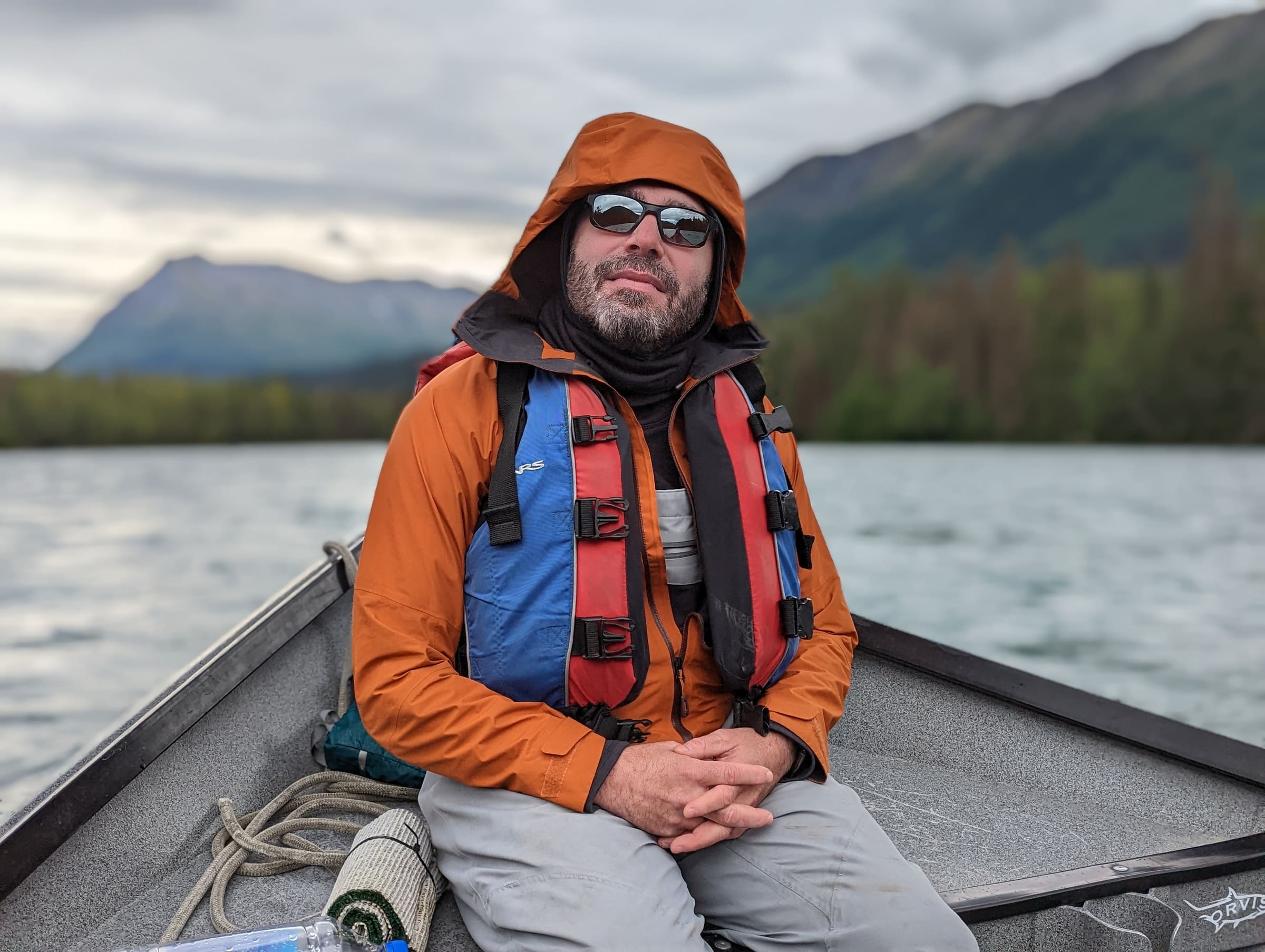
Glacial rivers, lakes, and ocean waters in Alaska remain dangerously cold year-round, typically hovering between 38°F and 48°F (3°C to 9°C). Accidental immersion causes immediate cold-water shock. Whenever your family walks along working boat harbors (such as the Seward or Homer harbors), fishing docks, or fast-flowing riverbanks, fit your toddler in a properly adjusted, U.S. Coast Guard-approved Type II or Type III life jacket equipped with an infant/child head-support collar and crotch strap.
Route Strategy for an Alaska Road Trip with Baby or Toddler
When selecting your regional corridor, balance scenic reward against physical accessibility, hospital access, and daily drive durations.
The Southcentral Advantage: Kenai Peninsula and Mat-Su Valley
For parents traveling with infants and toddlers, the loop encompassing Anchorage, the Kenai Peninsula, and the Matanuska-Susitna (Mat-Su) Valley is the gold standard. Exploring the Kenai Peninsula loop keeps you within reliable proximity to full-scale regional hospitals in Anchorage, Palmer, and Soldotna, while offering smooth paved roads, frequent gas stations, and short driving hops between highlights.
Evaluating Denali National Park with Young Children
Denali is a bucket-list destination for many travelers, but requires careful evaluation for families with toddlers. Private vehicles can only drive the first 15 miles of the Denali Park Road to the Savage River check station. Past Mile 15, visitors must board transit or tour buses operated by the park concessionaire.
Furthermore, according to the National Park Service Denali conditions update, the Denali Park Road remains closed at Mile 43 (Pretty Rocks) due to an ongoing landslide bridge reconstruction project. Read our full analysis of the Denali Park Road access conditions before finalizing your route. Sitting on an unairconditioned bus for four to five hours round-trip with a toddler can test the endurance of any family. If you choose to visit Denali, focus on front-country stroller trails around the Visitor Center, the free sled dog demonstrations, and short scenic pullouts along the Parks Highway rather than extended bus excursions.
Accessible Glacier Viewing Without Technical Hiking
You do not need to book strenuous backcountry treks or expensive helicopter flights to show your toddler an ancient ice sheet. Two exceptional roadside glacier options provide safe, immediate access:
- Exit Glacier (Kenai Fjords National Park, Seward): The lower trail loop is paved and ADA-accessible, allowing parents to push a standard stroller directly through the cottonwood forest to views of the glacier terminus.
- Matanuska Glacier State Recreation Site (Glenn Highway): Located at Mile 101 of the Glenn Highway, the state recreation site offers elevated wooden viewing platforms and gravel trails overlooking the massive ice field without requiring you to step onto hazardous, slippery glacial terrain.
Designing the Ideal Alaska Road Trip for Families with Toddlers: 7 to 10-Day Pacing Blueprint
This realistic itinerary framework maintains the two-to-three-hour daily driving ceiling, pairs morning physical activities with afternoon car naps, and eliminates unnecessary hotel packing cycles.
Day 1: Arrival in Anchorage and Supply Outfitting
Arrive at Ted Stevens Anchorage International Airport (ANC). Collect your rental vehicle, check into your Anchorage hotel, and spend the afternoon stocking up on bulk groceries, baby wipes, diapers, and emergency supplies at local superstores. Take an easy evening stroll along the flat, paved Tony Knowles Coastal Trail or visit Westchester Lagoon to let toddlers watch floatplanes land.
Day 2: Anchorage to Girdwood (40 miles / 1 hour drive)
Depart south along the scenic Seward Highway. Stop at Potter Marsh to view nesting waterfowl, then proceed along Turnagain Arm. Arrive in the resort town of Girdwood by lunchtime. Ride the Alyeska Tramway to the top of Mount Alyeska for panoramic mountain and ocean views without any uphill hiking. Stay overnight in Girdwood.
Day 3: Girdwood to Seward via Alaska Wildlife Conservation Center (90 miles / 2 hours drive)
Spend the morning exploring the Alaska Wildlife Conservation Center at Mile 79. After an early lunch, start your drive south through the scenic Kenai Mountains during your toddler's midday nap window. Arrive in Seward, check into your multi-night accommodation, and walk the paved harbor promenade. Stay overnight in Seward (Night 1 of 2).
Day 4: Marine Wildlife and SeaLife Center in Seward
Dedicate the morning to the Alaska SeaLife Center, a world-class public aquarium and marine mammal rescue facility located downtown. Toddlers can view harbor seals, sea lions, and puffins from indoor underwater viewing windows. In the afternoon, opt for a focused, 3-hour marine tour of Resurrection Bay rather than an exhausting 7-to-8-hour open-ocean cruise. These shorter bay tours stay in protected waters, substantially reducing the risk of toddler seasickness while offering views of whales, otters, and coastal bird rookeries. Stay overnight in Seward (Night 2 of 2).
Day 5: Seward to Cooper Landing (45 miles / 1 hour drive)
Visit the paved lower trail of Exit Glacier in Kenai Fjords National Park after breakfast. Drive a short, relaxed leg to the quiet riverside hamlet of Cooper Landing along the turquoise Kenai River. Enjoy an afternoon non-driving recovery period skipping stones along the shallow river banks or relaxing at your cabin. Stay overnight in Cooper Landing.
Day 6: Cooper Landing to Palmer / Hatcher Pass (130 miles / 2.5 to 3 hours drive)
Drive north along the Sterling and Seward Highways back toward the Mat-Su Valley, timing the drive with your child's nap. Settle into your Palmer basecamp. Visit the Musk Ox Farm in the late afternoon for a guided, toddler-friendly educational tour. Stay overnight in Palmer (Night 1 of 2).
Day 7: Alpine Views at Hatcher Pass and Independence Mine
Take the short 30-minute scenic drive up to Hatcher Pass. Explore the historic Independence Mine State Historical Park, featuring wide gravel roads, restored mining cabins, and gentle alpine meadows filled with ground squirrels. Toddlers can run safely across open alpine tundra without steep drop-offs. Stay overnight in Palmer (Night 2 of 2).
Day 8: Palmer to Anchorage and Departure (45 miles / 1 hour drive)
Return to Anchorage along the Glenn Highway. Depending on your flight schedule, visit the Anchorage Museum's Discovery Center, which features interactive tactile play zones for toddlers, before dropping off your vehicle and boarding your flight home.
Vehicle Choice: Rental Car vs. RV for Alaska with Toddlers
Choosing between a passenger vehicle and a motorhome is a major decision for parents. Evaluating both setups against family logistics reveals distinct operational trade-offs.
| Decision Criteria | Rental SUV / Minivan + Lodging | Class C / B Motorhome (RV) |
|---|---|---|
| Car Seat Safety | Factory-installed LATCH anchors and top tethers in forward/rear positions. | Often relies on side-facing dinette lap belts; lacks modern child restraint anchors. |
| Restroom Accessibility | Requires stopping at designated roadside rest areas or gas stations. | Immediate access to an on-board toilet and diaper changing space at any pullout. |
| Maneuverability & Parking | Easy parking in crowded trailhead lots, downtown Seward, and grocery centers. | Requires large vehicle spaces; challenging in narrow downtown street grids. |
| Meal Preparation | Dependent on cabin kitchenettes, vacation rentals, or kid-friendly family restaurants. | Cook warm toddler meals and prepare baby bottles anywhere along the highway. |
For deeper insights into vehicle logistics, review our comparison guide on renting an RV versus a car in Alaska.
Eliminating the Stress: DIY Planning vs. a Custom Done-For-You Route
Coordinating an alaska road trip for families with toddlers involves significant logistical research. Parents often spend dozens of hours cross-referencing road construction notices, calculating driving blocks around nap schedules, checking which boat charters allow car seats or small children, and searching for accommodations with separate bedrooms and blackout blinds.
A poorly planned DIY itinerary can result in cranky toddlers stuck in construction backups, missed nap windows, and exhausting backtracking along remote highways. Choosing a professionally crafted plan removes this administrative friction so you can focus on enjoying the journey with your child.
How Alaska Road Trip Simplifies Your Family Vacation
Every itinerary from Alaska Road Trip provides a custom day-by-day Alaska road-trip itinerary, hand-built by a named founder who has driven thousands of Alaska miles across multiple seasons. Your custom route integrates toddler-friendly pacing, realistic driving blocks, barrier-free nature stops, and practical grocery replenishment points.
Our itineraries reflect current-season research (such as the 2026 Denali Park Road Mile 43 bridge closure) rather than outdated automated templates. Alaska Road Trip hand-picks lodging and gives you direct booking links, but you book it yourself — it does not make reservations on your behalf, so you keep full control and flexibility over your reservations and loyalty accounts. Similarly, Alaska Road Trip recommends activities and tours with timing and booking links; you reserve them yourself. Alaska Road Trip does not book flights or rental cars; you arrange those independently.
Straightforward, Transparent Pricing
Alaska Road Trip is a one-time flat fee, not a subscription — there are no recurring charges. You receive a comprehensive, printable, offline-ready PDF delivered directly to your inbox in 3 to 5 business days, complete with 1 to 2 revision rounds to tailor the route to your family's exact needs:
- Lite (a measurable budget): Best for short regional getaways (1 to 5 days).
- Standard (a measurable budget): Ideal for comprehensive family loops (up to 14 days).
- Plus (a measurable budget): Comprehensive planning for extended multi-region journeys (14+ days).
- Concierge (a measurable budget): Adds a dedicated 30-minute live founder consultation call to review route details, gear questions, and toddler pacing strategies.
Every purchase is backed by a published 14-day money-back guarantee with a full refund and no questions asked. Ready to begin? Explore our trip planning options to get started.
Frequently Asked Questions
Is Alaska too rugged for a road trip with a 1-year-old or 2-year-old?
No. Southcentral Alaska and the Kenai Peninsula feature paved highway corridors, modern grocery supercenters, and advanced medical centers in Anchorage, Palmer, and Soldotna. As long as you maintain a conservative driving schedule of two to three hours per day and stick to accessible, barrier-free trails, traveling with an infant or toddler is completely safe and manageable.
Should we rent an RV or a rental car when traveling Alaska with toddlers?
Both options have merits. An SUV or minivan paired with cabin or vacation rental stays provides superior car seat safety (using factory LATCH systems) and easier maneuvering in crowded harbor towns. A motorhome offers the convenience of an on-board kitchen and private restroom at every scenic pullout. However, many rental RV dinette benches lack modern three-point tether systems for car seats, so verify child restraint safety before renting.
How do we handle toddler bedtime with 20 hours of Alaska daylight?
Pack portable suction-cup blackout curtains to block light around window edges in cabins and hotels. Establish an indoor wind-down routine starting two hours before sleep by dimming lights, turning off screens, and drawing blinds. Maintain your normal home bedtime schedule rather than letting daylight dictate your child's sleep cues.
What are the best glacier tours suitable for families with young toddlers?
For water excursions, choose shorter 3-hour marine tours within the sheltered waters of Resurrection Bay (out of Seward) or Whittier's passage canal, rather than full-day open-gulf trips. For land viewing, visit the paved, stroller-accessible lower loop trail at Exit Glacier or the elevated wooden platforms at the Matanuska Glacier State Recreation Site.
Ready for a seamless family journey? Let Alaska Road Trip hand-build your custom, toddler-paced itinerary with curated stops, realistic drive times, and direct booking links in a downloadable offline PDF.
See a real Alaska itinerary before you spend a dollar
A real 3-day plan with driving times, lodging picks, and a daylight chart — free, in your inbox.
One email. No spam. Unsubscribe anytime. Or view it right now — no email needed ↗
Ready for the full plan? Get your custom itinerary — from $197 · 5-day delivery →