Executing an effective alaska road trip lodging booking strategy for 2026 requires understanding that Alaska's highway network has a fixed, critically scarce supply of accommodations that cannot scale up to meet peak summer demand. Independent drivers who secure their rooms early, target strategic geographic corridors, and rely on direct operator links avoid the common pitfalls of inflated third-party pricing, ghost inventory, and four-hour backtracking detours across rural highways.
Planning a self-drive journey across the Last Frontier involves far more logistical discipline than a standard road trip in the Lower 48. Between extreme seasonal constraints, massive cruise line room blocks, and remote highway stretches with zero cell service, your lodging anchors the success of your entire route. This comprehensive guide details how to build an independent booking plan, manage regional bottlenecks, and ensure your overnight stays match your daily driving pace.
The Anatomy of Alaska's Acute Accommodation Shortage
To navigate lodging availability across the state, you must first understand the structural dynamics that create shortages every summer. Outside of Anchorage and Fairbanks, Alaska's road system traverses vast wilderness areas punctuated by small, isolated communities. Towns like Talkeetna, Seward, Copper Center, and Cantwell possess a tiny inventory of permanent physical beds relative to the volume of travelers driving the highways between late May and early September.
This limited physical supply collides with a compressed operating window. Most seasonal lodges, historic roadhouses, and boutique cabin operations open between May 15 and Memorial Day, shutting their doors by mid-September. Commercial operators must generate their entire annual operating revenue within this 90- to 120-day span. As a result, peak summer dates—especially from mid-June through the first week of August—experience demand that outstrips room capacity by multiples in key hubs.
Compounding this seasonal crunch is the overwhelming presence of corporate cruise tour operations. Major cruise lines do not simply dock ships in Whittier or Seward; they move hundreds of thousands of passengers inland via private rail cars and motorcoaches to land lodges in Denali, Talkeetna, and Kenai Fjords. Cruise companies contract large blocks of rooms at premier properties up to a year or more in advance. For independent travelers focused on the best time for an Alaska road trip, this commercial footprint removes an enormous share of available rooms from the open market, leaving self-drive visitors to compete for the remaining private cabins, small motels, and independent bed and breakfasts.
Why an Alaska Road Trip Lodging Booking Strategy Requires Booking Directly
When booking accommodations in major metropolitan markets, Online Travel Agencies (OTAs) and booking aggregators offer speed and consolidation. In rural Alaska, relying on third-party aggregators is one of the costliest mistakes an independent driver can make. Technical mismatches, unmapped properties, and inventory syncing delays regularly leave travelers stranded without confirmed rooms in towns where every alternative within a 70-mile radius is sold out.
Third-party platforms frequently map remote Alaska properties incorrectly. An aggregator might list a cabin as "near Denali National Park," only for the driver to realize upon arrival that the property sits across an unbridged river, down an unpaved mining road unsuitable for standard rental vehicles, or 45 miles south in Cantwell when their morning excursion departs from Healy. Furthermore, many small, multi-generation family roadhouses and dry cabin operations do not integrate their reservation books with global distribution systems. Third-party sites often display "ghost inventory"—showing phantom vacancies that the host cannot honor, or displaying "sold out" when rooms remain open directly through the host's direct booking engine or phone desk.
Booking directly with local lodge owners eliminates intermediary friction. Small operators maintain strict, localized cancellation and deposit schedules tailored to subarctic operations. When you communicate directly with a host in places like Moose Pass, Glennallen, or McCarthy, you receive real-time check-in protocols, direct updates on localized road construction, and clear details on utility setups (such as generator hours or off-grid water systems).
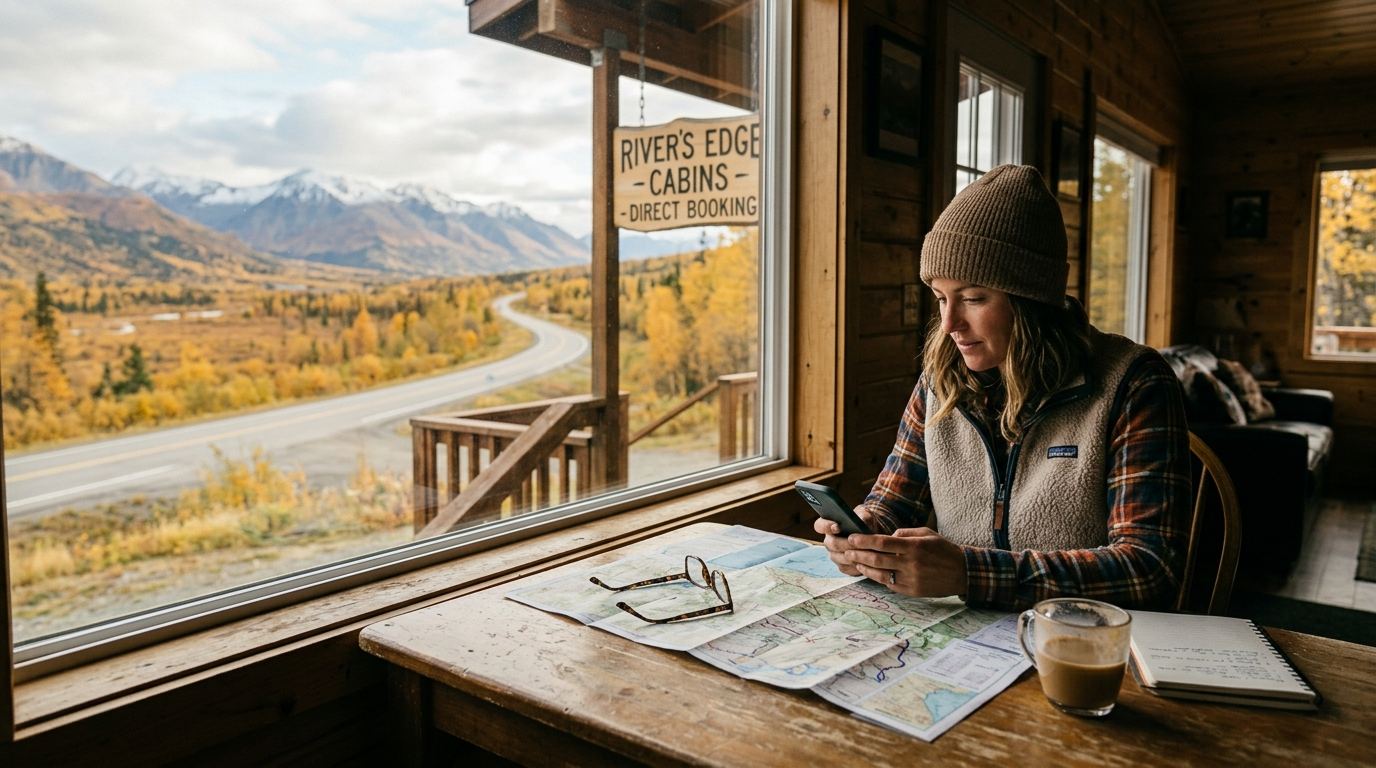
For independent drivers looking to maintain complete autonomy over their reservations without spending dozens of hours cross-referencing maps, Alaska Road Trip hand-picks lodging and gives you direct booking links, but you book it yourself — it does not make reservations on your behalf, so you keep full control and flexibility. This approach guarantees that your reservation sits directly with the host while ensuring every stop logically supports your daily driving radius.
Optimal Month-by-Month Reservation Windows for Summer Drivers
Timing your reservations correctly dictates whether you secure private cabins with mountain views or end up paying premium rates for outdated rooms adjacent to industrial rail yards. Because demand curves vary dramatically between peak summer and shoulder months, your reservation sequence must follow a disciplined calendar.
For high-pressure corridors—most notably Denali National Park (Healy, Cantwell, McKinley Village) and the Kenai Peninsula (Seward, Homer, Cooper Landing)—the ideal booking window opens 6 to 9 months before departure. Travelers planning a July road trip should finalize their core bottleneck lodging between October and January. Waiting until March or April often means accepting significant compromises: settling for properties two hours away from your planned activities, paying exorbitant last-minute rates, or shifting your entire itinerary to fit whatever random scattered nights remain.
Public-use cabins managed by federal agencies follow precise release schedules that require immediate action. Cabins on federal lands across the Chugach and Tongass National Forests open for reservations exactly 6 months in advance on a rolling daily basis via Recreation.gov at 7:00 AM AKST. High-demand cabins along pristine lakes and coastal fjords routinely sell out within minutes of release for prime July and August weekends.
Shoulder-season travel demands a slightly modified strategy:
- Late May to Early June: Properties are opening, daylight is expanding rapidly, and cruise crowds have not peaked. A reservation window of 4 to 6 months in advance is generally sufficient, though specialty lodges in Seward and Homer still fill early for Memorial Day weekend.
- Mid-June through Mid-August: The absolute peak window. Full 6-to-9 month advance booking is required. High-end wilderness lodges and boutique cabins often book a full 10 to 12 months ahead.
- Late August through Mid-September: As foliage turns and the risk of autumn rain increases, availability improves across the interior. A 3-to-5 month window works well, though properties along the Richardson Highway and Denali corridor begin closing for the season as early as the second week of September. You can track shifting pressure across regions using the Alaska lodging crunch index.
Core Hubs vs. Secondary Towns: Regional Tactics for Your Alaska Road Trip Lodging Booking Strategy
Strategic geographic positioning separates an effortless road trip from an exhausting driving endurance test. Many first-time visitors default to booking inside tourist "gateway hubs," inadvertently subjecting themselves to inflated rates, crowded dining, and heavy tour bus congestion. Target secondary basecamps positioned 20 to 45 minutes outside commercial epicenters to secure better value, authentic wilderness settings, and superior logistics.
| Region / Corridor | Primary Gateway Hub | Strategic Secondary Alternative | Logistical & Strategic Tradeoffs |
|---|---|---|---|
| Denali Corridor | Denali Park Canyon ("Glitter Gulch") | Healy (11 miles north) or Cantwell (28 miles south) | The Canyon is dominated by cruise lodges, heavy foot traffic, and chain retail. Healy offers independent bed and breakfasts, full-service grocery access, and quiet cabins. Cantwell offers direct access to the Denali Highway and peaceful wooded properties. |
| Eastern Kenai | Seward (Small Boat Harbor) | Moose Pass (29 miles north) or Cooper Landing (45 miles northwest) | Seward places you right at the boat dock for morning marine charters, but hotel rates are among the highest in Alaska. Moose Pass and Cooper Landing feature riverside log cabins, world-class trout fishing, and easy access to both Seward and Homer routes. |
| Wrangell-St. Elias & Glenn Highway | Glennallen Commercial Junction | Copper Center (15 miles south) or Palmer / Mat-Su Valley (Westbound) | Glennallen is primarily a functional supply junction with limited lodging character. Copper Center offers historic roadhouse heritage along the Klutina River, closer to the Edgerton Highway entrance for McCarthy and Chitina. |
| Kachemak Bay | Homer Spit | Homer Bluff / East End Road or Anchor Point | The Homer Spit is convenient for halibut charters and water taxis but exposed to intense winds, commercial crowds, and premium pricing. The bluff and East End Road provide panoramic views across Kachemak Bay with private, quiet acreage. |
When selecting your regional stops, balance the allure of remote outposts with practical supply lines. For example, staying in Moose Pass allows you to easily drive down to Seward for an 8:00 AM Kenai Fjords marine charter, then transition west toward Soldotna the following morning without paying peak waterfront hotel surcharges.
Categorizing Alaska Accommodations: Choosing the Right Stay for Your Driving Route
Alaska's lodging inventory differs significantly from the standardized hotel landscape of the contiguous United States. Successful road trip planning requires choosing the appropriate category of stay for each segment of your journey based on utility needs, vehicle type, and daily travel pacing.
1. Historic Roadhouses and Highway Lodges
Dating back to the gold rush and early freighting eras, highway roadhouses represent the traditional backbone of interior travel along routes like the Richardson, Glenn, and Parks Highways. These properties combine basic, clean private rooms or rustic cabins with a central communal dining room serving hearty home-cooked meals. While soundproofing and modern amenities can be basic, roadhouses offer authentic pioneer heritage, exceptional local advice, and strategic resting points in areas where no corporate hotels exist.
2. Self-Contained Vacation Cabins and B&Bs
Private, fully furnished cabins are the gold standard for independent couples and families driving through Alaska. These properties usually feature private kitchenettes or full kitchens, private baths, and dedicated parking spaces right outside your door. Having kitchen facilities allows you to prepare your own breakfasts and pack trail lunches, saving hours each morning and cutting food expenses in remote regions where restaurant options are limited. For families evaluating vehicle platforms, exploring RV vs car travel in Alaska helps clarify whether fixed-roof cabins or motorhome rentals better match your budget and daily comfort requirements.
3. Off-Grid and "Dry" Cabins
Throughout the state—particularly around Fairbanks, Talkeetna, and the Kenai interior—you will encounter listings for "dry cabins." These are rustic structures with no indoor plumbing; they feature an outhouse and provide water via dispensing jugs. While dry cabins offer an authentic backwoods experience at a budget-friendly price point, they require an adventurous mindset and extra daily effort. Understand the utility specifications before reserving so you do not arrive expecting a hot shower after a 300-mile drive.
4. Utility Realities: Power, Water, and Internet
When booking independent stays, often verify utility parameters upfront. Many off-grid properties run on solar-battery banks backed by diesel generators that shut down between 10:00 PM and 6:00 AM. High-speed internet varies dramatically across the state; while properties utilizing satellite systems like Starlink provide dependable broadband, older satellite or rural copper connections may struggle with basic email. Confirm whether a property requires cash payment upon arrival, as rural payment terminals frequently drop offline when local telecommunication links experience weather disruptions.
Handling Road Closures, Construction, and Last-Minute Stay Adjustments
Subarctic road infrastructure is vulnerable to seasonal disruptions, major construction projects, and geological shifts. Your lodging bookings must maintain enough geographic flexibility to withstand sudden delays without causing a cascade of missed nights.
A prime operational example is the ongoing road work within Denali National Park. The Pretty Rocks landslide at mile 43 forced the closure of the park road to public tour buses west of the East Fork bridge, necessitating an extensive, multi-year bridge construction project. According to the National Park Service - Denali Conditions & Road Status, access beyond mile 43 remains restricted while engineering work proceeds. Drivers planning to explore the park do not need to book stays deep inside Kantishna (which previously required road transit through the restricted zone), but should instead anchor in Healy or along the Parks Highway corridor. For a full breakdown of park transit logistics, review the detailed guide on the Denali Park Road status for 2026-2027.
Beyond park roads, primary arteries such as the Glenn Highway, Richardson Highway, and Sterling Highway undergo intensive pavement preservation and bridge rehabilitation during the brief summer construction window. According to the Alaska 511 Traveler Information System, active work zones frequently implement single-lane traffic controls. A 20- to 45-minute pilot car delay combined with slow-moving RV traffic can quickly stretch a four-hour drive into a seven-hour journey. Always choose lodging bases that allow you to reach your evening destination well before midnight, even with significant construction delays.
Carefully evaluate operator cancellation policies. Independent Alaska properties often enforce strict policies: deposits of many or more upon booking, with the balance due 30 to 60 days before arrival. Cancellations made inside the 30-day window are frequently non-refundable unless the operator manages to rebook the room. To protect against sudden highway closures, unexpected ferry cancellations, or vehicle mechanical issues, select lodging providers with sensible cancellation terms and ensure your personal travel insurance covers remote road delays.
When you use our planning services, founder-built itineraries reflect current-season research at the time they are built, ensuring driving distances remain realistic even with regional highway disruptions. You receive daily routing plans calibrated against documented summer construction corridors, preventing unrealistic travel legs that jeopardize your check-in times.
Step-by-Step Execution Plan: How to Secure Alaska Accommodations Independently
To successfully execute an independent lodging strategy without succumbing to analysis paralysis, follow this structured, four-step implementation sequence.
- Lock in Your Driving Route and Pacing Framework: Avoid booking individual hotel rooms before establishing your complete loop geometry. Determine your total available days, ports of entry/exit (e.g., Anchorage round-trip), and strict daily driving limits (ideally capping windshield time at 3 to 5 hours per day). Clarify your foundational route pacing before committing non-refundable deposits.
- Secure Critical Bottleneck Destinations First: Do not book your trip chronologically from Day 1 to Day 10. Instead, immediately secure rooms in the most constrained geographic markets:
- Denali corridor (Healy or Cantwell)
- Seward and Kenai Fjords access points
- Homer / Kachemak Bay
- Valdez (if utilizing the Alaska Marine Highway ferry system)
- Fill in Flexible Intermediary Transit Hubs: With high-demand bottleneck dates locked down, book your transition stops in larger regional hubs that offer deep lodging inventory. Places like Anchorage, the Mat-Su Valley (Palmer/Wasilla), and Fairbanks feature numerous chain hotels, boutique inns, and short-term rentals that can easily absorb shifting itinerary dates.
- Compile an Offline-Ready Booking Ledger: Cellular reception drops completely across broad stretches of the Glenn, Richardson, Seward, and Denali Highways. Download all lodging confirmations, door access codes, physical driving directions, and host phone numbers directly to your smartphone, and print a physical paper binder. Do not rely on cloud apps or OTA mobile platforms to load check-in instructions at the end of a long driving day.
If you prefer a seamless, expertly structured route that completely removes the stress of DIY coordination, explore our transparent itinerary options and pricing to see how an experienced local founder can build your ideal summer journey.
Frequently Asked Questions
How far in advance should I execute an Alaska road trip lodging booking strategy for peak summer?
For peak summer travel between mid-June and mid-August, you should book critical bottleneck locations—such as Denali, Seward, and Homer—6 to 9 months in advance (ideally between October and January). High-demand public-use cabins on Recreation.gov must be booked exactly 6 months in advance on a rolling daily basis at 7:00 AM AKST. Shoulder-season dates in May and September offer more flexibility and can typically be reserved 3 to 5 months out.
Can I find same-day roadside motel vacancies while driving through Alaska?
Relying on same-day walk-in vacancies between June and August is extremely risky in rural Alaska. Outside of Anchorage and Fairbanks, lodging inventory is strictly limited, and small towns frequently reach full capacity every evening. Showing up without a confirmed reservation often forces travelers to sleep in their passenger vehicle at a highway pullout or drive an extra 150 miles late into the night searching for an open room.
Why do third-party booking sites show fewer available rooms in remote Alaska towns than direct lodge websites?
Many independent cabin operations, historic roadhouses, and boutique lodges in Alaska do not list their rooms on major online travel aggregators to avoid high commission fees and complex technical integrations. Additionally, aggregators frequently display outdated availability or phantom sellouts. Booking directly through an operator's official website or direct reservation desk gives you access to full, accurate inventory.
What cancellation policies are typical for small, family-owned Alaska cabins?
Because Alaska's operating season lasts only 90 to 120 days, independent operators enforce stricter cancellation terms than major urban hotel chains. It is standard for operators to require a many deposit at booking, with the remaining balance charged 30 to 60 days before arrival. Cancellations made within 30 days of check-in are often non-refundable unless the property can rebook the room. often read property policies carefully and carry comprehensive travel insurance.
Take the guesswork out of your route pacing and stay selections. Get a custom, day-by-day Alaska road-trip itinerary hand-built by our founder, complete with direct lodging booking links and current-season drive times.
See a real Alaska itinerary before you spend a dollar
A real 3-day plan with driving times, lodging picks, and a daylight chart — free, in your inbox.
One email. No spam. Unsubscribe anytime. Or view it right now — no email needed ↗
Ready for the full plan? Get your custom itinerary — from $197 · 5-day delivery →