Embarking on an Alaskan RV adventure promises unparalleled freedom, vast landscapes, and the mesmerizing phenomenon of the Midnight Sun. While 20+ hours of daylight might suggest endless solar charging, powering your custom RV build in Alaska is more nuanced than simply adding panels. The low angle of the northern sun and frequent coastal cloud cover present unique challenges, demanding a specialized approach to RV power systems. Standard solar setups designed for lower latitudes often fall short, leaving travelers frustrated and without power.
This guide explores the intricacies of designing and optimizing an effective alaska rv solar power system. It will cover how to maximize energy harvest under the unique Alaskan sun, manage high-draw electrical systems like induction cooktops during multi-day rainstorms, and integrate essential charging fallbacks like your alternator. By understanding these critical factors, you can ensure your custom RV build remains a beacon of comfort and convenience, no matter how remote your Alaskan journey takes you in 2026 and beyond.
The Unique Solar Landscape of Alaska: More Than Just Midnight Sun
While the Midnight Sun – nearly continuous daylight during summer – sounds like a solar enthusiast's paradise, its specific characteristics are crucial. Unlike the intense, direct overhead sun found closer to the equator, Alaska's summer sun remains at a significantly lower angle. This means that even with 20+ hours of daylight, direct sunlight intensity on your panels is often less than what you'd experience further south, akin to a sunrise or sunset in lower latitudes – beautiful, but not optimal for solar generation.
Furthermore, Alaska's diverse geography brings varied weather patterns. Coastal regions, such as the Kenai Peninsula or Southeast Alaska, are notorious for frequent cloud cover and rain, significantly reducing solar panel output for days. Even interior regions, while often sunnier, can experience overcast skies. This combination of low sun angle and potential for prolonged cloudiness means a robust alaska rv solar power system must be designed with resilience and redundancy. Relying solely on passive, flat-mounted panels is a recipe for disappointment when power needs are critical.
Designing Your Alaska RV Solar Power System for High Latitudes
Building a reliable solar system for Alaska requires thoughtful planning, focusing on efficiency and adaptability. It's not just about total panel wattage; it's about how effectively that wattage translates into usable power under challenging conditions.
Panel Selection and Orientation: Maximizing Every Ray
- Panel Type: Monocrystalline panels are generally preferred for Alaskan conditions due to their higher efficiency, especially in lower light or partially shaded conditions. While more expensive, their performance gains often justify the investment in a low-angle, potentially cloudy environment.
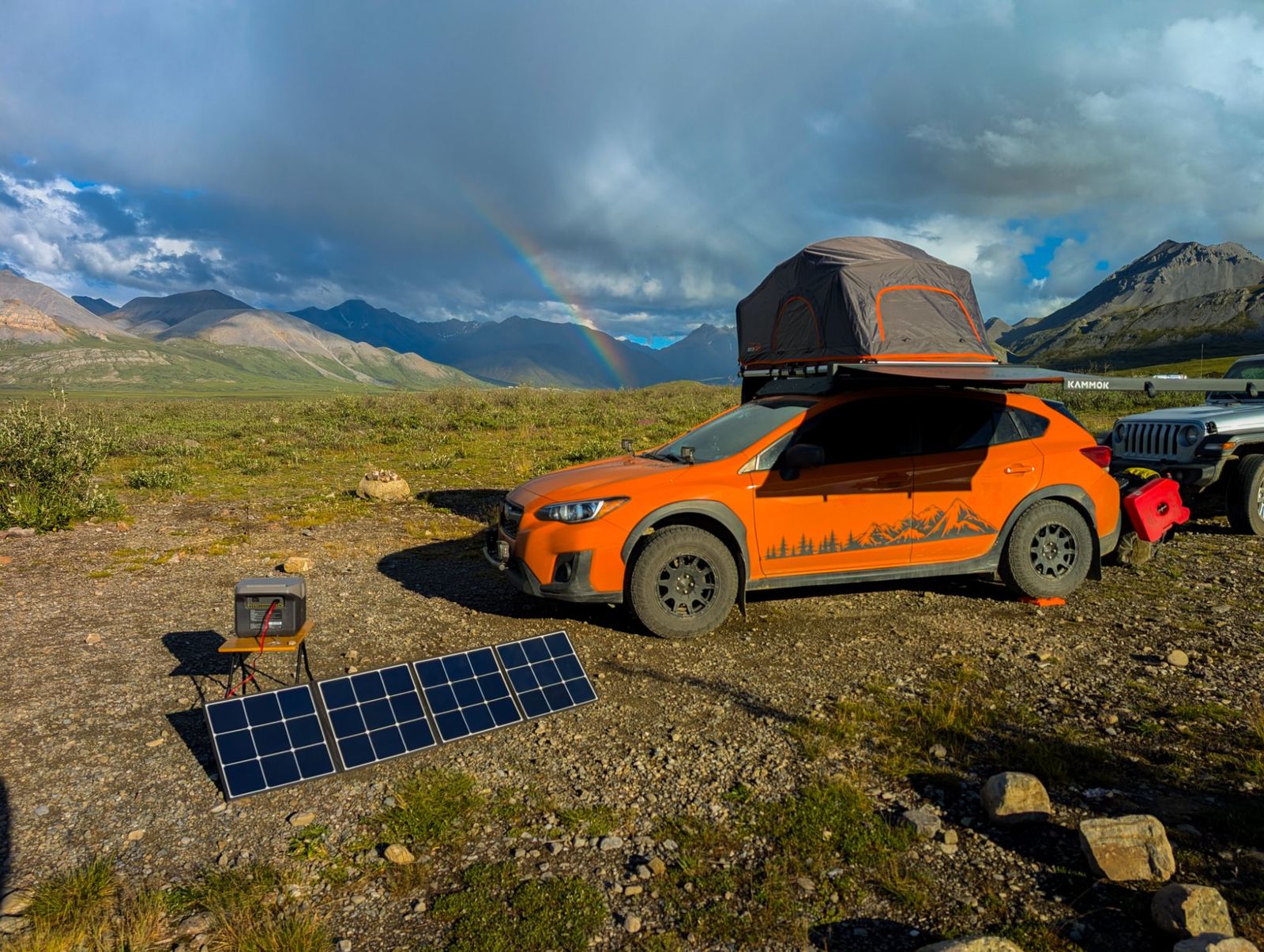
- Adjustable Mounts: This is a critical component for an Alaskan RV solar setup. Flat-mounted panels are suboptimal for high latitudes. With the sun always low, tilting panels directly towards the sun dramatically increases energy harvest. Robust, easily adjustable mounts are highly recommended, allowing angle changes throughout the day and as your location changes. Aim to tilt panels to match the sun's angle (15-30 degrees from horizontal in summer, 45-60 degrees in shoulder seasons). This active management is key to maximizing your alaska rv solar power output. For more on managing unique Alaskan conditions, see our Alaska Midnight Sun Sleeping Tips.
- Series vs. Parallel Wiring: For multiple panels, consider shading impact. If one panel in a series string is shaded, the entire string's output can be severely reduced. Parallel wiring mitigates this, as each panel operates independently, though it requires thicker gauge wire for higher currents. A hybrid approach or careful placement to avoid shading is often best.
The Powerhouse: Battery Bank Sizing and Technology
Your battery bank is the heart of your off-grid system, storing harvested energy. In Alaska, where solar input can be inconsistent, a generous and robust battery bank is non-negotiable.
- Lithium Iron Phosphate (LiFePO4) Batteries: These are the gold standard for Alaskan RV solar systems in 2026, offering superior performance over traditional lead-acid batteries: Depth of Discharge: Can be discharged deeply without significant damage, providing more usable capacity. Cycle Life: Last significantly longer, often providing thousands of charge cycles and a lifespan of 10+ years, making them a wise long-term investment. Weight: Much lighter than lead-acid batteries of equivalent capacity. Cold Tolerance: Many modern LiFePO4 batteries include internal heating elements, making them suitable for Alaska's colder shoulder seasons. Ensure your chosen batteries have low-temperature charging protection or heating. For more details on LiFePO4 battery benefits, refer to resources from manufacturers like Battle Born Batteries.
- Calculating Daily Energy Needs: Accurately calculate your daily energy consumption (Wh or Ah) by listing every appliance, its wattage, and daily usage hours. Don't forget phantom loads! This calculation is fundamental. For example, an induction cooktop might draw 1500W for 30 minutes (750Wh), while an LED light might draw 10W for 5 hours (50Wh).
- Sizing the Battery Bank: After calculating consumption, factor in a buffer for cloudy days. In Alaska, planning for 2-3 days of autonomy (power without solar input) is a good starting point. If your daily consumption is 200Ah, aim for at least a 400-600Ah LiFePO4 battery bank. Reputable manufacturers like Victron Energy or Battle Born offer excellent LiFePO4 options, often with integrated Bluetooth monitoring.
- Battery Management System (BMS): A high-quality BMS is essential for LiFePO4 batteries, protecting against overcharging, over-discharging, over-current, and temperature extremes, ensuring longevity and safety. Many LiFePO4 batteries include an integrated BMS.
Managing High-Draw Appliances: Living Comfortably Off-Grid
Powering high-wattage appliances is a major challenge for Alaskan road trip costs and off-grid living. While solar handles lights, charging devices, and small fridges, items like induction cooktops, microwaves, and air conditioners demand significant energy.
Induction Cooktops and Microwaves: Energy Hogs and How to Tame Them
These convenient appliances draw immense power (1500-2000W). Running them directly from your inverter requires a substantial battery bank and a powerful pure sine wave inverter (typically 2000W+). Strategies include:
- Strategic Use: Use only when solar input is abundant or your battery bank is fully charged.
- Propane Alternatives: Consider a propane stove or oven as your primary cooking method; propane is efficient and readily available.
- Generator Backup: For extended use or cloudy periods, a generator might be necessary to power these appliances or rapidly recharge batteries.
Heating and Cooling: Beyond Solar's Direct Reach
Alaska's summers are generally mild, but nights can be cool, and shoulder seasons cold. AC is rarely necessary but desired on warm days. Both heating and cooling are massive energy consumers:
- Heating: RV furnaces typically run on propane, far more efficient for off-grid heating than electric options. Diesel heaters are another excellent, fuel-efficient option for extended cold weather.
- Cooling: Running an RV air conditioner solely on solar power is extremely challenging. It requires a massive solar array (1000W+) and an even larger battery bank (600Ah+ LiFePO4). Most RVers rely on shore power or a generator for AC.
The Indispensable Backup: Alternator Charging and Generators
Even the most meticulously designed alaska rv solar power system will encounter days with insufficient sun. Backup charging solutions are critical for maintaining your off-grid lifestyle.
DC-to-DC Chargers: Your Driving Powerhouse
A DC-to-DC charger is essential for any serious Alaskan RV solar setup, efficiently charging house batteries from your vehicle's alternator while driving. Unlike simply connecting house batteries to your starting battery, a DC-to-DC charger:
- Optimizes Charging: Provides a multi-stage charging profile, ensuring LiFePO4 batteries are charged correctly and completely.
- Protects Alternator: Prevents house batteries from overdrawing your alternator, avoiding premature wear or failure.
- Isolates Batteries: Ensures your starting battery remains isolated and fully charged, helping prevent being stranded. For more on DC-to-DC charger benefits, see resources from manufacturers like REDARC Electronics.
For multi-day cloudy periods or long drives, driving becomes a powerful way to top off batteries. REDARC Electronics products are highly regarded for robust DC-to-DC charging, even with smart alternators in newer vehicles.
Generators: The Ultimate Failsafe
Despite optimal solar and alternator charging, a generator will sometimes be necessary. This is especially true during extended bad weather, for running high-draw appliances longer, or during shoulder seasons with limited daylight. Consider a quiet, fuel-efficient inverter generator (e.g., Honda, Yamaha). Remember to factor in fuel planning for your generator, especially in remote areas, as discussed in our guide to Fuel Planning for Your Alaska Road Trip.
Advanced Considerations for Robust Alaska RV Solar Power Systems
To truly optimize your alaska rv solar power system, consider these advanced components and practices:
MPPT Charge Controllers: Maximizing Harvest
A Maximum Power Point Tracking (MPPT) solar charge controller is crucial. Unlike simpler PWM controllers, MPPT controllers extract significantly more power from solar panels, especially in varying light conditions common in Alaska. They do this by continuously adjusting voltage and current to match the optimal charging voltage for your batteries. This efficiency gain is invaluable when solar input is limited. For more information on MPPT technology, consult resources from solar component providers like Renogy.
System Monitoring: Knowing Your Power Status
Investing in a comprehensive system monitor is highly recommended. A shunt-based battery monitor (e.g., Victron BMV or SmartShunt) provides accurate real-time data on battery state of charge, current draw, and historical usage. Many modern systems offer Bluetooth connectivity, allowing monitoring from your smartphone. Knowing your power generation and consumption empowers informed decisions about appliance use and driving schedules.
Cold Weather Performance and Maintenance
While summer is peak season, some travelers venture into Alaska during cooler months. If so, ensure your LiFePO4 batteries have internal heating elements or are housed in a heated compartment to prevent charging below freezing, which can damage them. Keep solar panels clear of snow and ice for efficiency. Regular inspection of wiring, connections, and components ensures system reliability.
Planning Your Alaskan Adventure with Reliable Power
A well-designed alaska rv solar power system offers unparalleled freedom, allowing you to explore remote corners of the state without constantly searching for shore power. It's an investment in independence and comfort, enabling you to truly embrace the wild beauty of Alaska.
However, designing such a system can be complex, requiring careful consideration of your specific power needs, travel style, and the unique Alaskan environment. For those looking to plan an unforgettable journey, Alaska Road Trip's Alaska Itinerary Planning Services can help integrate your power needs into a seamless travel plan, ensuring you're prepared for every aspect of your adventure. Our team understands the nuances of Alaskan travel and can help you make informed decisions about your RV setup, including power solutions.
Frequently Asked Questions
Is solar worth it for an Alaska RV trip?
Yes, solar is highly beneficial for an Alaska RV trip with a properly designed and actively managed system. Despite low sun angle and frequent cloud cover challenges, a robust alaska rv solar power system with adjustable panels and ample battery storage significantly enhances off-grid capabilities, reducing reliance on generators and shore power for more feasible boondocking.
How many solar panels do I need for an Alaska RV?
Panel count depends on daily energy consumption. Light users (lights, charging devices, small fridge) might need 200-400W with good battery and alternator charging. Heavy users (induction cooktop, microwave, extensive electronics) often require 600-1000W+ combined with a large LiFePO4 battery bank (400Ah+). Calculate specific needs first.
Can solar power run my RV air conditioner in Alaska?
Running an RV air conditioner solely on solar in Alaska is extremely challenging and generally impractical. AC units draw immense power (1500-3000W), typically needing a very large solar array (1000W+) and battery bank (600Ah+ LiFePO4) for significant operation. Most RVers use shore power or a generator for AC.
What's the best battery type for Alaskan RV solar?
Lithium Iron Phosphate (LiFePO4) batteries are widely considered best for alaska rv solar power systems. They offer superior usable capacity, longer lifespan, lighter weight, and better cold-weather performance (especially with internal heaters) than lead-acid. Though upfront cost is higher, their long-term value and performance suit the demanding Alaskan environment.
How important is alternator charging for an Alaskan RV solar setup?
Alternator charging is critically important as an indispensable backup and often primary charging source during cloudy periods or long drives. A high-quality DC-to-DC charger ensures efficient, safe charging of house batteries from your vehicle's alternator, providing a reliable power boost when solar input is low. It's a key component for continuous power on your Alaskan road trip.
Planning an Alaskan road trip involves many considerations, and a reliable power system is paramount for comfort and flexibility. Let Alaska Road Trip help you craft the perfect adventure. Alaska Road Trip's expert team can assist with every detail, from route planning to ensuring your RV is equipped for the unique demands of the Last Frontier. Start planning your dream Alaska road trip today and experience the freedom of the open road, powered by a system designed for the Midnight Sun.

See a real Alaska itinerary before you spend a dollar
A real 3-day plan with driving times, lodging picks, and a daylight chart — free, in your inbox.
One email. No spam. Unsubscribe anytime. Or view it right now — no email needed ↗
Ready for the full plan? Get your custom itinerary — from $197 · 5-day delivery →