If you are searching for the quintessential winter experience in the Far North, dog sledding should be at the very top of your bucket list. While many visitors flock to the state to experience the midnight sun of Alaska in summer, those who brave the winter months are rewarded with pristine, snow-covered landscapes and the thrilling rush of dog sledding. In this comprehensive guide, we will dive deep into the world of dog sledding in Fairbanks, exploring everything from the rich history of the sport to what you can expect on a multi-day expedition into the frozen wilderness.
The Deep Roots of Dog Sledding in Alaska
To truly appreciate dog sledding, it is essential to understand its historical significance. Long before snowmobiles and bush planes became the standard modes of transportation in the Arctic, dog sledding was the lifeline of the North. Indigenous peoples of Alaska have been dog sledding for thousands of years, relying on these incredible canine athletes for hunting, trapping, and traveling across vast, unforgiving expanses of ice and snow.
During the Klondike Gold Rush of the late 19th and early 20th centuries, dog sledding became even more prominent. Prospectors, mail carriers, and doctors relied heavily on dog sledding teams to navigate the treacherous terrain. The famous 1925 serum run to Nome, where teams of mushers and dogs relayed life-saving diphtheria antitoxin across nearly 700 miles of brutal winter conditions, cemented dog sledding into the annals of heroic history. Today, this legacy is celebrated annually through world-renowned dog sledding races like the Iditarod Trail Sled Dog Race and the Yukon Quest.
When you participate in dog sledding today, you are not just booking a tourist excursion; you are stepping into a living, breathing piece of Alaskan heritage. The connection between the musher and the dogs is a profound partnership built on mutual respect, trust, and a shared love for the frozen trail.
Why Fairbanks is the Ultimate Destination for Dog Sledding
While you can find dog sledding operations throughout the state, Fairbanks is widely considered the premier destination for this activity. Located in the heart of Alaska's Interior, Fairbanks boasts a subarctic climate that guarantees long, reliable winters with plenty of dry, powdery snow—the perfect conditions for dog sledding.
Beyond the ideal weather, Fairbanks serves as the gateway to some of the most spectacular wilderness areas in the world, including the White Mountains National Recreation Area. This vast expanse of rugged peaks, frozen rivers, and dense boreal forests provides an unparalleled backdrop for dog sledding. The trail systems here are well-maintained and stretch for hundreds of miles, offering endless opportunities for both short day trips and extended multi-day dog sledding expeditions.
Furthermore, Fairbanks is one of the best places on Earth to witness the aurora borealis. Imagine the magic of dog sledding through a silent, snow-draped forest under a sky dancing with vibrant ribbons of green and purple light. It is an ethereal experience that elevates dog sledding from a mere outdoor activity to a deeply spiritual encounter with nature.
My 5-Day Dog Sledding Expedition in the White Mountains
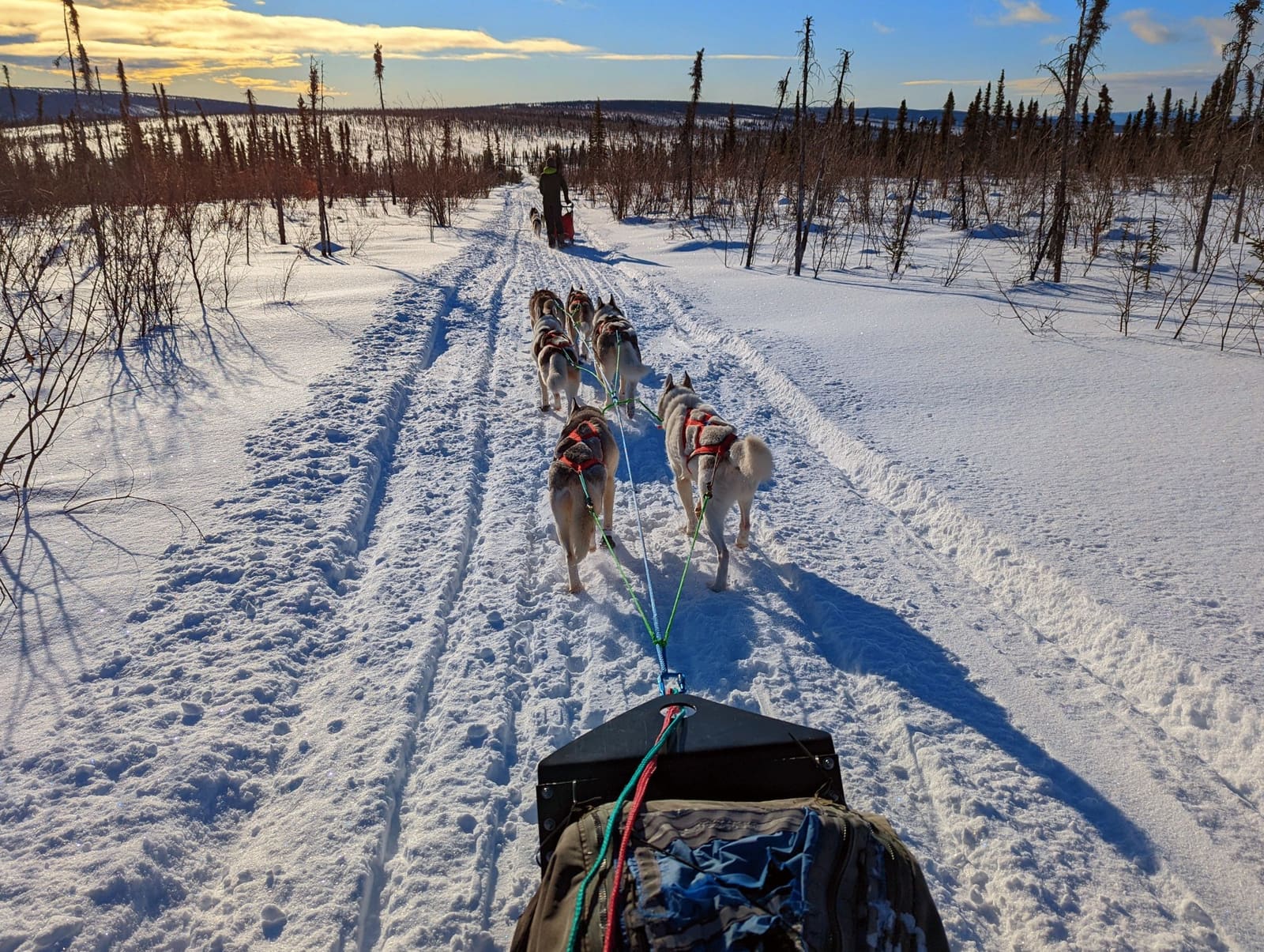
A few years back, I went on a five days dog sledding expedition in the white mountains north of fairbanks with Arctic Dog Adventures. What an amazing experience that was you can watch a video of this expedition to see the breathtaking scenery and the sheer joy of the dogs in action.
This was not a passive, sit-back-and-relax kind of tour. It was a fully immersive dog sledding journey that required active participation and a willingness to embrace the rugged Alaskan lifestyle. From the moment we arrived at the kennel, the energy was palpable. The dogs knew what was coming, and their excited howls echoed through the crisp winter air. I quickly learned that dog sledding is a team effort, and as a musher, I was an integral part of that team.
Each morning began before sunrise. I had to harness the dogs, a task that requires patience, a firm but gentle touch, and an understanding of each dog's unique personality. Once the team was hooked up to the gangline, the anticipation reached a fever pitch. The moment the snow hook was released, the barking ceased instantly, replaced by the rhythmic padding of paws and the soft shushing of the sled runners gliding over the snow.
The terrain in the White Mountains is incredibly diverse. We navigated through dense spruce forests, crossed wide-open frozen rivers, and tackled steep, challenging inclines. I had to run alongside them uphill, pushing the sled to help lighten the load for the team. It was physically demanding, but the sense of accomplishment when we reached the crest of a hill was indescribable. I also had to learn how to change weight distribution while riding, leaning into corners to keep the sled balanced and prevent it from tipping over.
At night, we stayed in remote, rustic public use cabins scattered throughout the recreation area. After a long day of dog sledding, our first priority was always the dogs—unharnessing them, massaging their muscles, and preparing their warm meals before we even thought about our own comfort. Sitting by the crackling woodstove, listening to the dogs settle in for the night, allowed me to completely immerse myself in one of the most authentic Alaska experiences imaginable. I highly recommend this activity to anybody who loves the outdoors and is looking for a genuine, hands-on adventure.
The Anatomy of a Dog Sled Team
To truly master dog sledding, you must understand the structure of the team. A dog sledding team is a highly organized unit, with each dog playing a specific and crucial role based on their strengths, intelligence, and temperament.
- Lead Dogs: Positioned at the very front, lead dogs are the brains of the operation. They must be incredibly intelligent, responsive to the musher's voice commands (like "gee" for right and "haw" for left), and capable of finding the trail even when it is buried under fresh snow.
- Swing Dogs: Located directly behind the lead dogs, swing dogs help steer the team around corners and ensure the rest of the team follows the leaders' trajectory.
- Team Dogs: These dogs make up the core of the line. They provide the steady, enduring pulling power required for long-distance dog sledding.
- Wheel Dogs: Positioned right in front of the sled, wheel dogs are typically the largest and strongest dogs on the team. They bear the brunt of the sled's weight and help navigate the sled around tight obstacles.
Understanding these roles deepened my appreciation for dog sledding. It is a complex, beautifully choreographed dance between human and animal, requiring constant communication and mutual trust.
What It Really Takes to Mush Your Own Team
Many people assume that dog sledding simply involves standing on the back of a sled while the dogs do all the work. In reality, active dog sledding is a rigorous physical workout. When you are mushing your own team, you are constantly engaged.
You must maintain a firm grip on the handlebar and keep your knees slightly bent to absorb the shock of bumps and dips in the trail. When navigating tight corners or uneven terrain, you have to shift your body weight dramatically to keep the sled upright. And as I experienced in the White Mountains, when the trail goes uphill or the snow is particularly deep, you cannot just stand there and force the dogs to pull your dead weight. You must step off the runners and jog alongside the sled, or "pedal" by keeping one foot on the runner and pushing off the snow with the other foot.
Braking is another critical aspect of dog sledding. The dogs love to run, and they will go as fast as they possibly can. It is up to the musher to control the speed using a drag mat (a piece of snowmobile track that you step on to create friction) or a metal claw brake that digs into the ice. Managing the team's speed ensures their safety and prevents the sled from careening out of control on downhill sections.
Essential Gear for Winter Dog Sledding
Surviving and thriving during a multi-day dog sledding expedition requires the right gear. Temperatures in the Alaskan Interior can easily plummet to 30 or 40 degrees below zero Fahrenheit. Proper preparation is non-negotiable.
Layering is the golden rule of dressing for dog sledding. You need a moisture-wicking base layer to keep sweat away from your skin, an insulating mid-layer (like fleece or wool) to trap body heat, and a heavy-duty, windproof, and waterproof outer shell. Because you alternate between standing still on the sled (where you can get very cold) and running uphill (where you can quickly overheat), you must be able to add or remove layers easily.
Extremities are the most vulnerable to frostbite during dog sledding. You will need heavily insulated, extreme-cold-weather boots (often provided by the outfitter), thick wool socks, and a combination of liner gloves and heavy over-mittens. A warm hat, a neck gaiter, and ski goggles are also essential to protect your face from the biting wind and the glare of the sun on the snow. For a comprehensive breakdown of what to bring, be sure to review our detailed Alaska road trip packing list.
Frequently Asked Questions
Is dog sledding safe for beginners?
Yes, dog sledding is generally very safe for beginners, provided you go with a reputable outfitter. Professional guides will give you a comprehensive safety briefing, teach you the necessary commands, and show you how to operate the sled's braking systems before you ever hit the trail. While minor tips and spills in the soft snow can happen, serious injuries are rare.
How cold does it get in Fairbanks during dog sledding season?
Winter temperatures in Fairbanks can vary wildly. During the peak dog sledding months of December through March, average high temperatures range from 0°F to 15°F, but it is not uncommon for temperatures to drop to -30°F or even -40°F. Outfitters are well-equipped to handle these extremes and will often provide specialized arctic outerwear to keep you safe and warm.
Do I have to drive the sled, or can I just ride?
This depends entirely on the type of dog sledding tour you book. Many operators offer "ride-along" tours where you sit comfortably wrapped in blankets in the basket of the sled while an experienced guide mushes the team. However, for those seeking a more active adventure, "drive your own team" expeditions are widely available and highly recommended for a true Alaskan experience.
When is the best time to go dog sledding in Alaska?
The prime season for dog sledding in Alaska runs from late November through early April, when there is a reliable and deep snowpack. March is often considered the optimal month, as the days are getting longer, the temperatures are slightly milder, and the snow conditions are usually perfect. For more insights on seasonal planning, check out our guide on the best time for an Alaska road trip.
Start Planning Your Dog Sledding Adventure Today
A dog sledding expedition through the frozen landscapes of Fairbanks is more than just a vacation; it is a transformative journey that connects you with the raw, untamed spirit of the North. Whether you are gliding silently under the northern lights or working up a sweat pushing your sled up a snowy ridge, the memories forged on the trail will last a lifetime. If you are ready to harness up and experience the thrill of the mush, take the next step and plan your trip with us today. The wilderness is calling, and the dogs are ready to run.
See a real Alaska itinerary before you spend a dollar
A real 3-day plan with driving times, lodging picks, and a daylight chart — free, in your inbox.
One email. No spam. Unsubscribe anytime. Or view it right now — no email needed ↗
Ready for the full plan? Get your custom itinerary — from $197 · 5-day delivery →