Learning how to get to Matanuska Glacier starts with a straightforward drive: take the Glenn Highway (Alaska Route 1) northeast from Anchorage to Mile 102 near Glacier View.
Driving to Matanuska Glacier is straightforward on paper, but the logistics catch many first-time travelers off guard. Matanuska is a valley glacier roughly 27 miles long and four miles wide. While it sits directly adjacent to a state highway, walking on the ice requires driving across private property and checking in at a managed recreation area. Knowing how access works, where cell service drops, and where to stop for fuel will keep your travel day running smoothly.
The short answer: Matanuska Glacier sits two hours northeast of Anchorage
The glacier is reached by road via the Glenn Highway, an asphalt two-lane road that stays open year-round. It is one of the most accessible glaciers in Alaska because you do not need a boat or a bush plane to reach the terminus.
The glacier ice sits on private land. While the Glenn Highway pullout at Mile 101 offers an elevated view across the Matanuska River valley at no charge, you cannot walk to the ice from the state right-of-way. Stepping foot on the glacier requires turning onto a private access road at Mile 102, passing an access checkpoint, and paying an entry or tour fee. Understanding this distinction is essential: the highway overlook gives you a scenic vista, but standing on the physical ice is an organized, fee-based experience.
Summer road trips from late May through September offer the most reliable driving conditions and full access to glacier activities. Early October often brings freezing conditions, snow flurries, and reduced operating hours. If you are building a travel plan, treat this glacier stop as a focused half-day excursion or as an overnight milestone between Anchorage and the Copper River basin. Do not attempt to pack it between two other multi-hour activities on the same afternoon.
Driving to Matanuska Glacier: the Glenn Highway route, milepost by milepost
Leaving downtown Anchorage, head east on 5th Avenue, which transitions directly into the Glenn Highway (Alaska Route 1). Past the Matanuska River crossing near the Knik River bridge, the divided highway ends and narrows into a two-lane road that climbs along the river valley.
The driving corridor passes through distinct geographical waypoints:
- Mile 42: Palmer. This is the agricultural hub of the Mat-Su Valley and the final large town with full grocery stores, multiple service stations, and big-box amenities.
- Mile 60: Sutton. A small historical coal-mining community with a general store, public restrooms at the library, and occasional fuel pumps.
- Mile 75: Chickaloon. The canyon begins to narrow significantly here, with the roadway running along steep rock bluffs above the rushing Matanuska River.
- Mile 95 to 100: Glacier View. A spread-out community with small lodges, helicopter outfitters, and local guide offices.
- Mile 102: The private glacier access road turnoff, marked on the south side of the highway.
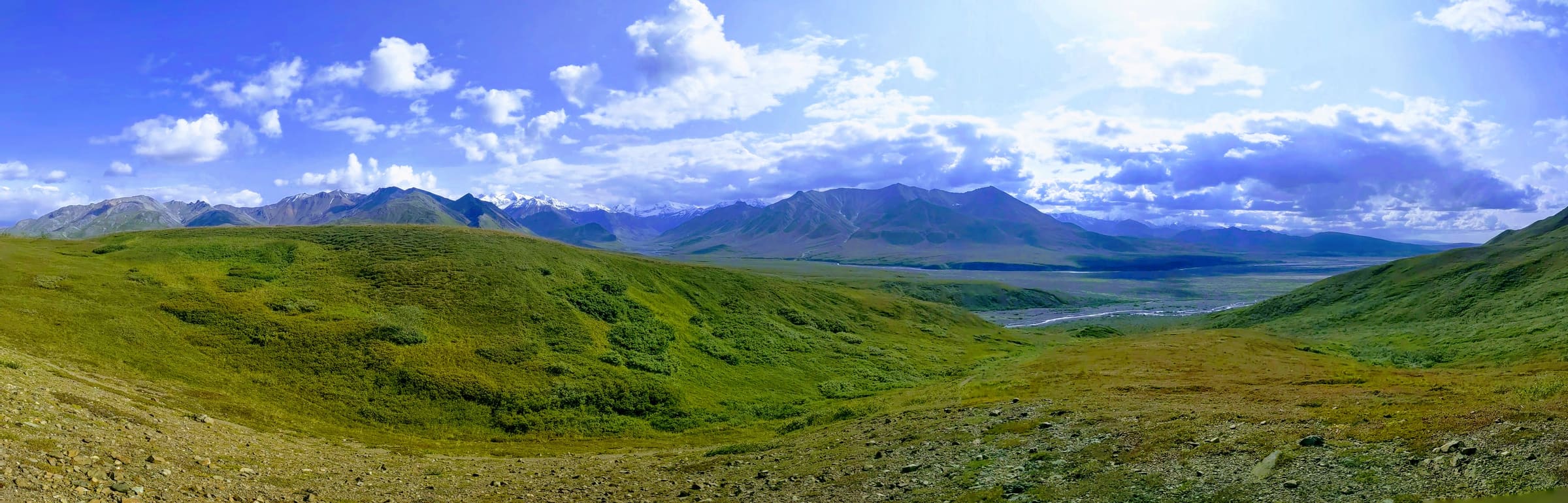
The run from Palmer to Glacier View provides rugged mountain scenery accessible by passenger car in Southcentral Alaska. The valley splits the Chugach Mountains to the south from the older Talkeetna Mountains to the north. Learn more about the terrain along this scenic route through the Alaska Department of Transportation Glenn Highway Scenic Byway guide. Several paved pullouts allow you to step out, check your camera, and let faster commercial traffic pass.
Top off your fuel tank in Palmer or Sutton. Services along the Glenn Highway between Palmer and Glennallen are sparse, and independent filling stations often keep seasonal hours or run short of fuel during supply delays. Reviewing reliable fuel planning for Alaska road trips before driving through rural highway corridors will prevent unexpected delays.
Cellular data through major carriers drops off sharply between Sutton and Chickaloon. You will encounter extended stretches of no service until you approach the lodge operations at Glacier View, where a faint signal may return. Download all navigation maps, confirmation emails, and reservation documents to your mobile device before clearing the Palmer town limits.
What the last two miles actually look like
Reaching the glacier itself requires leaving the paved state highway at Mile 102 and turning down a steep gravel access road. This spur road winds downward through glacial till, crosses a bridge over the turbulent Matanuska River, and heads toward the base terminal.
This gravel road is maintained for standard passenger cars during dry summer periods, but it is unpaved, dusty, and prone to washboard ruts and potholes after rain. Low-clearance sedans and large motorhomes can make the trip, but drivers need to travel under 15 miles per hour to avoid tire punctures and undercarriage scrapes. If you are comparing your vehicle options before arriving in Anchorage, see our breakdown on renting an RV versus a car for an Alaska road trip.
At the gate, you will encounter a private check-in station. Because Matanuska Glacier access is held by a private landowner and operating company, public lands passes like the America the Beautiful interagency pass, federal senior passes, or Alaska State Parks passes are not recognized here. For details on access logistics, check the Matanuska Glacier access policies.
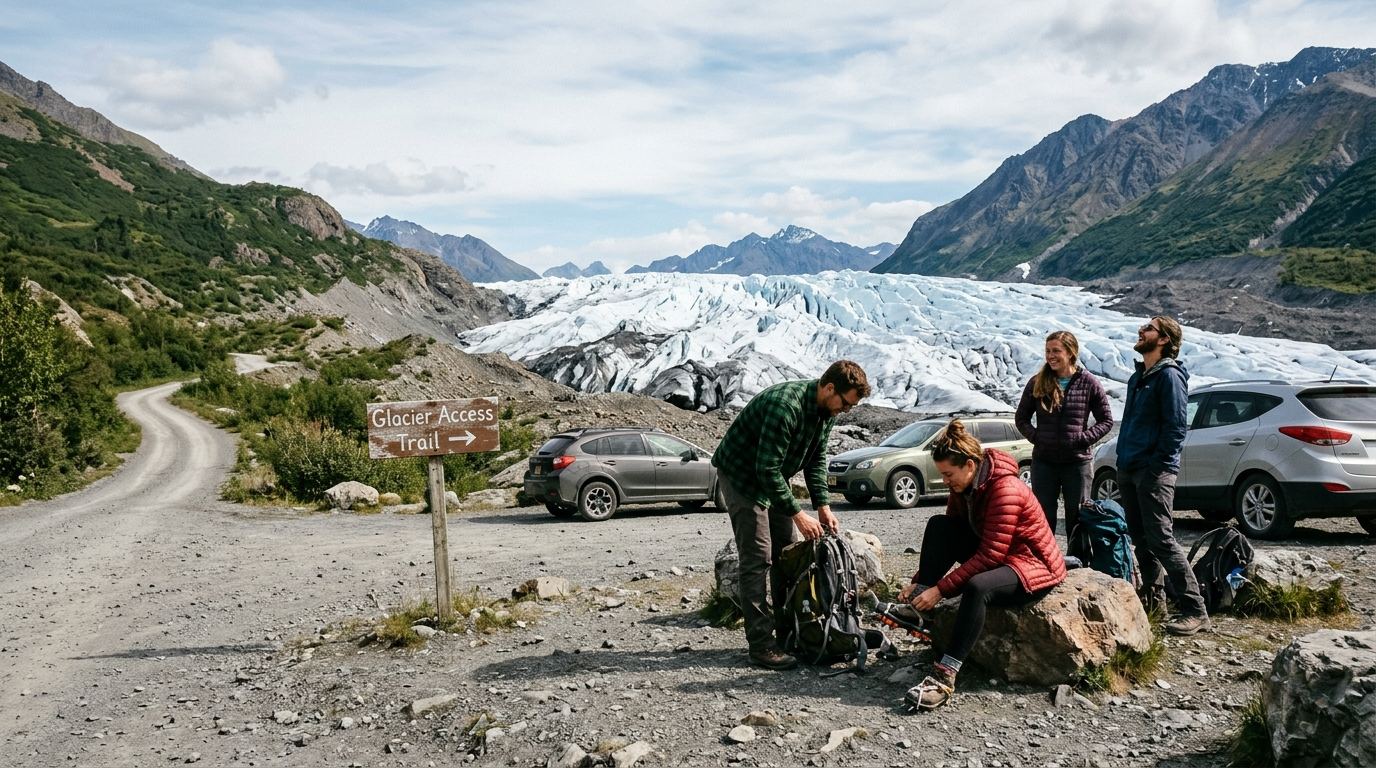
Once through the gate, you park in a gravel lot near the outfitter buildings. From the vehicle parking area, travelers either board a short transport vehicle or take a marked walking path down across the terminal moraine to the staging platforms where crampons and microspikes are fitted. The road conditions and walking paths shift continually as the glacier moves, so winter and shoulder-season access can be paused without advance warning.
Do you need a guide to walk on the glacier?
Under current access guidelines, the operating company requires visitors entering the glacier ice to accompany a certified guide. Independent, unguided hiking onto the ice face is generally not permitted for casual tourists due to the severe safety hazards posed by moulins, hidden crevasses, and collapsing seracs.
Guided excursions run throughout the day during peak summer months. Most standard guided walks last between two and two and a half hours, covering roughly two miles of terrain. More technical routes that venture deeper into serac fields, blue ice caves, and active crevasses require dedicated gear and extended time commitments. The outfitter supplies specialized traction equipment, including fitted crampons or spikes and protective helmets. Wear sturdy, ankle-supporting hiking boots; sneakers and soft running shoes do not support crampons well.
Dressing appropriately is essential. Katabatic winds pull dense, frigid air down off the ice sheet all day. Even when Palmer registers 75 degrees Fahrenheit in the sunshine, the air at the ice face can hover around 45 degrees with steady wind gusts. Dress in synthetic layers, carry a windproof and waterproof outer jacket, and bring a warm fleece beanie and lightweight gloves. For a complete list of recommended cold-weather gear, check our Alaska road trip packing list.
If you are traveling with young children or mobility-conscious adults, evaluate the walking distance before booking. Crossing the terminal moraine requires navigating loose shale, slippery mud, and uneven rocky slopes before stepping onto the firm ice. It is an active walk across loose moraine and uneven rock.
Matanuska Glacier as a road trip stop: where it fits in a broader loop
Because of its location on Route 1, a Matanuska Glacier road trip stop fits several route shapes depending on your available vacation days:
- The Anchorage Day Trip. Depart Anchorage by 7:30 a.m., reach the glacier base around 10:00 a.m., join an 11:00 a.m. guided ice walk, eat a packed lunch, and return to Anchorage by late afternoon. It is an efficient route, but it requires spending five total hours behind the wheel in one day.
- The Glacier View Overnight. Drive up from Anchorage or the Mat-Su Valley in the afternoon, stay at a quiet cabin or bed-and-breakfast in Glacier View or Sheep Mountain, and tackle the glacier walk the next morning. Lodging in Glacier View is sparse and fills quickly for peak summer dates, so booking accommodations well ahead of time is critical.
- The Through-Route to Valdez or Glennallen. Use the glacier as a midday leg-stretcher while transiting from Anchorage to the Copper River Valley or the coastal port of Valdez. You pick up the Richardson Highway at Glennallen and descend through Keystone Canyon to Prince William Sound.
- The Hatcher Pass Alternate. On your return toward Anchorage, branch off the Glenn Highway near Palmer to traverse the high alpine tundra of Hatcher Pass. This loop adds mountain views and historical mining sites, though the central summit road is gravel and remains snowbound until early July.
A frequent error among first-time visitors is budgeting only an hour for the glacier. Between checking in at the private gate, gearing up with crampons, walking across the moraine, spending two hours on the ice sheet, and returning to the highway, the experience consumes three to four full hours on site.
Season, weather, and road conditions to plan around
The primary operating season runs from late May through early September. Late August and September bring vivid golden foliage to the birch and aspen groves framing the highway, along with fewer crowds and cooler afternoon temperatures. By mid-October, the glacier access road frequently freezes, and winter access rules take effect.
The Glenn Highway is a paved road maintained by the state, but Alaska's short summer construction window means you will encounter work zones. Check the official Alaska Department of Transportation Glenn Highway project updates for pilot cars, paving closures, and resurfacing projects that can add 30 to 45 minutes to your travel time. Add a buffer to your schedule so you do not miss your reserved tour window.
Precipitation plays a direct role in your experience. Persistent summer rain turns the private gravel spur road and moraine trails into slick mud. While guided tours operate in light rain, outfitters may alter or shorten routes during intense storms or high wind events for visitor safety.
Moose are abundant throughout the Palmer, Sutton, and Chickaloon river flats. They regularly feed in highway ditches and cross into driving lanes at sunrise and dusk. Obey posted speed limits and avoid driving the canyon corridor after dark.
The DIY research trap (and what a hand-built itinerary changes)
Locating the turnoff for Matanuska Glacier is straightforward. What complicates a vacation is assembling the pieces around it: deciding which night to sleep in Glacier View versus Palmer, coordinating your guided tour times around highway construction delays, and linking the Glenn Highway drive with Denali, Seward, or Valdez without exhausting everyone in the vehicle.
Most travelers lose hours reading through travel forums, only to realize that the rules they are relying on for glacier entry, parking, or tour requirements were superseded two seasons ago.
Alaska Road Trip hand-picks lodging and gives you direct booking links, but you book it yourself—it does not make reservations on your behalf, so you keep full control and flexibility. Alaska Road Trip recommends activities and tours with timing and booking links; you reserve them yourself. Furthermore, Alaska Road Trip does not book flights or rental cars; you arrange those independently.
Our service eliminates the research grind through clear, human-built planning. Alaska Road Trip is a one-time flat fee, not a subscription—there are no recurring charges. Planning options accommodate shorter itineraries of a few days, standard trips up to two weeks, extended routes, and a concierge level that adds a 30-minute live call with the founder.
Every itinerary is hand-built by a named founder who has driven these routes on eight Alaska trips between 2015 and 2024, across four seasons. Plans are checked against current conditions for the traveler's dates. Itineraries reflect current-season research at the time they are built, accounting for specific logistics like the 2026 Denali Park Road mile 43 closure. Alaska Road Trip does not provide real-time booking availability, live tracking, or guaranteed live condition monitoring.
Every custom itinerary comes with a published 14-day money-back guarantee, providing a full refund with no questions asked. Plans are delivered directly to your inbox as a printable, offline-ready PDF within 3 to 5 business days, including 1 to 2 revision rounds to adjust routing to your pace. If you are comparing your options between unguided planning and professional assistance, read our guide on DIY planning versus hiring an Alaska itinerary planner.
Common mistakes on the drive to Matanuska Glacier
- Assuming federal park passes cover entry. Matanuska Glacier is accessed across private land, so federal and state recreation passes will not gain you entry.
- Passing the Palmer fuel stations on a quarter-tank. Rural service stations farther up the Glenn Highway can close unexpectedly. Top off your tank before heading past Sutton.
- Scheduling mid-day ice tours with zero travel padding. A single road-work pilot car or rockslide clearing crew between Palmer and Chickaloon can make you late for your excursion slot.
- Wearing light city footwear. Thin tennis shoes soak through on wet moraine rock, and crampon straps will pinch through soft uppers. Sturdy boots with ankle support are essential.
- Overloading the daily driving schedule. Combining a three-hour glacier walk, a side detour through Hatcher Pass, and an evening push to Talkeetna forces you into ten hours of transit in a single day.
- Relying on mobile data for navigation. Cellular signals drop out along the canyon bottom. Keep an offline PDF and downloaded road maps stored on your device.
Frequently asked questions
How do you get to Matanuska Glacier?
You reach the glacier by driving northeast from Anchorage along the Glenn Highway (Alaska Route 1) to Mile 102. At Mile 102, turn south onto the marked private access road, cross the bridge over the Matanuska River, and proceed down to the visitor parking area and check-in lodge.
How long does it take to drive from Anchorage to Matanuska Glacier?
The 100-mile drive takes approximately 2 to 2.5 hours under standard summer conditions. Bad weather, slow-moving RV traffic along two-lane stretches, or road construction delays can push travel time to three hours.
Can you drive to Matanuska Glacier in a standard rental car, or do you need 4WD?
You do not need a four-wheel-drive vehicle in the summer. The Glenn Highway is fully paved, and the two-mile private access spur is a maintained gravel road passable by ordinary passenger cars. Drivers must watch for washboard ruts and potholes, and check their car rental contracts regarding unpaved driving clauses.
Do you need a guide to walk on Matanuska Glacier?
Yes. Private property rules require visitors who want to hike onto the glacier ice to join a guided excursion. Guides supply necessary safety equipment, including crampons and helmets, and navigate around deep crevasses and unstable seracs.
Is there a fee to see Matanuska Glacier, and does the national park pass cover it?
Viewing the glacier from the Glenn Highway state pullout at Mile 101 is free. However, accessing the road down to the glacier and walking on the ice requires paying private entry and guided tour fees. Because the property is privately held, America the Beautiful and federal park passes are not accepted.
Bottom line: build the glacier into the trip, not around it
Navigating the highway to Matanuska Glacier is one of the easiest road trips from Anchorage, but the logistics surrounding it dictate the success of your day. Decide early whether the glacier will be an active day trip, a relaxing overnight stay in the Mat-Su backcountry, or a scenic waypoint on your drive east toward Valdez. Reserve your guided walking slot and nearby lodging well in advance to ensure availability during peak summer weeks.
If you would rather spend your planning hours on the trip than on the research, Alaska Road Trip builds a custom day-by-day itinerary around your dates, including where to sleep near the glacier and when to book the ice walk. Plans are delivered as a printable PDF in 3 to 5 business days, backed by a 14-day money-back guarantee.
See a real Alaska itinerary before you spend a dollar
A real 3-day plan with driving times, lodging picks, and a daylight chart — free, in your inbox.
One email. No spam. Unsubscribe anytime. Or view it right now — no email needed ↗
Ready for the full plan? Get your custom itinerary — from $197 · 5-day delivery →