Securing the right alaska road trip car rental insurance requires understanding that standard credit card collision damage waivers and national rental car contracts routinely exclude unpaved highways, gravel damage, and remote towing. If you take a standard rental vehicle onto unpaved corridors like the Denali Highway or the McCarthy Road, you risk voiding your entire coverage and facing thousands of dollars in direct out-of-pocket repair and vehicle recovery costs.
Driving across Alaska is unlike driving anywhere else in North America. Between high-velocity flying gravel, severe frost heaves, industrial haul truck traffic, and hundreds of miles of highway with zero cellular coverage, rental vehicles take a severe beating. Navigating car rental insurance policies, fine-print exclusions, and road restrictions is essential before you pick up your keys in Anchorage or Fairbanks.
The Alaska Driving Reality: Why Standard Rental Insurance Falls Short
In the Lower 48, a standard rental vehicle collision policy primarily protects against fender benders, parking lot dings, and highway collisions. In Alaska, vehicle damage is rarely caused by multi-car accidents. Instead, the landscape itself inflicts damage on vehicles through flying shale, loose chip seal, violent frost heaves, and deep potholes.
During the summer road trip season, the Alaska Department of Transportation and Public Facilities undertakes extensive road resurfacing across major routes such as the Parks Highway (Route 3) and the Glenn Highway (Route 1). These maintenance zones use fresh chip seal—a layer of liquid asphalt topped with fine crushed aggregate. As commercial haul trucks and large RVs pass at highway speeds, they launch high-velocity stones directly into oncoming traffic. Windshield pitting, star cracks, and shattered glass are common daily occurrences rather than rare anomalies.
Beyond glass damage, Alaska road conditions expose vehicles to unique mechanical hazards:
- Shredded tire sidewalls: Crushed volcanic rock and unpaved shale surfaces contain sharp, angular edges that slice through standard passenger-car tire sidewalls, causing blowouts that tire plug kits cannot repair.
- Undercarriage abrasion: Continuous high-speed travel on gravel corridors acts like a sandblaster against oil pans, brake lines, catalytic converters, and rocker panels.
- Suspension trauma: Severe frost heaves—undulations created by the seasonal freezing and thawing of permafrost subgrades—can bottom out a low-clearance sedan and snap struts or bend control arms.
The greatest financial vulnerability in Alaska, however, is remote recovery logistics. If your vehicle suffers a mechanical breakdown or blown oil pan on a remote gravel route, standard roadside assistance policies do not provide free long-distance towing. Towing a disabled vehicle from a remote interior corridor back to an authorized repair facility in Fairbanks or Anchorage frequently costs thousands of dollars when billed at standard per-mile commercial recovery rates.
Credit Card Coverage vs. Alaska Road Trip Car Rental Insurance
Many travelers rely on the auto rental collision damage waiver (CDW) benefits provided by premium travel credit cards like the Chase Sapphire Reserve®, Capital One Venture X®, or The Platinum Card® from American Express. While these cards offer primary or secondary rental insurance that saves money in urban destinations, relying exclusively on credit card coverage in Alaska requires scrutinizing the benefit terms.
Credit card rental coverage operates under strict contractual parameters. When evaluating your alaska road trip car rental insurance options, you must verify how your credit card agreement handles the following specific exclusions:
- Unpaved road exclusions: A substantial number of card benefit administrators explicitly state that coverage is void if the vehicle is operated on "unpaved, dirt, or gravel surfaces" or roads not maintained by a state, borough, or federal agency.
- Vehicle class limitations: Card policies frequently exclude large 4x4 trucks, heavy-duty passenger vans with seating for more than eight or nine occupants, full-size SUVs over specific gross vehicle weight ratings (GVWR), and specialized camper conversions.
- Duration caps: Coverage is generally capped at 15 to 31 consecutive days on a single rental agreement.
A critical question for self-drive travelers is: does credit card insurance cover alaska gravel roads? The answer depends on two conditions: the precise wording of your credit card's Guide to Benefits, and the terms of your rental agreement. If your rental contract forbids driving on unpaved roads, driving on one constitutes a breach of contract. A breach of the underlying rental contract automatically invalidates your credit card's collision protection, leaving you fully liable for all vehicle damage, loss of use, and recovery expenses.
Furthermore, credit card administrators require extensive documentation to process claims, including the original rental agreement, police accident reports, detailed repair estimates, and proof of fleet utilization. If the rental agency assesses fees that the credit card company disputes—such as administrative fees, diminished value claims, or unsubstantiated loss-of-use charges—you remain personally liable to the rental agency for the disputed balance.
| Coverage Parameter | Premium Credit Card CDW | National Airport Car Rental CDW/LDW | Specialty Alaska 4x4 / Outfitter Insurance |
|---|---|---|---|
| Paved Public Highways | Covered (Primary or Secondary) | Covered (Zero Deductible options available) | Covered |
| Major Unpaved Highways (Denali, McCarthy) | Excluded if prohibited by rental contract | Strictly prohibited; voids all coverage | Explicitly permitted and insured |
| Windshield & Glass Damage | Subject to reimbursement claim process | Included in premium waivers; excluded in basic plans | Covered under specific gravel waivers |
| Tire Sidewall Damage & Punctures | Frequently excluded or disputed | Excluded unless supplementary roadside package purchased | Covered (often includes 2 full-size spares) |
| Remote Corridor Towing Costs | Capped at low limits ($50–$100 standard) | Standard roadside assistance limits apply; remote overages billed | Comprehensive remote recovery plans available |
Rental Car Insurance for Alaska Gravel Roads and Highway Restrictions
When searching for rental car insurance for alaska gravel roads, the fundamental hurdle is not the insurance policy itself, but the underlying vehicle rental agreement. Major corporate rental agencies operating out of Ted Stevens Anchorage International Airport (ANC) and Fairbanks International Airport (FAI)—including Hertz, Avis, Enterprise, Budget, and National—include explicit geographical and road-surface prohibitions in their standard contracts.
These contracts routinely prohibit driving on specific unpaved public corridors, including:
- The Denali Highway (Alaska Route 8)
- The McCarthy Road (Chitina to McCarthy / Kennecott)
- The Dalton Highway (Alaska Route 11, north of Livengood to Deadhorse)
- The Taylor Highway and Top of the World Highway (beyond the paved boundary)
- The Hatcher Pass Road (unpaved summit section)
- The Nabesna Road (Slana to Nabesna)
When a customer drives an airport fleet vehicle onto one of these prohibited routes, they trigger an immediate breach of contract. In legal terms, this breach revokes every protective waiver purchased at the rental counter, nullifies third-party supplemental liability coverage, and invalidates any personal credit card rental insurance. The renter assumes complete personal liability for all damages, collision repairs, loss of use during vehicle repair downtime, and remote off-road recovery bills.
If your itinerary involves unpaved highways, you must rent from specialized local Alaska vehicle outfitters (such as GoNorth Car & RV Rental, Alaska 4x4 Rentals, or Midnight Sun Car Rentals) rather than standard airport franchise counters. These local companies build gravel travel permissions directly into their rental agreements, equip their fleets with heavy-duty light truck (LT) tires and full-size spare tires, and provide specialized gravel collision damage waivers designed for these routes. If you are comparing vehicle platforms for your route, review our guide on renting a 4WD vehicle in Alaska to match ground clearance and drivetrains to specific highway profiles.
Windshield, Tire, and Undercarriage Damage: Understanding Exclusions
Glass and tire claims make up the vast majority of vehicle repair billing in Alaska. Because these components face predictable wear and tear from unpaved and chip-sealed highways, standard supplemental collision waivers sold by airport rental desks often include fine-print caveats that exclude glass and tires, or categorize them under separate, higher-deductible coverage tiers.
To avoid unexpected damage charges when turning in your vehicle, pay close attention to high-risk wear areas:
1. High-Velocity Windshield Damage
On two-lane highways like the Parks Highway heading north toward Denali National Park, traffic moves at 65 mph while oncoming commercial trucks displace loose gravel. A tiny micro-chip sustained on Day 2 can rapidly spread across the entire windshield due to temperature swings between midday sun and sub-freezing overnight lows, rendering the glass structurally compromised and requiring a full replacement upon return.
2. Tire Tread and Sidewall Integrity
Modern passenger cars at airport rental lots are equipped with highway-terrain (all-season) passenger tires designed for smooth asphalt and fuel efficiency, not sharp gravel. When driven over washboard gravel, these thin sidewalls are vulnerable to punctures. If you puncture a tire sidewall, the tire cannot be plugged or patched; you will be billed for a complete replacement tire, and potentially a matching pair to maintain balanced tread depth on all-wheel-drive systems.
3. Undercarriage and Rocker Panel Sandblasting
Vehicles driven continuously on unpaved roads suffer finish erosion on low-hanging plastic air dams, wheel well liners, and painted rocker panels. Inspecting the underside of your vehicle before departure ensures you are not billed for previous renters' gravel excursions.
ANC and FAI Rental Pick-Up Inspection Checklist
- Perform a continuous video walkaround: Record a slow, 360-degree, high-resolution video of the vehicle's exterior before moving it from the parking stall. Focus closely on the windshield, fog lights, front bumper, rocker panels, and roofline.
- Inspect the windshield micro-chips: Look for existing pinhead-sized rock chips. Ensure the lot attendant documents every individual glass mark on the initial condition report.
- Check tire tread and inspect the spare: Confirm that all four tires have sufficient tread depth and no sidewall bulging. Open the trunk, lift the cargo floor, and verify the presence of a functional jack, lug wrench, and properly inflated spare tire.
- Photograph the undercarriage: Crouch down and capture clear, well-lit photos of the front skid plate, lower bumper valance, and exhaust system.
Key Alaska Highways and Their Specific Rental Insurance Risks
Every major road corridor in Alaska presents distinct roadbed conditions, logistical challenges, and insurance risk factors. Understanding the specific nature of each highway helps you determine whether your vehicle and insurance package are legally compliant and mechanically suitable.
Denali Highway (Route 8)
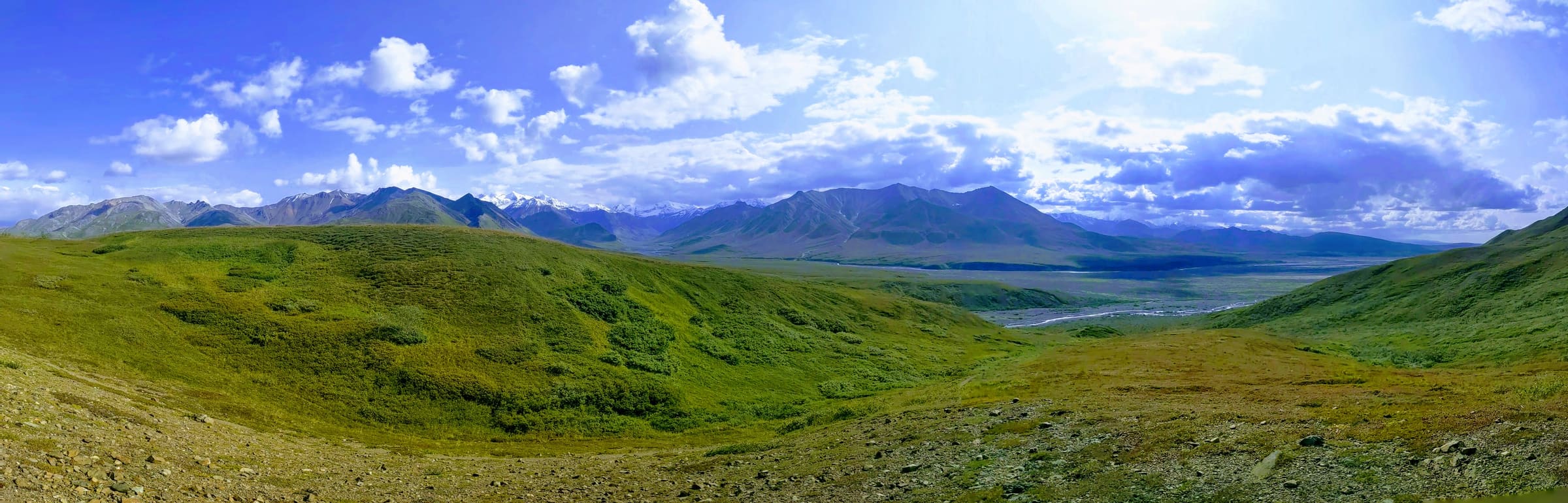
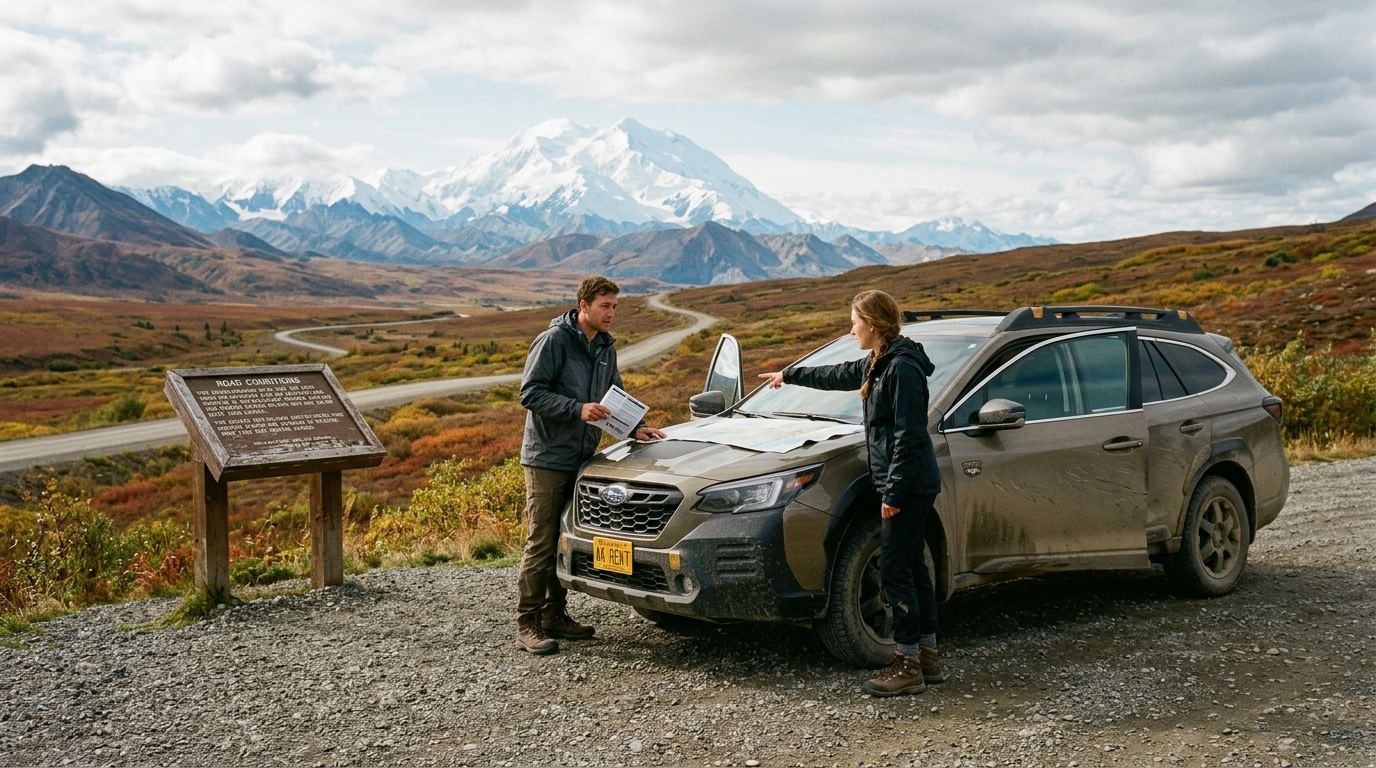
Running 135 miles between Paxson and Cantwell, the Denali Highway offers exceptional views of the Alaska Range. As detailed in the Bureau of Land Management Denali Highway Guide, 114 miles of the route remain unpaved gravel. The road surface consists of rough gravel, deep washboard ridges, exposed sharp rocks, and temporary stream washouts. Commercial services are sparse, and cellular coverage is virtually nonexistent across the entire corridor. Driving a standard airport rental car here breaches conventional rental contracts and risks catastrophic tire and suspension damage.
McCarthy Road (Wrangell-St. Elias National Park)
The 60-mile McCarthy Road follows the historic route of the Copper River and Northwestern Railway from Chitina to the Kennicott River. According to the National Park Service McCarthy Road Guide, the road is unpaved, narrow, contains rough gravel and washboard ruts, and occasionally reveals historical railroad spikes embedded in the subgrade that create sharp puncture hazards for low-ply passenger tires. The corridor has no commercial fuel or vehicle services, meaning a severe breakdown requires an expensive long-distance commercial recovery from Glennallen or Anchorage.
Dalton Highway (Route 11)
The 414-mile Dalton Highway extends from north of Fairbanks across the Arctic Circle to Deadhorse and Prudhoe Bay. As noted by the Bureau of Land Management Dalton Highway Guide, the route serves as an industrial supply corridor for the North Slope oil fields, featuring rough gravel, steep grades at Atigun Pass, heavy dust clouds, and high-speed tractor-trailer traffic. Flying gravel and calcium chloride road treatments quickly damage glass and accelerate undercarriage corrosion. Specialized 4x4 rental vehicles with dedicated gravel insurance are strictly required for this corridor. For complete logistics on traveling this route, consult our in-depth Dalton Highway guide.
Top of the World Highway
Connecting Tetlin Junction near Tok with Dawson City in Canada's Yukon Territory, the Top of the World Highway winds along high-elevation ridge lines. The unpaved portions feature narrow shoulders, sharp shale rock, and severe washboarding that deteriorates rapidly after prolonged summer rainfall. International border logistics and remote towing limitations make standard airport rental agreements completely incompatible with this route.
Choosing the Right Alaska Road Trip Car Rental Insurance Strategy
Determining the right insurance configuration requires matching your planned driving route with the correct vehicle provider and coverage tier. Choosing coverage depends on your route type:
Scenario A: The Fully Paved Highway Route
If your itinerary is confined entirely to paved corridors—such as driving from Anchorage to the Kenai Peninsula via the Seward Highway, exploring Denali National Park via the Parks Highway, and viewing glaciers along the Glenn Highway—a standard airport rental car from a major franchise is legally compliant. For this route profile, you can utilize primary credit card CDW coverage or purchase the rental agency's Loss Damage Waiver (LDW). If relying on credit card insurance, verify that your card provides primary coverage, and ensure you purchase a standalone roadside assistance package that includes towing and glass repair.
Scenario B: The Mixed Paved & Gravel Highway Route
If your travel plans include unpaved highways like the Denali Highway, McCarthy Road, or Hatcher Pass, you must avoid major airport franchise counters. Instead, book your vehicle directly through a licensed Alaska 4x4 outfitter whose rental agreement explicitly authorizes unpaved highway travel. Purchase the outfitter's zero-deductible gravel collision damage waiver, which covers windshield stars, cracked glass, tire blowouts, and body sandblasting without requiring complicated claims through your personal insurance carrier.
When selecting your strategy, review your personal auto insurance policy before leaving home. Call your insurance agent to confirm whether your comprehensive and collision coverages extend seamlessly to rental vehicles in Alaska, verify your deductible amounts, and check whether your policy reimburses rental company loss-of-use administrative charges. You should also ensure you understand regional supply points; review our detailed breakdown on fuel planning in Alaska to avoid running low on remote interior stretches.
Attempting to design a complex route while cross-referencing rental contract restrictions, vehicle clearance requirements, and insurance fine print can quickly become overwhelming. Alaska Road Trip does not book flights or rental cars; you arrange those independently. Instead, every itinerary is hand-built by a named founder who has driven thousands of Alaska miles across multiple seasons, matching each day of driving to practical vehicle capabilities, current road conditions, and realistic travel times.
If you want clear guidance on structuring your trip without route blunders, explore our custom Alaska road trip itinerary options. Plans are available at straightforward, flat one-time pricing: Lite $97 (1-5 days), Standard $197 (up to 14 days), Plus $297 (15+ days), or Concierge $497, which includes a 30-minute live founder consultation. Alaska Road Trip hand-picks lodging and gives you direct booking links, but you book it yourself — it does not make reservations on your behalf, so you keep full control and flexibility. Every custom plan is delivered as a printable, offline-ready PDF within 3 to 5 business days, includes 1 to 2 revision rounds, and is backed by a published 14-day money-back guarantee with a full refund and no questions asked.
Essential Precautions Before Driving Off the Anchorage or Fairbanks Lot
Before you shift your rental car into drive and depart Anchorage or Fairbanks, take these vital mechanical and administrative precautions:
- Verify the spare tire and recovery tools: rarely accept a rental vehicle in Alaska that supplies only an aerosol tire inflator can and a 12-volt compressor. You need a real spare tire (ideally a full-size spare if driving gravel highways), a functional scissors or bottle jack, and a lug wrench that fits the vehicle's lug nuts. Check that the spare tire is inflated to its rated PSI before leaving the urban area.
- Establish an offline communication protocol: Because vast stretches of Alaska's highway network have no cellular coverage, you cannot rely on a phone call to summon roadside assistance. Carry an offline satellite communication device (such as a Garmin inReach or an Apple Satellite SOS-enabled phone). Save the direct dispatch numbers of local towing operators along your route in an offline notebook.
- Document pre-existing body and glass imperfections: Perform your vehicle walkaround in good lighting. Record high-resolution, time-stamped video coverage of every rocker panel, the lower corners of the front and rear bumpers, and all glass surfaces. Have the rental agent sign off on any existing chips or scrapes on the formal pick-up agreement.
- Inspect the engine air filter and fluid levels: If you are embarking on a multi-week trip, check that the engine oil, windshield washer fluid, and coolant levels are at factory-specified marks. Alaska road dust clogs engine air filters rapidly, which can affect engine efficiency across long mountain passes.
Frequently Asked Questions
Does credit card insurance cover driving on Alaska gravel roads?
In most cases, credit card auto rental insurance does not cover driving on unpaved gravel roads in Alaska. Most credit card benefit administrators explicitly exclude dirt and unpaved roads. Furthermore, if your underlying rental contract prohibits driving on unpaved highways, doing so constitutes a breach of contract that instantly voids all credit card collision protections, making you personally responsible for all damage and towing bills.
Can I drive standard rental cars on the Denali Highway or McCarthy Road?
No. Major airport rental car companies (such as Hertz, Avis, Enterprise, and Budget) strictly prohibit their standard vehicles from being driven on the Denali Highway, McCarthy Road, Dalton Highway, and other unpaved routes. To drive these roads legally and with active insurance coverage, you must rent a vehicle from a specialized Alaska outfitter that explicitly permits unpaved highway travel.
What happens if my rental car windshield gets cracked by flying gravel in Alaska?
If your rental vehicle's windshield is chipped or cracked by flying gravel, you will be billed for the repair or full glass replacement upon returning the vehicle. If you purchased a zero-deductible Loss Damage Waiver (LDW) that includes glass coverage from the rental agency, the replacement cost is fully covered. If you declined the waiver, you must pay the rental company directly and file a reimbursement claim through your personal auto insurance or credit card provider.
Do I need to buy supplementary CDW insurance when renting a car in Alaska?
While supplementary Collision Damage Waiver (CDW) is not legally mandated, purchasing zero-deductible CDW directly from the rental provider is highly recommended for driving in Alaska. Given the high frequency of rock chips, tire punctures, and costly remote towing expenses, a standalone rental agency waiver provides walk-away coverage that shields your personal auto insurance policy from expensive out-of-state claims and prevents disputed loss-of-use charges.
Ready to explore the Last Frontier without route blunders or insurance headaches? Get a custom day-by-day Alaska road-trip itinerary built by a local founder, complete with direct booking links and route guidance tailored to your vehicle.
See a real Alaska itinerary before you spend a dollar
A real 3-day plan with driving times, lodging picks, and a daylight chart — free, in your inbox.
One email. No spam. Unsubscribe anytime. Or view it right now — no email needed ↗
Ready for the full plan? Get your custom itinerary — from $197 · 5-day delivery →