Imagine cruising down the Denali Highway, the vast Alaskan wilderness stretching out before you. It’s an iconic drive, but if your tires are inflated to highway pressure, you’re on the fastest route to a blowout. This isn't a scare tactic; it's a reality check for anyone planning an Alaska road trip. The unique conditions of Alaska's unpaved roads, often featuring sharp rocks, loose gravel, and varying surfaces, demand a different approach to tire management, especially when it comes to tire pressure for your Alaska road trip. Ignoring these specific demands can lead to discomfort, vehicle damage, and even dangerous situations in remote areas. While planning an Alaska self-drive trip can feel overwhelming, understanding tire pressure is a small but critical detail that can contribute to a smoother journey. This guide will walk you through the specifics of adjusting your tire pressure for Alaska's gravel roads, managing challenging conditions, and ensuring your vehicle is properly equipped for the adventure ahead in 2026.
Driving at highway speeds (above 45-50 mph) with reduced tire pressure on paved roads can cause excessive heat buildup, potentially leading to tire failure. For more information on how heat affects tire pressure and safety, refer to this Yeargansauto source.
Understanding Alaska's Unique Road Network
Alaska isn't just paved highways. Many of its most scenic and adventurous routes are unpaved, gravel roads. Think of the Denali Highway, a stunning 135-mile stretch of gravel that offers unparalleled views of the Alaska Range. Or the McCarthy Road, leading to the historic Kennecott Mines in Wrangell-St. Elias National Park, known for its sharp rocks and remote stretches. Even parts of the Top of the World Highway, connecting Alaska to the Yukon, are gravel. These aren't just dirt tracks; they are often well-maintained but still present challenges that asphalt roads do not.
Driving these roads at the same tire pressure you'd use on Interstate 5 is a recipe for disaster. Highway pressures are designed for optimal fuel efficiency and handling on smooth, hard surfaces. On gravel, however, this rigidity becomes a liability. The tire cannot flex over rocks and uneven terrain, making it more susceptible to punctures, sidewall damage, and blowouts. Furthermore, a rigid tire transmits every bump directly to the vehicle and its occupants, leading to a much rougher, less comfortable ride and reduced control on loose surfaces.
The Science Behind Lowering Tire Pressure on Gravel
Adjusting your alaska road trip tire pressure for gravel roads isn't just a suggestion; it's a fundamental principle of safe and comfortable off-pavement driving. Here's why:
- Increased Contact Patch: When you lower your tire pressure, the tire flattens out slightly, increasing the amount of rubber in contact with the road surface. This larger contact patch significantly improves traction, giving you better grip for accelerating, braking, and steering on loose gravel, which is essential for maintaining control.
- Reduced Risk of Punctures and Blowouts: A softer tire is more pliable. Instead of resisting and being cut by sharp rocks, it can flex and conform around them. This flexibility distributes the impact force over a wider area, drastically reducing the likelihood of a puncture or a sudden, dangerous blowout.
- Improved Ride Comfort: The tire acts as an additional shock absorber. With lower pressure, it can absorb more of the bumps and vibrations from the uneven gravel surface, leading to a smoother, more comfortable ride for everyone in the vehicle. This is especially important on long stretches like the Denali Highway.
- Better Heat Dissipation: While counter-intuitive, a properly deflated tire on gravel can actually manage heat better than an over-inflated one. The increased flex helps dissipate heat generated by friction, preventing excessive heat buildup that can lead to tire failure. However, it's crucial to note that driving at high speeds with significantly reduced pressure on pavement will cause excessive heat and damage.
According to tire experts, including those at TireBuyer, citing Goodyear's general advice, lowering tire pressure for off-road conditions allows the tire to conform to obstacles, increasing grip and reducing the chance of impact damage. They suggest a reduction of 10-15 PSI from your highway pressure as a general starting point for off-road driving, though specific recommendations can vary by vehicle and terrain.
How and When to Adjust Your Tire Pressure
The process of adjusting your alaska road trip tire pressure is straightforward, but requires the right tools and a clear understanding of when to make the change.
Step-by-Step Adjustment Guide:
Know Your Starting Point: Before you leave home, or at least before you hit the gravel, know your vehicle manufacturer's recommended tire pressure for normal highway driving. This is typically found on a sticker inside the driver's side door jamb or in your owner's manual. Do not use the maximum PSI listed on the tire sidewall.
Determine Your Target Pressure: For most passenger vehicles and SUVs on Alaska's gravel roads, a reduction of 5-10 PSI from your highway pressure is a good starting point. For example, if your highway pressure is 35 PSI, aim for 25-30 PSI on gravel. This isn't a one-size-fits-all number; it depends on your vehicle's weight, tire type, and the specific road conditions. Heavier vehicles or those with stiffer sidewalls might benefit from a slightly smaller drop, while lighter vehicles or those with very flexible tires might go a bit lower. The key is to find a balance that offers comfort and protection without making the tire too soft for control. Source: Tireflateinc source.
Use a Reliable Gauge: Invest in a good quality tire pressure gauge. Digital gauges are often more accurate and easier to read than pencil-style gauges.
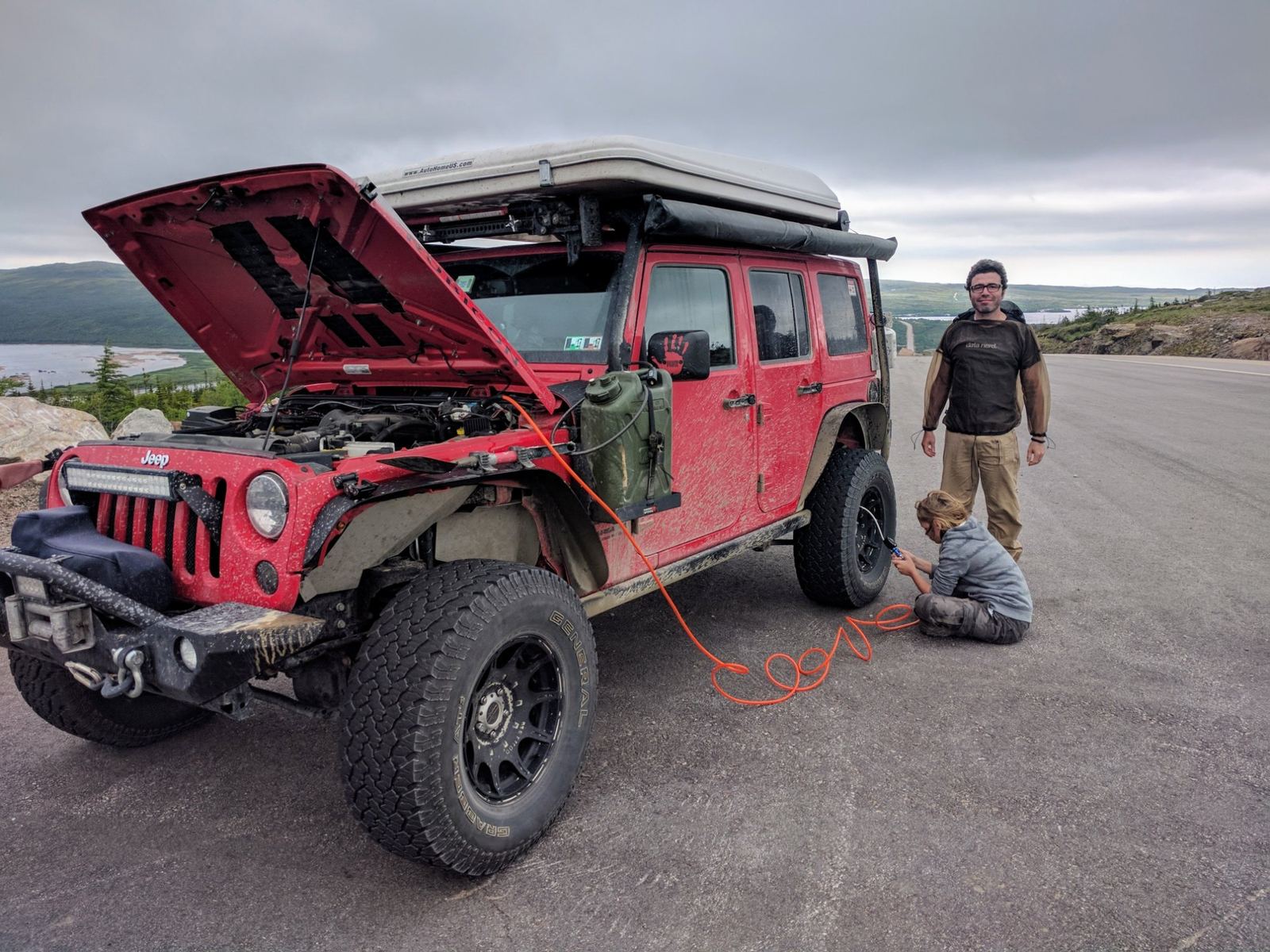
Deflate Your Tires: When you reach the start of a significant gravel section (like the Denali Highway or McCarthy Road), pull over safely. Use your gauge to check the current pressure, then press the pin in the valve stem to release air until you reach your target pressure. Recheck with your gauge.
Re-inflate for Pavement: This is critical. Driving at highway speeds (above 45-50 mph) with reduced tire pressure on paved roads will cause excessive heat buildup, potentially leading to tire failure and dangerous handling. As soon as you return to a paved highway for an extended period, you must re-inflate your tires to the manufacturer's recommended highway pressure. This means carrying a portable air compressor.
When to Adjust:
- Before Gravel: It's generally recommended to deflate your tires before you embark on a long stretch of gravel. Don't wait until you're already experiencing issues.
- Before Pavement: It is often recommended to re-inflate tires before returning to paved roads for any significant distance.
- Temperature Changes: Tire pressure changes with temperature. A significant drop in ambient temperature (e.g., overnight) will lower your tire pressure, while driving on hot pavement will increase it. For the most accurate reading, it's best to check your tires when they are 'cold' (before driving).
For roads like the Denali Park Road (which has a mile 43 closure in 2026, limiting access), even though it's not entirely gravel, the unpaved sections within the park benefit from slightly reduced pressure for comfort and safety, especially if you plan to drive the full accessible length.
Managing "Tire Wander" and Rutted Roads
One common phenomenon you might encounter on lower-pressure tires on gravel is "tire wander" or "tire squirm." This is the feeling that your vehicle is floating or drifting slightly, requiring constant small steering corrections. It's more pronounced on rutted or washboarded roads.
What Causes Tire Wander?
- Increased Flexibility: While beneficial for impact absorption, the softer sidewalls of a deflated tire can lead to less precise steering response.
- Road Conditions: Loose gravel, deep ruts, and washboards (corrugations in the road surface) can make the vehicle feel less stable.
Driving Techniques to Manage Wander:
- Reduce Speed: The most effective way to manage tire wander and maintain control is to slow down. Driving at 20-30 mph on rough gravel is often safer and more comfortable than trying to maintain 45 mph.
- Gentle Steering Inputs: Avoid sudden, jerky steering. Make smooth, small corrections.
- Look Ahead: Scan the road far in front of you to anticipate ruts, potholes, and changes in surface. This allows you to adjust your line and speed proactively.
- Maintain Momentum (Carefully): On washboard sections, sometimes a slightly higher, but still controlled, speed can "float" over the tops of the corrugations, reducing vibration. However, this requires careful judgment and should only be attempted if conditions allow and you feel confident.
- Consider 4WD/AWD: While not strictly about tire pressure, a vehicle with 4WD or AWD can offer better traction and stability on loose, rutted gravel, giving you more control and confidence. Many rental companies offer these options, and they are highly recommended for an Alaska road trip.
Maintaining a consistent, moderate speed and avoiding harsh braking or acceleration are often key to managing loose surfaces and preventing loss of control.
Why High-Quality All-Terrain Tires Are Non-Negotiable
This is a critical point for anyone planning an Alaska road trip, especially if you're renting a vehicle. Many standard rental cars come equipped with highway-oriented tires (often referred to as "all-season" tires). While these are fine for paved roads, they are a significant liability on Alaska's gravel. Their thinner sidewalls and less aggressive tread patterns are simply not designed to withstand the abuse of sharp rocks and rough surfaces.
What to Look For:
- Aggressive Tread Pattern: All-terrain (AT) tires have deeper, more open tread blocks that provide better grip on loose surfaces and are more resistant to punctures.
- Reinforced Sidewalls: This is perhaps the most crucial feature. AT tires have stronger, multi-ply sidewalls that are far more resistant to cuts and tears from sharp rocks, which are common on Alaska's gravel roads.
- M+S Rating: Look for tires with an "M+S" (Mud and Snow) rating, indicating they are designed for better performance in varied, challenging conditions.
When booking a rental car, specifically inquire about tire types. If possible, opt for an SUV or truck that is more likely to come with AT tires, or at least has the option for them. The peace of mind and reduced risk of a flat tire in a remote area are well worth any additional cost. A flat tire on the Denali Highway isn't just an inconvenience; in remote areas, assistance can be significantly delayed, potentially impacting your precious vacation time.
Essential Gear for Tire Management on Your Alaska Road Trip
To properly manage your tires and handle potential issues, you'll need a few key items:
- Portable Air Compressor: Absolutely non-negotiable. You'll need this to re-inflate your tires when transitioning from gravel back to pavement. Look for one that plugs into your vehicle's 12V outlet and has a decent flow rate.
- Accurate Tire Pressure Gauge: As mentioned, a reliable gauge is essential for precise adjustments.
- Tire Repair Kit (Plug Kit): For minor punctures in the tread (not sidewall damage), a plug kit can be a temporary lifesaver to get you to the nearest tire shop.
- Full-Size Spare Tire: Ensure your rental vehicle has a full-size spare, not just a "donut" or a can of sealant. A donut spare is not suitable for extended driving on rough Alaskan roads.
- Jack and Lug Wrench: Make sure you know where these are in your vehicle and how to use them. Practice changing a tire before your trip if you're unsure.
Regular tire maintenance and checking pressure are important, as underinflated tires can lead to serious safety issues. For more on how heat affects tire pressure and safety, refer to this Yeargansauto source.
The Hidden Costs of DIY Tire Management (and Trip Planning)
Managing tire pressure, understanding tire types, and carrying the right gear can feel like just another item on an already overwhelming DIY Alaska road trip checklist. The sheer volume of research—from lodging to activities, drive times, and understanding local nuances like the 2026 Denali Park Road closure—can quickly turn excitement into stress. Instead of spending hours on these details, imagine having an expert guide you through every step of your journey, allowing you to focus on the adventure itself.
Planning Your Alaska Road Trip: Beyond Tire Pressure
While mastering Alaska road trip planning is crucial, it's just one facet of a successful trip. Planning an Alaska road trip involves navigating complex logistics: securing lodging in popular areas like Seward or Homer, understanding ferry schedules, booking unique activities, and accounting for the vast distances and variable road conditions. For example, knowing the best time to visit or how to avoid cruise ship crowds requires local insight.
At Alaska Road Trip, the founder, who has driven thousands of miles across multiple seasons, hand-builds custom day-by-day itineraries. We take the guesswork out of your planning, providing a detailed, printable, and offline-ready PDF that includes recommended lodging and activities with direct booking links. You book directly, maintaining control, but with the confidence that every recommendation is current-season research (e.g., reflecting the 2026 Denali Park Road mile 43 closure) and tailored to your specific interests and pace.
Our services are designed to alleviate the DIY pain:
- Custom Itineraries: Hand-built by a founder, not a generic template.
- Flexible Packages: We offer various custom itinerary packages tailored to your trip length and needs.
- Concierge Option: A concierge option is also available for a personalized consultation with our founder to discuss your trip in detail.
- Guarantee Information: Details regarding our service guarantee can be found on our guarantee page.
- Efficient Delivery: Custom itineraries are delivered with revision options, and a concierge option offers priority support.
Focus on the adventure, not the anxiety. Let us handle the intricate planning so you can enjoy the unparalleled beauty of Alaska with confidence. Start planning your custom Alaska road trip today.
Frequently Asked Questions
How much PSI should I drop for gravel roads in Alaska?
For most passenger vehicles and SUVs on Alaska's gravel roads, a reduction of 5-10 PSI from your manufacturer's recommended highway pressure is a good starting point. For example, if your highway pressure is 35 PSI, aim for 25-30 PSI on gravel. It is often recommended to re-inflate to highway pressure when returning to pavement.
Can I drive highway speeds with reduced tire pressure on gravel?
No. While reduced tire pressure is beneficial for traction and comfort on gravel, it's crucial to significantly reduce your speed. Driving at high speeds (above 45-50 mph) with deflated tires, even on gravel, can lead to excessive heat buildup, tire damage, and loss of control. Drivers should often proceed cautiously and adjust their speed to the prevailing conditions.
What if my rental car doesn't have all-terrain tires?
Many standard rental cars come with highway-oriented tires, which are not ideal for Alaska's gravel roads. If you cannot secure a rental with all-terrain tires, you must be extra cautious. Drive slower, be more vigilant for road hazards, and be prepared for a higher risk of punctures. Consider routes with less gravel or shorter gravel sections. Carrying a portable air compressor and a tire repair kit becomes even more critical.
Is it worth carrying a portable air compressor for an Alaska road trip?
Absolutely. A portable air compressor is an essential piece of gear for any Alaska road trip that involves gravel roads. It allows you to safely deflate your tires for gravel sections and, more importantly, re-inflate them to highway pressure when you return to paved roads. Without one, you risk tire damage or dangerous driving conditions.
Navigating Alaska's diverse road conditions, especially its extensive gravel network, requires preparation and the right knowledge. Understanding how to manage your tire pressure is a key part of that preparation. Don't let the details of trip planning overshadow the adventure itself. Let Alaska Road Trip handle the complexities of building your perfect itinerary, ensuring you have a smooth, safe, and unforgettable journey. With a custom, hand-built plan from the Alaska Road Trip founder, you can focus on the stunning scenery and unique experiences, knowing all the critical details are covered. Alaska Road Trip offers custom itinerary planning services to help you take the first step towards your dream Alaska adventure today.

See a real Alaska itinerary before you spend a dollar
A real 3-day plan with driving times, lodging picks, and a daylight chart — free, in your inbox.
One email. No spam. Unsubscribe anytime. Or view it right now — no email needed ↗
Ready for the full plan? Get your custom itinerary — from $197 · 5-day delivery →