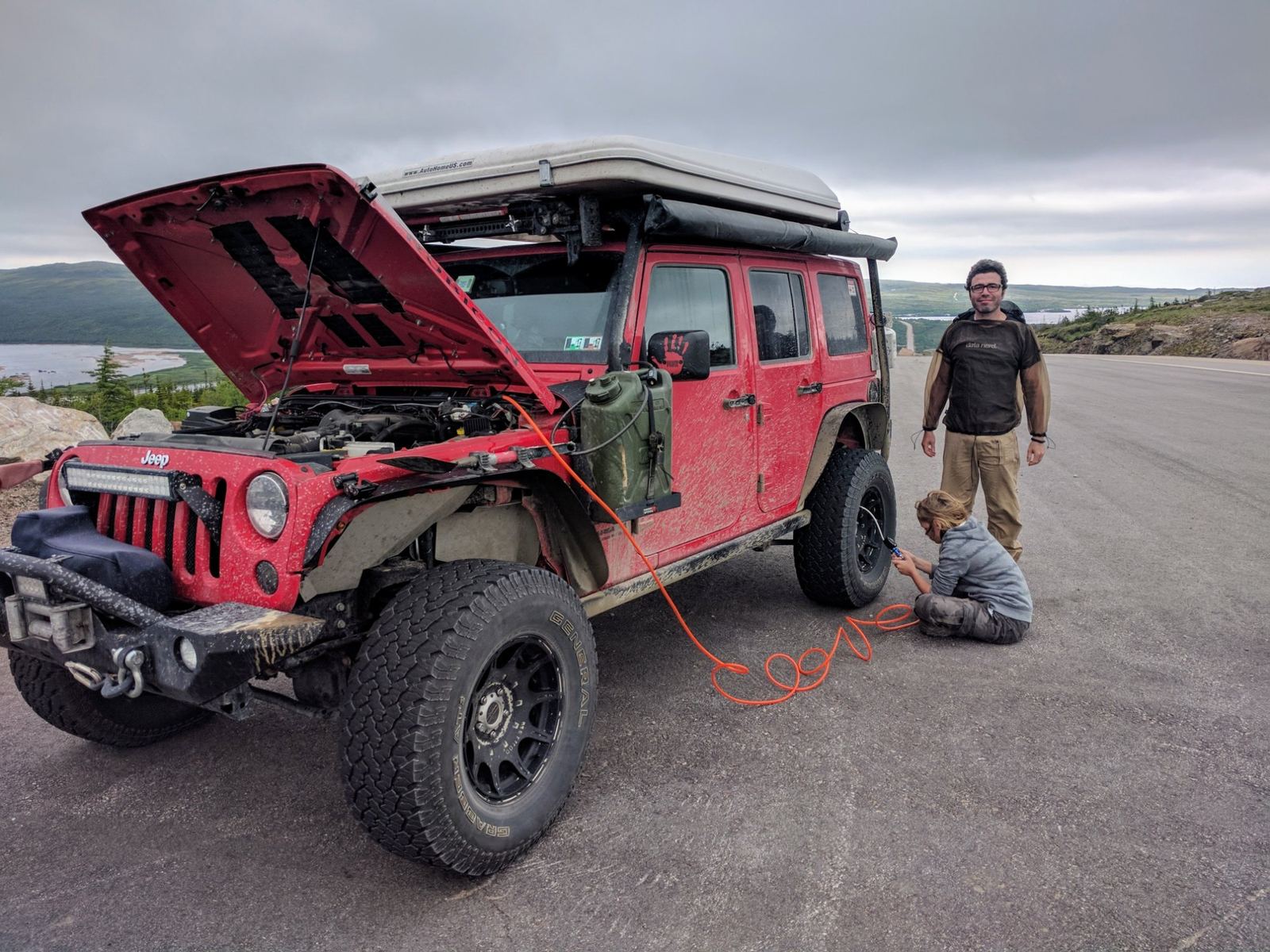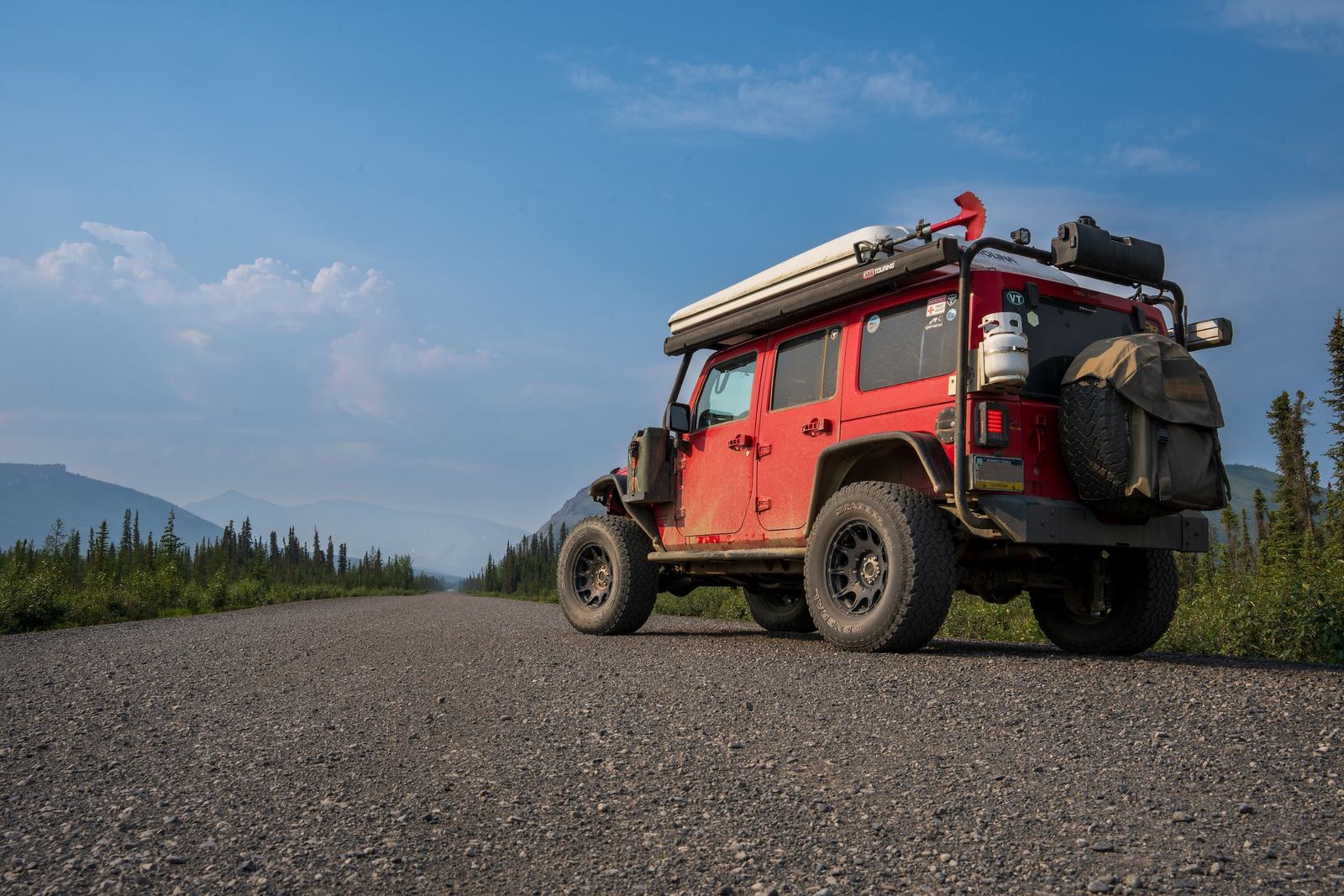
Imagine you are driving through the breathtaking landscapes of the Last Frontier. The sun is shining, the mountains are towering, and you have a meticulously planned itinerary ahead of you. Suddenly, a sharp hiss cuts through the hum of your engine. Within minutes, you are stranded on the shoulder of a remote gravel road, miles from cell service, with a shredded tire. A single flat tire can completely derail your travel plans, turning an unforgettable adventure into a stressful logistical nightmare. To prevent this common travel mishap, you need a solid strategy. This comprehensive alaska road trip tire guide is designed to help you navigate the unique challenges of driving in Alaska, from the smooth asphalt of the coastal highways to the punishing, tire-shredding gravel of the interior routes.
The Reality of Alaska's Roads: Paved vs. Gravel
When planning your route, it is crucial to understand that Alaska's road network is divided into two distinct worlds: well-maintained paved highways and rugged, unpaved gravel routes. Navigating these surfaces requires different driving techniques, preparation, and tire considerations.
On one hand, you have scenic, fully paved corridors like the Kenai Peninsula's famous coastal route. If you are following our Seward Highway guide, you will experience smooth asphalt, clear lane markings, and regular services. On these paved routes, standard highway tires and typical manufacturer-recommended tire pressures are perfectly adequate. The primary hazards here are potholes caused by winter freeze-thaw cycles and occasional frost heaves, but the risk of a catastrophic tire puncture is relatively low.
On the other hand, Alaska is famous for its legendary gravel highways. Routes like the Denali Highway, the McCarthy Road, and the infamous Dalton Highway present an entirely different set of challenges. If you are planning an adventurous route, such as the one detailed in our Dalton Highway guide, you will be traversing hundreds of miles of dirt, loose gravel, and calcium chloride-treated surfaces. These roads are often constructed from crushed local stone, which contains sharp, jagged pieces of shale, slate, and volcanic rock. These sharp stones can easily slice through the thin tread or sidewall of a standard passenger car tire.
Furthermore, roads like the McCarthy Road are built on top of old railroad beds, where historical spikes and construction debris can occasionally surface, as noted in the National Park Service (NPS) McCarthy Road Guide. Over time, these materials work their way to the surface, creating a challenging driving environment. To tackle these routes safely, you must prepare your vehicle specifically for gravel driving, which often means upgrading your rubber and adjusting your driving habits.
Tire Selection: What Rubber Do You Need?
Before setting out on your journey, it is essential to evaluate the tires mounted on your vehicle. Not all tires are created equal, and choosing the wrong type can lead to premature failure on gravel roads.
Highway Terrain (H/T) Tires
These are the standard tires found on most passenger cars, crossovers, and light SUVs. They are designed for quiet rides, fuel efficiency, and wet-weather traction on paved roads. H/T tires typically feature thin, flexible sidewalls (often only 1-ply or 2-ply polyester) and tight tread patterns. While comfortable on the highway, they are highly vulnerable to sidewall punctures and tread chipping when exposed to sharp gravel. If you plan to stick strictly to paved routes, H/T tires are fine. However, if you plan to venture onto gravel, they are a significant liability.
All-Terrain (A/T) Tires
For any route involving significant gravel travel, All-Terrain tires are highly recommended. Popular models like the BFGoodrich All-Terrain T/A KO2 or the Falken Wildpeak A/T3W are engineered with reinforced sidewalls (often featuring 3-ply construction) and tougher rubber compounds that resist cutting and chipping. The deeper, wider tread blocks not only provide superior traction on loose dirt and mud but also help eject stones rather than trapping them in the tread where they can cause "stone drilling" (where a stone is repeatedly pressed into the tire carcass until it punctures the inner liner).
Mud-Terrain (M/T) Tires
While M/T tires offer maximum puncture resistance and aggressive tread for deep mud, they are generally overkill for standard Alaskan gravel highways. They are noisy on paved sections, reduce fuel economy, and can actually offer less traction on hard-packed, wet gravel than a high-quality A/T tire. For most travelers, a robust A/T tire strikes the perfect balance of durability and highway comfort.
If you are renting a vehicle, pay close attention to the tire type and condition. Standard rental SUVs are frequently equipped with highway terrain tires designed for paved roads rather than rugged gravel. When booking, consider renting from a specialty agency that permits gravel road driving and equips their fleet with heavy-duty A/T tires. For more insights on choosing the right vehicle platform, refer to our guide on planning a 4WD Alaska road trip.
Tire Pressure Adjustments: The Science of "Airing Down"
There is no single official tire pressure for Alaska's gravel highways. Tire manufacturers decline to publish an air-down number because low-pressure running is a driver judgment call, not a spec. What follows are directional starting points drawn from overland and 4x4 practice, not an authoritative standard. Start conservative, check your own vehicle's handling, and treat any air-down as an off-pavement measure only. The most important rule is the last row: re-inflate to your door-placard pressure before you return to pavement or highway speed.
| Surface / condition | Suggested adjustment from your pavement PSI | Notes |
|---|---|---|
| Paved highway | Keep your door-placard PSI | No air-down. Placard pressure is what keeps the tire cool and stable at highway speed. |
| Maintained gravel (e.g. graded sections of the Denali Highway or McCarthy Road) | About 4 to 8 PSI below pavement | Enlarges the contact patch and softens sharp-rock impacts. For a standard passenger car, easing your speed and watching for sharp rock matters more than airing down aggressively. |
| Rough washboard | Up to about 25 percent below pavement (off-pavement only) | Softens high-frequency washboard hammering. Keep speeds low, and only run pressure this low off the highway. |
| Back on pavement | Re-inflate to your door-placard PSI | Non-negotiable. Low pressure at highway speed builds heat and sidewall flex and can cause a blowout. This is why you carry a 12V compressor. |
One of the most effective ways to prevent tire punctures on gravel roads is to adjust your tire pressure—a process known as "airing down." Understanding the physics behind this technique is essential for any driver tackling remote Alaskan routes.
When a tire is inflated to its maximum highway pressure (typically 35 to 45 PSI for passenger vehicles and light trucks), the tire carcass is stiff and unyielding. When a highly inflated tire rolls over a sharp, jagged rock, the rock acts like a chisel. Because the tire cannot deform around the rock, the concentrated force is transferred directly into the rubber, often resulting in a puncture or a ruptured carcass. This risk is well-documented in off-road tire safety literature, which emphasizes the relationship between proper inflation, load distribution, and tire structural integrity on unpaved surfaces.
By lowering your tire pressure (airing down) when you transition from pavement to gravel, you achieve several critical benefits:
- Increased Contact Patch: Lower pressure allows the tire's footprint to lengthen, distributing the vehicle's weight over a larger surface area. This reduces the pressure exerted on any single point of the tire.
- Improved Flexibility: A softer tire can flex and conform around sharp rocks rather than resisting them. Instead of being punctured, the tire simply rolls over the obstacle, absorbing the impact.
- Enhanced Traction: The larger contact patch provides significantly better grip on loose gravel, reducing wheel spin and sliding.
- Smoother Ride: Lower tire pressure acts as secondary suspension, absorbing high-frequency vibrations and washboard ripples, which reduces driver fatigue and wear on your vehicle's suspension components.
How Much Should You Air Down?
The optimal pressure depends on your vehicle, tire type, and load. As a general rule of thumb for gravel highways like the Denali or McCarthy roads:
- If your normal highway pressure is 35 PSI, you can safely air down to 25 to 28 PSI for gravel driving.
- For heavier trucks or SUVs running LT (Light Truck) tires with higher load ratings (e.g., normal highway pressure of 50-60 PSI), you can air down to 35 to 40 PSI.
Crucial Caveat: Driving at high speeds with lowered tire pressure can cause excessive heat buildup and potential tire failure. It is highly recommended to keep speeds moderate—typically under 45 MPH—when tires are aired down, and to re-inflate them to standard manufacturer specifications as soon as you return to paved highways to prevent sidewall damage, uneven wear, and compromised handling.
Essential Tire Repair Gear to Pack
Across overland and remote-Alaska driving advice, the consensus "do not leave pavement without it" list is short and specific:
- A full-size spare mounted on a wheel, correctly inflated. Carry two for the Dalton Highway, where services sit roughly 500 miles apart between Fairbanks and Deadhorse.
- A tire plug / repair kit for tread punctures from nails, screws, and sharp rock.
- A 12V air compressor so you can air back up to your placard pressure before returning to the highway, and top off after a plug repair.
- A jack plus the tools to actually change a tire (a lug wrench that fits your vehicle, and a board or plate to keep the jack from sinking into soft gravel).
When traveling in remote parts of Alaska, self-reliance is key. You cannot rely on cell service or prompt roadside assistance. Therefore, your vehicle must be equipped with a comprehensive tire emergency kit. When compiling your gear, make sure to cross-reference our detailed Alaska road trip packing list to ensure you have all other safety essentials covered.
Your tire emergency kit should include the following items:
1. Heavy-Duty Tire Plug Kit
A high-quality tire plug kit is your first line of defense against tread punctures caused by nails, screws, or sharp rocks. Avoid cheap plastic kits; instead, invest in a professional-grade kit with heavy-duty T-handle reamer and insertion tools. The kit should include self-vulcanizing rubber repair strips (plugs), rubber cement, and a small knife to trim the excess plug material.
2. 12V Portable Air Compressor
A plug kit is useless if you cannot re-inflate your tire after repairing it. A reliable 12V portable air compressor that connects directly to your vehicle's battery terminals (rather than the cigarette lighter socket, which often blows fuses under heavy loads) is essential. This tool allows you to air down for gravel sections and easily air back up when you return to the pavement.
3. High-Quality Tire Pressure Gauge
Do not rely on cheap pencil-style gauges. Pack a high-quality dial or digital pressure gauge to monitor your pressures accurately when airing down and re-inflating.
4. Robust Jack and Base Board
Standard vehicle scissor jacks are notoriously unstable, especially on uneven gravel shoulders. A heavy-duty bottle jack is highly recommended. Additionally, pack a thick piece of plywood or a dedicated plastic jack block (at least 12"x12"). Placing this under your jack prevents it from sinking into soft gravel, mud, or tundra when lifting the vehicle.
5. Full-Size Spare Tire
This is non-negotiable. A compact "donut" spare tire is completely useless on remote gravel highways. It lacks the tread depth, durability, and load capacity to handle rough terrain, and driving on one can damage your vehicle's drivetrain over long distances. Ensure you have a matching, fully inflated, full-size spare tire mounted on a wheel, along with a lug wrench that fits your vehicle's lug nuts.
Step-by-Step: How to Plug a Tire on the Road
- Locate the Puncture: Inspect the tire tread for embedded objects or listen for escaping air. If you cannot find the leak, spray or pour soapy water over the tread and look for bubbling.
- Prep the Hole: Use the T-handle reamer tool to clean and roughen the puncture hole. Insert and remove the tool several times at the angle of the puncture.
- Prepare the Plug: Thread a rubber plug strip through the eye of the needle insertion tool so it is centered. Apply a small amount of rubber cement to the tip of the plug.
- Insert the Plug: Push the insertion tool firmly into the puncture until about half an inch of the plug strip remains visible above the tread surface. Do not twist the tool.
- Remove the Tool: Pull the insertion tool straight out with a quick, firm motion. The plug should remain lodged in the tire.
- Trim and Inflate: Use your knife to trim the excess plug material flush with the tread. Use your 12V compressor to re-inflate the tire to the appropriate pressure, and check for leaks.
Last-Chance Tire Repair Shops & Remote Services
Even with the best preparation, some tire damage is beyond roadside repair (such as large sidewall tears). In these cases, you must know where the nearest professional help is located. Below is a directory of last-chance tire repair shops and service stations along Alaska's most remote routes. For real-time road conditions and service availability, always consult the Alaska Department of Transportation & Public Facilities (DOT&PF) before departing.
The Dalton Highway (Haul Road)
The Dalton Highway is one of the most isolated roads in North America. Services are extremely sparse, so plan accordingly:
- Yukon River Camp (Mile 56): Offers basic fuel and emergency assistance, but tire repair capabilities are highly limited.
- Coldfoot Camp (Mile 175): This is your primary service hub. Coldfoot features a dedicated tire repair shop capable of patching, plugging, and sometimes replacing common tire sizes.
- Deadhorse / Prudhoe Bay (Mile 414): Multiple industrial service centers cater to oil field vehicles and can assist travelers with major tire repairs or replacements.
The Denali Highway
This 135-mile gravel highway connects Paxson and Cantwell. There are no major towns along this route, but limited help is available:
- Cantwell (West End): Basic fuel stations and mechanical services are available near the intersection with the Parks Highway.
- Alpine Creek Lodge (Mile 68): Located near the midpoint of the highway, the lodge staff are incredibly resourceful and can often assist with basic tire plugs, air, and emergency tools.
- Paxson / Glennallen (East End): Glennallen features full-service tire shops and mechanical garages.
The McCarthy Road
This scenic dirt road, spanning approximately many miles, leads to the historic towns of McCarthy and Kennicott inside Wrangell-St. Elias National Park:
- Chitina (Start of the Road): Basic fuel and limited mechanical assistance. Ensure your tires are in perfect shape before leaving Chitina.
- McCarthy (End of the Road): There are no formal tire shops in McCarthy, but local operators and lodges often have air compressors and plug kits for emergencies. The nearest full-service tire shops are back in Kenny Lake or Glennallen.
Driving Techniques to Prevent Damage
Your driving style is the single most significant factor in determining whether you will suffer a flat tire. By adopting a defensive, gravel-conscious driving style, you can dramatically reduce the stress on your rubber.
First, manage your speed. High speeds increase the kinetic energy of any impact. Hitting a sharp rock at high highway speeds is far more likely to cause a carcass rupture than navigating the same obstacle at a controlled, slower pace. Keep your speed moderate, especially on winding sections or areas with fresh, uncompacted gravel.
Second, maintain a generous following distance. Vehicles ahead of you—especially large trucks—will kick up loose stones. These flying rocks can chip your windshield or puncture your tires. Maintain a following distance of at least three to four vehicle lengths on gravel roads.
Third, handle oncoming traffic with care. When a vehicle approaches from the opposite direction, slow down and move as far to the right as safely possible. This minimizes the speed of any flying stones kicked up by the oncoming vehicle's tires, protecting both your windshield and your sidewalls.
Finally, scan the road ahead constantly. Look for sharp, exposed rocks, deep potholes, and washboard sections. Avoid swerving violently to miss a pothole, as this can cause you to lose control on loose gravel or pinch your tire sidewall against the rim. Instead, slow down smoothly and steer gently through the obstacle.
Frequently Asked Questions
Can I drive a rental car on Alaska's gravel highways?
Most national rental car agencies strictly prohibit driving their vehicles on unpaved roads, including the Dalton Highway, Denali Highway, and McCarthy Road. If you violate these terms and suffer a flat tire or mechanical breakdown, you may be held fully responsible for the cost of remote towing and repairs, which can be exceptionally high in isolated regions of Alaska. To drive these routes legally and safely, you must rent from a specialty agency that explicitly permits gravel road driving and equips their vehicles with heavy-duty tires.
What should I do if I get a sidewall puncture?
Sidewall punctures cannot be safely plugged or repaired. The sidewall of a tire experiences intense flexing and structural stress; a plug inserted here will quickly fail, potentially causing a dangerous blowout. If you suffer a sidewall puncture, you must replace the damaged tire with your full-size spare and proceed directly to the nearest professional tire shop to purchase a replacement.
Is a 4WD vehicle absolutely necessary for gravel roads?
While 4WD or AWD is highly beneficial for maintaining traction on wet, muddy gravel, high ground clearance is often more critical. Vehicles with low clearance are more likely to scrape their undercarriages on rocks or high-centered gravel ridges, potentially damaging oil pans, fuel lines, or suspension components. A high-clearance 2WD vehicle with robust tires can navigate most Alaskan gravel highways in dry conditions, but a high-clearance 4WD vehicle offers the ultimate peace of mind.
How do I know if a road is open or safe to drive?
Before embarking on any remote drive, check the latest road conditions using the Alaska 511 system, which provides real-time updates on state-maintained routes like the Dalton and Denali highways. Weather conditions in Alaska can change rapidly, and heavy summer rains can wash out gravel roads or make them impassable for standard vehicles.
Gravel tire questions
Should you air down your tires on Alaska gravel roads?
On rough gravel and washboard, airing down can help: lower pressure enlarges the contact patch and lets the tire flex around sharp rock instead of getting chiseled by it, which softens impacts and improves grip. It is an off-pavement measure only. Low pressure at highway speed on pavement builds heat and sidewall flex and can lead to a blowout, so you must re-inflate to your door-placard pressure before returning to pavement or highway speed. That means carrying a 12V compressor. For a standard passenger car on a graded gravel road, reducing your speed and watching for sharp rock does more good than aggressively airing down.
What tire pressure for gravel roads in Alaska?
It depends, and there is no single official number. Tire manufacturers decline to publish an air-down figure. As a directional starting point from overland and 4x4 practice, roughly 4 to 8 PSI below your pavement pressure suits maintained gravel, and up to about 25 percent below can help on rough washboard, off-pavement only. Start conservative, watch how your vehicle handles, and always re-inflate to the door-placard pressure before you are back on pavement or at highway speed.
Can you drive a rental car on Alaska gravel highways?
Usually not. Standard Alaska rental contracts prohibit driving on the named gravel highways, commonly the Dalton Highway, the Denali Highway (AK-8), the McCarthy Road, the Top of the World Highway, and the Steese Highway, and some companies enforce it with GPS tracking. Specialty outfitters such as Alaska 4x4 Rentals and GoNorth rent gravel-authorized vehicles for these roads. Always read your own rental agreement before you go.
How many spare tires do you need for the Dalton Highway?
For the Dalton, many experienced drivers carry two full-size spares rather than one, because services are roughly 500 miles apart between Fairbanks and Deadhorse and a second flat can otherwise strand you. Alongside the spares, carry a tire plug kit, a 12V air compressor, and a jack with the tools to actually change a tire.
Plan Your Ultimate Alaskan Adventure Safely
Preparation is the key to a successful, stress-free Alaskan road trip. By equipping your vehicle with the right tires, understanding how to adjust your tire pressure, packing essential repair gear, and practicing defensive driving techniques, you can confidently tackle any highway the Last Frontier throws at you. Don't let the fear of a flat tire hold you back from exploring the spectacular wilderness of Alaska. Ready to start designing your dream itinerary? Let Alaska Road Trip help you craft the perfect, worry-free journey with our detailed, expert-designed itineraries. Plan your trip with Alaska Road Trip today and embark on the adventure of a lifetime!

See a real Alaska itinerary before you spend a dollar
A real 3-day plan with driving times, lodging picks, and a daylight chart — free, in your inbox.
One email. No spam. Unsubscribe anytime. Or view it right now — no email needed ↗
Ready for the full plan? Get your custom itinerary — from $197 · 5-day delivery →