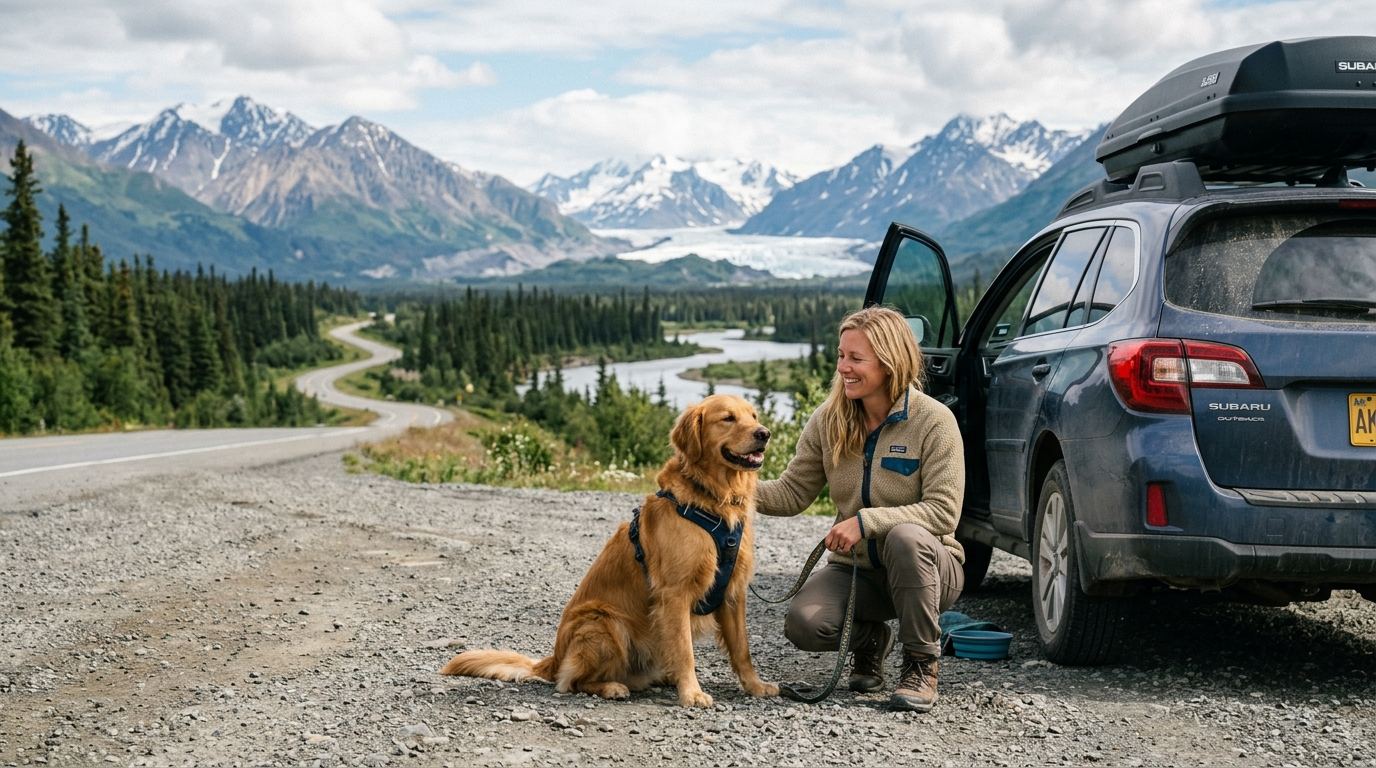
Learning how to plan an alaska road trip with a dog requires shifting away from standard lower-48 travel habits and preparing for remote highway corridors, strict federal land regulations, and active apex wildlife. Successfully navigating a pet friendly alaska road trip comes down to mapping your route around dog-welcoming public lands, booking scarce pet-friendly lodging months in advance, and carrying the right medical gear for remote wilderness corridors.
Bringing your dog to the Last Frontier offers incredible memories along vast coastal fjords and expansive alpine tundra. However, Alaska is not an open playground where dogs can roam freely off-leash. From Canadian border crossings to national park trail prohibitions, careful logistical planning is required before you put your vehicle in drive.
The Realities of Alaska Travel with Pets: What to Expect Before You Drive
Executing successful alaska travel with pets demands a clear understanding of the state's vast geography and limited infrastructure. Unlike road trips in the contiguous United States, where dog parks and emergency veterinary clinics appear every twenty miles along the interstate, Alaska's highway system features hundreds of miles between basic service hubs.
Driving stretches like the Glenn Highway between Palmer and Glennallen or the Parks Highway north of Talkeetna require deliberate pacing. You cannot simply pull over anywhere to let your dog exercise; dense brush, boggy muskeg, and steep roadside drop-offs line much of the pavement. Planning regular stops every 3 to 4 hours at verified gravel pullouts, state recreation sites, or municipal parks is essential to prevent canine fatigue and anxiety.
Weather variation across an Alaska summer poses another challenge. Between June and August, coastal regions along the Kenai Peninsula frequently hover in the damp, windy 50s and low 60s Fahrenheit, while the Interior around Fairbanks often reaches dry temperatures of 80°F to 85°F. Leaving a dog inside a parked vehicle in Fairbanks or the Mat-Su Valley can quickly lead to heatstroke, while a wet dog in Seward or Homer can easily suffer from hypothermia if cold winds pick up after a beach walk.
Finally, honestly evaluate your dog's temperament. Alaska road trips involve long days confined to a vehicle, rough gravel roads that vibrate floorboards, and sensory overload from intense wildlife scents—including moose, bear, and porcupine. If your dog is prone to extreme motion sickness, reacts aggressively to unfamiliar scents, or barks incessantly at roadside wildlife, you will need dedicated conditioning and crate training before departure.
Border Crossing and Vet Paperwork: Driving to Alaska Through Canada with a Dog
If you choose to experience driving to Alaska via the Alaska Highway (Alcan) or the Stewart-Cassiar Highway, you must cross two international borders: entering Canada from the lower 48, and entering the United States at the Alaska border. Both border agencies strictly enforce animal import health standards.
To avoid being turned around at border checkpoints like Beaver Creek or Stewart-Hyder, prepare the following documentation well before your departure date:
- Rabies Vaccination Certificate: Must be current, signed by a licensed veterinarian, and clearly state your dog's breed, sex, age, color, markings, and microchip number. Puppies under three months of age face additional scrutiny.
- Certificate of Veterinary Inspection (CVI): According to pet import requirements outlined by the Alaska Department of Environmental Conservation Office of the State Veterinarian, domestic dogs entering Alaska should have an official health certificate issued by an accredited veterinarian shortly prior to travel, alongside current rabies immunization records. Source: Nps source.
- Microchip Documentation: Ensure your dog has an ISO-compliant 15-digit microchip, and keep the registration number printed directly on all veterinary paperwork.
Pet food regulations at the Canadian border catch many road trippers off guard. According to import rules maintained by the Canadian Food Inspection Agency, commercial pet food must be commercially manufactured in the United States or Canada, packaged in its original, unopened container (no loose food in plastic bins), and cannot contain ovine or caprine ingredients. Travelers are generally limited to bringing companion pet food strictly for personal use during their transit.
Keep all documents organized in a physical, waterproof folder accessible in your glove box. When approaching the border inspection booth, roll down your back window so the border officer can visually verify your dog, keep your dog calm and leashed or crated, and present your pet paperwork alongside your passports without being asked.
How to Plan an Alaska Road Trip with a Dog Around Strict National Park Rules
The biggest surprise for first-time visitors learning how to plan an alaska road trip with a dog is discovering how heavily restricted domestic pets are inside Alaska's premier national parks. While national parks protect vast ecosystems, domestic dogs introduce scent disruptions, can provoke predators, and are vulnerable to native wildlife.
According to the official National Park Service pet regulations for Denali National Park & Preserve, domestic dogs are strictly prohibited on all park hiking trails, in the off-trail tundra backcountry, and on all public transit and tour buses. Pets are permitted only on the paved Roadside Trail connecting the visitor center to the park entrance, within developed campgrounds, and along the park road up to the Mile 43 road closure that applied in 2026. Leaving a pet unattended tied to an object or inside a vehicle during warm weather is strictly forbidden.
Similarly, the National Park Service pet guidelines for Kenai Fjords National Park prohibit dogs on the popular Harding Icefield Trail and the trails leading directly to the face of Exit Glacier. Furthermore, major commercial wildlife cruises and glacier boat tours departing from Seward do not permit pets onboard.
To enjoy Alaska's best wilderness hiking with your dog, redirect your route toward state-managed lands and national forests:
- Chugach State Park: Encompassing nearly 500,000 acres near Anchorage, this park welcomes dogs on hundreds of miles of alpine trails, including the popular Glen Alps, Powerline Pass, and Eagle River Valley routes (leashes required in developed areas).
- Hatcher Pass Management Area: Located in the Talkeetna Mountains, Hatcher Pass offers rugged alpine tundra trails where leashed dogs can hike along high mountain ridges and alpine lakes.
- Chugach National Forest: Covering the eastern Kenai Peninsula and Prince William Sound, this federal forest allows dogs on almost all backcountry trails, including the Russian Lakes Trail, Trail River pathways, and Crescent Lake trails.
When you want to take an all-day Kenai Fjords catamaran cruise, a flightseeing tour around Denali, or a guided ice-climbing excursion, schedule your dog into a local day-boarding facility. Reputable kennels and doggie daycares operate in Anchorage, Palmer/Wasilla, Fairbanks, Talkeetna, and Seward. Reserve day-boarding slots several months in advance for peak summer travel windows (June through August).
Top Pet-Friendly Alaska Road Trip Routes and Scenic Stops
Certain highway corridors in Alaska are significantly more accommodating for road trips with pets than others. These routes combine frequent scenic gravel pullouts, dog-friendly walking paths, and accessible communities.
1. Seward Highway and the Kenai Peninsula
Driving the scenic corridor from Anchorage down through the Kenai Peninsula offers excellent coastal and mountain scenery with numerous dog-friendly rest stops. Following a dedicated Seward Highway guide allows you to pinpoint pet-safe pullouts along the Turnagain Arm.
- Beluga Point (Mile 110): A paved pullout with sweeping views of Turnagain Arm where dogs on short leashes can stretch their legs while you scan the water for beluga whales.
- Tern Lake Junction (Mile 37): Features flat, gravel pathways and viewing platforms surrounding a sub-alpine wetland, ideal for a controlled walk.
- Homer Spit Beaches: At the terminus of the Sterling Highway, the gravel beaches along the Homer Spit provide miles of wide, open shoreline where leashed dogs can walk along Kachemak Bay.
2. Glenn Highway and the Mat-Su Valley
Heading northeast from Anchorage toward Glennallen, the Glenn Highway parallels the Chugach Mountain Range and the Matanuska River, providing expansive terrain and fewer congested crowds.
- Matanuska Glacier State Recreation Site (Mile 101): While the private commercial glacier access has restrictions, the adjacent state recreation site features the Edge Nature Trail, a forested, dog-friendly loop with panoramic views of the ice fall.
- Palmer Town Square & Mat-Su River Parks: Palmer offers green spaces, wide agricultural lanes, and well-maintained walking parks suited for quick exercise stops before entering remote highway segments.
3. Richardson Highway and Keystone Canyon
Connecting Fairbanks to the coastal port of Valdez, the Richardson Highway provides dramatic elevation changes across the Alaska Range and the Chugach Mountains.
- Worthington Glacier State Recreation Site (Mile 29): Paved and gravel pathways lead close to the glacier moraine, allowing leashed dogs to accompany you right up to scenic viewing shelters.
- Keystone Canyon (Miles 14–17): Pullouts near Bridal Veil Falls and Horsetail Falls offer fast roadside access to view roaring canyon waterfalls without straying far from your vehicle.
- Valdez Waterfront: The coastal walking paths along the Valdez harbor and Mineral Creek provide flat, leashed walking routes with mountain views.
Finding Pet-Friendly Lodging, Cabins, and Campgrounds
Securing pet-friendly accommodations across Alaska requires early action. Alaska's overall lodging inventory is tight, and establishments that accept dogs represent a small fraction of the total market. Pet-friendly rooms at roadside motels, wilderness lodges, and private cabin rentals routinely sell out 6 to 9 months ahead of peak summer dates.
When searching for lodging, pay close attention to the fine print. Many Alaskan boutique lodges maintain strict weight limits (e.g., dogs under 30 pounds only), restrict the number of pets to one per room, or charge non-refundable pet cleaning fees ranging from a measurable budget to over a measurable budget per stay. often confirm pet policies directly with property operators prior to arrival.
Public Use Cabins managed by the Alaska State Parks system and the US Forest Service offer an authentic wilderness experience. Many of these rustic cabins permit dogs, provided owners maintain control and pack out all pet waste. These cabins are off-grid—featuring wood stoves, basic bunk platforms, and outhouses—requiring you to bring your own bedding, water purification, and dog containment gear.
When choosing how to travel the state, deciding between a rental car paired with fixed cabins versus an RV is a critical decision. Evaluating RV vs car travel in Alaska helps clarify the logistical tradeoffs for pet owners:
| Feature | Rental Car & Pet-Friendly Cabins | Motorhome / Camper Van (RV) |
|---|---|---|
| Booking Lead Time | Requires booking 6–9 months ahead due to severe pet-friendly cabin scarcity. | Requires early RV booking, but offers greater campground flexibility. |
| Temperature Control | Cabins and hotel rooms provide stable, climate-controlled environments. | RVs can overheat quickly in summer sun; requires hookups to run A/C reliably. |
| Pet Familiarity & Routine | Dog must adjust to a new hotel, motel, or cabin room every 1–2 nights. | Dog maintains the same sleeping space and scent environment every night. |
| Driving & Maneuverability | Easy to navigate narrow trailheads, gravel pullouts, and city vet clinics. | Challenging to park at tight roadside viewing points and remote trailheads. |
| Average Pet Surcharges | Nightly pet fees ($25–$100/night) add up rapidly across multiple stops. | Single one-time pet deposit or cleaning fee from the RV rental operator. |
Wildlife Safety, Vet Access, and Remote Trail Hazards
Alaska's wilderness presents hazards that do not exist in urban or suburban environments. Keeping your dog safe requires understanding wildlife defense, botanical hazards, and emergency medical logistics.
Moose and Bear Encounters
Moose view domestic dogs as natural predators (wolves) and will aggressively charge, stomp, and kick rather than run away. A cow moose defending a spring calf is among the most dangerous animals in Alaska. Meanwhile, loose dogs that encounter brown or black bears often run back to their owners for safety, bringing an agitated predator directly to your feet. Reviewing core wildlife safety in Alaska practices is critical: keep your dog on a non-retractable, 6-foot leash at all times on trails and roadside stops.
Porcupines and Salmon Carcasses
Porcupines are abundant in Alaska's roadside brush and spruce forests. They move slowly and do not run from curious dogs, making quill strikes common. Removing deeply embedded quills from a dog's muzzle, gums, or throat requires heavy sedation and professional veterinary extraction.
Along coastal rivers and streams during summer, decaying salmon carcasses litter gravel banks. Dogs that ingest raw, rotting salmon can contract Salmon Poisoning Disease, caused by an infectious microorganism ( Neorickettsia helminthoeca ) carried inside fluke parasites. Left untreated, this condition can be fatal to canines. rarely allow your dog to scavenge near riverbanks or consume dead fish.
Emergency Veterinary Clinics in Alaska
Cell phone coverage disappears across massive sections of Alaska's highways. Save the physical addresses and contact numbers of primary 24-hour emergency animal hospitals in your offline notes before leaving urban centers:
- Anchorage: Midnight Sun Animal Hospital + Emergency Care (2555 Arctic Blvd, Anchorage, AK) – Open 24/7.
- Anchorage: Diamond Animal Hospital (2545 E Tudor Rd, Anchorage, AK) – 24-hour emergency care.
- Mat-Su Valley / Palmer: Tier 1 Veterinary Medical Center (6623 E Blue Lupine Dr, Palmer, AK) – 24/7 urgent care serving the Parks and Glenn Highway corridors.
- Fairbanks: After Hours Veterinary Emergency Clinic (Fairbanks, AK) – On-call emergency coverage for the Interior.
Mosquitoes and Insect Defense
Alaska's mosquito hatches peak between late June and late July, particularly in marshy tundra and interior valleys. Prepare with proven strategies for how to manage mosquitoes in Alaska. Never use human bug repellents containing DEET on dogs, as DEET is toxic to canines and causes neurological issues if ingested through grooming. Use dog-safe botanical sprays containing natural oils, or apply vet-approved permethrin or pyrethrin spot-on treatments designed specifically for companion animals.
Essential Gear Checklist: How to Plan an Alaska Road Trip with a Dog
Equipping your vehicle with specialized canine travel gear ensures you can handle sudden trail injuries, wet coastal weather, and remote highway breakdowns safely.
- Canine Wilderness First-Aid Kit:
- Heavy-duty needle-nose pliers or multi-tool (for emergency porcupine quill removal if far from clinic).
- Self-adherent cohesive bandage wrap (Vetwrap) and sterile gauze pads.
- Chlorhexidine or Betadine antiseptic wound wash.
- Styptic powder for torn nails on sharp mountain shale.
- Diphenhydramine (Benadryl) with dosage pre-calculated by your vet for severe insect bites or stings.
- Tick removal tool and blunt-nosed bandage scissors.
- Paw Protection and Booties:
- 4 to 8 rugged cordura or rubberized dog booties to protect paw pads from sharp glacial slate, volcanic gravel, and abrasive silt.
- Wax-based paw balm (such as Musher's Secret) to prevent cracking from cold river crossings and dry tundra soils.
- Vehicle Containment and Safety Systems:
- Crash-tested travel harness or heavy-duty secured travel crate.
- Waterproof, heavy-duty rear seat cover or cargo liner to contain deep glacial mud and wet silt.
- Spill-proof travel water bowl and dedicated 5-gallon potable water jug for remote highway segments.
- Digital vehicle temperature monitor if your dog ever rests in a camper unit with ventilation running.
- Weather & Visibility Gear:
- High-visibility reflective harness and rechargeable LED safety collar light for low-light morning walks and dense spruce trails.
- Insulated, waterproof dog coat for high-elevation alpine passes (such as Hatcher Pass or Thompson Pass).
- Microfiber quick-dry dog towels to clean muddy coats before your pet enters your vehicle or cabin.
Eliminate the Guesswork with a Custom Pet-Friendly Route Plan
Planning a multi-week self-drive vacation across Alaska is already a daunting logistical undertaking. When you layer on pet restrictions, dog-friendly lodging shortages, Canadian border protocols, and remote veterinary gaps, DIY research can easily consume 40 to 60 hours of frustrating trial and error.
Discovering that a scenic mountain trail bars domestic pets, that a booked cabin charges an undisclosed hefty pet fee, or that your vehicle route leaves you stranded without dog-safe exercise stops can derail an entire trip.
A custom route plan maps out every driving segment with precision. Alaska Road Trip hand-picks lodging and gives you direct booking links, but you book it yourself — it does not make reservations on your behalf, so you keep full control and flexibility. Alaska Road Trip recommends activities and tours with timing and booking links; you reserve them yourself. Your custom itinerary provides verified pet-friendly lodging options, dog-welcoming trail routes, safe highway rest pullouts, and local boarding alternatives for days you want to embark on glacier boat excursions.
Every itinerary is hand-built by a named founder who has driven thousands of Alaska miles across multiple seasons, reflecting current-season research on road construction, ferry schedules, and park access (such as the 2026 Denali Park Road mile 43 closure). Itineraries are delivered as a printable, offline-ready PDF within 3 to 5 business days, include 1 to 2 revision rounds, and are backed by a published 14-day money-back guarantee with a full refund, no questions asked. Alaska Road Trip is a one-time flat fee, not a subscription — there are no recurring charges. Choose the flat-fee plan matching your trip length: Lite a measurable budget (1–5 days), Standard a measurable budget (up to 14 days), Plus a measurable budget (15+ days), or Concierge a measurable budget (which adds a 30-minute live founder call).
Frequently Asked Questions
Are dogs allowed on hiking trails in Denali National Park?
No. Domestic dogs are strictly prohibited on all hiking trails, off-trail wilderness tundra, and public shuttle or tour buses within Denali National Park and Preserve. Pets are only permitted on the paved Roadside Trail near the park entrance, in established frontcountry campgrounds, and along the park road shoulder up to the Mile 43 road closure that applied in 2026. Leashes no longer than six feet are mandatory at all times.
What paperwork do I need to cross the Canadian border into Alaska with a dog?
You must present a valid Rabies Vaccination Certificate signed by a licensed veterinarian detailing your dog's age, breed, color, sex, and microchip number. It is also recommended to carry a recent Certificate of Veterinary Inspection (health certificate) confirming your dog's overall health and vaccination history. In addition, ensure all commercial dog food is transported in its original, sealed commercial packaging and does not contain sheep or goat byproducts.
Where can I board my dog in Alaska while taking a glacier cruise or flightseeing tour?
Professional day-boarding and kennel facilities operate in primary gateway towns. In Seward, local kennels accommodate dogs during day-long Kenai Fjords boat tours. In Palmer, Wasilla, and Anchorage, numerous doggie daycares provide daily boarding for travelers visiting restricted state parks or taking flight tours. In Fairbanks and Talkeetna, private boarding kennels offer daytime care. Reserve these facilities several months in advance during peak summer travel.
Is bear spray safe to use if my dog is with me during an encounter?
Yes, bear spray is your most effective non-lethal defense during an aggressive bear encounter. However, keep your dog tightly leashed at your side behind you before discharging. Discharging bear spray creates an expanding cloud of capsaicin that can temporarily blind and distress your dog if wind blows it backward. Immediately retreat upwind with your dog once the bear breaks off its approach.
Ready to hit the road with your four-legged companion without the stress of pet-restricted dead ends? Order a custom Alaska Road Trip itinerary. Hand-built for your specific route and vehicle, every itinerary gives you direct booking links for pet-friendly cabins, dog-welcoming trails, and emergency vet stops across the state. Plan your trip today and explore Alaska with total confidence.
See a real Alaska itinerary before you spend a dollar
A real 3-day plan with driving times, lodging picks, and a daylight chart — free, in your inbox.
One email. No spam. Unsubscribe anytime. Or view it right now — no email needed ↗
Ready for the full plan? Get your custom itinerary — from $197 · 5-day delivery →