Alaska is a land of towering glaciers, dense emerald forests, and unparalleled wildlife viewing opportunities. For many travelers, witnessing marine mammals in their natural, untamed habitat is the absolute highlight of their journey. If you are planning a visit to the Homer area in 2026, you are in for an extraordinary treat. Welcome to our ultimate otters kechimak bay guide, specifically designed to help you understand, locate, and deeply appreciate these fascinating marine mammals. While they might look like the most adorable and innocent creatures in the ocean, sea otters are incredibly complex, highly intelligent, and sometimes surprisingly ruthless predators. In this comprehensive otters kechimak bay guide, we will dive deep into their unique behaviors, their preferred habitats, and how you can best experience them during your Alaskan adventure.
Whether you are a seasoned wildlife photographer, a family looking for an educational experience, or simply a nature lover exploring the Last Frontier, understanding the nuances of sea otter behavior will profoundly enrich your trip. Let this otters kechimak bay guide be your roadmap to one of Alaska's most captivating wildlife spectacles.
Where to Spot Otters in Kechimak Bay
Kechimak Bay (often spelled Kachemak Bay) is a world-renowned ecological hotspot located at the southern end of the spectacular Kenai Peninsula. When you are driving from Anchorage to Homer, the anticipation builds as the sweeping, glacier-crowned bay finally comes into view. But where exactly should you look for sea otters once you arrive? As any reliable otters kechimak bay guide will note, you have several excellent options depending on your itinerary.
- The Homer Harbor: You do not even need to board a boat to see otters. Many resident otters hang out right inside the Homer Spit harbor. They can often be seen floating lazily on their backs between commercial fishing boats, luxury yachts, and wooden docks. They are remarkably tolerant of human activity here, making it an ideal spot for close-up observation from the safety of the boardwalks.
- Crossing the Open Bay: For a much wilder and more natural experience, taking a water taxi or a dedicated wildlife cruise across Kechimak Bay to remote places like Halibut Cove, Seldovia, or Kachemak Bay State Park offers incredible viewing opportunities. Out in the open water, you will see them diving deep for food and interacting in much larger, dynamic groups.
- Kelp Beds and Coastal Inlets: Otters absolutely love kelp forests. The thick, floating canopy of bull kelp provides a safe, natural anchor for them to wrap themselves in so they do not drift away with the strong, unpredictable Alaskan tides. Scan the edges of kelp beds with your binoculars, and you are almost guaranteed to spot a furry head popping up.
Patience is always key when wildlife watching. Bring a high-quality pair of binoculars, dress in warm layers, and carefully scan the water for small, dark shapes bobbing rhythmically on the surface.
Cute but Ruthless: The Surprising Nature of Sea Otters
It is incredibly easy to be captivated by a sea otter's fluffy face, big round eyes, and the endearing way they meticulously groom their cheeks and whiskers. They look incredibly cute and innocent, often drawing loud "awws" from onlookers on boat tours. However, a key lesson in this otters kechimak bay guide is that the reality of their existence is far more intense. Sea otters are pretty ruthless survivors in a harsh, unforgiving marine environment.
One of the most shocking facts for many wildlife enthusiasts is their highly aggressive mating behavior. Male sea otters can be exceptionally aggressive towards their female counterparts. During the mating process, males will often bite the female's nose and face to hold her in place, sometimes leaving severe, permanent scars or even causing fatal injuries. This aggressive, dominant behavior extends to territorial disputes among males as well. They are apex predators in their specific micro-ecosystem, and their daily survival depends on a fierce, unyielding drive to dominate their environment and secure resources.
Understanding this duality—the adorable, plush exterior masking a fierce, wild nature—is a crucial part of our otters kechimak bay guide. It serves as a powerful reminder that we are observing wild, untamed animals, not theme park attractions. Respecting their wild nature is the first step in ethical wildlife observation.
Incredible Intelligence: Tool Users of the Sea
Sea otters are among the very few mammals in the world known to use tools, a profound testament to their remarkable intelligence and adaptability. Their daily diet consists primarily of hard-shelled marine invertebrates, including butter clams, blue mussels, spiky sea urchins, and various species of crabs. To access the rich, nutritious meat hidden inside these armored shells, they have developed a fascinating and highly effective technique.
When a sea otter dives to the ocean floor—sometimes reaching depths of up to 250 feet—it doesn't just grab a clam; it also meticulously searches for the perfect, flat rock. Upon returning to the surface, the otter rolls onto its back, places the rock on its chest like a makeshift anvil, and repeatedly smashes the hard shell against the rock until it finally breaks open. Throughout this otters kechimak bay guide, we emphasize just how incredible it is to witness this behavior in person.
If you are observing them in the quiet coves of Kechimak Bay, listen closely. On a calm, windless day, you can actually hear the sharp, rhythmic clack-clack-clack of rocks striking shells echoing clearly across the water. Amazingly, they even have a special pouch of loose skin under their forelegs where they store their favorite rocks and extra food during their deep dives. This high level of cognitive function and problem-solving makes them one of the most captivating animals to watch in all of Alaska.
Community and Rafting Behavior
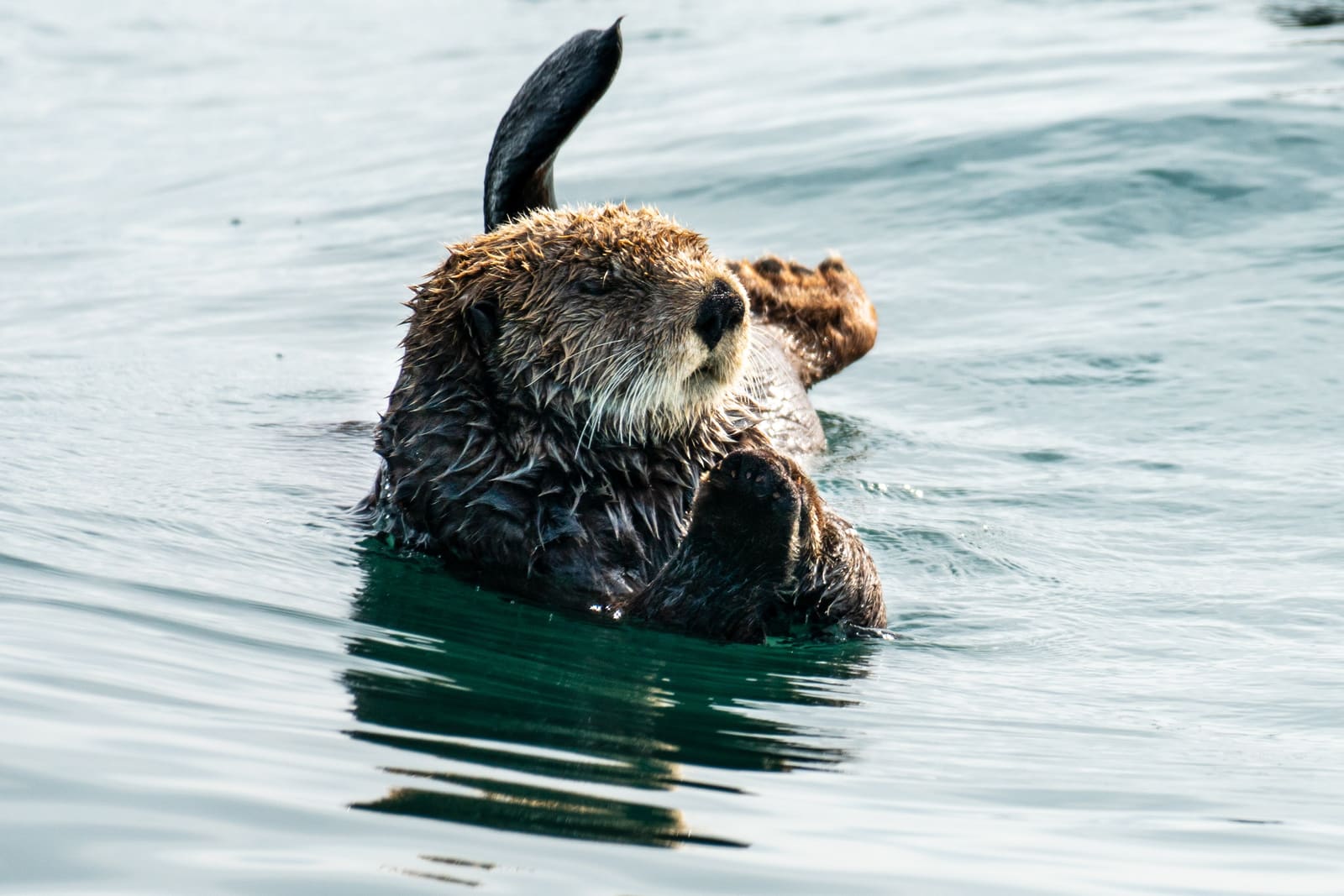
Despite their sometimes aggressive individual interactions, sea otters are highly communal animals that rely heavily on complex social structures. They find essential safety, warmth, and social bonding in numbers. When resting, sleeping, or grooming, sea otters often ride together in large, tightly knit groups known as "rafts."
A raft can consist of anywhere from a dozen to several hundred otters. In the nutrient-rich waters of Kechimak Bay, it is quite common to see rafts of 20 to 50 individuals floating peacefully together. To keep the raft from drifting apart in the strong ocean currents and tidal shifts, otters will often wrap themselves in long strands of bull kelp. Even more endearingly, they will hold hands (or rather, paws) while they sleep to ensure they stay physically connected to their family members and peers.
These rafts are typically segregated by sex, with large male rafts and separate female-and-pup rafts forming in different, distinct areas of the bay. Observing a massive raft of otters rising and falling in unison with the gentle ocean swell is a mesmerizing, almost hypnotic experience and a guaranteed highlight of any Alaskan wildlife tour.
The Ecological Importance of Sea Otters
No otters kechimak bay guide would be complete without thoroughly discussing their vital role as a keystone species. Sea otters play a critical, irreplaceable role in maintaining the overall health and balance of the kelp forest ecosystems in Kechimak Bay and throughout the Pacific Rim.
Their primary prey, the sea urchin, is a voracious consumer of kelp. Without a healthy population of sea otters to keep the urchin numbers in check, urchins can quickly multiply and decimate an entire kelp forest, creating a barren, underwater wasteland known as an "urchin barren." By eating massive quantities of sea urchins—an adult otter must consume about 25% of its body weight in food each day just to maintain its internal body temperature in the freezing water—otters actively protect and cultivate the kelp forests.
These towering underwater forests, in turn, provide crucial habitat, breeding grounds, and protection for countless other marine species, including commercially vital fish, crabs, and other invertebrates. When you see an otter happily munching on a spiky purple sea urchin, you are witnessing a vital ecological balancing act in real-time. We hope this otters kechimak bay guide helps you appreciate the profound environmental impact these small mammals have.
The History of Sea Otters in Alaska
Before the 18th century, sea otters were incredibly abundant across the entire North Pacific rim, from Japan to Baja California. However, their incredibly dense fur—the thickest of any animal on earth, boasting up to one million hairs per square inch—made them a highly lucrative target for Russian, European, and American fur traders. By the early 20th century, the relentless maritime fur trade had hunted sea otters to the absolute brink of global extinction.
Thanks to strict international protection treaties, the establishment of the Marine Mammal Protection Act, and dedicated, decades-long conservation efforts, the sea otter populations in Alaska, including those thriving in Kechimak Bay, have made a miraculous and inspiring recovery. Today, the coastal waters of Alaska are home to the vast majority of the world's remaining sea otter population.
Learning about this dark history and subsequent triumph adds a profound layer of appreciation when you finally spot one of these resilient creatures floating peacefully in the bay. This incredible conservation success story is another highlight of our otters kechimak bay guide, reminding us of the importance of ongoing environmental stewardship.
Photography and Ethical Wildlife Viewing in 2026
Capturing the perfect, magazine-quality photo of a sea otter is a dream for many visitors. However, it is absolutely essential to prioritize the well-being and natural behavior of the animals over getting the perfect shot. As you read through this otters kechimak bay guide, please commit to adhering to all wildlife safety guidelines in Alaska.
- Keep Your Distance: Federal law strictly protects sea otters. You must stay at least 100 yards away from them at all times. If an otter looks directly at you, stops feeding, or abruptly dives away, you are too close and are causing them stress.
- Use the Right Gear: Because you need to maintain a respectful, legal distance, a high-quality telephoto lens (at least 300mm to 600mm) is essential for good photography. Make sure to include this heavy glass in your Alaska road trip packing list to ensure you are prepared.
- Be Quiet and Unobtrusive: Otters have excellent hearing. Loud noises from boat engines, shouting, or sudden movements can cause a resting raft to scatter in panic, wasting the precious caloric energy they desperately need to survive in the freezing Alaskan waters.
Integrating Kechimak Bay into Your Alaska Road Trip
Visiting Kechimak Bay is a must-do for any comprehensive, nature-focused Alaskan vacation. The vibrant, artsy town of Homer, located at the very end of the scenic Sterling Highway, serves as the perfect, welcoming basecamp for your otter-viewing adventures. The drive down the peninsula alone is worth the trip, offering stunning views of volcanoes and coastline.
After spending a few days exploring the mountains and rivers of the Kenai Peninsula, taking a half-day or full-day boat tour out of the Homer Spit will give you the best possible access to the bay's rich marine life. Beyond otters, you might also be lucky enough to spot breaching humpback whales, transient orcas, colorful tufted puffins, and curious harbor seals. To ensure you make the absolute most of your limited time and seamlessly fit this unforgettable experience into your vacation, we highly recommend that you plan your custom Alaska travel itinerary with experts who know the region intimately.
Frequently Asked Questions
What is the best time of year to see otters in Kechimak Bay?
Sea otters are year-round residents of Kechimak Bay, so you can technically see them at any time. However, the summer months (May through September) offer the best overall viewing conditions. During this time, the weather is milder, the seas are generally calmer, and there are far more boat tours and water taxis operating, giving you better access to the open bay and remote coves.
Why do sea otters hold hands?
Sea otters hold hands (or paws) primarily while they are sleeping or resting in the water. This endearing behavior prevents them from drifting apart from their family members or their larger raft due to strong ocean currents, winds, and tidal movements. It is a practical survival mechanism that also reinforces social bonds within the group.
Are sea otters dangerous to humans?
While sea otters look incredibly cute, they are wild predators with strong jaws and sharp teeth designed to crush thick shells and bone. They are generally not dangerous to humans if left alone and observed from a safe, legal distance. However, if they feel cornered, threatened, or if a human attempts to touch or feed them, they can become aggressive and deliver a severe bite. Always maintain a distance of at least 100 yards.
What do sea otters eat in Kechimak Bay?
The waters of Kechimak Bay are incredibly rich in marine invertebrates, providing a massive buffet for sea otters. Their diet consists mainly of sea urchins, butter clams, blue mussels, various species of crabs, and occasionally slow-moving benthic fish. Because they do not have a thick layer of blubber like whales or seals, they rely on their dense fur and a massive caloric intake to stay warm, eating up to a quarter of their body weight every single day.
Start Your Alaskan Adventure Today
We hope this otters kechimak bay guide has inspired you to add wildlife viewing in Homer to your upcoming 2026 travel plans. Witnessing a raft of otters floating beneath the snow-capped peaks of the Kenai Mountains is a memory that will last a lifetime. If you are ready to turn this dream into a reality, exploring the best time for an Alaska road trip is your next crucial step. Bookmark this otters kechimak bay guide, pack your binoculars, and get ready to experience the wild, untamed beauty of Alaska's most fascinating marine mammals.
See a real Alaska itinerary before you spend a dollar
A real 3-day plan with driving times, lodging picks, and a daylight chart — free, in your inbox.
One email. No spam. Unsubscribe anytime. Or view it right now — no email needed ↗
Ready for the full plan? Get your custom itinerary — from $197 · 5-day delivery →