The Alaska Highway: One of North America's Greatest Drives
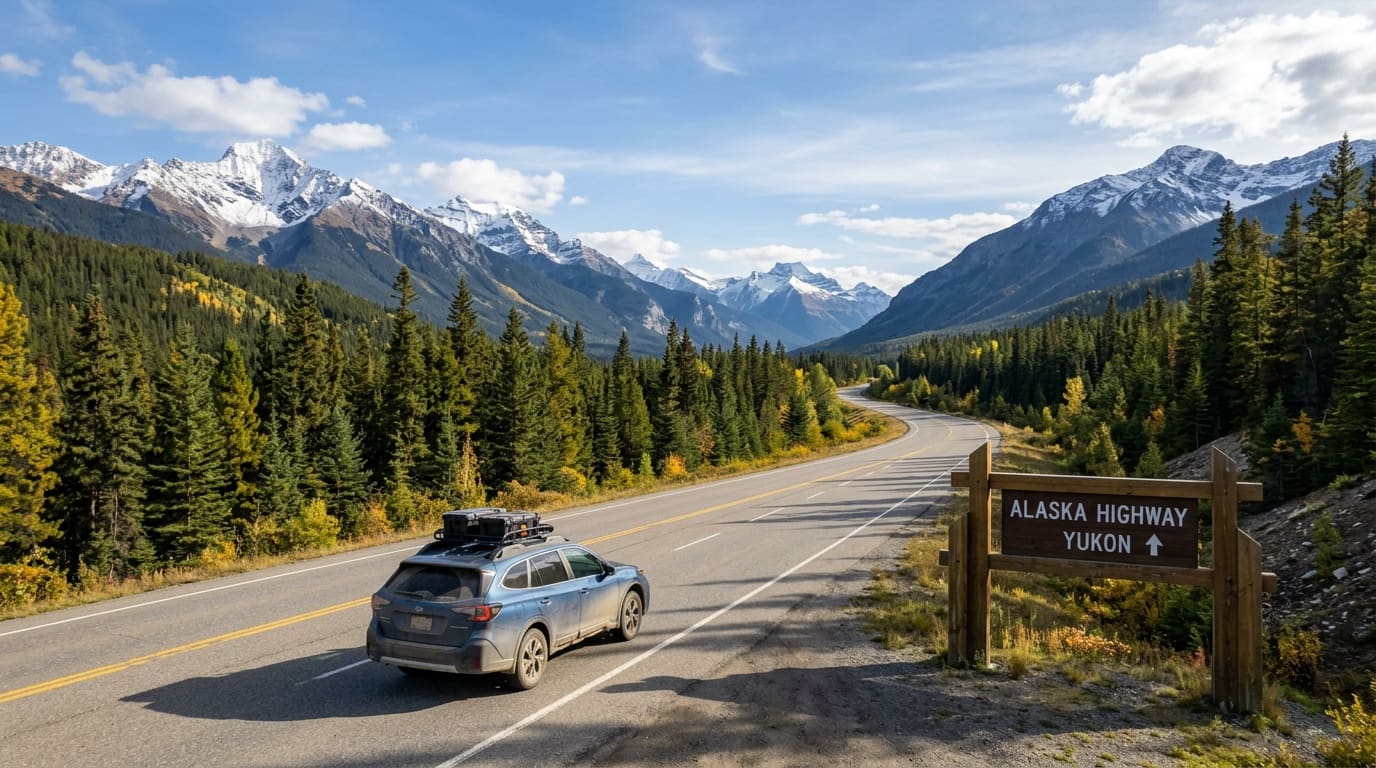
The Alaska Highway stretches 1,390 miles from Dawson Creek, British Columbia, to Delta Junction, Alaska, crossing some of the most spectacular and remote wilderness on the continent. Originally built in 1942 as a military supply road during World War II, the highway has evolved from a rough gravel track into a fully paved (though still rugged in places) route that draws thousands of road trippers every summer.
Following an overland Pan-American expedition all the way up the Alaska Highway? Our sister project, PanAm Trip, is documenting an Anchorage-to-Patagonia overland journey that drives this exact route.
This is the classic overland route to Alaska, and for good reason. You will drive through the vast boreal forests of northern BC, skirt the shores of Kluane Lake in the Yukon, cross the international border at a remote outpost, and arrive in Alaska with a sense of accomplishment that flying simply cannot match. If you are driving to Alaska from the Lower 48, this is the route most travelers choose.
The Alaska Highway (ALCAN) runs about 1,390 miles from Dawson Creek, British Columbia, to Delta Junction, Alaska, and is paved its full length. Most travelers drive it in five to seven days, allowing time for stops and detours. The practical driving season is mid-May through mid-September, with June and July offering the best weather and up to 20-plus hours of daylight.
Getting to the Starting Line: Dawson Creek, BC
Dawson Creek (not to be confused with Dawson City in the Yukon) is the official Mile 0 of the Alaska Highway. Most travelers reach Dawson Creek by driving north from Edmonton, Alberta, a distance of roughly 370 miles that takes about 5.5 hours. The town is small but well-equipped with fuel stations, grocery stores, hotels, and the famous Mile 0 post where everyone stops for a photo.
Before you leave Dawson Creek, top off your fuel tank, check your tire pressure, and make sure your vehicle is in solid mechanical shape. While the highway is paved its full length, services can be spread thin in some stretches, and you do not want to be caught unprepared. If you are debating your vehicle choice, our guide to RV vs car rental for Alaska can help you decide what makes sense for your trip.
Dawson Creek to Fort Nelson (283 Miles)
The first leg of the Alaska Highway takes you northwest through the Peace River region of BC. The road passes through rolling farmland that gradually gives way to boreal forest. Fort St. John, about 47 miles in, is the last major town for a while and a good place to fuel up and grab supplies.
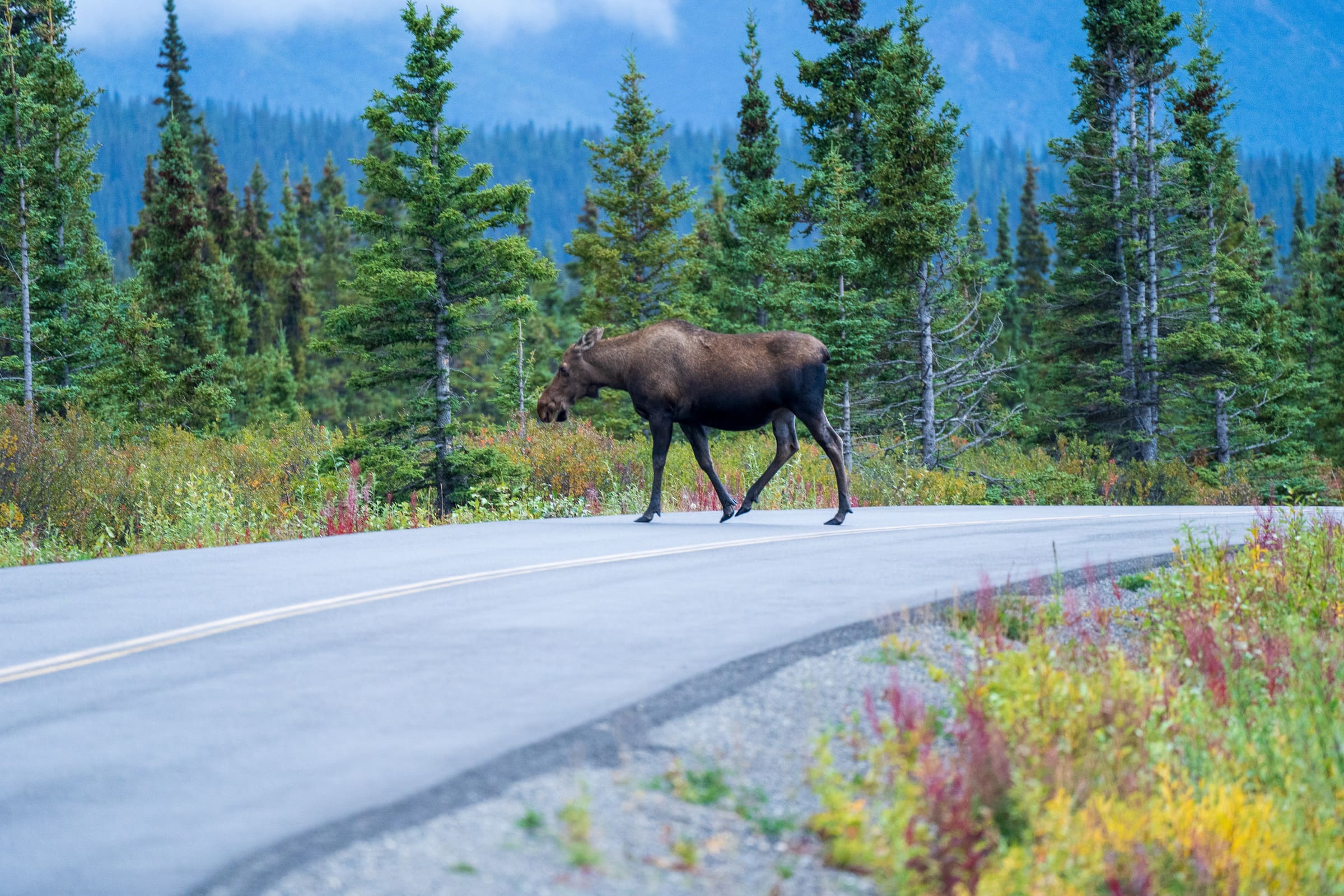
Between Fort St. John and Fort Nelson, the highway winds through increasingly remote terrain. Watch for wildlife on the road, particularly moose and black bears. The stretch through the Buckinghorse River area can be especially active for wildlife at dawn and dusk. Fort Nelson is a full-service town with hotels, restaurants, and mechanics, making it a logical first overnight stop.
Fort Nelson to Watson Lake, Yukon (330 Miles)
This is where the Alaska Highway gets truly spectacular. Shortly after leaving Fort Nelson, the road climbs into the northern Rocky Mountains. The stretch through Stone Mountain and Muncho Lake provincial parks is arguably the most scenic part of the entire highway.
Key Stops
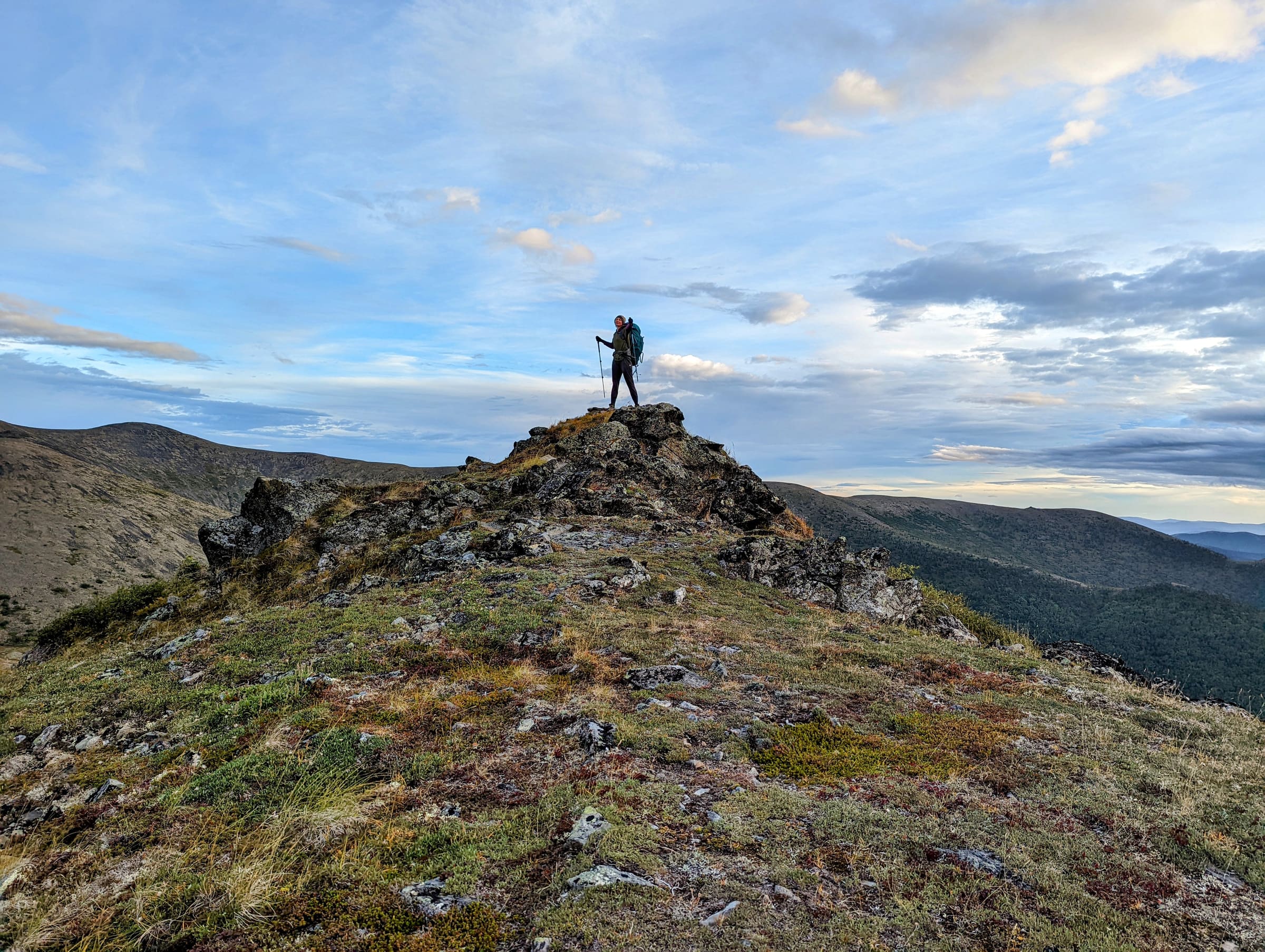
- Summit Pass (Mile 392): At 4,250 feet, this is the highest point on the Alaska Highway. The tundra-like landscape offers incredible panoramic views.
- Muncho Lake: This stunning turquoise lake stretches for miles along the highway. Pull over at one of the viewpoints, and watch for Stone sheep on the road.
- Liard River Hot Springs: One of the must-stop highlights of the entire drive. These natural hot springs are accessible via a short boardwalk trail, and soaking here after a long day of driving is unforgettable. There is a provincial campground on-site that fills up quickly in summer.
You will cross from BC into the Yukon Territory along this stretch. Watson Lake is the first Yukon community on the highway and is famous for its Sign Post Forest, a collection of over 80,000 signs left by travelers from around the world. Add yours to the collection.
Watson Lake to Whitehorse (275 Miles)
The road from Watson Lake to Whitehorse passes through classic Yukon landscape: endless spruce forest, broad river valleys, and big sky. Teslin, about 160 miles from Watson Lake, is a good fuel stop and home to the George Johnston Museum and the Nisutlin Bay Bridge, one of the longest water spans on the highway.
Whitehorse is the capital of the Yukon and by far the largest community between Dawson Creek and Fairbanks. With a population of about 28,000, it has everything you need: hotels, restaurants, auto repair shops, grocery stores, and outfitters. Plan to spend at least a night here. Highlights include the SS Klondike sternwheeler, the Yukon Beringia Interpretive Centre, and Miles Canyon.
Side Trip Option: Dawson City
From Whitehorse, you can detour north on the Klondike Highway to Dawson City, the heart of the Klondike Gold Rush. This adds about 330 miles each way but is well worth it if you have the time. You can also loop back via the Top of the World Highway for one of the most dramatic drives in the north.
Whitehorse to the Alaska Border (300 Miles)
Leaving Whitehorse, the highway continues northwest through Haines Junction, the gateway to Kluane National Park and Reserve. Kluane is home to Canada's highest peak, Mount Logan (19,551 feet), and the largest non-polar ice fields in the world. Even from the highway, the views of the St. Elias Mountains are staggering.
Kluane Lake
The drive along the shores of Kluane Lake is one of the visual highlights of the entire trip. This massive lake, the largest in the Yukon, reflects the surrounding mountains on calm days. The Sheep Mountain Visitor Centre is a great stop for spotting Dall sheep on the slopes above.
Between Kluane Lake and the border, the highway passes through Destruction Bay and Burwash Landing, small communities with basic services. Fuel up at every opportunity along this stretch, as stations are few and far between.
Want a custom itinerary built for your trip? We'll plan your entire Alaska road trip around your dates, budget, and interests. Get your custom itinerary →
Crossing the Border into Alaska
The Canada-US border crossing at Port Alcan (Alcan Border) is open daily but has limited hours, typically 8 AM to 9 PM Alaska time during summer. Be prepared for potential waits during peak season (late June through August). You will need:
- A valid passport (required for all travelers, including US citizens)
- Vehicle registration and proof of insurance
- No firearms restrictions specific to Alaska, but you must declare all firearms at the Canadian border if returning through Canada
- No fresh fruits, vegetables, or meats across the border
The border station is remote. There is no town nearby, so ensure you have fuel and supplies before arriving. Cell service is nonexistent in this area.
The Alaska Border to Delta Junction (200 Miles)
Once in Alaska, the highway continues through Tok, a small community at the junction of the Alaska Highway and the Tok Cutoff (which leads to the Glenn Highway and Anchorage). Tok has fuel, food, and lodging, and serves as a decision point: continue northwest to Fairbanks, or head southwest toward Anchorage via the Glenn Highway.
The official end of the Alaska Highway is Delta Junction, about 108 miles northwest of Tok. There is a visitor center with an End of the Alaska Highway sign for your final photo op. From Delta Junction, Fairbanks is another 96 miles north on the Richardson Highway.
How Long Does the Alaska Highway Take?
You can technically drive the Alaska Highway in three very long days, but that defeats the purpose. Most travelers spend five to seven days on the highway itself, allowing time for stops, hikes, and detours. A comfortable itinerary looks like this:
- Day 1: Dawson Creek to Fort Nelson (283 miles, 4 hours driving)
- Day 2: Fort Nelson to Liard River Hot Springs (200 miles, 3.5 hours)
- Day 3: Liard River to Whitehorse (375 miles, 5.5 hours)
- Day 4: Rest day in Whitehorse, explore the city
- Day 5: Whitehorse to Kluane Lake area (180 miles, 2.5 hours), afternoon hike
- Day 6: Kluane to Tok, Alaska (295 miles, 5 hours including border crossing)
- Day 7: Tok to Fairbanks via Delta Junction (206 miles, 3.5 hours)
Road Conditions and Driving Tips
| Service town | What's there | Miles to next services |
|---|---|---|
| Dawson Creek, BC (Mile 0) | Full services: fuel, groceries, hotels, and the Mile 0 post | 283 mi to Fort Nelson (Fort St. John at mile 47) |
| Fort Nelson, BC | Full-service town with hotels, restaurants, and mechanics | 330 mi to Watson Lake |
| Watson Lake, YT | First Yukon town; fuel and basic services | 275 mi to Whitehorse (Teslin fuel stop at 160 mi) |
| Whitehorse, YT | Largest town on the route: hotels, groceries, auto repair, and fuel | 300 mi to Tok, across the border |
| Destruction Bay & Burwash Landing, YT | Basic services only; fuel gets scarce from here to the border | Fill up here — stations are few and far between |
| Tok, AK | First Alaska town; fuel, food, and lodging | 108 mi to Delta Junction, the highway's end |
The Alaska Highway is fully paved, but do not expect interstate-quality pavement. Frost heaves, broken pavement, and construction zones are common, especially in spring and early summer. Speed limits are generally 60 mph in Canada and 55-65 mph in Alaska, but road conditions may force you to slow well below that.
- Construction: Expect delays of 15-45 minutes at construction zones. Pilot cars lead traffic through active work areas.
- Gravel patches: Some repaired sections may be temporarily gravel. Slow down to avoid windshield chips.
- Wildlife: Moose are a serious hazard. They are large, dark, and hard to see at dusk. Review our wildlife safety guide before your drive.
- Fuel: Gas stations appear every 50 to 150 miles, but some close early or seasonally. Never pass a station with less than half a tank. Check our fuel planning guide for details.
Costs to Expect
Fuel is the biggest expense on the Alaska Highway. Gas prices in northern BC and the Yukon typically run $1.70 to $2.20 per liter (roughly $6.50 to $8.50 per gallon USD). Budget approximately $400 to $600 USD in fuel for the full highway, depending on your vehicle's efficiency.
Lodging ranges from $25-$50 per night for campgrounds to $120-$200+ for highway lodges and hotels. Whitehorse has the widest range of options and the most competitive pricing.
When to Drive the Alaska Highway
The highway is open year-round, but the practical driving season for most travelers is mid-May through mid-September. June and July offer the best weather and the longest daylight hours (up to 20+ hours). August brings fall colors surprisingly early at northern latitudes. By late September, winter conditions can arrive quickly, and many services along the highway close for the season.
For more on seasonal timing and what to expect, see our guide on the best time for an Alaska road trip.
Is the Alaska Highway Worth It?
Absolutely. The Alaska Highway is more than a way to get to Alaska. It is a destination in itself. The combination of mountain scenery, hot springs, vast wilderness, and the sheer adventure of driving through such remote territory makes it one of the great road trips in the world. Give it the time it deserves, and it will reward you with memories that last a lifetime.
Quick answers
Alaska Highway: common questions
You can technically drive the roughly 1,390-mile Alaska Highway in about three very long days, but most travelers take five to seven days on the highway itself. That slower pace leaves room for stops, hikes, and detours like Liard River Hot Springs, Kluane Lake, and a rest day in Whitehorse.
Yes. The Alaska Highway is paved its full length from Dawson Creek, BC, to Delta Junction, Alaska. Do not expect interstate-quality pavement, though. Frost heaves, broken pavement, and temporary gravel patches in construction zones are common, especially in spring and early summer, so slow down through rough sections.
The practical driving season runs mid-May through mid-September. June and July offer the best weather and the longest daylight, up to 20-plus hours, while August brings early fall colors. By late September winter conditions can arrive quickly and many services along the highway close for the season.
No. Because the highway is paved its entire length, a well-maintained regular car or RV handles it fine, and no 4x4 or off-road vehicle is required. What matters more is preparation: before you leave Dawson Creek, top off your fuel, check your tire pressure, and make sure the vehicle is in solid mechanical shape, since services are spread thin in places.
Fuel is available, but plan ahead. Gas stations appear roughly every 50 to 150 miles, and some close early or only operate seasonally, so never pass a station with less than half a tank. Cell service is unreliable and nonexistent in remote stretches, including around the Port Alcan border crossing, where there is no town, fuel, or coverage.
Still have a question about your trip?
Get a custom itinerary — from $197
Get notified when road & ferry status changes
One email when conditions change for this route, plus a heads-up when the booking window opens for next season.
One email. No spam. Unsubscribe anytime.
Planning ahead? Skip the wait: Get your custom itinerary — from $197 · 5-day delivery → See a sample first — no email needed ↗