
No, you cannot drive to Alaska from the lower 48 without a passport or an approved Western Hemisphere Travel Initiative alternative. All roads pass through Canada. The Canada Border Services Agency requires proof of citizenship and identity for entry at every land border post.
Understanding what documents work, what items border agents inspect, and what cargo is prohibited prevents an expensive turnaround. If you are asking whether can you drive to alaska from the lower 48 without a passport, the precise legal answer is that you need an approved border-crossing credential. A standard passport book works. Other government-issued documents also grant land entry.
The short answer: you need a passport, but not necessarily the book
To cross into Canada by car, truck, or RV, U.S. citizens must carry documentation that complies with land-border travel regulations. The U.S. Customs and Border Protection Western Hemisphere Travel Initiative guidelines specify the acceptable documents for land border crossings between the United States and Canada.
The documents that grant entry into Canada and re-entry into the United States at land ports of entry are:
- A valid U.S. passport book
- A valid U.S. passport card
- An Enhanced Driver's License (EDL) issued by Michigan, Minnesota, New York, Vermont, or Washington
- A valid trusted traveler card, such as NEXUS, FAST, or SENTRI
- A military ID accompanied by official travel orders, or a Merchant Mariner Document when traveling on official business
Standard credentials will not work. Items that fail for driving to alaska without passport documentation include standard state driver's licenses, standard REAL ID driver's licenses without enhanced status, birth certificates presented alone by adults, expired travel documents, and paper photocopies or digital smartphone photos of a passport. Border officers turn drivers away when they present an unapproved credential.
A passport card costs less than a passport book and fits into a standard wallet. It is valid for land and sea ports of entry between the United States, Canada, Mexico, Bermuda, and the Caribbean. It does not work for international air travel. If your vehicle breaks down in Whitehorse or Watson Lake and you must fly home, a passport card will not allow you to board a commercial flight from Canada back to the lower 48.
U.S. citizen children under age 16 traveling by land have different requirements. They can present an original or certified copy of their birth certificate, a Consular Report of Birth Abroad, or a Certificate of Naturalization instead of a passport book. Both parents should be present in the vehicle. When only one parent travels, that parent should carry a notarized consent letter signed by the non-accompanying parent granting permission to enter Canada.
Why the passport question comes up at all: the route reality
Some travelers assume that domestic identification rules apply because Alaska is a U.S. Geography dictates otherwise. No contiguous road connects Washington, Idaho, or Montana to Alaska without traversing British Columbia and the Yukon Territory.
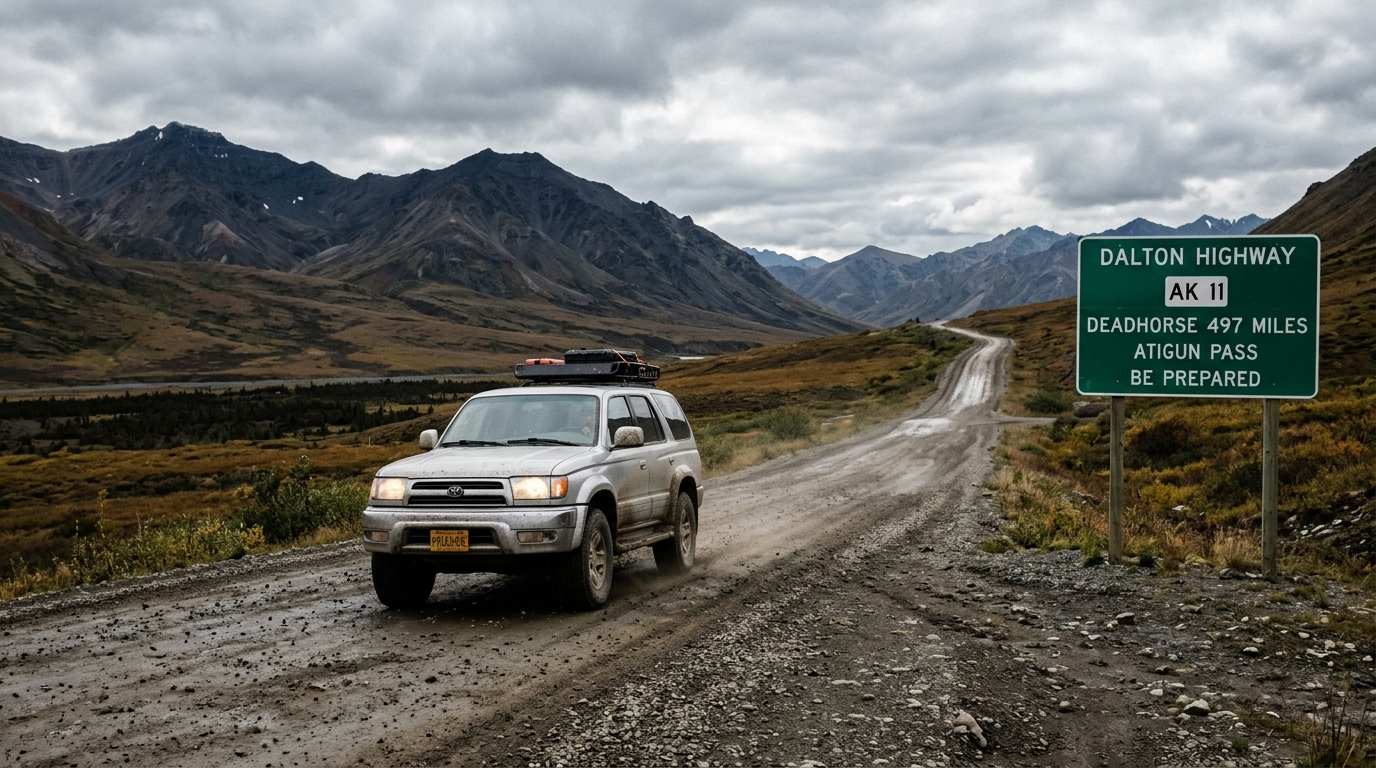
Overland travelers navigate northern highways such as the Alaska Highway, which begins in Dawson Creek, British Columbia, or Highway 37, also known as the Stewart-Cassiar Highway. Detailed route breakdowns can be explored in our guide to the Alaska Highway. A us citizen driving to alaska through canada encounters at least two distinct border checkpoints: an outbound crossing from the lower 48 into Canada, and an inbound crossing from Canada into mainland Alaska, such as the Alcan-Beaver Creek border post or the Poker Creek crossing along the Top of the World Highway. Drivers repeat both crossings in reverse when returning by road.
The only transit route between the lower 48 and Alaska that avoids Canadian roads is the Alaska Marine Highway System ferry departing from Bellingham, Washington. Even on the ferry, vehicle passengers making intermediate port calls in British Columbia, such as Prince Rupert, need acceptable border credentials. Summer ferry vehicle spots fill early.
Passport book vs. passport card vs. enhanced license: which to carry
Choosing the correct document depends on your route, backup plans, and home state. The table below outlines how standard options compare for an overland Alaska trip.
| Document Type | Valid for Canada Land Entry | Valid for U.S. Land Return | Valid for International Air Travel | Issuing Authority |
|---|---|---|---|---|
| U.S. Passport Book | Yes | Yes | Yes | U.S. Department of State |
| U.S. Passport Card | Yes | Yes | No | U.S. Department of State |
| Enhanced Driver's License (EDL) | Yes | Yes | No | Select States (MI, MN, NY, VT, WA) |
| NEXUS Card | Yes | Yes | Air travel at select kiosks only | CBP and CBSA Joint Program |
| Standard REAL ID License | No | No | No | State DMV / Licensing Agency |
A standard REAL ID license features a star in the upper corner and meets domestic airport security standards within the United States. It does not establish citizenship and is not valid for crossing into Canada. In contrast, an Enhanced Driver's License carries an American flag graphic, contains an RFID chip, and verifies citizenship at the state DMV level. Only five northern border states issue EDLs. If your license was issued in Ohio, Texas, California, or Florida, it cannot be used as an EDL regardless of REAL ID compliance.
NEXUS cards expedite border clearance for pre-approved travelers. Both the Canada Border Services Agency and U.S. Customs and Border Protection vet applicants through background checks and interviews that often take several months. Travelers planning a summer 2026 drive cannot rely on NEXUS as a quick fix if applying only a few weeks prior to departure.
Carrying a full passport book provides a practical safety margin. Mechanical problems, medical emergencies, or road closures can require flying out of Whitehorse or Fairbanks on short notice. A passport book covers all travel modes.
What happens at the Canadian border: a step-by-step walkthrough
Arriving at a Canadian border post requires preparation before rolling down the driver's window. Turn off windshield wipers and radios. Remove sunglasses. Roll down front and back windows so officers can view the vehicle interior. Hold all identification ready in hand.
The CBSA officer asks a standard series of questions at the inspection booth:
- What is the purpose of your visit? Drivers should answer that they are driving through Canada to Alaska.
- How long will you be in Canada, and what route are you taking?
- Are you carrying any firearms, weapons, mace, or pepper spray?
- Do you have any commercial goods, tobacco, alcohol, or significant sums of currency to declare?
- Do you have any fresh fruits, vegetables, meat, or live animals?
Firearms cause severe complications at the Canadian border. Handguns and firearms with barrel lengths under 105 mm are classified as prohibited and cannot cross Canadian territory under normal tourist circumstances. Certain non-restricted hunting rifles and shotguns can be transported for transit, but they require advance declaration via a Non-Resident Firearm Declaration form (RCMP GRC 5589), an associated fee, and strict transport compliance: unloaded, locked in a secure case, with ammunition stored separately. Bringing an undeclared firearm into Canada results in vehicle seizure, criminal charges, and immediate removal. Bear spray is permitted when the canister label states it is registered for use against bears and does not exceed 500 ml. Personal defense pepper sprays meant for humans are prohibited weapons in Canada.
Cannabis laws stop at the border. Recreational cannabis is legal within Canada and within Alaska, but taking cannabis across the border in either direction remains illegal under federal law. Leave all cannabis products, CBD oils, and vape cartridges at home. Border officers conduct vehicle searches, and drug detection dogs patrol secondary inspection lanes.
Fresh produce and meat face agricultural restrictions based on current pest and disease quarantine zones. Firewood movement is restricted across borders to halt the spread of invasive insects like the emerald ash borer; buy firewood locally at your campsites. For pets, guidelines on bringing dogs into Canada require proof of current rabies vaccination signed by a licensed veterinarian, detailing the animal's breed, color, weight, and vaccine expiration date.
Cross during daylight hours. Staffing is steady between morning and late afternoon. Arriving at a remote port late at night after twelve hours behind the wheel increases fatigue and the likelihood of a secondary vehicle inspection.
Common reasons U.S. citizens get turned around
Most drivers cross without incident. Still, simple paperwork errors send vehicles back to the American side every week. Fixing these issues in advance avoids lost travel days.
Border officers inspect expiration dates immediately. Passports should remain valid for the entirety of your planned trip through Canada. If your document expires mid-trip, you risk refusal at the booth. Name mismatches also generate delays. When a vehicle registration, marriage certificate, and passport show different legal surnames, bring documentation showing the legal name change, such as an official marriage certificate or court decree.
Past criminal convictions represent an unexpected barrier for many American drivers. Under Canadian law, offenses such as Driving Under the Influence (DUI), Driving While Intoxicated (DWI), and reckless driving equate to federal indictable offenses. The Government of Canada's criminal inadmissibility rules state that travelers with impaired driving records may be barred from entering the country. Canada and the United States share criminal databases, and border officers see these records during document scans. Resolving inadmissibility requires filing for a Temporary Resident Permit or applying for Criminal Rehabilitation well before departure.
Vehicle paperwork issues also derail crossings. Carry the original state registration and valid proof of insurance. If the vehicle is financed, some border officers may ask to see proof that insurance coverage extends to Canada. If driving a rental car or rented RV, review your contract carefully. You need written agreement from the rental company granting permission to drive through Canada into Alaska. For vehicle considerations, see our review of RV vs. car options for Alaska.
The return trip: getting back into the United States
Once you reach the Alaska-Canada border post, or when you re-enter Montana, Idaho, or Washington on your return journey, you pass through U.S. Customs and Border Protection. CBP enforces the same Western Hemisphere Travel Initiative standards used during the outbound leg.
At the U.S. checkpoint, declare all goods acquired outside the United States. Purchases made within Alaska do not incur import duties. Goods bought while transiting Canada, including regional art, packaged food, or spirits, are subject to personal exemption limits. Keep receipts in your center console instead of packed inside trunk luggage.
U.S. agricultural specialists inspect vehicles to prevent biological contamination. Certain fresh meats, eggs, and whole produce acquired in Canada cannot enter the United States. If you bought Canadian groceries in Whitehorse, declare them openly. Officers confiscate prohibited agricultural items, but declaring them avoids civil fines. Keep identification in an accessible dashboard compartment so you avoid searching bags in the lane.
If you do not have a passport yet: a realistic timeline
If you plan an Alaska driving route for 2026 and lack an approved document, start the application process immediately. Do not postpone paperwork until vehicle maintenance and campground bookings are finalized.
Processing times fluctuate. The U.S. Department of State updates processing windows periodically based on seasonal volume. Submitting applications early eliminates the need for emergency appointments at regional passport agencies, which require proof of imminent international travel and have limited appointment capacity.
Passport cards cost less than passport books and process on similar schedules. If you are certain that you will not board an international flight under any circumstances, applying for a passport card provides an economical, land-compliant solution. Ordering both the book and card simultaneously allows you to carry the card in your wallet as daily identification while leaving the book secured in your luggage.
Document timelines anchor your planning calendar. If you depart the lower 48 in June 2026, file all passport applications before spring. That schedule provides a comfortable buffer for postal delays or document requests. When managing road trip logistics independently, administrative details like passport validity windows, vehicle permissions, and route roadworks are easy to overlook.
Where the border crossing fits into your overall Alaska trip
Clearing the Canadian border post is a procedural hurdle. The physical driving conditions of the subarctic present the practical challenge. Road conditions, long distances between services, wildlife activity, and seasonal infrastructure shape your daily schedule.
Summer highway travel across northern British Columbia and the Yukon runs from June through August, when daylight extends late into the night and seasonal fuel stations operate reliably. Shoulder-season travel in May or September features lighter traffic but brings risks of early snowstorms, freezing rain, and shuttered roadhouses. Reviewing our seasonal guide on the best time for an Alaska road trip helps you match your route with open services.
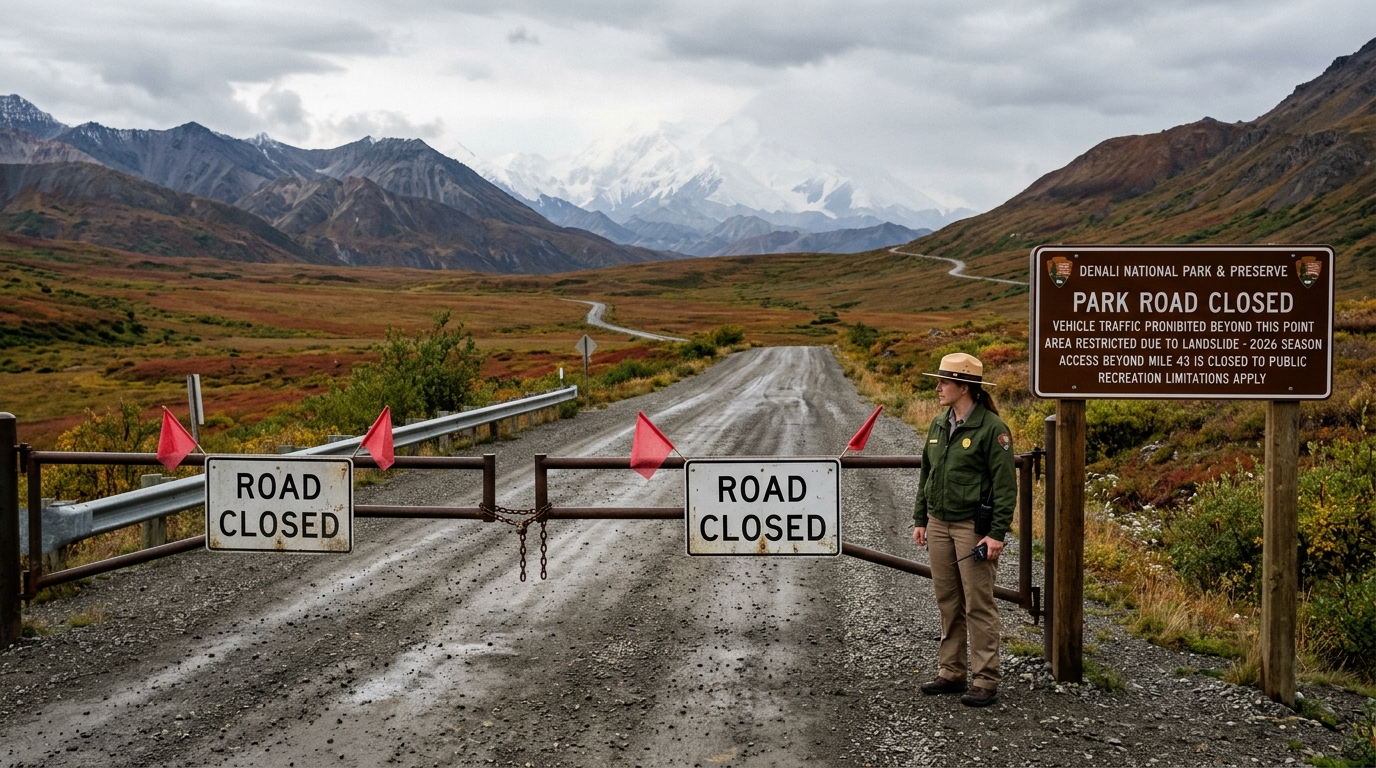
Once in Alaska, regional infrastructure shifts influence where you spend time. In Denali National Park, the Pretty Rocks landslide at mile 43 of the Denali Park Road limits general transit buses past that mark while permanent bridge construction continues through the 2026 season. Drivers must plan their days around available park transit shuttles, local hiking corridors, and alternative scenic routes such as Hatcher Pass or the Kenai Peninsula. Accommodations near Denali, Seward, and Homer routinely fill months ahead of the summer rush.
Planning this route takes substantial research. Alaska Road Trip provides a custom day-by-day Alaska road-trip itinerary, hand-built by a named founder who has driven these routes on eight Alaska trips between 2015 and 2024, across four seasons. Alaska Road Trip hand-picks lodging and gives you direct booking links, but you book it yourself: it does not make reservations on your behalf, so you keep full control and flexibility. Alaska Road Trip recommends activities and tours with timing and booking links; you reserve them yourself. Alaska Road Trip does not book flights or rental cars; you arrange those independently.
Itineraries reflect current-season research at the time they are built, ensuring you account for structural factors like the Denali mile 43 project. Alaska Road Trip is a one-time flat fee, not a subscription: there are no recurring charges. Packages cover varying trip lengths:
- Lite covers trips lasting one to five days.
- Standard covers driving routes up to fourteen days.
- Plus covers extended journeys of fourteen or more days.
- Concierge adds a 30-minute live call with the founder.
Each plan arrives as a printable, offline-ready PDF within 3 to 5 business days, including 1 to 2 revision rounds and backed by a published 14-day money-back guarantee with a full refund, no questions asked. You can review all options on our trip planning page.
Frequently asked questions
Can I drive to Alaska without a passport?
You cannot drive to Alaska using only standard domestic identification like a regular driver's license. You must cross Canadian territory, which requires a valid U.S. passport book or an approved Western Hemisphere Travel Initiative alternative, such as a U.S. passport card or an Enhanced Driver's License from an approved state.
Do you need a passport to go to Alaska?
If you fly directly from a domestic U.S. airport to Alaska without touching foreign airspace or landing in Canada, you do not need a passport; a standard REAL ID-compliant driver's license suffices. If you travel by road or cross through Canadian land or waters, an approved travel document like a passport book or card is mandatory.
Do you need a passport for Alaska?
A passport is not required for domestic flights within the United States, including flights between Seattle and Anchorage. However, if your trip involves driving across the Canadian border, taking certain international ferry connections, or taking excursions that enter Canadian territory, a passport book, passport card, or EDL is required.
Can you drive to Alaska from the lower 48 without a passport?
You can drive to Alaska without a full passport book only if you carry another valid, federally approved document: a U.S. passport card, an Enhanced Driver's License issued by Michigan, Minnesota, New York, Vermont, or Washington, or a trusted traveler card like NEXUS. Standard driver's licenses and birth certificates alone will not grant you entry into Canada.
Is a passport card enough to drive through Canada to Alaska?
Yes. A U.S. passport card fulfills all legal requirements for U.S. citizens crossing into Canada and returning to the United States at land border checkpoints. Note that a passport card cannot be used for commercial flights if you need to fly home unexpectedly from Canada.
Sort the paperwork, then build the drive
Driving to Alaska requires crossing through Canada, which makes border preparation non-negotiable. Verify that your passport book, passport card, or Enhanced Driver's License is valid. Leave prohibited gear at home. Check your vehicle paperwork, and set your departure schedule with realistic driving legs.
When your paperwork is ready and you want the driving route mapped out, Alaska Road Trip builds a custom day-by-day itinerary for your dates and sends it as a printable, offline-ready PDF in 3 to 5 business days. Plans carry a flat one-time fee with a published 14-day money-back guarantee. You can choose your tier on our trip planning page to begin.

See a real Alaska itinerary before you spend a dollar
A real 3-day plan with driving times, lodging picks, and a daylight chart — free, in your inbox.
One email. No spam. Unsubscribe anytime. Or view it right now — no email needed ↗
Ready for the full plan? Get your custom itinerary — from $197 · 5-day delivery →