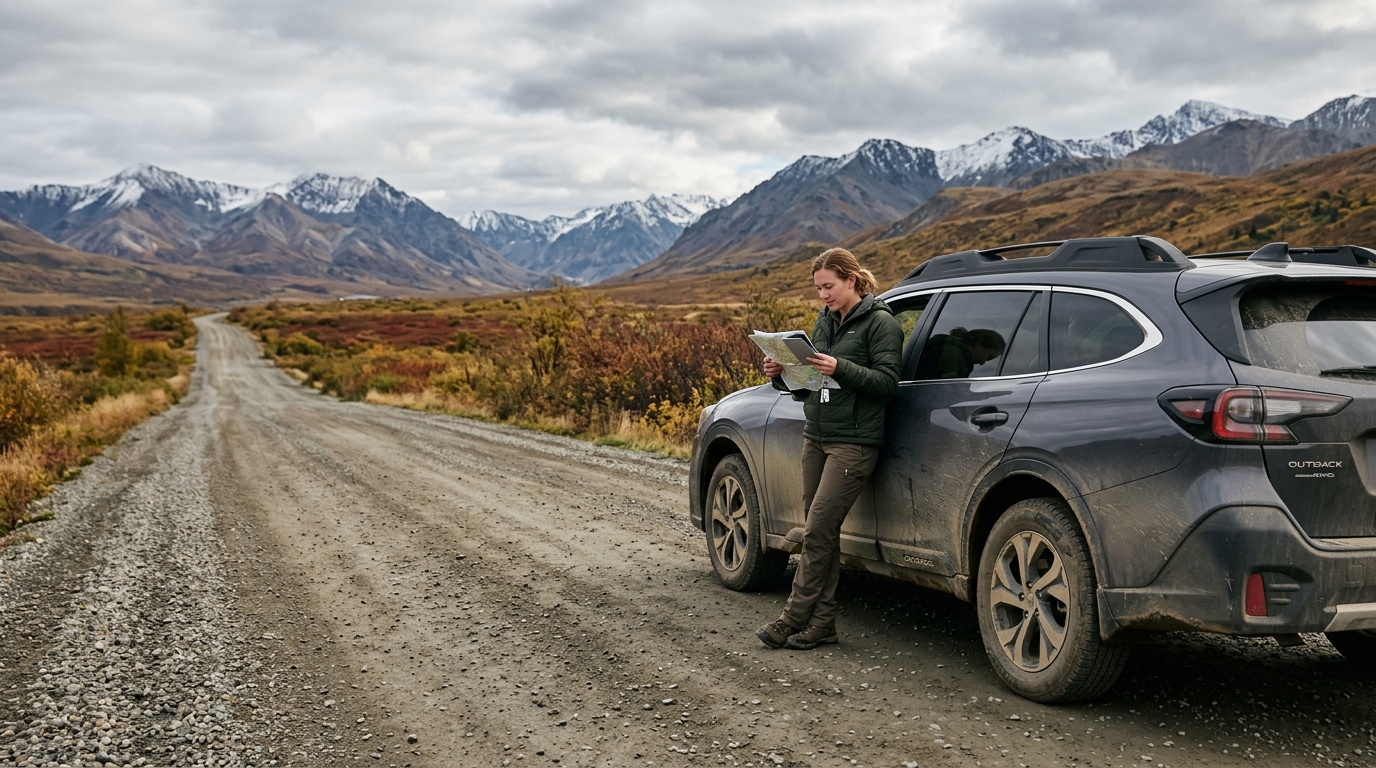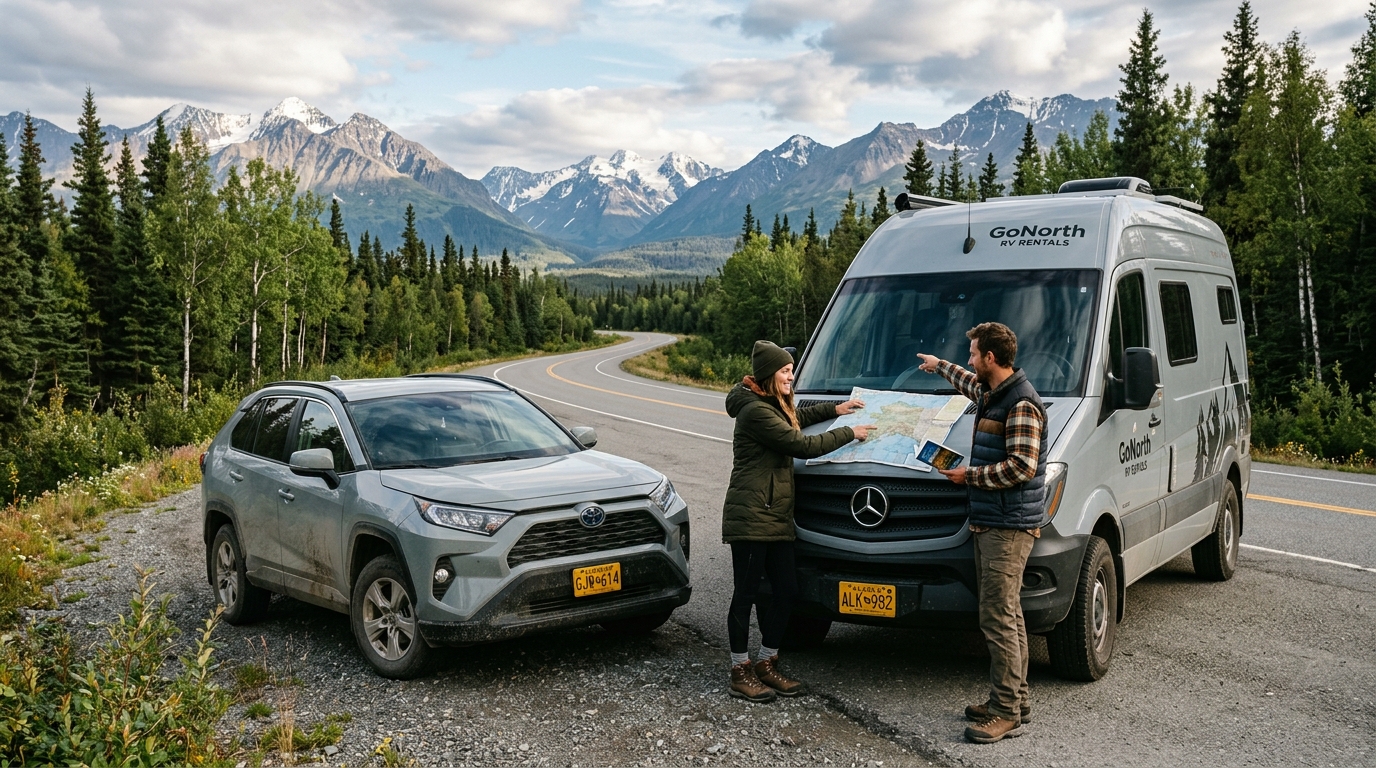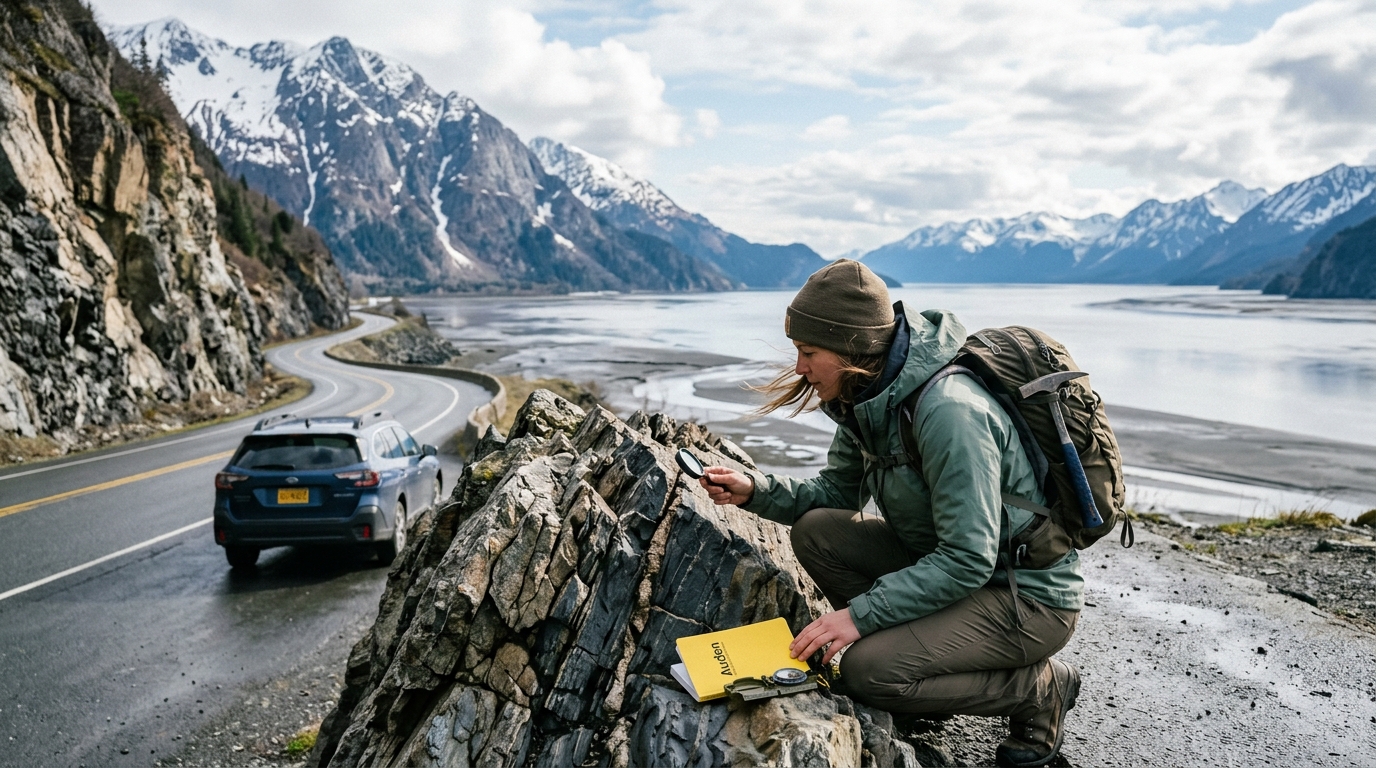

Executing a successful alaska road trip for photographers comes down to solving a calendar and clock problem, not buying more glass. If you position your vehicle at the right pullout when the low-angle subarctic sun skims the Alaska Range, even standard camera bodies capture breathtaking images, but a single two-hour driving miscalculation leaves you staring at harsh, flat light or sitting behind the wheel while the best light of your trip fades in your rearview mirror.
Most travelers plan an Alaska drive around miles covered between standard hotel check-in windows. Photographers cannot afford to travel that way. When sunset happens at 11:30 PM and dawn breaks at 4:15 AM, your entire daily schedule must invert. This guide breaks down the realistic logistics of planning an independent photography drive through Alaska in 2026: how the light behaves across the April-to-October operating season, which corridors deliver the highest visual yield, what camera gear actually survives the dust and drizzle, and how to sequence your days so you are standing behind a tripod instead of racing the clock on the highway.
Why an Alaska Road Trip for Photographers Is Really a Light-Planning Problem
In the Lower 48, landscape photography follows a familiar cadence: wake up at 5:00 AM for sunrise, scout or rest during the harsh midday hours, and set up your composition by 6:00 PM for a 7:30 PM sunset. In Alaska between May and August, that rhythm does not exist. The sun arcs low across the horizon for hours rather than dipping sharply below it, producing extended periods of twilight, lingering side-lighting, and almost nonexistent windows of true astronomical darkness.
That subarctic geometry creates both an immense opportunity and a serious logistical trap. A traditional tourist itinerary moves from Anchorage to Seward or Fairbanks on a standard daytime business schedule. If you follow that routine on an alaska road trip for photographers, you will spend your peak creative hours eating dinner at a crowded roadside diner or checking into your room, leaving you shooting high-contrast, hazy scenes during the middle of the afternoon when glaciers look blown out and mountain valleys lose their depth.
The primary constraint in Alaska is rarely distance on a map; it is where your tripod feet are planted when the sun drops to five degrees above the ridgeline. A ninety-minute delay behind an RV on the Seward Highway or an unexpected road-construction pilot car on the Parks Highway does not just make you late for dinner. It burns an entire day's visual payoff. Because driving distances between viable services often span 100 to 200 miles, you cannot easily backtrack if you realize the light would have been better fifty miles behind you.
For first-time visitors—especially couples, families, and retirees in the 50-to-65 age range balancing creative goals with travel comfort—geographic ambition overload is the most common pitfall. Alaska is vast, and attempting to stitch together the Kenai Peninsula, Denali National Park, Valdez, and the Arctic Circle on a standard vacation timeline turns your trip into an endurance rally that exhausts everyone in the vehicle. The inevitable outcome is thousands of blurry frames shot through a bug-splattered windshield from a moving car. Overcoming that mistake requires treating your itinerary as a light plan first and a road trip second. Editing presets and dynamic-range exposure blending cannot salvage an ill-timed route; solid logistics can.
Best Time for Alaska Photography: Matching Months to the Light You Actually Want
Deciding on the best time for alaska photography requires matching your visual objectives to specific subarctic seasons rather than grouping everything into a generic summer bucket. Each month between April and October offers a distinct profile of sun angles, weather patterns, wildlife activity, and road accessibility.
April and May: The High-Contrast Transition
Early spring brings deep snowbanks along mountain passes like Hatcher Pass and Thompson Pass, accompanied by rapidly opening river valleys. The snow line sits low on the Chugach and Kenai mountains, providing striking graphic contrast against dark metamorphic rock and early coastal melt. Crowds are virtually absent, tourist services are just beginning to wake up, and standard highway pullouts are quiet. However, higher-elevation hiking trails remain buried in slick slush, many scenic side roads remain gated, and coastal areas can experience persistent gray, wet low-pressure systems.
June: The Midnight Sun and Endless Side-Light
June delivers the longest days of the year, with up to nineteen to twenty-two hours of functional daylight depending on your latitude. The sun skims just below the northern horizon around midnight, creating a golden hour that can stretch for three continuous hours, bleeding directly into an extended blue hour and dawn. The tradeoff is extreme physical fatigue if you do not manage your sleep cycle, paired with intense lodging competition. Midday light is harsh and contrasty between 11:00 AM and 5:00 PM, meaning your camera should stay packed away during normal business hours while you rest or reposition between shooting locations.
July: Wildflowers, Rushing Rivers, and Glacial Runoff
By July, fireweed carpets highway rights-of-way, coastal mountain meadows bloom with lupine and alpine forget-me-nots, and braided glacial rivers run at full volume with milky, sediment-rich turquoise water. Sockeye salmon fill coastal rivers, drawing brown bears to river mouths and rapids. The photographic catch in July is precipitation and pest activity: coastal rain increases on the Kenai Peninsula, inland valleys can be humid, and clouds often linger over high peaks for days at a time. Photographers must pack dedicated weather covers and maintain flexible daily shooting schedules.
August: Muted Tones and Early Tundra Color
Early August continues the lush summer look, but by mid-to-late August, interior Alaska undergoes a rapid transformation. The alpine tundra above tree line shifts into brilliant carpets of crimson, gold, and burnt orange as dwarf birch and blueberry bushes turn. The sun begins dipping lower each evening, bringing back shorter days, manageable shooting hours, and the return of true twilight. By the final week of August, the night sky becomes dark enough around midnight to yield your first realistic opportunities for shooting the northern lights if geomagnetic conditions cooperate—which you can monitor using tools like the University of Alaska Fairbanks Geophysical Institute aurora forecast.
September: Peak Interior Color and Aurora Season
For many landscape specialists, September represents the ultimate window. Tundra foliage along the Denali Highway and the Richardson Highway peaks in incandescent scarlet and yellow before the leaves drop. Bull moose sport fully polished antlers and display rutting behavior along willow flats. Sunsets arrive at approachable hours (7:30 PM to 8:30 PM), and true night skies return, offering multi-hour windows to photograph the northern lights over reflective, unfrozen lakes. The risk, however, is abrupt weather shifts: heavy autumn rainstorms can ground bush planes, and early snowstorms can dust highway summits or trigger seasonal closures. For a complete look at seasonal weather patterns, consult our breakdown of the best time for an Alaska road trip.
Early October: The Fragile Shoulder
October brings sharp, crystal-clear cold, golden aspen stands dropping their final foliage, and fresh dusting ("termination dust") on every mountain crest. Tourist infrastructure is largely closed, summer ferries have reduced sailings, and many seasonal lodges are shuttered. You will have pullouts entirely to yourself, but you must carry winter recovery gear, navigate freezing black ice during early morning drives, and maintain tight contingency plans.
Alaska Landscape Photography Locations Worth Building a Route Around
When selecting your route, avoid compiling an unstructured list of isolated viewpoints. Alaska's road system is compact compared to its total landmass, consisting of primary paved highways with long distances between intersections. Group your work along defined corridors that yield high visual variety within sustainable driving distances.
1. Turnagain Arm and the Seward Highway
Running south from Anchorage toward the Kenai Peninsula, the Seward Highway hugs the sheer cliffs of the Chugach Mountains as they drop directly into Turnagain Arm. This corridor is famous for dramatic mudflats, reflections of jagged peaks across the water, and the occasional tidal bore wave pushing through the inlet. At low tide, the silty channels create intricate, abstract textures that look stunning under low-raking side-light.
The Payoff: Swift transitions between maritime fjords, sea-level mudflats, and steep alpine valleys within a single sixty-mile drive.
The Catch: The Seward Highway is heavily trafficked by commuters, commercial freight, and RVs. Shoulder pullouts can fill quickly, and high coastal winds regularly whip up spray that coats front lens elements in abrasive salt film. For tactical pullout notes along this drive, see our detailed Seward Highway guide.
2. The Kenai Peninsula Loop
Branching deeper into the Kenai brings you past glacial outflow lakes like Kenai Lake—celebrated for its surreal, milky teal hue caused by suspended glacial flour—and out toward the marine terminals of Seward and Homer. Sunrise mist rolling off the river flats near Cooper Landing offers ethereal early morning woodland and river compositions, while Homer Spit provides wide-angle perspectives across Kachemak Bay toward active volcanoes and coastal glaciers.
The Payoff: Exceptional variety ranging from deep boreal forest and salmon streams to coastal marine landscapes.
The Catch: Summer congestion around world-famous fishing spots can cause heavy traffic slowdowns, requiring generous travel buffers between morning shoots and evening locations.
3. The Matanuska Valley and the Glenn Highway
Driving northeast from Palmer along the Glenn Highway positions you between the Chugach Range to the south and the Talkeetna Mountains to the north. The crown jewel of this route is the Matanuska Glacier, an accessible valley glacier that pushes close to the highway corridor. Caribou Creek and Long Rifle Lodge offer commanding, elevated vantage points over the ice field framed by spruce forest.
The Payoff: Dramatic, accessible glacial topography visible directly from stable highway pullouts without requiring technical backcountry foot travel.
The Catch: The highway winds tightly along canyon rims; blind curves mean you must scout designated turnouts carefully rather than pulling off spontaneously when you spot an interesting composition.
4. The Parks Highway and the Denali Corridor
The Parks Highway links Anchorage and Fairbanks, running along the eastern flank of the Alaska Range. On clear days, roadside pullouts near Trapper Creek, Petersville Road, and the Alaska Veterans Memorial provide sweeping panoramic views of Denali and Mount Foraker rising thousands of feet above the low taiga plain.
The Payoff: The sheer scale of North America's highest peak looming above braided rivers and spruce bogs.
The Catch: Denali creates its own microclimate, frequently remaining shrouded in dense clouds during summer. Furthermore, visitors must understand current transit limits: as outlined in official National Park Service Denali road conditions, 2026 Denali Park Road access remains restricted to mile 43 due to ongoing construction at the Pretty Rocks Landslide. Classic deep-park bus excursions to Wonder Lake and Kantishna are unavailable, meaning landscape photographers must focus their lenses on viewpoints accessible along the first 43 miles, surrounding entrance trails, or long-range vantages along the Parks Highway. Read our analysis of the Denali Park Road 2026 conditions to plan realistically.
5. The Richardson Highway and the Interior
Extending from Valdez on Prince William Sound north to Delta Junction, the Richardson Highway cuts through Thompson Pass, crosses the Worthington Glacier moraine, passes Keystone Canyon's vertical waterfalls, and traces the Trans-Alaska Pipeline across broad interior plateaus. Autumn color along this route in late August and early September is spectacular.
The Payoff: Unmatched mountain pass scenery, massive hanging glaciers, and expansive views of the Wrangell-St. Elias volcanic range to the east.
The Catch: Remote stretches with substantial distances between fuel stations and lodging options, demanding strict vehicle range management.
Golden Hour in a State Where the Sun Sets at 11pm
Calculating the golden hour in Alaska requires throwing out standard sun-tracking calculators designed for mid-latitudes. Because Alaska sits between 55 and 71 degrees north latitude, the sun approaches the horizon at an oblique angle during summer. Rather than descending rapidly like an elevator, it slides sideways across the horizon for hours.
In Anchorage during late June, the sun dips below the horizon around 11:40 PM, but civil twilight persists until 1:00 AM, blending into nautical twilight before dawn begins at 3:45 AM. The functional golden hour—the period where sunlight hits the landscape at a low angle through atmospheric scattering—can easily last from 9:30 PM until after midnight. That yields a three-hour creative window where light changes slowly, shadows hold rich detail, and mountain faces glow in warm alpine glow.
The operational reality of that phenomenon catches many travelers off guard. If your primary landscape shoot runs from 9:30 PM to 12:30 AM, you will rarely return to your base, download memory cards, and get into bed before 2:00 AM. If your itinerary requires you to wake up at 7:00 AM to drive four hours to another town, you will burn out within three days. To survive a subarctic photography trip, build your daily schedule around late awakenings, light driving days, and a protected midday lull.
Midday light in Alaska during clear summer weather is exceptionally uncharitable to camera sensors. Glacial silt rivers reflect blinding white light, snowfields blow out highlight channels, and atmospheric haze softens distant peaks. Use the hours between 11:00 AM and 4:00 PM for driving between overnight bases, enjoying sit-down meals, scouting future pullouts, or catching up on sleep. Treat midday as purely operational time.
Adopt a strict scouting workflow: drive your target highway stretch in the early afternoon, note promising compositions, check shoulder safety and sun alignment using a solar azimuth app, and mark precise GPS coordinates on your offline maps. When 9:00 PM rolls around, return directly to two high-value locations rather than wasting precious late-night light hunting for spots in unfamiliar terrain.
Alaska Road Trip Camera Gear: What Earns Its Space in the Car
Packing alaska road trip camera gear is an exercise in prioritization. When sharing trunk space with heavy rain jackets, insulated layers, hiking boots, and food provisions, every piece of photo equipment must earn its keep. The goal is a weather-sealed, versatile kit that handles wide landscape vistas without leaving you defenseless if a grizzly bear appears along a riverbank.
Recommended Kit Structure
- Dual Camera Bodies: Carry a primary full-frame body and a compatible secondary body. Dust on interior dirt routes and constant coastal mist make outdoor lens swapping risky. Keeping a wide zoom on one body and a telephoto on the other minimizes sensor contamination.
- Ultra-Wide to Standard Zoom (16-35mm f/2.8 or f/4): Vital for expansive mountain landscapes, glacial walls, and towering coastal spruce forests where physical pullback room is limited.
- Mid-Range Workhorse Zoom (24-70mm or 24-105mm): Your everyday lens for environmental landscapes, roadside compositions, and abstract riverbed patterns.
- Long Telephoto Zoom (100-400mm or 150-600mm): Essential for mountain peak compression, distant braided stream abstracts, and ethical wildlife photography. A 70-200mm lens is frequently too short for northern wildlife across broad river valleys.
- Sturdy, Carbon-Fiber Tripod: Coastal gusts along Turnagain Arm and Thompson Pass will vibrate lightweight travel tripods. Invest in robust legs with spiked feet and a reliable ball head that operates smoothly in near-freezing temperatures.
- Filters and Power: Bring circular polarizers for cutting glare on wet glacial ice and vegetation, multi-stop neutral density filters for water movement, extra high-capacity memory cards, and at least four camera batteries per body, as cold subarctic mornings deplete lithium cells quickly.
Environmental Protection and Alaska-Specific Pitfalls
Moisture and temperature fluctuations are the two primary camera killers in the north. When working around coastal fjords, salt spray settles on optical elements, requiring microfiber cloths, lens cleaning fluid, and protective weather covers. When transitioning your cold camera gear from a 35-degree morning shoot into a heated vehicle or cabin, leave your cameras sealed inside your padded backpack for forty-five minutes. This allows equipment to warm up gradually without drawing interior condensation onto cold internal circuit boards and sensor glass.
Dust is another major concern. Unpaved corridors such as the Denali Highway or McCarthy Road generate fine, powdery silt that penetrates unsealed camera bodies and lens barrels. Keep your camera bag fully zipped while driving on gravel, and wrap your primary kit in clean dry bags when stowed in the trunk. For general road-trip packing advice, review our Alaska road trip packing list.
Regarding aerial equipment: remember that operating unmanned aircraft systems (drones) is strictly prohibited in all national parks, preserves, and monuments under federal regulation. As detailed by The Drone U's guide on flying in national parks, launching, landing, or operating a drone within National Park Service boundaries can lead to equipment confiscation and steep federal fines. State parks, wildlife refuges, and municipal lands also enforce localized restrictions, so research land management jurisdictions before packing a drone into your kit.
Driving, Pullouts, and Wildlife: The Safety Rules That Protect the Shot and You
The urge to slam on the brakes when a cow moose steps into roadside fireweed has caused numerous highway collisions in Alaska. Your safety, the safety of other motorists, and the welfare of local wildlife must often take precedence over getting a shot.
Highway safety requires strict discipline. Stopping a vehicle in an active travel lane creates an immediate road hazard, even when traffic seems light. Alaska highways carry heavy freight haulers and recreational vehicles that cannot stop quickly on steep mountain grades. Drivers must pull entirely off the asphalt onto a designated, firm gravel pullout and activate hazard lights before exiting the vehicle. If a turnout is full or narrow, continue down the road to the next safe area rather than blocking traffic.
Wildlife safety requires strict adherence to ethical distances. According to wildlife safety regulations published by the National Park Service for Denali, visitors must maintain at least 300 yards (900 feet) from bears and at least 25 yards from all other wildlife, warning that crowding animals creates extreme danger and alters natural behavior. Using high-magnification telephoto lenses from the safety of a vehicle or designated observation point is the only responsible way to capture frame-filling wildlife compositions.
Never place yourself between a moose cow and her calf, or between a foraging bear and its escape path. If an animal begins moving toward your position, alter your trajectory and retreat calmly toward your vehicle. Always carry EPA-registered bear spray in an accessible hip or chest holster—never stashed inside a zipped camera backpack—and understand how to deploy it in high-wind conditions. For comprehensive protocols on vehicle encounters, consult our guide to wildlife safety in Alaska, and maintain smart vehicle logistics by studying our advice on fuel planning in Alaska so you never run low on gas while chasing late-night light along isolated corridors.
Building the Itinerary: How to Sequence a Photography-First Route
Sequencing an alaska road trip for photographers requires reversing the standard travel planning model. Mainstream itineraries select overnight towns based on hotel chain availability and fill the daytime hours with commercial attractions. A photography-first itinerary begins by identifying three or four high-priority anchor shooting locations, determines the ideal light windows for those spots, and builds lodging, travel times, and secondary scouting stops backward from those moments.
Consider the typical failure mode of a generic travel schedule: a traveler books a room in Palmer, drives north past the Chugach Range during harsh midday sun, stops for lunch, arrives at the Denali viewpoint at 2:00 PM when the mountain is flat and hazy, and reaches an overnight hotel in Healy just as the sun begins dropping into golden hour, spending their best photographic window standing in a hotel check-in line. A properly sequenced itinerary places the driver on the road during the flat 1:00 PM to 4:00 PM lull, checks into lodging early, and positions the photographer on a ridgeline or pullout from 8:30 PM until midnight.
For a ten-day journey, focus on a tight combination: the Turnagain Arm and Kenai Peninsula corridor combined with the Matanuska Valley, or a targeted loop encompassing the Parks Highway and the Richardson Highway. Avoid attempting to circle the entire state. With an extended trip of ten to twelve days, you can comfortably link coastal fjords with the interior alpine tundra along the Denali Highway without turning your trip into an exhausting driving marathon.
The primary barrier to executing this strategy is Alaska's severe seasonal lodging scarcity. In compact hub communities like Seward, Talkeetna, and Copper Center, boutique lodges and functional cabins often sell out six to nine months in advance. For couples, families, and retirees looking for comfortable, restful bases near prime pullouts, missing those booking windows forces you into long late-night commutes that undermine your driving safety. Solving these logistics independently requires cross-referencing topographic maps, seasonal ferry schedules, road construction updates, and lodging availability calendars.
For photographers who want the guesswork eliminated, Alaska Road Trip builds a custom day-by-day Alaska road-trip itinerary, hand-built by a named founder who has driven these routes on eight Alaska trips between 2015 and 2024, across four seasons. Alaska Road Trip hand-picks lodging and gives you direct booking links, but you book it yourself — it does not make reservations on your behalf, so you keep full control and flexibility. Alaska Road Trip recommends activities and tours with timing and booking links; you reserve them yourself. Alaska Road Trip does not book flights or rental cars; you arrange those independently.
Alaska Road Trip is a one-time flat fee, not a subscription — there are no recurring charges. Pricing is transparent across four simple tiers on our itinerary options page: Lite at $97 (1-5 days), Standard at $197 (up to 14 days), Plus at $297 (15+ days), and Concierge at $497, which includes a 30-minute live call with the founder to review your shot list, routes, and timing. Every tier is backed by a published 14-day money-back guarantee, full refund, no questions asked.
DIY Research vs. Paying Someone: The Honest Tradeoff for a Photography Trip
Deciding between independent planning and working with an itinerary specialist comes down to how you prefer to invest your time before departing. The DIY approach is rewarding if you enjoy spending dozens of hours cross-referencing photography forums, satellite terrain imagery, government road construction portals, and booking platforms. A specialized planning service provides route sequencing that protects your creative windows while accounting for local driving conditions. To evaluate which path fits your travel style, consider the functional differences outlined below:
| Planning Factor | DIY Trip Planning | Alaska Road Trip Custom Itinerary |
|---|---|---|
| Time Investment | 40 to 80+ hours spent researching routes, forums, and outdated blogs | Completed intake form in 10 minutes; custom route built for you |
| Light & Route Sequencing | Manual guessing of drive times, sun angles, and golden-hour pullouts | Sequenced specifically around subarctic golden hours and realistic drives |
| Seasonal & Road Accuracy | High risk of missing road closures, construction delays, and park limits | Reflects current-season research, including the 2026 Denali Park Road status |
| Reservations & Logistics | Full manual booking of every hotel, lodge, and activity directly | Direct booking links provided for vetted accommodations; you book directly |
| Financial Protection | None; cancellation penalties fall entirely on your shoulders | Published 14-day money-back guarantee, full refund, no questions asked |
It is important to maintain realistic expectations about what any planning service can deliver. A well-built route ensures you are standing in the right spot at the ideal hour; it cannot control weather fronts, coastal fog, wildlife movements, or solar storm activity. Itineraries reflect current-season research at the time they're built. The trip dashboard can check available park, road, weather, and aurora data, but Alaska Road Trip does not provide real-time booking availability, live tracking, or guaranteed live condition monitoring.
If your upcoming journey covers a week or longer, spans two or more distinct highway corridors, and represents a major financial and creative investment, having your daily route hand-built around photographic light windows saves weeks of frustrating trial-and-error research.
Frequently Asked Questions
What is the best month for an Alaska road trip for photographers?
Late August through mid-September is widely considered the premier window for landscape and wildlife photographers. During these weeks, the interior alpine tundra erupts in deep red and gold foliage, bull moose sport polished antlers during the rut, and sunset shifts to an approachable 8:00 PM to 9:00 PM. Crucially, true dark skies return to subarctic latitudes by late August, opening up opportunities to capture the aurora borealis over open, unfrozen lakes. If your goal is photographing the midnight sun, lupine blooms, and maximum daylight hours, mid-to-late June is the ideal target.
How much camera gear should I bring on an Alaska road trip?
Keep your field kit streamlined to two camera bodies, three versatile zoom lenses (an ultra-wide 16-35mm, a standard 24-70mm, and a telephoto 100-400mm or equivalent), a sturdy carbon-fiber tripod, and dedicated rain covers. Bringing two camera bodies eliminates the need to swap lenses in blowing glacial silt or coastal drizzle, keeping your image sensors clean. Extra camera batteries are essential, as cold subarctic mornings deplete lithium charges rapidly. Avoid overpacking heavy studio gear or excessive prime lenses that consume valuable vehicle trunk space needed for cold-weather layers and hiking equipment.
Can I photograph the aurora on a summer Alaska road trip?
You cannot photograph the aurora borealis during May, June, or July. The subarctic sky remains in perpetual civil or nautical twilight throughout the summer solstice period, creating too much ambient light to see or photograph auroral displays, even during intense geomagnetic storms. The first realistic opportunities for northern lights photography begin around the third week of August and improve significantly throughout September as nighttime darkness expands across the state.
Is the Denali Park Road open for photography in 2026?
For the 2026 visitor season, access along the Denali Park Road remains restricted to mile 43 near the East Fork River due to ongoing reconstruction of the Pretty Rocks Landslide area. Private passenger vehicles can drive only to mile 15 without a special permit, while official park transit and tour buses operate out to mile 43. Deep-park destinations like Polychrome Pass, Toklat River, and Wonder Lake remain inaccessible by road. Photographers should focus their efforts on viewpoints along the first 43 miles, surrounding entrance trails, or roadside vantage points situated along the Parks Highway.
Do I need a tripod and filters for Alaska landscape photography?
A sturdy, wind-resistant tripod is indispensable for Alaska landscape photography. Subarctic golden hours occur late at night under low light, and framing glacial streams, coastal waterfalls, or midnight twilight requires long exposure times that cannot be handheld cleanly. A circular polarizing filter is vital for cutting harsh surface glare on wet glacial ice, rivers, and foliage, while multi-stop neutral density filters allow you to smooth rushing braided rivers and dramatic coastal tides during brighter afternoon scouting hours.
Next Step: Turn the Light Plan Into a Route You Can Actually Drive
Executing an unforgettable photography journey through Alaska rests on three concrete decisions: selecting the month that aligns with your visual priorities, narrowing your driving plan to two or three productive corridors, and picking three or four anchor shooting spots to structure your overnight lodging around. The biggest hurdle facing traveling photographers is rarely technical camera skill; it is building a travel schedule that respects subarctic driving distances while protecting late-night light windows.
If you would rather spend your evenings shooting than your afternoons cross-checking drive times, closures, and lodging availability, Alaska Road Trip builds a custom day-by-day plan around your dates and your light windows. It is a one-time flat fee — Lite $97 for 1-5 days, Standard $197 up to 14 days, Plus $297 for 15+ days, and Concierge $497 with a 30-minute live founder call — delivered as a printable, offline-ready PDF in 3-5 business days with 1-2 revision rounds, and backed by a published 14-day money-back guarantee, full refund, no questions asked. Head over to our trip planning page or explore the Concierge itinerary option to lock in your custom driving route and capture Alaska in its absolute best light.

See a real Alaska itinerary before you spend a dollar
A real 3-day plan with driving times, lodging picks, and a daylight chart — free, in your inbox.
One email. No spam. Unsubscribe anytime. Or view it right now — no email needed ↗
Ready for the full plan? Get your custom itinerary — from $197 · 5-day delivery →