If you are planning a journey to the Last Frontier in 2026, you are likely dreaming of massive rivers of ice carving their way through rugged mountain peaks. Welcome to the ultimate glaciers Alaska guide, designed to help you navigate the vast and icy landscapes of this incredible state. Alaska is a land of many glaciers; some of them you can hike to, others you can see right from the road, and some require a boat or bush plane to witness their calving majesty.
With climate change accelerating the retreat of many ice fields, 2026 is a pivotal time to witness these geological wonders. Alaska houses an estimated 100,000 glaciers, covering a significant portion of the state's total land area. However, only a fraction of these are easily accessible to the average traveler. This comprehensive glaciers Alaska guide will break down the best roadside viewing spots, accessible hikes, and essential planning tips to ensure your itinerary is nothing short of spectacular.
Understanding Alaska's Glacial Landscape
Before diving into specific destinations in this glaciers Alaska guide, it is helpful to understand the different types of glaciers you will encounter. Knowing the distinction not only enriches your travel experience but also helps you decide which tours and routes best fit your physical abilities and interests.
- Alpine Glaciers: Also known as mountain or valley glaciers, these form high in the mountains and flow downward through valleys. Exit Glacier and Byron Glacier are prime examples.
- Tidewater Glaciers: These are valley glaciers that flow all the way down to the ocean. They are famous for "calving"—the dramatic process where massive chunks of ice break off and crash into the sea. You will find these in places like Glacier Bay and Prince William Sound.
- Piedmont Glaciers: These occur when steep valley glaciers spill into relatively flat plains, spreading out into bulb-like lobes. The Malaspina Glacier is widely considered one of the largest piedmont glaciers in the world, though it is mostly viewed via flightseeing tours.
Roadside Glaciers: See Ice from Your Car
You do not need to be an extreme mountaineer to experience the thrill of ancient ice. Some of the most breathtaking sights are accessible via major highways. If you are renting a vehicle, incorporating these stops is a must for any glaciers Alaska guide.
Matanuska Glacier (Glenn Highway)
Located at Mile 101 on the Glenn Highway, the Matanuska Glacier is often cited as the largest glacier accessible by car in the United States. It is a massive valley glacier stretching for dozens of miles. Because it is a "weather hole," the area often enjoys sunny skies even when surrounding valleys are clouded over.
While you can see the glacier from the state recreation site, the actual access to the ice is located on private land. To walk on the ice in 2026, you must book a guided tour. Guides provide crampons and helmets, ensuring you can safely navigate the deep crevasses and striking blue meltwater pools. If you are planning a broader driving route, consider how this fits into your 10-day Alaska road trip itinerary.
Worthington Glacier (Richardson Highway)
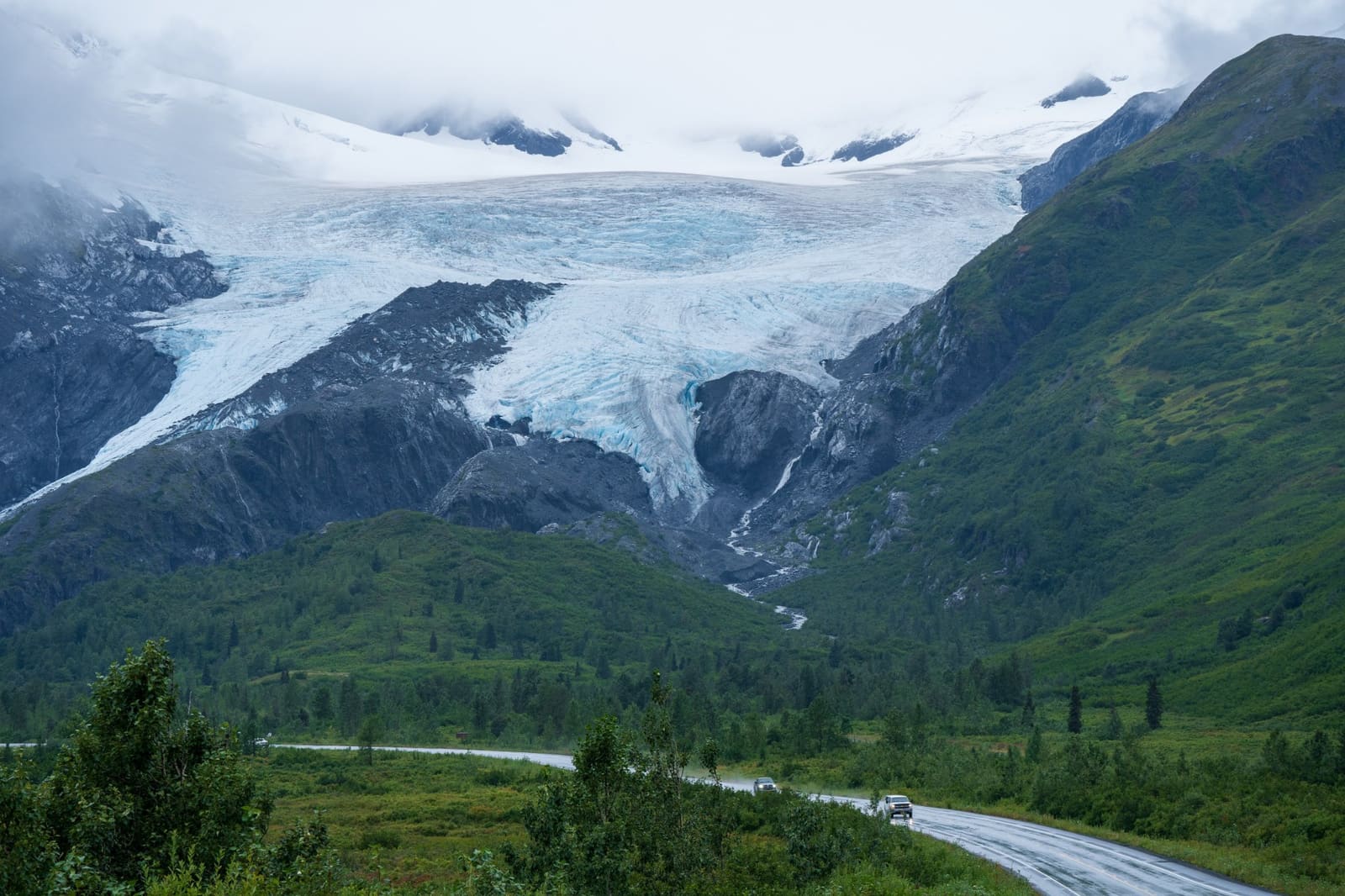
Situated in Thompson Pass just outside of Valdez (Mile 28.7 of the Richardson Highway), Worthington Glacier is one of the most accessible alpine glaciers in the state. You can pull right into the paved parking lot, read the interpretive signs, and take a short, paved, wheelchair-accessible trail to a viewing platform.
For the more adventurous, unmaintained trails lead closer to the ice, though visitors must exercise extreme caution due to loose rock and hidden crevasses. The drive through Thompson Pass itself is visually stunning, featuring towering peaks and numerous cascading waterfalls.
Portage Glacier (Portage Valley)
Just an hour south of Anchorage, Portage Glacier was once visible from the Begich, Boggs Visitor Center. However, due to rapid retreat, it has receded out of view from the main facility. According to the U.S. Forest Service, the glacier has retreated significantly over the last century, making boat tours or specific hikes necessary to see the face of the ice.
To see Portage Glacier today, you can take a one-hour day cruise across Portage Lake, or hike the Portage Pass Trail (a 4-mile round trip) which offers spectacular views of the glacier and the lake. This area is a perfect detour if you are exploring the Seward Highway.
Hike-to Glaciers: Get Up Close and Personal
For those who want to stretch their legs and feel the chill of the ice radiating off the landscape, hiking to a glacier is an unforgettable experience. This section of our glaciers Alaska guide highlights trails ranging from easy walks to moderate treks.
Exit Glacier (Kenai Fjords National Park)
Exit Glacier is the only part of Kenai Fjords National Park accessible by road. Located just outside of Seward, it offers a stark, visual representation of climate change. As you drive the access road and walk the trails, you will pass date markers indicating where the glacier's terminus stood in specific years.
The National Park Service maintains a network of trails here. The Glacier View Loop is a flat, accessible 1-mile trail. For a more strenuous adventure, the Harding Icefield Trail is an 8.2-mile round trip that climbs alongside the glacier, rewarding hikers with panoramic views of the massive Harding Icefield—the source of Exit Glacier and dozens of others. This is a highlight for anyone completing the Kenai Peninsula Loop.
Root Glacier (Wrangell-St. Elias National Park)
If you are willing to venture off the beaten path, the Root Glacier in Wrangell-St. Elias National Park offers one of the best glacier hiking experiences in the world. Accessed via the historic mining town of McCarthy and the Kennecott Mines National Historic Landmark, the hike to the glacier is about 1.5 miles each way.
Once at the ice, you can strap on crampons and explore the undulating surface, peering into bottomless moulins (vertical shafts in the ice) and walking past vibrant blue pools. Because this area is remote, it requires careful planning, especially regarding fuel planning in Alaska, as gas stations are sparse on the McCarthy Road.
Byron Glacier (Portage Valley)
For families or those seeking a low-impact hike, the Byron Glacier Trail is an excellent choice. Located near the Portage Glacier visitor center, this 1.4-mile round-trip trail is relatively flat and follows a rushing, glacially fed river. While you cannot safely walk on the glacier itself due to avalanche danger and falling ice, the trail brings you close enough to feel the dramatic drop in temperature and see the rugged ice caves that form at the base.
Tidewater Glaciers: Boat and Cruise Access
No glaciers Alaska guide would be complete without mentioning the towering tidewater glaciers. These massive walls of ice drop directly into the ocean, and the best way to experience them is from the deck of a boat.
Glacier Bay National Park
Glacier Bay is the crown jewel of Alaskan tidewater glaciers. Accessible primarily by cruise ship, tour boat, or plane from Juneau or Gustavus, this park features several active tidewater glaciers, including the famous Margerie Glacier and Johns Hopkins Glacier. Visitors often spend hours watching the ice calve into the sea, accompanied by the thunderous sound known as "white thunder." If you are arriving via a larger vessel, be sure to look into a cruise add-on to maximize your land-based itinerary before or after your sailing.
Prince William Sound
Departing from Whittier or Valdez, day cruises into Prince William Sound offer a more intimate glacier viewing experience. The sound is home to the highest concentration of tidewater glaciers in the world. The Columbia Glacier, known as one of the fastest-moving glaciers in the region, is a popular destination. The waters here are typically calmer than the open ocean, making it a great option for those prone to seasickness.
Hubbard Glacier (Yakutat Bay)
Located in eastern Alaska and part of Wrangell-St. Elias National Park and Preserve, Hubbard Glacier is widely recognized as one of the largest tidewater glaciers in North America. Unlike many glaciers worldwide, Hubbard has historically advanced rather than retreated. It stretches for dozens of miles and plunges deep into the bay. Because of its massive size and active nature, ships must keep a safe distance, as calving ice can create massive, dangerous swells. The sheer scale of Hubbard Glacier makes it a highly sought-after destination for cruise passengers and a vital inclusion in any comprehensive glaciers Alaska guide.
Wildlife Around the Ice
When you visit these glacial environments, you are not just looking at ice; you are entering unique ecosystems. The nutrient-rich waters at the base of tidewater glaciers attract a wealth of marine life. It is common to spot harbor seals resting on floating icebergs, protecting their pups from aquatic predators like orcas. Sea otters, humpback whales, and bald eagles are also frequent sights. Inland, near alpine and valley glaciers, keep an eye out for mountain goats navigating the steep, rocky cliffs, and bears foraging in the surrounding valleys. Always remember to practice proper wildlife safety in Alaska by maintaining a respectful distance and carrying bear spray when hiking.
Photography Tips for Glacial Landscapes
Capturing the immense scale and vibrant colors of Alaska's ice fields can be challenging. The bright white of the snow and ice often tricks camera sensors into underexposing the image, leaving your photos looking gray and dull. To combat this, manually adjust your exposure compensation by +1 or +2 stops. Additionally, using a polarizing filter is highly recommended in this glaciers Alaska guide. A polarizer will cut through the glare on the wet ice and water, deepening the blue hues of the crevasses and the sky. Finally, many photographers recommend trying to include a subject in your frame—such as a hiker, a boat, or a vehicle—to help provide a sense of scale. Without a reference point, it is nearly impossible for viewers to comprehend the towering face of a tidewater glacier.
Essential Planning for Your 2026 Glacier Adventure
Visiting these icy giants requires preparation. As you use this glaciers Alaska guide to build your itinerary, keep the following logistical and safety considerations in mind.
When to Visit
The optimal window for glacier viewing is between late May and mid-September. During these months, the roads are clear, tour operators are running at full capacity, and the weather is mild enough for extended outdoor activities. If you are planning a trip, reviewing the best time for an Alaska road trip will help you align your schedule with peak accessibility.
Safety and Gear
Glaciers are dynamic, constantly moving environments. They are beautiful but inherently dangerous. According to National Park Service safety guidelines, visitors should never walk onto a glacier without proper equipment (crampons, helmets, ice axes) and, ideally, a certified guide. Hidden crevasses covered by thin snow bridges can be fatal.
Even if you are just viewing from a distance, the weather near glaciers is unpredictable. The ice creates its own microclimate, generating what are known as katabatic winds. These cold, dense winds roll down the face of the glacier and can drop the ambient temperature rapidly, even on an otherwise warm summer day. Dress in moisture-wicking base layers, add an insulating fleece or down jacket, and always carry a waterproof outer shell. Sturdy, waterproof hiking boots are non-negotiable. For a comprehensive checklist, consult our Alaska road trip packing list.
Frequently Asked Questions
Are Alaska's glaciers disappearing?
Yes, the vast majority of Alaska's glaciers are retreating and thinning due to rising global temperatures. While a few, like the Hubbard Glacier, have historically advanced, the overall trend is a rapid loss of ice mass. This makes 2026 a critical time to visit and witness these landscapes before they change further.
Can you walk on glaciers without a guide?
While it is legally permissible on public lands (like the Root Glacier in Wrangell-St. Elias), it is highly discouraged unless you have extensive mountaineering and crevasse-rescue experience. Glaciers are incredibly dangerous, with deep crevasses, unstable ice seracs, and slippery surfaces. Hiring a local guide ensures you have the right safety gear and are walking on thoroughly scouted, safe routes.
What is the easiest glacier to get to in Alaska?
For roadside viewing, the Worthington Glacier on the Richardson Highway is arguably the easiest, as you can see it clearly from the paved parking lot. For walking on the ice, the Matanuska Glacier on the Glenn Highway is the most accessible, though it requires booking a guided tour to access the ice via private property.
Do I need a 4WD vehicle to reach these glaciers?
Most of the major glaciers mentioned in this glaciers Alaska guide, such as Matanuska, Worthington, and Exit Glacier, are accessible via well-maintained, paved highways suitable for standard 2WD rental cars or RVs. However, reaching more remote areas like the Root Glacier requires driving the unpaved McCarthy Road. If you plan to explore off the beaten path, you might want to consider a 4WD Alaska road trip setup.
Start Building Your Glacier Itinerary Today
Alaska's glaciers are more than just frozen water; they are living, breathing rivers of ice that shape the very landscape of the Last Frontier. Whether you are listening to the thunderous calving of a tidewater glacier in Glacier Bay, strapping on crampons to hike the Matanuska, or simply pulling over on the Richardson Highway to marvel at the Worthington Glacier, the experiences outlined in this glaciers Alaska guide are sure to be the highlight of your 2026 vacation.
Ready to turn these icy dreams into a reality? Navigating the vast distances, booking the right tours, and securing lodging near these natural wonders can be overwhelming. Let us help you craft the perfect, stress-free journey. Plan your trip with our expert itineraries today and ensure your 2026 Alaska adventure is truly unforgettable.
See a real Alaska itinerary before you spend a dollar
A real 3-day plan with driving times, lodging picks, and a daylight chart — free, in your inbox.
One email. No spam. Unsubscribe anytime. Or view it right now — no email needed ↗
Ready for the full plan? Get your custom itinerary — from $197 · 5-day delivery →